Misleading Product Description in Home Decor: What 180,868 Reviews Reveal
Inconsistent Product Description: The “Hidden Killer” in the Home Decor Industry
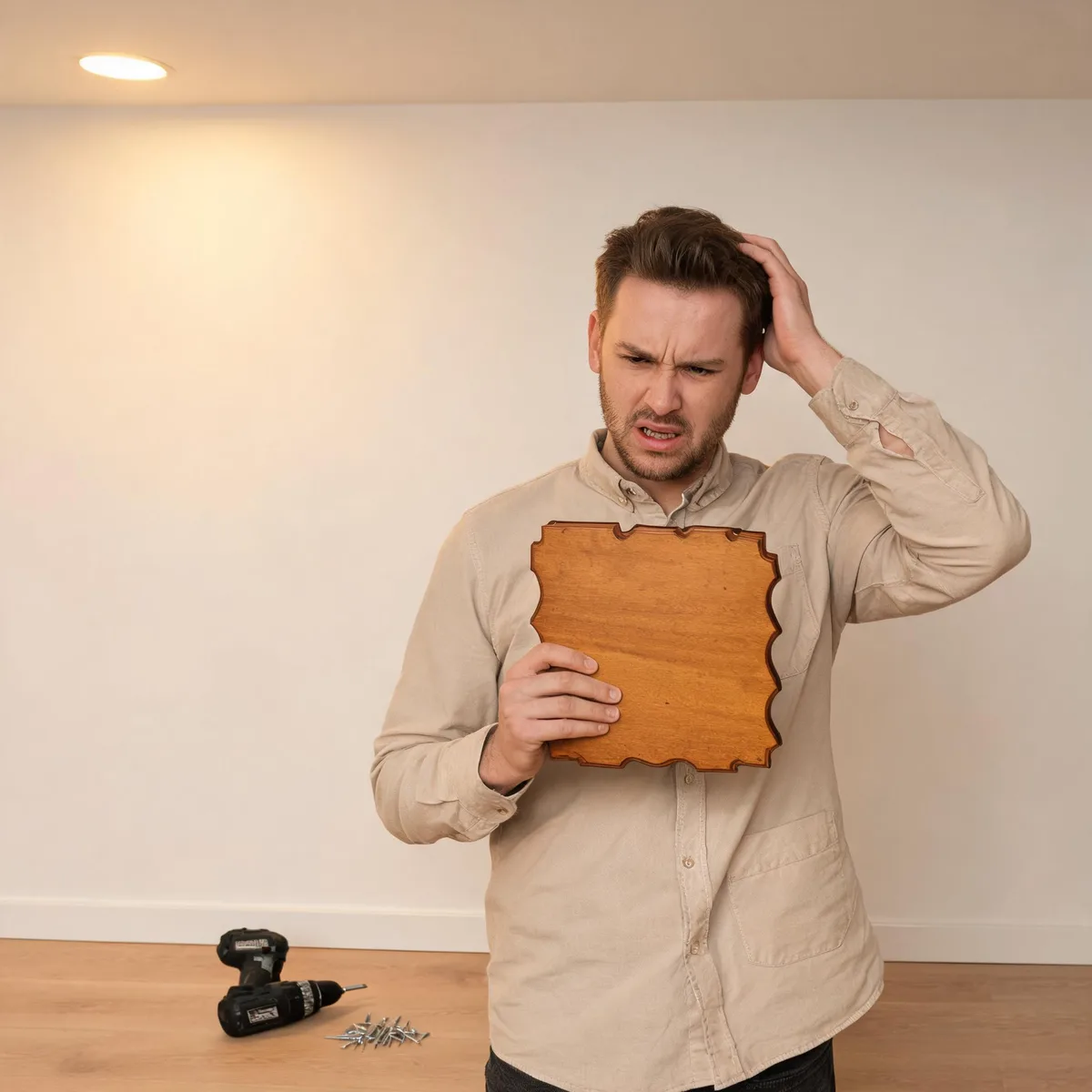
Ms. Lin, who had just moved into her new home, spotted a vintage-style wall hanging while scrolling through an e-commerce platform and took an instant liking to it. The dark brown matte metal plaque shown in the promotional image hung in the entryway, which was a perfect match for her log-style home decor. Priced at only 29.9 yuan, she placed an order without hesitation. When she unboxed the package 3 days later, she was stunned: the so-called “metal-texture hanging” was merely a piece of hard cardboard covered with a printed film, its edges were curled from being crushed during shipping as no reinforcement was provided, and it looked no different from a poster sold at a 10-yuan store when hung on the wall. She had to bear 8 yuan in shipping fees if she returned it, but it was too ugly to keep. In the end, she could only put it in the storage room to collect dust, and even her good mood from moving was spoiled.
After analyzing 180,868 real user reviews covering 42,339 home decor products, we found that as high as 35% of negative reviews are related to “inconsistent product descriptions”, making it the most complained-about issue in the home decor category. From minor problems like shrunk ornament sizes to major issues like completely mismatched materials, this “hidden killer” is eroding ordinary consumers’ trust in home e-commerce.
Why Are Product Descriptions Inconsistent? In-depth Breakdown of Root Causes
Many consumers attribute inconsistent descriptions to “merchants deliberately photoshopping images”, but in fact, this problem is the combined result of material properties, manufacturing-side quality control, shopping habits and platform rules:
Material Science Dimension: Visual Camouflage Provides Room for Image Retouching
From the perspective of material performance, different materials vary greatly in texture, density and mechanical properties, which are very difficult to distinguish only through two-dimensional images. For example, hard cardboard with a density of only 0.5g/cm³ can be retouched to have the matte metal texture of a material with a density of 7.8g/cm³ by adjusting the image’s reflection and saturation; ordinary chemical fiber fabrics can also be retouched to fake the texture of linen. This is just like how you cannot tell silver-plated plastic apart from a pure silver ornament only by photos. Many merchants take advantage of the visual camouflage property of materials, using beautified and retouched promotional images to hide the real texture of products and induce consumers to place orders.
Manufacturing Process Dimension: Large Tolerance for Non-standard Products, Low Quality Control Threshold
Most home decor products are non-standard categories, and many small workshops do not have unified quality control standards during production: for example, a wall hanging with a required hanging ear length of 2cm may only be 0.8cm when actually produced, which cannot be hung on a regular cement nail at all; there is no unified color card for the spraying process, and the color difference of the same batch of throw pillows can reach ΔE=10 (the color difference threshold that can be clearly distinguished by the human eye is ΔE=3). Merchants will not mark these process defects on the detail page, instead, they will uniformly retouch the promotional images to the popular Morandi color system, mark false process parameters, and hide the real defects of the product.
Shopping Habits + Platform Rules Dimension: Information Gap Leads to Pitfalls
Many consumers only look at the first 5 main images when shopping, and do not scroll down to read the small print parameters on the detail page. Some merchants deliberately put important information such as “only pillowcase sold” and “installation accessories not included” at the very end of the detail page, and use main images showing complete pillows and installation effects to mislead consumers. In addition, most e-commerce platforms only conduct keyword filtering for information review of non-standard products such as home decor, and there is no physical verification mechanism, so the violation cost for merchants to carry out false publicity is extremely low, which further exacerbates the spread of inconsistent description problems.
Comparison of “Inconsistent Product Description” Performances for Different Materials
Common types of description inconsistencies vary significantly for home decor products of different materials. The following is a comparison of four mainstream materials:
| Material Category | Common Products | Core Advantages | Common Inconsistent Description Behaviors | Qualified Product Performance That Meets Expectations (Cited from Real User Positive Reviews) |
|---|---|---|---|---|
| Fabric | Throw pillows, tapestries, table runners | Soft and skin-friendly, high style adaptability | Hiding “only pillowcase sold”, shoddy filling (broken cotton passed off as down), severe color difference | Full filling, color consistent with the marking on the detail page, ready to use directly |
| Paper/Composite Board | Decorative paintings, wall plaques, stickers | Lightweight, low price | Pretending to be solid wood/metal material, false thickness marking, easy to bend during shipping | Clearly marked material, flat edges, reinforced packaging for shipping |
| Metal | Wall hangings, metal ornaments | Strong texture, high durability | False thickness marking (thin iron sheet passed off as thickened iron art), insufficient size of hanging ear/hanging hole, burrs on edges | “Thin, lightweight metal is well made, no burrs, keyhole slots on the back for hanging” |
| Resin/Ceramic | Desktop ornaments, decorative vessels | Diverse shapes, rich colors | Size misleading (using mini scene maps to make the product look larger), inconsistent glaze texture (glossy passed off as matte) | “Perfect palm size, I love these cute little decorative pieces very much” |
How to Avoid Inconsistent Product Descriptions? Shopping and Usage Guide
3 Must-check Hard Indicators When Shopping
- Prioritize clear parameters over scene images: Skip the first 5 beautified main images, scroll directly to the “parameter section” of the product details, and look for specific dimensions (length, width and height in centimeters, avoid vague descriptions such as “large size” “medium size”), complete material name (avoid adjectives such as “premium texture” “vintage style”), and product list (such as “pillow core included” or “only pillowcase”, “with installation accessories” or “product only”).
- Check natural light real shots for color: If the detail page only has scene images with warm or cold light, no filter-free real shots taken in overcast/indoor natural light, there is a high probability of color difference. Prioritize products marked with color numbers and provided with real user uploaded photos.
- Prioritize negative reviews with images: Most of the merchants’ selected positive reviews are screened. Directly check the real photos uploaded by users in negative reviews, where you can see the most real texture, color difference and size problems.
Notable Process Details
If the detail page clearly marks the following details, the probability of encountering pitfalls will be greatly reduced:
- Fabric: Marked with filling weight, fabric count, and overlock process
- Board/Paper: Marked with thickness, shipping with hard cardboard reinforcement, and edge sealing
- Metal: Marked with thickness, edge polishing treatment, and specific size of hanging holes
- Resin/Ceramic: Marked with glaze type (matte/glossy) and whether anti-fall treatment is applied
Correction of Common Shopping Misconceptions
- ❌ Misconception: The size of the product in the scene image is its actual size ✅ Correct approach: Use a ruler to compare the specific centimeter value in the parameters. For example, an ornament marked “15cm high” is only about half the height of a mobile phone. Do not judge the size by the scene image.
- ❌ Misconception: “Down filled” “solid wood texture” means good material ✅ Correct approach: “Down filled” may be 10% down + 90% broken cotton, “solid wood texture” may be cardboard pasted with wood grain paper. Be sure to read the complete material description, and do not be misled by adjectives.
- ❌ Misconception: The color of the promotional image is exactly the same as the actual product ✅ Correct approach: Different displays and different shooting light sources will produce color differences. As long as the color difference is within ΔE=3 (almost indistinguishable to the human eye), it is within the normal range. If you have very high requirements for color, it is recommended to contact customer service in advance to ask for real shots taken in natural light.
“Pitfall Avoidance” Lessons from Real Users
The following are representative pitfall cases selected from 180,000 reviews, you can directly learn from the experience:
User negative review: “The sign itself is beautiful, and I could hardly wait to hang it up. So disappointed when it arrived bent, however, because it was not protected in the mailing envelope.” Lesson Summary: If you are shopping for easily bendable products such as paper, thin metal and board products, be sure to first check whether the detail page clearly marks “shipping with hard cardboard/foam reinforcement”. If there is no relevant description, there is a high probability of shipping deformation problems.
User negative review: “It’s just cardboard It’s very lightweight it’s like cardboard prefer the USA that I bought along with this” Lesson Summary: For all products whose descriptions only have vague adjectives such as “vintage texture” “premium texture” and do not clearly state the full name of the material, there is a high probability that low-cost composite materials are used to pretend to be solid wood or metal materials. Be sure to find clear material parameters when shopping.
User negative review: “Would not buy again I don’t know why they don’t put the handles on the hole is so small you need a magnifying glass”、“Hanger not long enough to reach nail. I am disappointed with this product.” Lesson Summary: For decorative products with hanging and storage functions, be sure to check whether the details mark the specific sizes of hanging holes, hanging ears and handles. If the merchant does not mention relevant parameters at all, it is very likely to have problems such as inability to install and use.
User negative review: “Not even for my couch Holy cats are these useless pillows. Yea, I knew they were down but I figured they’d be soft enough to use on my bed. Nope. The cotton is very heavy which makes arranging the pillow to where you want it darn near impossible.” Lesson Summary: When shopping for fabric filled products, be sure to clearly check the specific material and weight of the filling, such as “90% white duck down filling, weight 500g”. Do not only look at vague descriptions such as “down filled” “soft” to avoid receiving filling that does not meet expectations.
Related Deep Analysis in This Category
- Difficult Installation and Poor Usability — 18% of complaints relate to this
- Poor Packaging Causing Transit Damage — 22% of complaints relate to this
- Poor Product Quality — 45% of complaints relate to this