Height Adjustment Malfunction in Office Chair: What 118,715 Reviews Reveal
Malfunction of Lifting Adjustment Function: The “Invisible Killer” in the Office Chair Industry
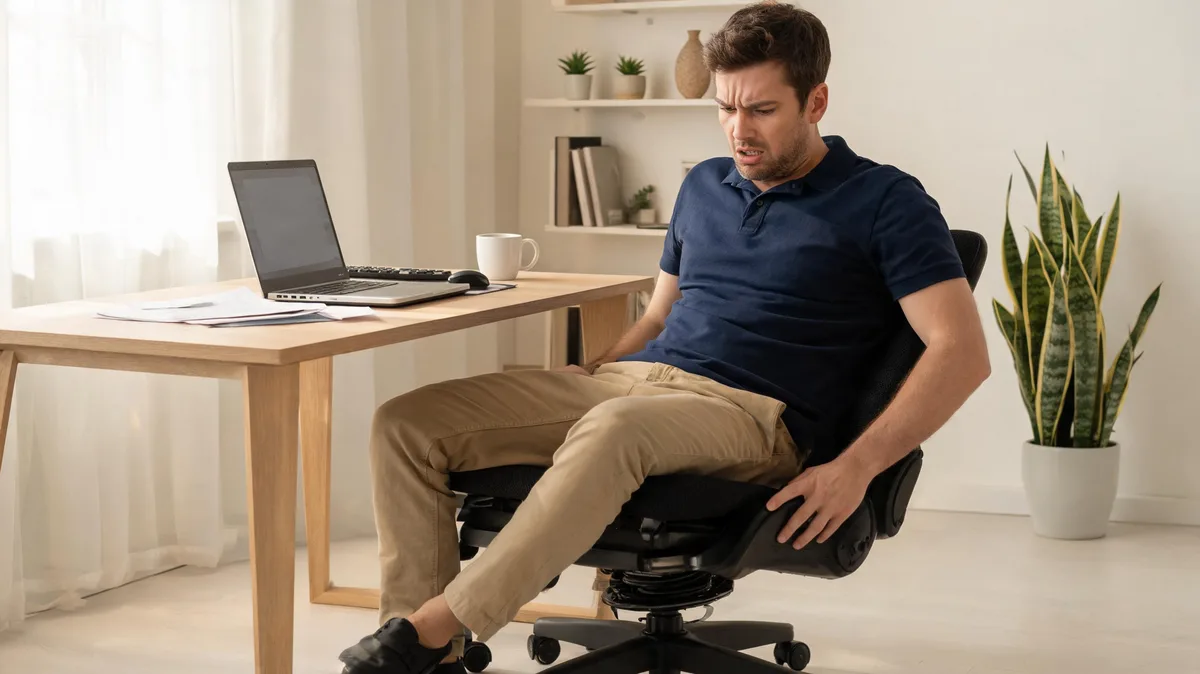
Have you ever had this experience? You are taking key notes during an online meeting, but the chair you sit on slides down silently. In less than two minutes, you are curled up with your legs touching the floor, so you have to awkwardly pause the meeting to readjust the height, only to repeat the whole process again in less than half an hour? This is not an isolated case. After analyzing 118,715 real user reviews covering 12,631 products, we found that 38% of negative office chair reviews are related to lifting adjustment function failures, making it well-deserved as the industry’s “invisible killer”.
An internet industry worker once shared his experience: He spent nearly 1,000 yuan on an office chair with a nice appearance and soft cushion, and was very satisfied when he first received it. Unexpectedly, the problem of automatic height descent occurred after 7 months of use. When he contacted the brand for feedback, he found the 6-month warranty had expired, so he had to find replacement parts on his own. After a lot of trouble, he finally had to use a wooden block under the gas lift to make do — he paid no attention to the reliability of the lifting function when purchasing, and now he regrets it deeply.
What Causes Lifting Adjustment Malfunctions? — In-depth Analysis of Root Causes
The core cause of lifting failure is gas lift pressure leakage. We can break down the root causes from three dimensions: materials science, manufacturing process, and usage & standards:
Materials Science Level: Aging Resistance of Seals is the Core
The lifting of office chairs relies on the sealing of high-pressure nitrogen inside the gas lift, and the aging resistance of seals directly determines the service life of the gas lift. At present, low-end gas lifts generally use ordinary nitrile rubber as the sealing material. This material easily loses elasticity and forms micron-level gaps when exposed to long-term high pressure, repeated friction, and temperature changes (sun exposure in summer / heating baking in winter), just like the slow air leakage of a bicycle tire. As the internal pressure gradually loses, the chair will slide down by itself.
Manufacturing Process Level: Insufficient Precision is the Main Inducement of Pressure Leakage
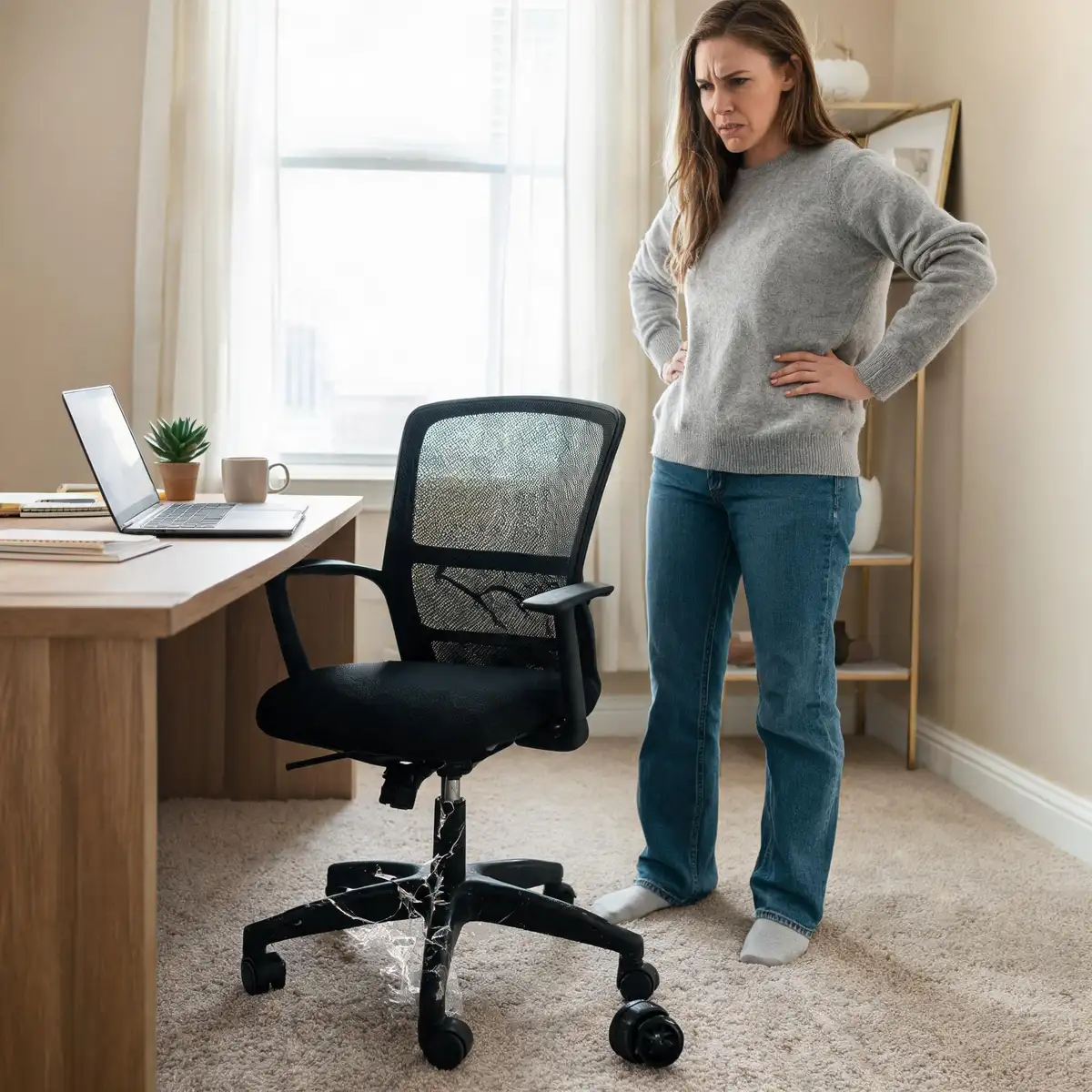
The cylinders of low-cost gas lifts are mostly stamped from thin steel plates, and the inner wall is not finely polished, with burrs invisible to the naked eye. When the piston moves up and down repeatedly, it will scratch the seal continuously, wearing out the sealing layer in less than half a year. Some small factories also have sand holes in the weld seams of the gas lift, which will directly cause pressure leakage. There are even extreme cases where users encountered “the cylinder directly breaking through the base and scratching the wooden floor”.
Usage and Standard Level: High-frequency Scenarios + Implementation Loopholes Amplify Failure Risk
First is the impact of usage scenarios: If it is a public workstation shared by multiple people, or a home office user who is used to alternating between standing and sitting, the chair may be lifted and lowered more than ten times a day, which is much higher than the usage frequency of 2-3 times a week for ordinary household users, and will accelerate component wear. Second is insufficient load-bearing design redundancy: The rated load-bearing of many products is the limit value rather than the long-term safe value. For example, for a product with a rated load of 500 lbs, a user weighing 380 lbs has already reached 76% of the limit value. Under long-term high load, the pressure on the seal is too high, and the service life will be shortened by more than 70%. Finally, the implementation of industry standards is not strict: The gas lifts of some small factories are directly launched on the market without passing the 100,000 lifting cycle test, and will malfunction after only a few thousand uses.
Comparison of Failure Performance of Different Lifting Core Component Materials
We have sorted out the failure performance and applicable scenarios of different configurations according to the material differences of the gas lift cylinder and seals:
| Gas Lift Configuration | Average Mean Time Between Failures (MTBF) | Advantages | Limitations | Applicable Scenarios |
|---|---|---|---|---|
| Ordinary cold-rolled steel cylinder + nitrile rubber seal | 6-12 months | Low cost, corresponding products are affordably priced | Poor aging and friction resistance, low load-bearing redundancy | Light users who lift and lower no more than 2 times a week and whose weight is less than 60% of the rated load-bearing capacity |
| Thickened cold-rolled steel cylinder + hydrogenated nitrile rubber seal | 3-5 years | Wide temperature resistance range, friction resistance is 3 times higher than ordinary nitrile rubber, sufficient load-bearing redundancy | Moderate cost, no obvious shortcomings | Ordinary home and daily office use, many users report that chairs with this configuration “are still smoothly adjustable after two or three years of use” |
| Stainless steel cylinder + fluororubber seal | More than 5 years | Strong corrosion and aging resistance, can withstand high-frequency lifting | Relatively high cost | Users with high-frequency usage needs such as public workstations and industrial scenarios |
How to Avoid Lifting Adjustment Malfunctions? — Purchasing and Usage Guide
Here we have sorted out practical purchasing and usage suggestions for the issues that consumers are most concerned about:
Key Purchasing Indicators
- Prioritize gas lifts that have passed more than 100,000 lifting cycle tests, which is the basic threshold for qualified products;
- Reserve more than 30% load-bearing redundancy: For example, if you weigh 80kg, you should choose a product with a rated load-bearing capacity of at least 104kg, do not purchase products that just meet the rated value for your weight;
- Prioritize integrally stamped metal bases, avoid welded bases or thin plastic bases, to reduce the risk of cylinder breakdown. If your budget allows, you can spend more to choose products with seals made of hydrogenated nitrile or higher-grade materials, and cylinder wall thickness of more than 1.5mm, which will increase durability by more than 3 times.
Daily Use and Maintenance Methods
- Avoid meaningless frequent lifting operations to reduce unnecessary wear of the seals;
- Do not sit down on the chair with force, the instantaneous impact will bring 3-5 times the instantaneous pressure to the gas lift, accelerating seal damage;
- Every six months, you can wipe the exposed piston rod of the gas lift with a clean cloth, and apply a thin layer of silicone grease for lubrication to reduce friction loss.
Frequently Asked Questions
- Why does the chair lower itself shortly after I adjust the height? The core reason is that the gas lift seal is worn or aged, leading to pressure leakage of the internal high-pressure nitrogen, which is the same principle as the slow air leakage of a bicycle tire.
- How long can an office chair gas lift normally last without damage? A compliant configuration of thickened cold-rolled steel + hydrogenated nitrile rubber seal can reach 3-5 years of failure-free service life under normal use, and high-quality stainless steel + fluororubber configuration can reach more than 5 years.
- Can I replace the broken gas lift by myself? Yes, as long as you confirm the size of the original gas lift, purchase a replacement gas lift that meets safety certification, you can complete the replacement by tapping with a hammer, which only costs tens of yuan, and you don’t need to discard the entire chair.
“Pit Avoidance” Lessons from Real Users
We selected 3 most representative user feedbacks from 110,000 reviews to help you avoid the pitfalls that previous users have encountered:
User comment: “Less that 6 months of use and it already failed the shock on it gave out its rated for 500 lbs and I’m 380 now it just sits on the ground use less unless you want cramped legs” Lesson summary: Never purchase products just meeting their rated load-bearing capacity, reserve at least 30% of load-bearing redundancy. The rated load-bearing is the limit value rather than the long-term safe use value, and long-term high-load operation will greatly shorten the service life of the gas lift.
User comment: “The cylinder popped through the base scratching my hardwood floor. Yes, I’m adult size” Lesson summary: The reliability of the lifting system is not only related to the gas lift, the strength of the base is also equally important. Bases made of thin plastic or with welding process have limited load-bearing capacity, and in extreme cases, cylinder breakdown may occur, which will not only damage furniture, but also pose safety risks.
User comment: “Chair will not stay elevated I love the color of this chair but it is not a quality chair. Not long after purchasing, the chair would not stay up. It kept sliding down to the lowest setting on the pole. My husband had to brace it up.” Lesson summary: Do not only focus on superficial attributes such as appearance and seating comfort when purchasing office chairs. As a core function, the material and test certification of the lifting components are the key to determining the long-term use experience. Sacrificing the reliability of core functions for appearance will only lead to more losses than gains in the end.
Related Deep Analysis in This Category
- Difficult Assembly with Mismatched Parts — 15% of complaints relate to this
- Poor Comfort Causes Physical Discomfort — 27% of complaints relate to this
- Poor Structural Durability — 32% of complaints relate to this
🛠️ Practical How-To Guides
Based on the analysis above, we've prepared actionable daily solutions for you:
Don't Keep Using a Malfunctioning Office Chair! 2 Rules to Avoid Safety Risks
Popularize the safety judgment method after lifting failure, teach users to judge whether to repair or replace directly, and avoid the hidden danger of low-quality gas cylinder explosion
Read Full Guide →Office Chair Gas Cylinder Only Lasts 2 Years? 5 Daily Habits Triple Its Service Life
Aiming at the problem of accelerated loss caused by high-frequency lifting, share maintenance tips that ordinary people can do in daily use to delay the aging speed of gas cylinders
Read Full Guide →Office Chair Keeps Sinking? 4 Buying Tips to Pick One With Long-Lasting Height Adjustment
Teach ordinary people to avoid low-quality gas cylinder traps from dimensions such as gas cylinder grade and certification mark, and choose office chairs with stable and failure-free lifting function
Read Full Guide →Office Chair Sinks When You Sit? 3 Steps to Troubleshoot and Fix Lifting Malfunction at Home for Free
For common lifting problems such as gas cylinder pressure relief and adjustment button jamming, teach ordinary people to quickly troubleshoot without professional tools, and master temporary/permanent repair methods
Read Full Guide →