Wrong Sizing & Poor Fixation in Bed Sheets: What 211,408 Reviews Reveal
Inaccurate Sizing and Failed Fastening: The “Hidden Killer” in the Bedsheet Industry
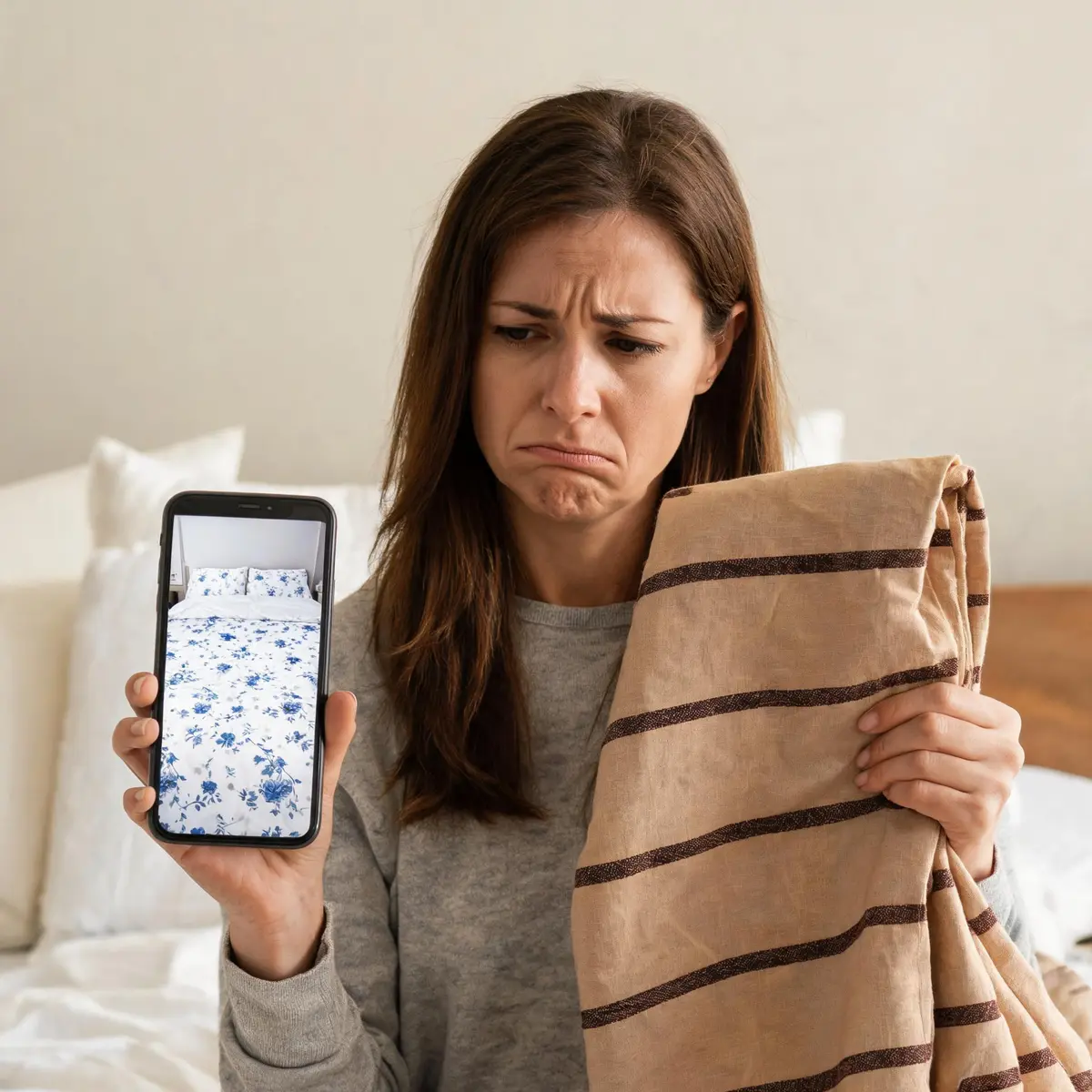
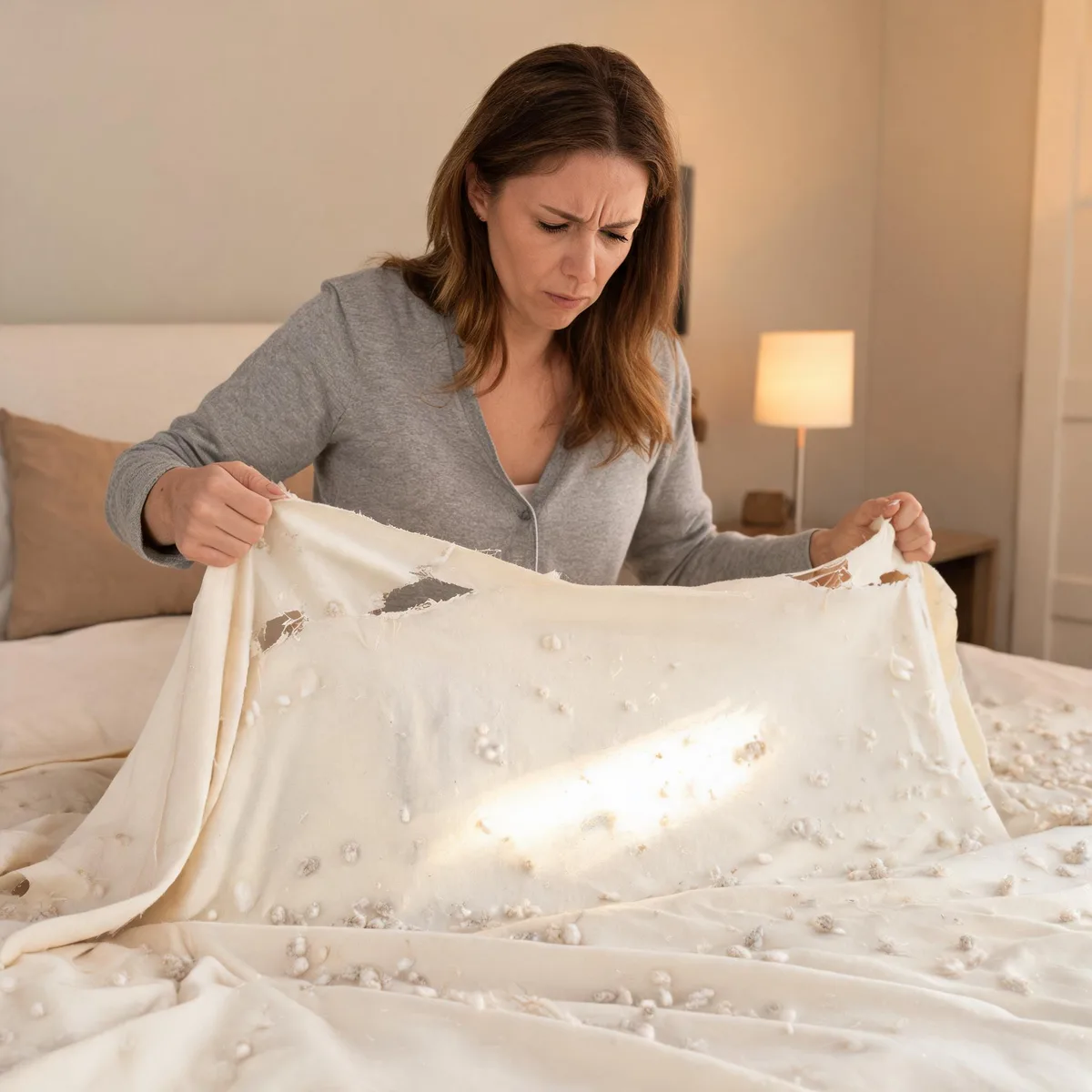
When you wake up and sit up in the morning, you find the fitted sheet has slid down to cover only a third of the mattress, with its four corners hanging limply over the bed edge, and the crumpled fabric digging into your back and causing soreness—this is an annoying scenario many consumers have encountered. After compiling and analyzing 211,408 real user reviews covering 44,818 mainstream products on the market, we found that 36% of negative reviews are related to the problem of “inaccurate sizing and failed fastening”, making it the second most complained-about issue in the bedsheet category, second only to fabric comfort. Many consumers follow a highly similar purchasing trajectory: after getting a new mattress, they specifically pick a popular fitted sheet advertised as compatible. It fits neatly and smoothly when first put on, so they even leave a positive review. But after two or three washes, it starts to slip and shift—either the elastic band becomes completely loose and cannot stay in place, or it shrinks so much after washing that it can no longer fit over the mattress at all. A product costing hundreds of yuan can only be thrown away after less than half a year of use, leaving users regretting not checking the parameters carefully at the time of purchase.
Why Does Inaccurate Sizing and Failed Fastening Happen? An In-depth Breakdown of Root Causes
The core triggers of this problem can be broken down from three dimensions: material science, manufacturing process, and usage habits. It is not as simple as “not putting it on properly”:
Material Science Level: Fatigue Resistance of the Elastic Band Determines Fastening Lifespan
The core fastening component of a fitted sheet is its internal elastic band, whose core performance is the “stretch rebound rate”, comparable to the rubber bands we use daily. Low-quality elastic bands are mostly made of recycled reclaimed rubber, which has an unstable molecular structure. After 30 repeated stretches, the rebound rate drops below 60%, and elasticity is permanently lost. Qualified high-elastic natural rubber elastic bands, by contrast, can maintain a rebound rate of over 90% after 500 stretches, and will not become loose after 2 years of normal use. Many users report that the fitted sheet slips off after a few months of use, which is essentially elastic failure caused by poor-quality elastic band materials.
Manufacturing Process Level: Three Industry Loopholes Directly Cause Size Deviation
First, outdated pattern design: In recent years, the thickness of mainstream mattresses on the market has upgraded from 10-15cm thin mattresses to 25-30cm thick mattresses, but many manufacturers still use patterns from 10 years ago, with a side height of only 18cm. Even if advertised as “suitable for 1.8m beds”, it cannot fit at all when the thick mattress is combined with a bed topper and protective pad. Second, non-standard size labeling: There is currently no mandatory unified size standard in the industry. The “suitable for 1.8m beds” label used by some brands only refers to the width of the mattress, and does not mark the side height parameter at all, making it easy for consumers to buy the wrong product. Third, insufficient edging process: The four corners of the fitted sheet are the positions under the most stress. Low-quality products only have a single line of stitching, which will come loose after a few tugs, directly leading to failed corner fastening. The user feedback that “it tore as soon as I put it on” is due to this reason.
Usage Habits Level: Improper Care Will Accelerate Failure
Many people do not know that the rubber component of elastic bands is sensitive to high temperatures. Washing fitted sheets with hot water above 60°C and high-temperature drying will accelerate rubber aging, shortening the elastic lifespan by more than 60%. Violently tugging at the corners when putting on the fitted sheet will also directly cause the edging to come loose, leading to early fastening failure.
Comparison of “Inaccurate Sizing and Failed Fastening” Performance for Different Materials
Fabric Material Performance Comparison
| Fabric Type | Common Failure Symptoms | Advantages | Stability Performance of Qualified Products |
|---|---|---|---|
| 100% Cotton | Products without pre-shrinking treatment can have a shrinkage rate of up to 5%-8% after washing, which easily leads to reduced size and inability to fit; the fabric is prone to deformation and shifting after overstretching | Skin-friendly and breathable, strong friction makes it not easy to slip | Pre-shrunk 100% cotton fitted sheets have a shrinkage rate of ≤3%, can maintain a smooth pattern after multiple washes and fit the mattress, meeting the standards mentioned in user positive reviews such as “hold up well after washing” and “Fit is great on a tall mattress” |
| Polycotton Blend | Poor fit when the fabric has insufficient elasticity, prone to overall shifting, corners cannot be fastened | Good wrinkle resistance, low shrinkage rate | Polycotton fitted sheets blended with high-elastic fibers have a high fit and are not easy to shift after multiple uses |
| Tencel/Lyocell | Smooth fabric with low friction, prone to corner slipping; drooping deformation after washing leads to insufficient side height | Cool and smooth, good draping effect | Tencel fitted sheets with anti-slip particle treatment on the bottom have stable fastening effect, with minimal size change after multiple washes |
Elastic Band Material Performance Comparison
| Elastic Band Material | Common Failure Symptoms | Reference Normal Service Life |
|---|---|---|
| Recycled Reclaimed Rubber | Rebound rate drops below 60% after 30 stretches, loosening occurs after 1-3 months of use | <3 months |
| Ordinary Synthetic Rubber | Rebound rate is about 80% after 100 stretches, gradually loses elasticity after 3-6 months of use | 3-6 months |
| Natural High-Elastic Rubber | Rebound rate remains above 90% after 500 stretches, elasticity can be maintained for more than 2 years under normal use | ≥2 years |
How to Avoid Inaccurate Sizing and Failed Fastening? Purchase and Usage Guide
Core Indicators to Check When Purchasing
- Prioritize three-dimensional parameters: Do not only look at the vague label of “suitable for X-meter bed”, be sure to check the three specific values of length, width and side height. The side height should be 3-5cm higher than the total thickness of your mattress + bed topper + protective pad, to reserve allowance for shrinkage and fitting;
- Elastic band configuration: Prioritize styles with 360-degree full-wrap elastic, avoid styles with elastic only at the four corners. The elastic band thickness should preferably be ≥1cm;
- Shrinkage rate label: Formal qualified products will be marked with a shrinkage rate of ≤3%, which complies with national textile safety standards;
- Process label: Prioritize styles clearly marked with “double-stitched reinforced corners”.
Process Details Worth Investing In
Fabric pre-shrinking treatment, 360-degree natural high-elastic rubber elastic band, double-stitched reinforced corners, anti-slip particle design on the bottom of the fitted sheet. These processes can greatly reduce the probability of fastening failure.
Correct Usage and Care Methods
- Washing water temperature should not exceed 40°C, use neutral detergent, avoid strong alkaline cleaners that corrode the rubber component of the elastic band;
- Avoid high-temperature drying, as high temperature will accelerate rubber aging and loss of elasticity. It is best to hang to dry naturally;
- Do not tug hard at the corners when putting on the fitted sheet. Fix the four corners first, then pull the four sides flat in turn to reduce stress on the corners;
- Avoid sharp objects hooking the edging of the fitted sheet to prevent stitching from coming loose.
Correction of Common Misconceptions
- Misconception: The thicker the fitted sheet, the better the fastening effect: In fact, the core of the fastening effect depends on the quality of the elastic band and pattern design, and has no direct relationship with the fabric thickness;
- Misconception: Fitted sheets of the same size are universal: The pattern standards of different brands are not unified. Some are designed for thin mattresses with a side height of only 15cm, while some are suitable for thick mattresses with a side height of up to 30cm. You must check the specific parameters;
- Misconception: The fitted sheet slips off because I didn’t put it on properly: If it slips off shortly after being put on every time, it is most likely a problem with the product’s own size deviation or elastic band failure, not a problem with the usage method.
“Pit Avoidance” Lessons from Real Users
-
User Review: “purchased in 2015 for $144.99. For that amount of money, I expected to use these sheets for many years… almost 4 years later, my fitted sheet (failed)” Lesson Summary: High price does not equal high quality. When purchasing, do not only look at the price, focus on core parameters such as elastic band material, edging process, shrinkage rate, etc. Even high-priced products may have early aging and failure problems if these parameters are not marked.
-
User Review: “Tore as I put it on the bed… when we went to zip it up it tore apart. Not happy with it at all. Wasted money.” Lesson Summary: The four corners of the fitted sheet are the main stress points when putting it on. If there is only single-stitch edging, it is very easy to tear and lose stitching when under stress. When purchasing, prioritize styles clearly marked with double-stitched reinforced corners, and avoid violently tugging at the corners when putting it on.
-
User Review: “The pillow cases are extremely narrow - so they are very hard to put on a regular width " Lesson Summary: There is no national unified mandatory standard for the size labeling of bedding products. The “regular size” of different brands may vary greatly. Do not assume that products marked with the same size can be compatible. Before purchasing, be sure to check the specific length, width and side height values to match the size of your mattress at home.
-
User Review: “Have this in gray from a year ago and love the design… so recently ordered it again…in blue gray. Big mistake!” Lesson Summary: Process fluctuations may also occur in different batches of products from the same brand. After receiving a new fitted sheet, it is recommended to test the size fit dry first, and confirm that there is no problem before washing it with water, to avoid finding that the size does not match after washing and being unable to return or exchange it.
Related Deep Analysis in This Category
- False Advertising & Product Mismatch — 28% of complaints relate to this
- Poor Material & Low Durability — 48% of complaints relate to this
- Poor Skin Feel & Bad Usage Experience — 22% of complaints relate to this
🛠️ Practical How-To Guides
Based on the analysis above, we've prepared actionable daily solutions for you:
Fitted Sheet Elastic Getting Loose? 5 Daily Care Habits to Keep It Tight Longer
Protect elastic fibers with gentle washing, proper drying, and careful handling to reduce fitted-sheet looseness.
Read Full Guide →Fitted Sheet Keeps Sliding Off? Try 4 Low-Cost Fixes to Keep It in Place
Use anti-slip pads, clips, corner straps, and proper elastic tension to stop fitted sheets from shifting or coming off.
Read Full Guide →Fitted Sheet Too Small for a Thick Mattress? Measure These 3 Numbers to Pick the Right Size
A simple measuring guide for mattress length, width, and thickness so you can match the right fitted-sheet depth.
Read Full Guide →Why Does a “1.8m” Fitted Sheet Not Fit? How to Read Size Labels and Avoid Brand-Specific Pitfalls
Learn the difference between mattress size, flat size, and pocket depth, and compare brand size charts before buying.
Read Full Guide →