Weak or Incorrect Fragrance in Candle: What 246,924 Reviews Reveal
Inconsistent Scent/No Scent/Harsh Odor: The “Hidden Killer” of the Candle Industry
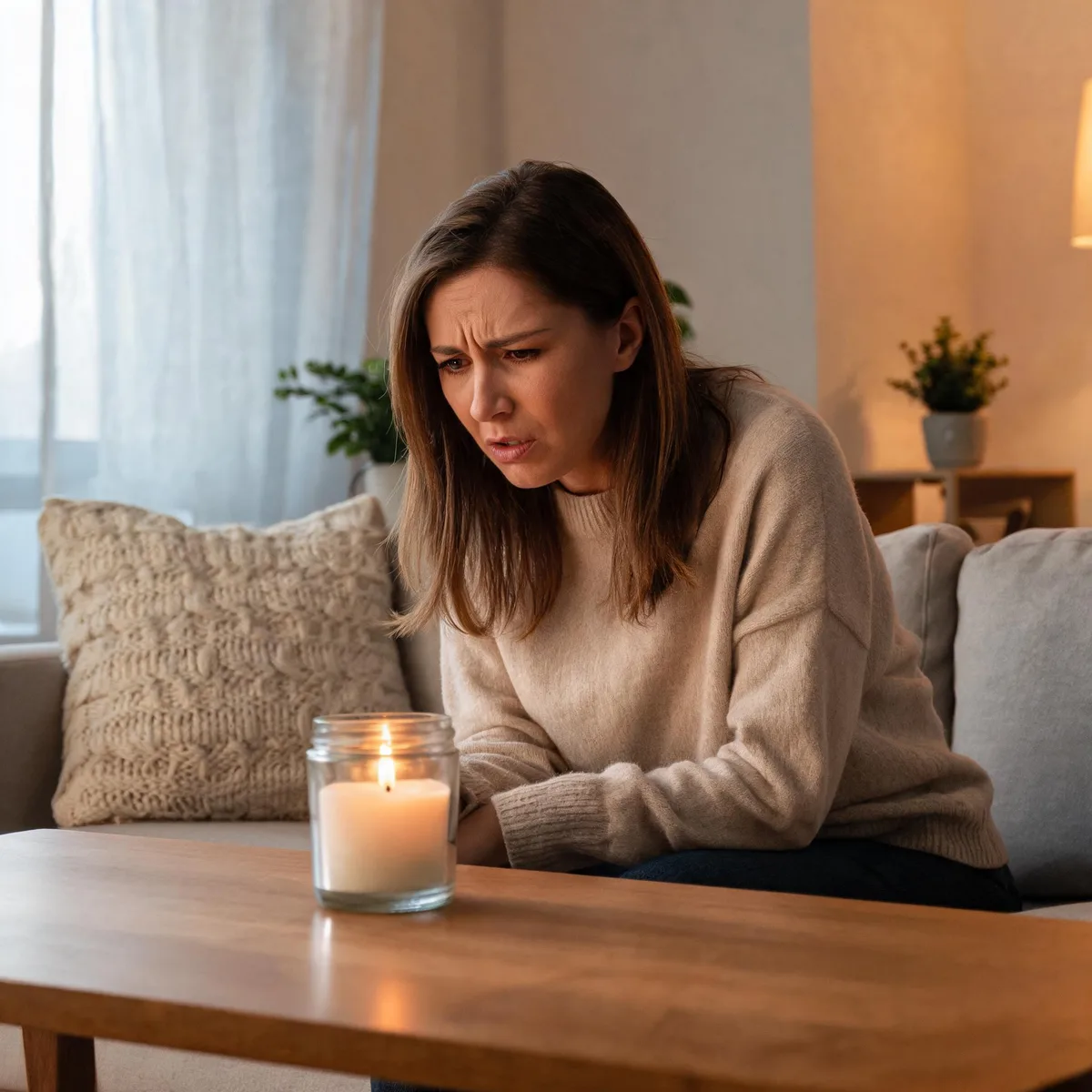
As autumn just sets in, to add some ambiance to your daily space, you spend 3 days browsing reviews and pick a product advertised as “autumn limited caramel cinnamon scent, fills 20 sqm room with fragrance”. You pay dozens of yuan for it, and it does smell sweet when you sniff it unlit after unboxing. But after burning it all afternoon on the weekend, sitting on the couch, you feel nothing but the warmth of the flame, not a hint of cinnamon scent. You only smell a faint wax odor when you lean right up to the candle, and your guest later mentions there is a weird chemical smell floating in your room. Not only is your money wasted, but the expectation you built up for ages is also dashed. This is not an isolated case. After analyzing 246,924 real user reviews covering 42,239 products, we found that: 48% of negative candle reviews are directly related to inconsistent scent/no scent/harsh odor, which is a more common industry pain point than short burn time or damaged packaging. Worse still, the problem usually only reveals itself after the candle is lit, so many consumers miss the after-sales window and can only accept the loss.
Why Do Inconsistent Scent/No Scent/Harsh Odor Issues Occur? In-depth Breakdown of Root Causes
This problem is never as simple as “merchant false advertising”. It involves multiple factors including material science, manufacturing processes, individual differences, etc. We break them down one by one:
Material Level: Raw Material Quality Determines the Lower Limit of Scent Performance
First, the quality and addition amount of fragrance: Compliant scented candles use cosmetic-grade or even food-grade fragrance, which has low impurities and produces no irritating volatiles after burning. Inferior products use industrial-grade fragrance that costs only a few yuan per kilogram, which contains a large amount of unpurified impurities. When lit, it will produce a chemical smell similar to cheap air fresheners, and may even cause headaches. At the same time, the addition amount is also critical: too little added leads to no smell even when unlit, while too much added causes the problem of “strong unlit scent, but fragrance burns out quickly after lighting, no scent in the later burning stage”. Second, the compatibility between wax material and fragrance: This is just like the matching degree of milk tea powder and water. If the two are not soluble, the powder will sink to the bottom of the cup, and the upper part will taste bland. For example, natural beeswax has extremely poor compatibility with synthetic fragrance. No matter how much fragrance is added, it is difficult to release when burning. Inferior paraffin wax has poor compatibility with natural essential oils, which easily causes fragrance to sink to the bottom: only the first few burns have scent, and the wax burned later contains almost no fragrance, so naturally there is no smell.
Process Level: Manufacturing and Burning Processes Determine the Upper Limit of Scent Performance
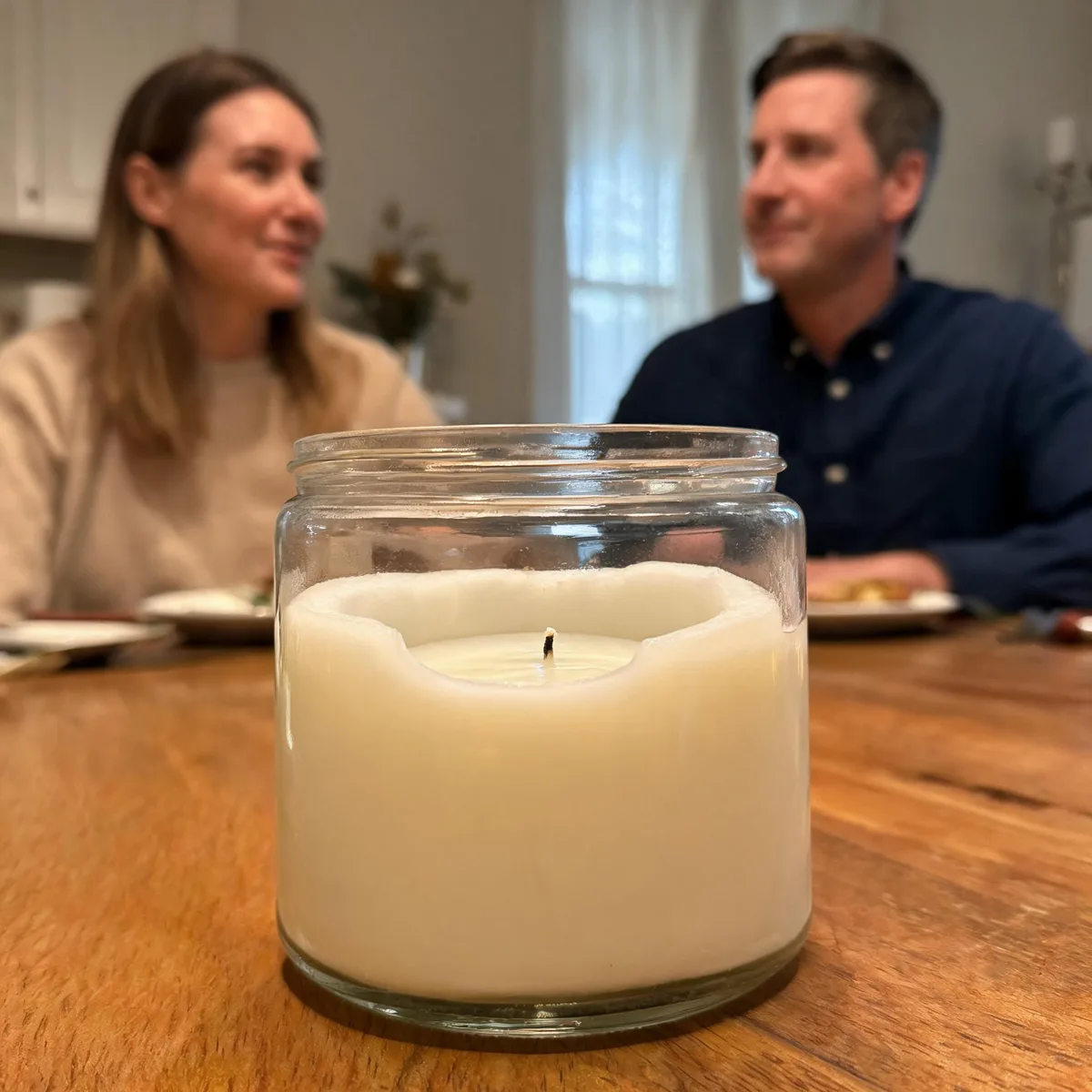
First, defects in the wax pouring process: If the temperature during wax pouring is too high, most of the fragrance will volatilize when poured into the wax liquid, so the finished product will naturally have no scent. If stirring is uneven, fragrance will concentrate at the bottom or surface of the wax block, leading to the problem of “strong scent in the first few burns, getting lighter and lighter as it burns later”. Second, insufficient burning temperature: Fragrance molecules need to reach a specific temperature to volatilize into the air. If the wick is too thin, or the “tunneling effect” occurs during burning (only the wax in the middle melts, the wax on the edge never burns), the heated area of the wax is too small and the temperature is insufficient, so fragrance molecules cannot be released at all, leading to the situation of “can’t smell the scent even after burning for hours”. The user feedback “only a little bit of wax in the middle melted, how can there be any scent” is exactly for this reason. Third, damage from storage environment: Fragrance is a volatile substance. If candles are stored in direct sunlight or high-temperature environments for a long time, fragrance will volatilize in advance. Some users receive candles that have melted and deformed, most of the scent of such products has already been lost, so there will naturally be no scent after lighting.
Cognitive Level: Lack of Standards and Individual Differences Amplify Perception Gaps
On the one hand, there is no unified scent standard in the industry: At present, there is no quantitative scent grading rule in the global scented candle industry. “Light scent” and “strong scent” have no corresponding volatilization indicators, and scent descriptions rely entirely on the merchant’s subjective marketing. The “cedar scent” you imagine is the cool woody scent from the forest, but the merchant may use cheap woody fragrance that smells like old furniture, so you will naturally feel that the scent is inconsistent. On the other hand, there are huge individual differences in consumers’ sense of smell: Studies show that the genetic difference of human olfactory receptors can be as high as 30%. For the same rose scent, some people think it is too strong and pungent, while some people think it is so light that it is almost undetectable. People who smoke for a long time or have allergic rhinitis have 30%-50% lower olfactory sensitivity than ordinary people, so they are more likely to think the candle is “scentless”.
Comparison of “Inconsistent Scent/No Scent/Harsh Odor” Performance of Different Wax Materials
The physical properties of different wax materials vary greatly, and their corresponding scent performance is also significantly different. There is no absolute good or bad, it only depends on whether it matches your needs:
| Wax Type | Scent Performance Advantages | Scent Performance Limitations | Typical User Feedback |
|---|---|---|---|
| Paraffin Wax | Good compatibility with synthetic fragrance, stable scent release, strong diffusion, suitable for use in large spaces | Inferior industrial paraffin wax will release irritating impurities when burning, which is prone to pungent odor problems; poor compatibility with natural essential oils, prone to the situation of smelling fragrant when unlit but no scent after lighting | Positive feedback: “The burning time is very long, and the scent lasts throughout the entire burning cycle” |
| Soy Wax | Natural material with few impurities when burning, almost no pungent odor problems, friendly to sensitive groups | Average compatibility with fragrance, low upper limit of fragrance addition, generally light scent, easy to have no scent problem in large spaces over 20 sqm | Negative feedback: “I paid a lot for natural soy wax, I can only smell the scent when I lean close to it after lighting” |
| Beeswax | Has its own faint natural honey scent, minimal impurities when burning, almost no pungent feeling | Extremely poor compatibility with synthetic fragrance, fragrance is very difficult to release, scent can almost only be smelled within 1 meter. All beeswax candles advertised as “filling the whole room with fragrance” basically have exaggerated promotional claims | Negative feedback: “It was supposed to be a lavender scented beeswax candle, but after lighting there is only the smell of beeswax, no lavender scent at all” |
| Compliant Mixed Wax | Different wax materials are matched in proportion, taking into account both compatibility and safety, even scent release, not prone to pungent or scentless problems | Inferior mixed wax blended by small factories easily has the disadvantages of multiple wax materials at the same time, which is more prone to unstable scent problems | Positive feedback: “The pumpkin scent is very authentic, the scent is still as strong as the beginning after half of it is burned” |
How to Avoid Inconsistent Scent/No Scent/Harsh Odor? Purchase and Usage Guide
Core Reference Indicators When Purchasing
- Prioritize fragrance labeling: If the product is labeled with “cosmetic-grade fragrance” or “food-grade fragrance”, the probability of pungent odor problems is much lower. Products without any fragrance grade labeling should be chosen carefully.
- Choose wax material according to usage scenarios: For small spaces under 10 sqm, families with elderly, children or sensitive groups, prioritize soy wax and beeswax products; For large spaces over 20 sqm, or if you want obvious scent, prioritize compliant paraffin wax or well-formulated mixed wax products.
- Pay attention to wick design: Single thin wick is suitable for spaces under 10 sqm, thick wick or multiple wicks are suitable for larger spaces. Cotton-wood mixed wick has more stable burning temperature, and is less prone to tunneling burning problems.
Process Details Worth Paying a Premium For
Products labeled with “constant temperature wax pouring” and “homogeneous stirring process” have more even distribution of fragrance in the wax liquid, and will not have the problem of strong first then light scent. Products labeled with “scent retention test” have higher accuracy of scent description, and the probability of inconsistent scent is lower.
Correct Usage Methods
- For the first burn, be sure to wait until the wax pool completely covers the entire surface of the container before extinguishing, to avoid forming a memory ring, which will lead to scentless problems caused by tunneling burning later.
- Do not place the candle at the air vent. Wind will not only blow away the scent, but also make the wick burn crookedly, leading to uneven heating of the wax, so fragrance cannot be released normally.
- Unopened candles should be stored in a cool, dark place, and try to use them up within 3 months after opening, to avoid fragrance volatilizing in advance.
Common Misconceptions Correction
- It is not true that the more expensive the candle, the stronger the scent: Natural beeswax and soy wax products are inherently light in scent. Even if the price is very high, they cannot achieve the diffusivity of industrial paraffin wax. Do not buy natural wax products for the demand of “filling the whole room with fragrance”.
- It is not true that the more fragrant the candle smells unlit, the better it is: Many inferior products add excessive amounts of fragrance, which smells very strong when unlit. After lighting, the fragrance burns quickly, not only does it lose scent soon, but also easily produces irritating volatiles.
“Pitfall Avoidance” Lessons from Real Users
We selected 4 most reference-worthy lessons from tens of thousands of negative reviews to help you avoid the pitfalls others have stepped in:
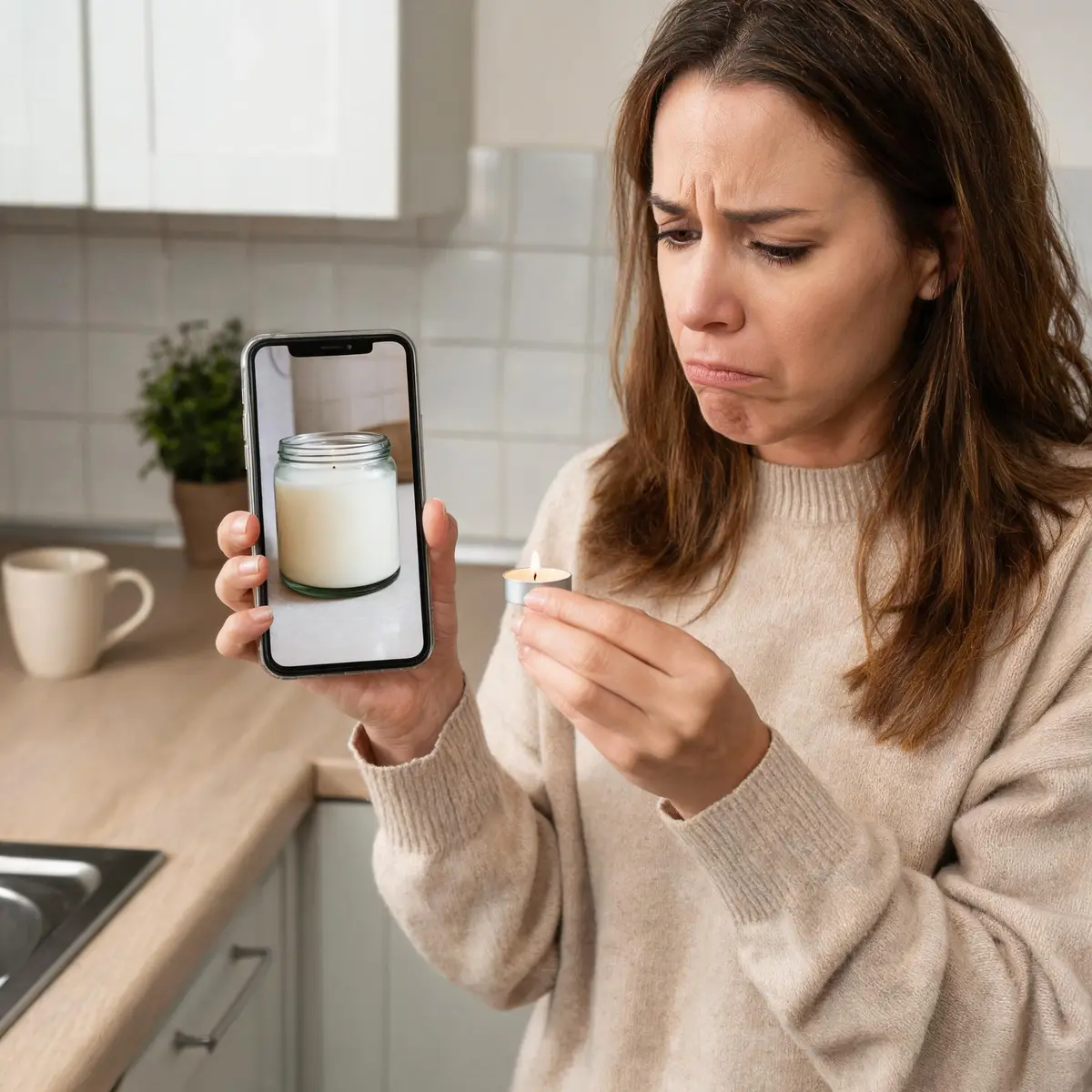
User feedback: “It smelled amazing when I received it, literally heavenly scent, but after lighting it there was no scent at all, even when I leaned right up to smell it I couldn’t get anything” Lesson summary: Don’t judge the scent performance of a candle only by the unlit smell when you receive it. A good unlit smell only means the fragrance addition amount is enough, but does not mean it can be released normally after burning. Try to choose products that support return if you are not satisfied after trial burning.
User feedback: “It doesn’t smell like the advertised campfire scent at all, I can’t even smell it when I’m less than 60cm away from it, total waste of money” Lesson summary: Scent description is very subjective. Don’t pay too high a premium for so-called “limited scents” or “niche scents”. If you have high requirements for scent matching, prioritize products with clear scent notes (clear labeling of top, middle and base notes).
User feedback: “After lighting, it doesn’t smell like the advertised star magnolia scent at all, but like a terrible cheap air freshener, it gives me a headache” Lesson summary: If you smell an obvious chemical pungent smell after lighting, extinguish it immediately. It is most likely that industrial-grade inferior fragrance is used, and long-term inhalation will irritate the respiratory tract. Do not continue to use it because you are reluctant to waste money.
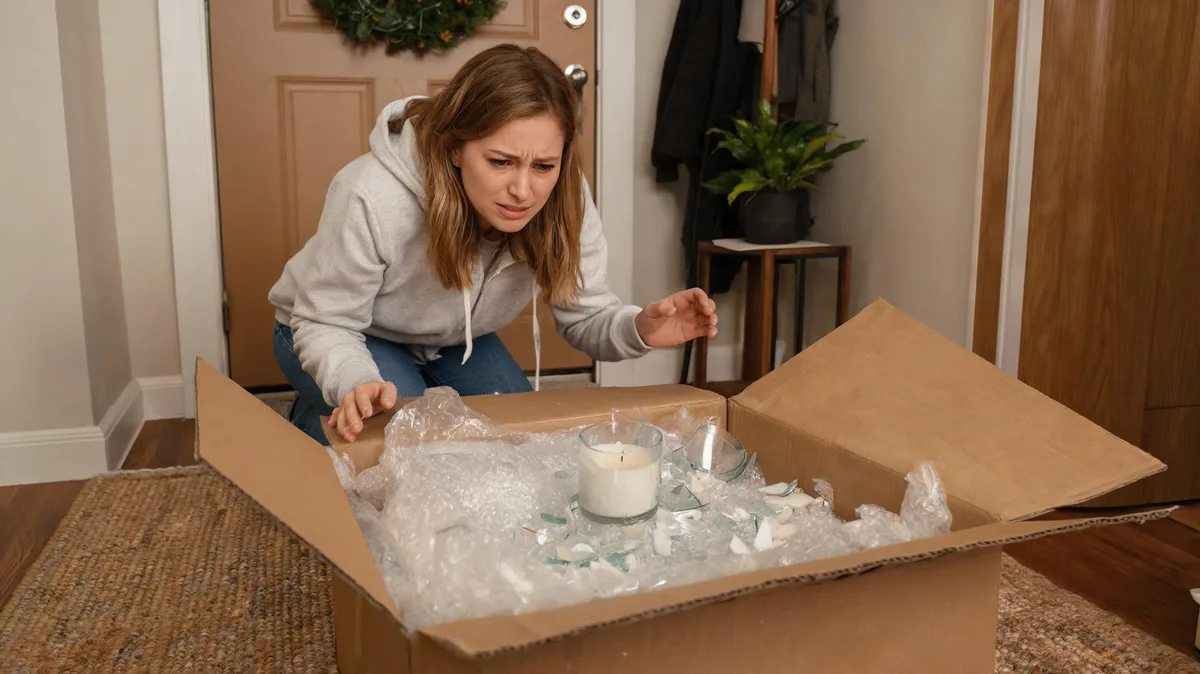
User feedback: “The candle was already melted and deformed when I received it, the scent was very weak after lighting, totally not worth the price” Lesson summary: You can directly apply for after-sales service if you receive a melted or deformed candle. Candles that have been melted at high temperature have already had part of their fragrance volatilized in advance, and the structure of the wax is damaged, so the subsequent scent performance will definitely be affected.
Related Deep Analysis in This Category
- Damaged Upon Delivery — 16% of complaints relate to this
- Not As Described / Low Value For Money — 8% of complaints relate to this
- Poor Burning Performance — 28% of complaints relate to this
🛠️ Practical How-To Guides
Based on the analysis above, we've prepared actionable daily solutions for you:
Candle Smells Weak? Master These 3 Awakening Tips to Fill Your Room with Scent!
Learn how to trim wicks, manage the first burn, and avoid drafts to completely solve weak scent throw issues.
Read Full Guide →Getting Headaches from Scented Candles? Save This Space Matching and Scent Control Guide!
Provides candle size recommendations for different room sizes and shares practical tips on burn time and proper extinguishing to prevent headaches.
Read Full Guide →Say No to Cheap Chemical Smells! Check These 3 Things to Easily Pick Premium Botanical Candles
From ingredient lists and wax types to testing methods, this guide helps you avoid cheap fragrances and buy premium candles.
Read Full Guide →