Misleading Advertising & Item Not as Described in Holiday Decor: What 145,176 Reviews Reveal
Misleading Advertising and Mismatched Products: The “Invisible Killer” in the Christmas Decoration Industry
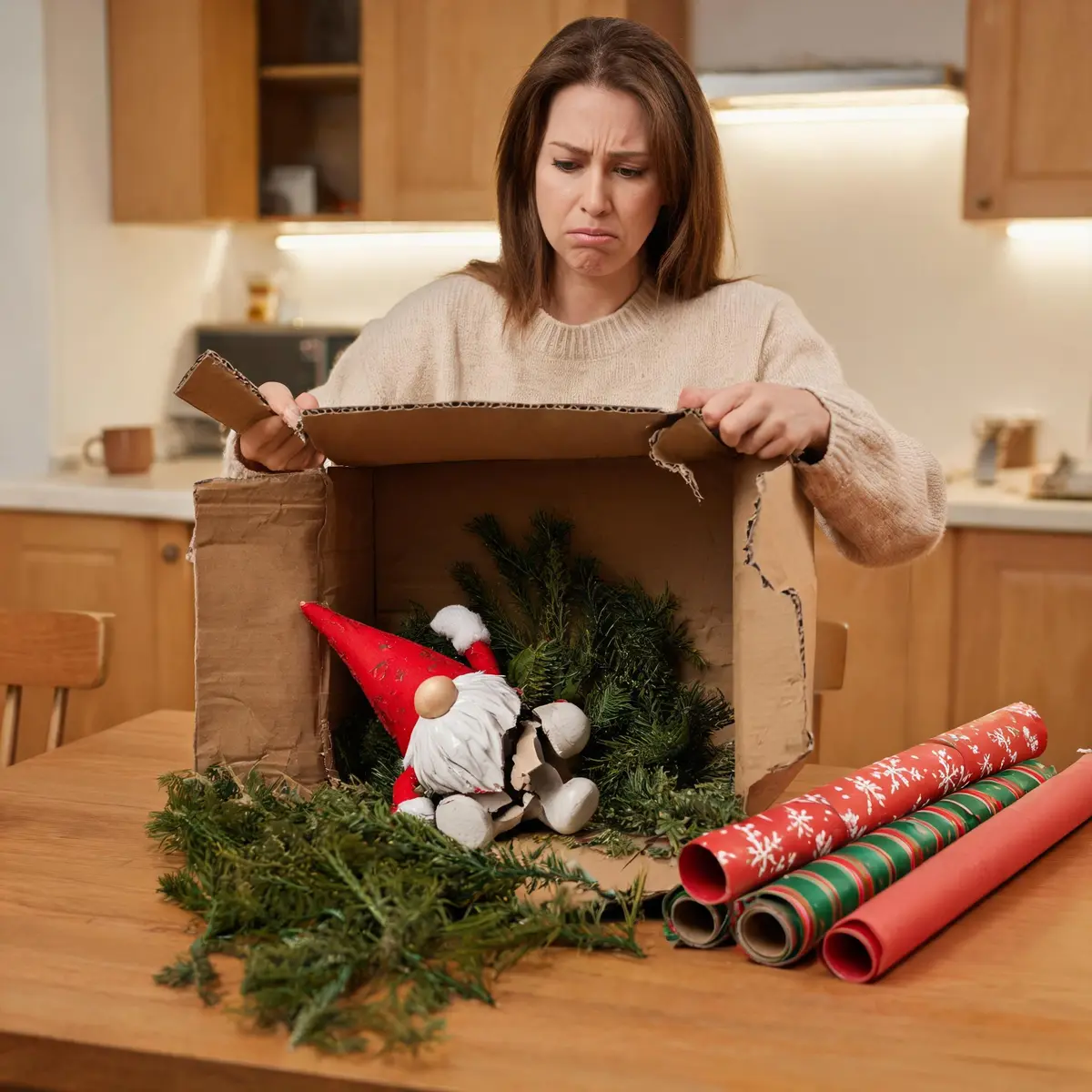
As Christmas approaches, every snow-dusted, warm-glowing Christmas decoration cover image you scroll past may hide a consumer who ends up bitterly disappointed after receiving their order. After analyzing 145,176 real user reviews covering 31,976 Christmas decoration products, we found that 36% of negative reviews point to “misleading advertising and product mismatch”, making this issue the most common “invisible killer” in Christmas decoration consumption. Ms. Chen, a resident of Shanghai, browsed an e-commerce platform to pick out Christmas decorations two weeks in advance. The cover image showed a cream-colored flocked tree skirt embroidered with a chubby Santa Claus and covered with glittering golden snowflakes, so she immediately added it to her combined order and checked out. When she unboxed it to decorate on Christmas Eve, she found the tree skirt was made of thin, translucent non-woven fabric, the snowflakes stuck to the surface fell off at the slightest touch, and there were several patches of dry, hard hot glue marks. When she tried to return or exchange it, she found that local same-city delivery services were already overloaded, and pickup could only be arranged after the holiday at the earliest. Her carefully planned Christmas decorating had to be settled for a makeshift arrangement, and the tree skirt ended up being thrown in the trash after only one use. Scenarios like this appear countless times in consumer feedback every Christmas season.
Why Do Misleading Advertising and Product Mismatches Happen? In-depth Breakdown of Root Causes
We conducted an in-depth analysis from three dimensions: material characteristics, manufacturing logic, and industry ecology, and found that this problem is an inevitable result of the superimposition of multiple factors:
Information Gap on the Material End
Many merchants advertise “high-density flocking” and “wear-resistant, durable fabric”, but actually use recycled polypropylene non-woven fabric with a gram weight of less than 50g, which costs only 1/6 of qualified flocked fabric, feels hard, breaks easily, and sheds lint easily. The advertised “PE simulated pine branches” are actually made of recycled PVC with a large amount of filler, which is brittle, easy to break, and will crack and shed debris at low temperatures, completely inconsistent with the advertised “flexible and no shedding”. Ordinary consumers can hardly distinguish material differences from retouched cover images, and are easily misled by vague promotional wording.
Peak Season Compromises on the Manufacturing End
The production peak season for Christmas decorations is only September to November every year, and factory order volumes are 8 to 10 times that of the off-season. Many manufacturers simplify processes to cut costs: for example, sticking decorative accessories originally requires 30 seconds of cold pressing to ensure firmness, but during peak season, products pass inspection with just a dot of hot glue, leading to an overflowing glue and missing accessory rate of over 40%. Printed decorations originally use thermal transfer technology to ensure accurate color and no fading, but during peak season, this is replaced with inkjet printing which costs only 1/3, leading to severe color deviation. The “burgundy beads turned purple” mentioned in user negative reviews is a typical example of process swapping.
Short-term Arbitrage Logic in the Industry
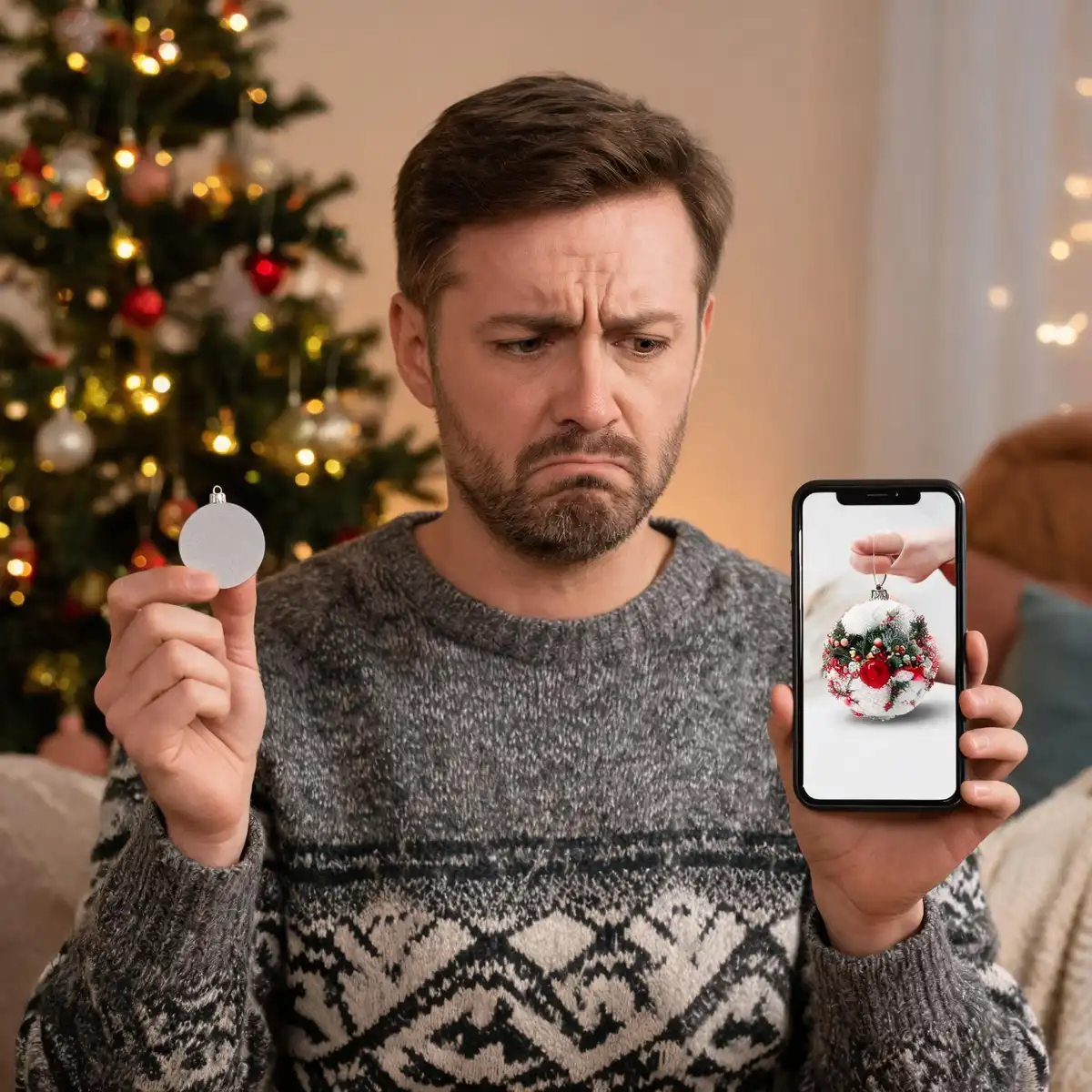
First, e-commerce advertising compliance is insufficient. Many merchants deliberately use professionally lit sample photos or even stolen images, and falsely report dimensions: for example, a 1.5m Christmas tree is marked as 1.8m, counting the wire on the tree tip and the height of the base in the total measurement. Second, consumers tend to make impulsive holiday purchases: many people place orders just because the cover image looks good when combining orders, and never scroll through the detail page to read the small-print disclaimers, such as “Image is for scene display, accessories need to be purchased separately”. Third, the violation cost for seasonal products is extremely low: the sales cycle for Christmas decorations is only 1 to 2 months, merchants do not need to pursue repeat purchases, even if the negative review rate is high, they just take the link down after selling out this batch, and relaunch under a new link next year. Fourth, industry standardization is lacking: there is currently no mandatory requirement for Christmas decorations to be marked with “net dimensions”, “material composition proportion”, and “accessory list”, so merchants can mark information arbitrarily. Fifth, merchants deliberately inflate expectations: small hanging ornaments are shot close-up to look large, but are actually only the size of a fingernail, leaving consumers with a huge gap after receiving the goods.
Comparison of “Misleading Advertising and Product Mismatch” Performance by Different Materials
The performance of product mismatch varies greatly for Christmas decorations made of different materials. We have compiled a comparison of the three most common material types:
| Material Category | Common Misleading Advertising Points | Actual Performance of High-Quality Products | Reference Real Positive User Reviews |
|---|---|---|---|
| Fabric category (tree skirts, Christmas stockings, hanging flags, etc.) | Advertised as “thickened flocking”, “wear-resistant and durable”, but actually thin non-woven fabric, easy to tear, glue overflow, accessories easily fall off | High fabric gram weight, soft hand feel, neat stitching, firmly attached accessories, accurate color without obvious deviation | “Great Quality & Super Cute Garden Flag…Very vibrant colors!” |
| Simulated greenery category (Christmas trees, pine branch wreaths, etc.) | Advertised as “PE simulated pine branches”, “no debris shedding”, “includes lights and accessories”, but actually brittle PVC material, easy to break and shed debris, missing accessories such as light strings, berries, etc. | Flexible branches that can be shaped freely, no debris shedding, complete accessories consistent with the detail page markings | “The pictures don’t do it justice…turned our living room into a winter wonderland.” |
| Decorative accessories category (bead strings, hanging ornaments, lighting, etc.) | Advertised as “metallic texture”, “true red/burgundy”, but actually cheap plastic, severe color deviation, light and flimsy texture | Color consistent with advertising without obvious deviation, heavy texture, fine details without burrs | “Adorable! I have a decade ornament for every year since the 90s! This one is adorable!” |
How to Avoid Misleading Advertising and Product Mismatches? Shopping and Usage Guide
Core Information to Check When Shopping
- Skip the cover image and check the parameter area directly: Don’t be misled by atmospheric cover images, prioritize products that clearly mark “net dimensions” (excluding additional parts such as base, tree tip, packaging, etc.), “material composition proportion” (e.g. “100% polyester flocking” instead of “high-grade velvet”), and “complete accessory list” (e.g. “includes 10m warm white light string + 20 simulated red berries” instead of “with decorations”).
- Pay attention to disclaimers: If there is small print at the bottom of the detail page such as “Images are for reference only, accessories are random”, “Color deviation between batches is normal”, “Dimension error within 10cm is within normal range”, purchase with caution.
- Prioritize follow-up reviews and negative reviews with images: Many default positive reviews are automatic reviews for combined orders, follow-up reviews are real feedback from consumers when they receive the product and are ready to decorate, and negative reviews with images can directly expose the most common problems of the product, which has much higher reference value than positive reviews.
Craft Details Worth Paying Attention To
- Fabric category: Prioritize checking detail photos posted by buyers, products without obvious glue overflow, neat stitching, and non-reflective, non-transparent fabric have more qualified craftsmanship.
- Simulated greenery category: Check if buyers have posted photos of bending pine branches, products that can be bent freely without breaking or shedding debris have more qualified material.
- Accessories category: Check color comparison photos taken by buyers, products without obvious color deviation that feel heavy in hand are of better quality.
Receipt and Usage Precautions
- Unbox and inspect in advance: Don’t wait until the day before Christmas to unbox, it is recommended to unbox and count accessories within 24 hours of receiving the product, check for missing parts, glue overflow, scratches, and color deviation, contact the merchant immediately if there are any problems to avoid being unable to return or exchange due to overloaded delivery services.
- Reinforce vulnerable parts in advance: For decorations with glued accessories, you can reinforce them with a small amount of hot glue in advance to avoid falling off during decoration and affecting use.
Common Misconception Correction
- Misconception 1: The more expensive the product, the less likely it is to be mismatched. Many seasonal products have a premium of up to 300%, products from the same production line can be sold for 2-3 times more expensive just with a changed cover image, price is not the core standard for judging whether a product matches the advertisement.
- Misconception 2: All elements in the cover image are included. The cover images of most merchants are scene display images, the carpets, lighting, and other decorations in them are props and are not included in the sales price, be sure to check the accessory list.
“Pit Avoidance” Lessons from Real Users
Negative review original text: “pine garland I did NOT receive what was photographed. I got a very awful looking garland with a few broken, brittle pine cones and NO lights, NO red berries - just a super sad garland.” 「Lesson Summary」: Be sure to check the accessory list on the detail page before purchasing. Any product that does not clearly list the included accessories will most likely have the problem of “advertised but not actually included”, do not assume that all elements in the cover image are included in the sales price.
Negative review original text: “They look like mardi gras beads Big disappointment on this item. The beads are not copper and burgundy. They are more more purple than burgundy.” 「Lesson Summary」: For products with high color requirements, don’t just look at the color-adjusted cover images of merchants, be sure to scroll through real photos posted by buyers. At the same time, if the detail page marks “color deviation between batches is normal”, purchase with caution.
Negative review original text: “Cute design, but many flaws…The hot glue gun job is terrible. There are many spots of hot glue just randomly dried into the skirt. The snowflakes and the little faces are not glued on well. They are loose and falling off.” 「Lesson Summary」: For fabric decorations with glued accessories, be sure to check the detail photos posted by buyers. Products rushed during peak season will most likely have problems of glue overflow and loosely attached accessories. You can reinforce them yourself in advance after receiving the goods to avoid falling off during decoration.
Negative review original text: “Unhappy Purchase Item missing parts and arrived dented” 「Lesson Summary」: Christmas decorations are fragile products, and the probability of violent express delivery is high. It is recommended to take an unboxing video as evidence when receiving the goods. If there are missing parts or damage, you can directly contact the merchant for compensation. Don’t wait until you start decorating to find out, as you will be unable to provide proof.
Negative review original text: “Horrible!!! Very cheaply made. Poor quality. Was falling apart when received. One could never give this as a gift.” 「Lesson Summary」: If you are buying a product as a gift, be sure to receive and inspect it at least one week in advance to avoid receiving defective products and having no time to exchange them, which will affect your gifting arrangement.
Related Deep Analysis in This Category
- Poor User Experience & Functional Failure — 18% of complaints relate to this
- Poor Packaging & Shipping Leading to Damaged Items — 21% of complaints relate to this
- Poor Workmanship & Low Build Quality — 48% of complaints relate to this