Poor Workmanship & Low Build Quality in Holiday Decor: What 145,176 Reviews Reveal
Poor Workmanship and Low Quality: The “Hidden Killer” in the Christmas Decoration Industry
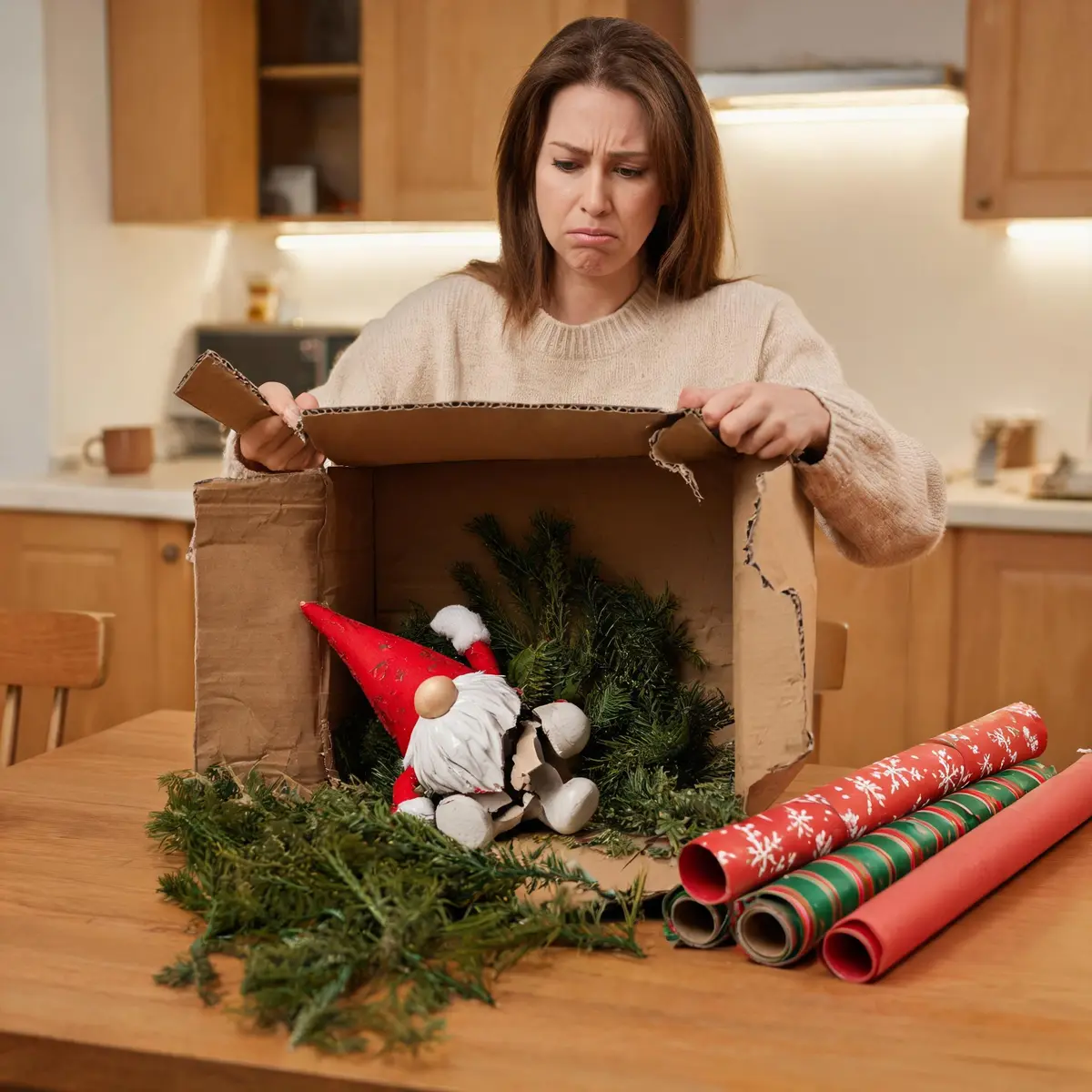
Every year, shopping for Christmas decorations during the festive season is originally meant to create a sense of holiday ritual, but it ends up becoming a source of frustration for many consumers. In collaboration with a consumer research platform, we analyzed 145,176 real user reviews covering 31,976 Christmas decoration products, and found that 48% of negative reviews point to the core issue of “poor workmanship and low quality” – 27 percentage points higher than the second-ranked problem “product not matching the description”. Ms. Lin, a resident of Hangzhou, encountered this problem last week: she placed a combined order for a 129-yuan Christmas tree set half a month in advance, planning to decorate it with her son who just started kindergarten on Christmas Eve. But when she unboxed the package, she found several pieces of solidified hot melt glue stuck to the tree skirt, the small snowman accessories on the hanging ornaments fell off at the slightest touch, and the simulated pine needles shed crumbs as soon as they were pulled. After struggling for two hours without achieving the desired effect, she finally threw most of the bag of decorations directly into the trash, rushed to a nearby stationery store temporarily to buy a basic set at twice the price as an emergency replacement, and the originally planned parent-child activity also lost all its fun.
Why Is Workmanship Poor and Quality Low? In-depth Dissection of Root Causes
We analyze the core causes of this problem from three dimensions: material science, production technology, and industry characteristics:
Extreme Compression of Material Costs
From the perspective of material properties, the root cause of problems with most low-quality Christmas decorations lies in raw material cost control. To fight price wars, many manufacturers use recycled plastic, which costs 30%-50% less than new materials, to make hanging ornaments and simulated pine branches. The molecular chains of this type of material have been degraded multiple times, so they have high brittleness and extremely poor bending resistance, and will break with slight force. Fabric products such as tree skirts and Christmas stockings are mostly made of thin non-woven fabric below 100D, with a gram weight of less than 80g/㎡, which feels similar to free supermarket shopping bags and tears easily. Adhesives are mostly low-quality industrial glue, which is only 1/5 the price of food-grade hot melt glue, with a temperature resistance range of only 0-40℃. It will lose viscosity when placed outdoors at low temperatures in winter, and melt and overflow when placed next to a warm air outlet in summer, which is the core reason why many users report “parts are not firmly glued and fall off everywhere”.
Lack of Production Process and Quality Control
Christmas decorations are labor-intensive products, and more than 80% of assembly processes need to be completed manually. Many small and medium-sized factories do not set up full-process quality control links: no tensile test is conducted on glued hanging ornaments, no skipped stitch inspection is done on sewn fabric products, and spray-painted accessories are packed before they are completely dry. This directly leads to widespread problems such as glue overflow, uneven sewing, uneven spray painting, and color difference, just as one user mentioned in a negative review: “The hot melt glue workmanship is extremely poor, there are solidified glue spots all over the tree skirt, the snowflakes and decorative faces are glued very loosely and fall off at the slightest touch.”
Overall Absence of Industry Standards
As a seasonal fast-moving consumer product, there are currently no mandatory national standards for durability and safety for Christmas decorations. Most manufacturers default to a product service life of only 1-2 uses, and do not carry out optimizations such as anti-aging, weather resistance, and sharp edge grinding at all. Some low-quality products even retain unvolatilized VOC substances, have a pungent odor, and have unpolished edges that are easy to scratch hands, posing clear safety hazards.
Comparison of “Poor Workmanship and Low Quality” Performance of Different Materials
We classify by common materials and sort out the differences in quality problems of different categories:
Fabric Category (Tree Skirts, Christmas Stockings, Decorative Flags)
- Poor performance: Mostly thin non-woven fabric, with a gram weight of less than 100g/㎡, tears easily, skipped stitching, frayed edges, often residual glue overflow on the surface, severe color fading after one wash
- Qualified performance: Mostly felt, canvas or thick polyester cloth of 200g/㎡ and above, neat stitching with locked edges, no glue overflow, uniform and firm color, just as mentioned in positive reviews: “The quality is very good, the color is very bright, it can be used from Christmas to Valentine’s Day without problems”
Plastic/Resin Category (Pendants, Ornaments, Decorative Beads)
- Poor performance: Mostly recycled plastic, thin wall and fragile, uneven spray painting, extremely large color difference, sharp unpolished edges, as one user complained: “The wine red beads I bought are actually purple, completely different from the picture, like cheap beads used for carnivals”
- Qualified performance: Mostly new ABS or resin material, uniform wall thickness, will not break after falling 2-3 times, uniform color without color difference, polished smooth edges without burrs
Simulated Plant Category (Christmas Trees, Pine Branch Wreaths, Rattan)
- Poor performance: Mostly recycled PVC pine needles, brittle and easy to break, pinecones are mostly broken defective products, no color fixation treatment, serious crumb and powder shedding, missing accessories, one user received a wreath that “only has a few broken pinecones, no lights and no red berries, the packaging bag looks like it was picked up from the trash can”
- Qualified performance: Mostly PE or new PVC pine needles, will not break after being bent more than 10 times, complete pinecones, treated with color fixation, no random crumb shedding, accessories consistent with the description
Decorative Accessories Category (Glitter, Sequins, Small Parts)
- Poor performance: Glitter is not laminated, comes off on hands at the slightest touch, small parts are not firmly bonded and fall off easily
- Qualified performance: Glitter is fixed with lamination, will not scatter everywhere, small parts are firmly bonded and will not fall off under normal touch
How to Avoid Poor Workmanship and Low Quality? Purchase and Use Guide
Key Judgment Points for Purchase
- Check material labels: Prioritize products with clearly marked materials. Fabric products with a gram weight ≥ 200g/㎡ are more durable, plastic products marked “new material” have lower brittleness, and products for outdoor use should preferably be marked “weather resistant, waterproof”
- Check real user feedback: Do not only look at the merchant’s retouched main images, focus on checking image-attached negative reviews and follow-up reviews, paying special attention to whether anyone mentions problems such as glue overflow, falling parts, color fading, and product not matching the description
- Check safety tips: Avoid buying products explicitly mentioned to have “pungent odor”, for products with small parts, prioritize models marked “edge polished” to reduce scratch risk
Process Details Worth Extra Investment
If you plan to use the product for more than 2 years, you can prioritize these processes: fabric products with edge locking process, plastic products with edge polishing, glitter products with laminated color fixation, and sealed edges at bonding points. These details can increase the service life of the product by 3-5 times
Correct Use and Maintenance Suggestions
- For decorations used outdoors, you can apply an extra layer of waterproof glue to the bonding points before installation to avoid degumming due to rain, wipe off moisture before storage after use
- Do not press simulated plants and fabric decorations heavily during storage to avoid deformation or glue separation
- Decorations with small parts should not be touched by children under 3 years old alone to avoid accidental ingestion
Common Misconception Correction
- Misconception 1: “I only use it once anyway, just buy the cheapest one”: Data shows that products priced 30% lower than the industry average have a 72% probability of poor workmanship, many products break as soon as they are unboxed, which is a waste of money instead
- Misconception 2: “I can buy it if the main image looks good”: The reference value of retouched main images of Christmas decorations is extremely low. Problems such as color difference, missing accessories, and poor process are mostly not shown in the main image, so be sure to check real feedback from users
“Pit Avoidance” Lessons from Real Users
- User negative review: “The design is very cute, but there are many flaws. The hot melt glue workmanship of the tree skirt is extremely poor, there are many random solidified glue spots on it, the snowflakes and small decorations are glued very loosely, and they fall off at the slightest touch” Lesson summary: Do not be attracted only by the design, process problems are the high-incidence area. Be sure to check real photos in negative reviews before buying, and focus on whether there is feedback on glue overflow and loose parts
- User negative review: “The pine branch wreath I received is completely different from the picture, only a few broken, brittle pinecones, no lights and no red berries, the packaging bag looks like it was taken out of the trash can” Lesson summary: The problem of product not matching the description for simulated plant decorations is very common. Prioritize models with a clear accessory list and complete product displays from real user photos
- User negative review: “The quality is very poor, it fell apart when I received it, it can’t be given as a gift at all, so I had to throw it in the trash can” Lesson summary: If you buy it as a gift, do not choose ultra-low-priced products without any material or process labels. The probability of it being broken upon receipt is extremely high, which will cause embarrassment instead
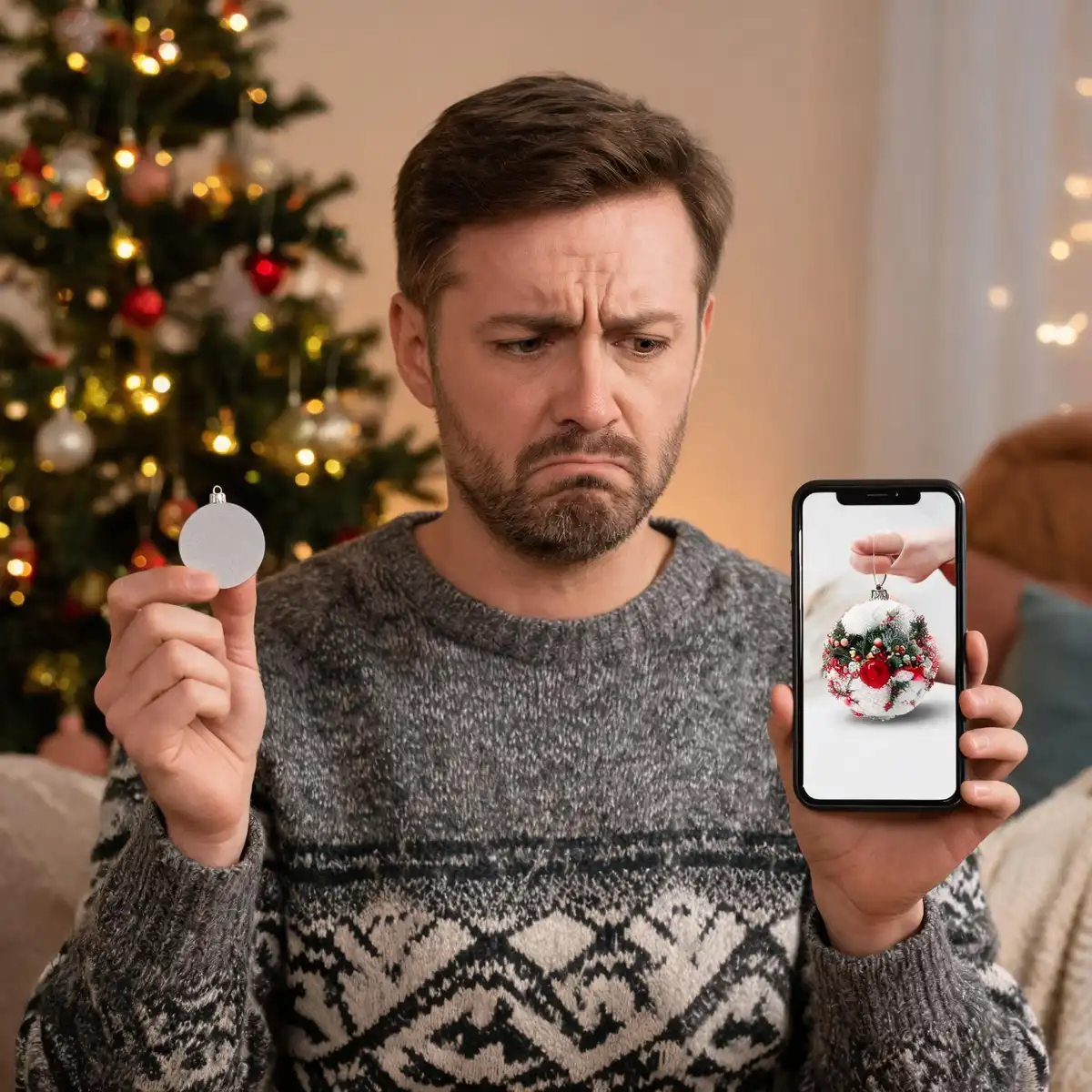
- User negative review: “The wine red beads I bought are actually purple, the dark color is completely different from the picture, you can buy it if you want a purple Christmas” Lesson summary: The color difference problem of colored decorations is extremely common. Do not trust the filtered main images of merchants too much, prioritize viewing real user photos taken under natural light to judge the color
- User negative review: “Parts were missing when I received it, and there were dents, very dissatisfied” Lesson summary: Christmas decorations are fragile products. Be sure to confirm before buying whether the merchant provides reissue services for damaged or missing parts, to avoid being unable to defend your rights after receiving defective products
Related Deep Analysis in This Category
- Poor User Experience & Functional Failure — 18% of complaints relate to this
- Misleading Advertising & Item Not as Described — 36% of complaints relate to this
- Poor Packaging & Shipping Leading to Damaged Items — 21% of complaints relate to this