Complicated Operation and Poor Cooking Performance in Pressure Cooker: What 56,140 Reviews Reveal
Complicated Operation and Poor Cooking Performance: The “Hidden Killers” in the Pressure Cooker Industry
Many consumers choose pressure cookers with the original intention of saving cooking time and getting tender, flavorful cooking results, but reality often falls short of expectations: high-priced products either have such complicated operation logic that users cannot understand the manual, or produce meat too tough to bite and porridge that burns to the bottom every time, ending up left in storage to collect dust. After analyzing 56,140 real user reviews covering 2,856 products, we found that 22% of negative reviews point to the two interrelated problems of “complicated operation and poor cooking performance”, making them the second leading cause of negative reviews after quality failures.
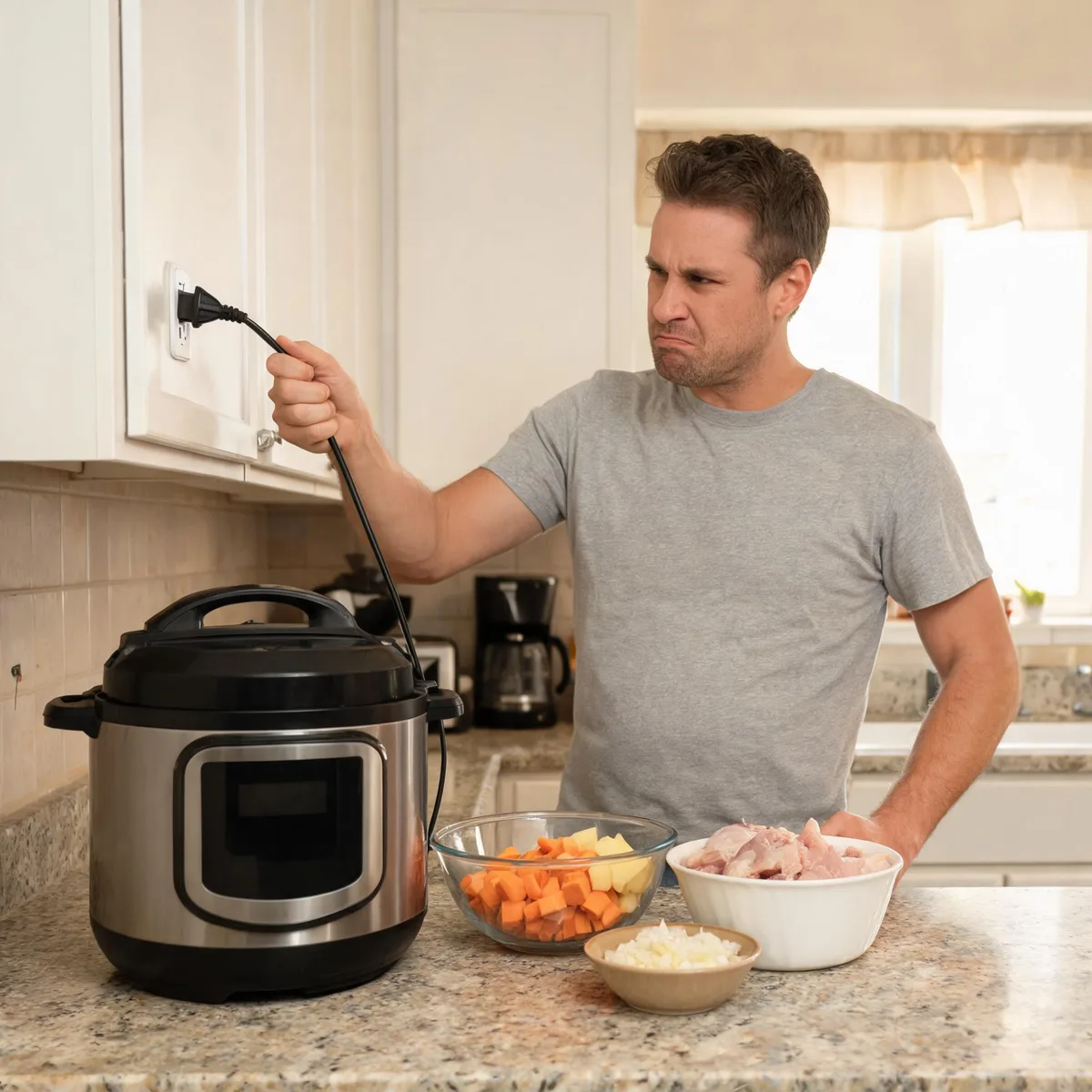
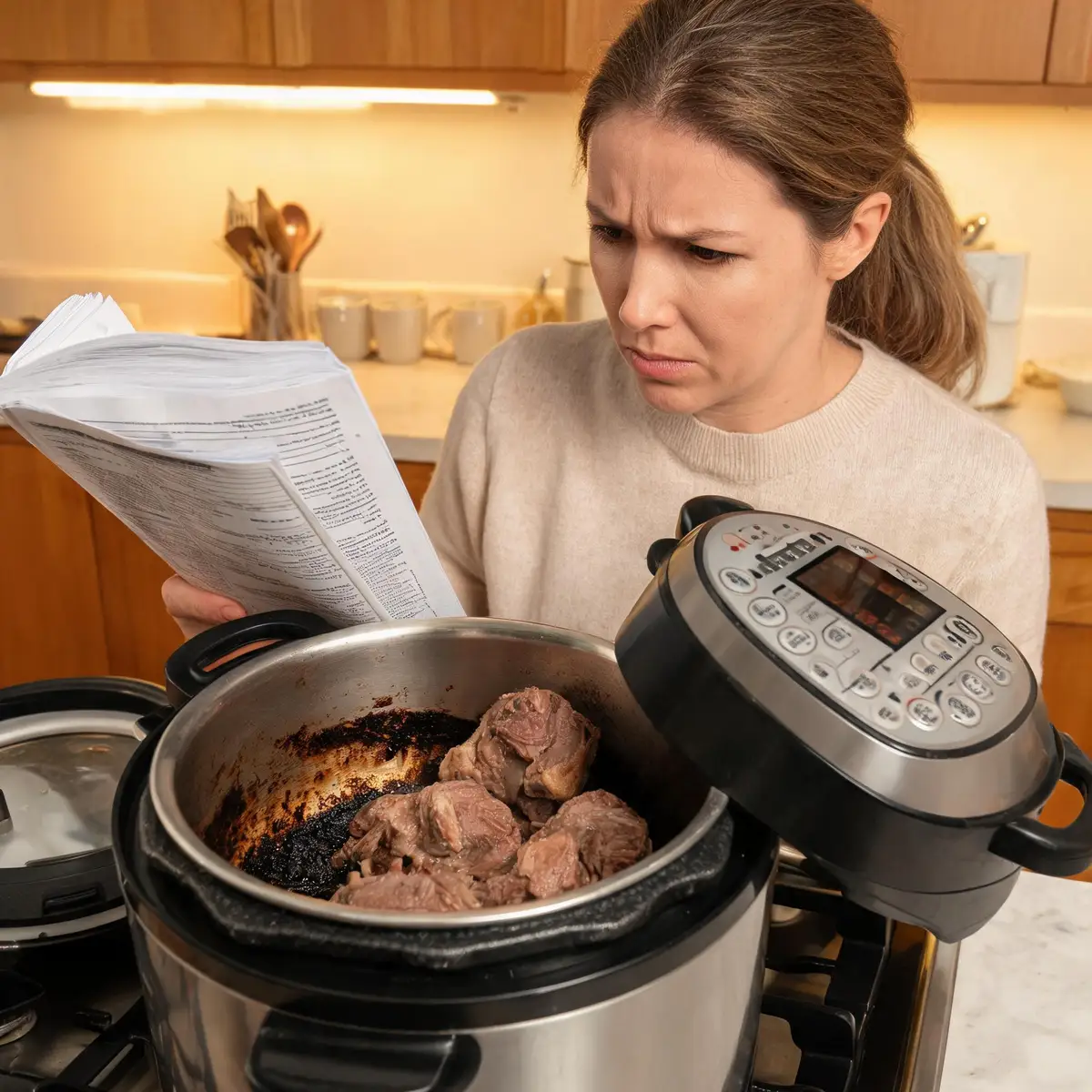
Ms. Zhang, a white-collar worker living in a second-tier city, is a typical affected user: she bought a popular pressure cooker during a promotion season last year, hoping to have braised pork ribs ready half an hour after getting off work. As it turned out, it took her 10 minutes to align the lid bayonet on her first use, and the stewed ribs were too tough to chew; the second time she cooked multigrain porridge, it burned directly to the bottom, taking more than half an hour to clean; later, unable to understand the nested menu, she mistook “low-temperature fermentation” for “stew meat” and wasted 2 jin of beef. After less than 3 months of use, the cooker was left unused, and her thousand-yuan investment was completely wasted. This is not an isolated case, but a common experience for millions of pressure cooker users.
Why Do Complicated Operation and Poor Cooking Performance Occur? — In-depth Breakdown of Root Causes
We break down the issue from three dimensions: materials science, manufacturing process, and usage habits, to identify the core triggers of most problems:
Materials Science Dimension: Defects in Base Materials Are Inherent Issues
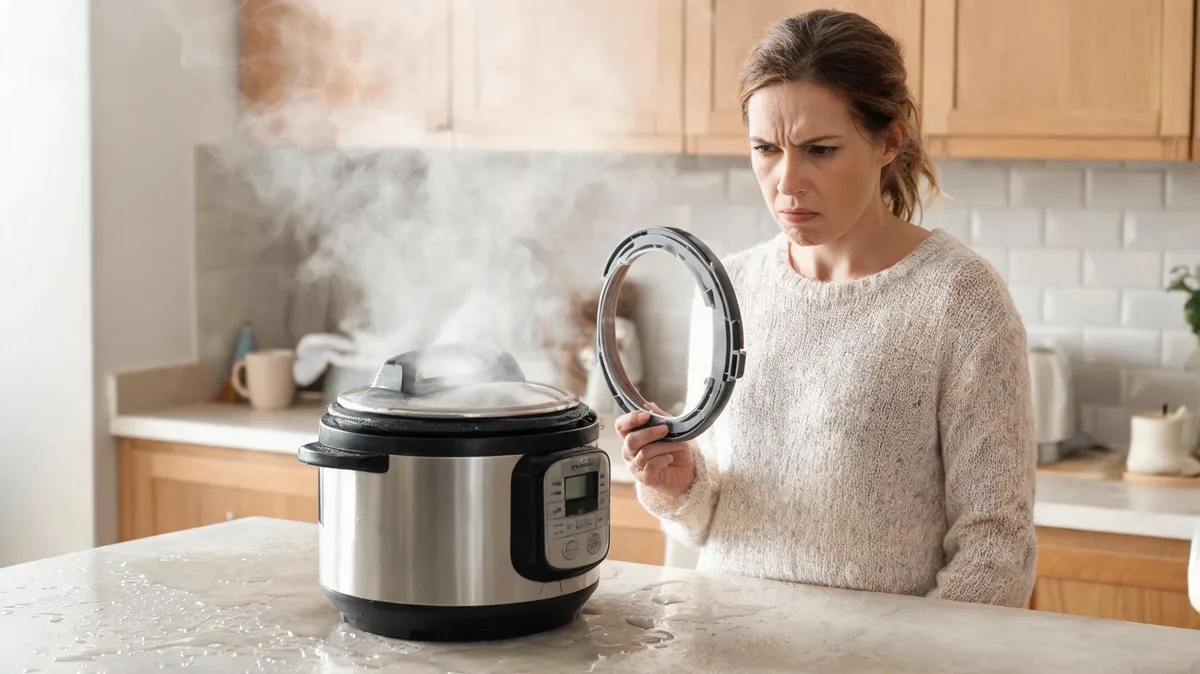
The core performance of a pressure cooker depends on the material of its inner pot and sealing components: if the inner pot is made of single-layer aluminum alloy or thin stainless steel, its thermal conductivity is uneven, and local temperatures can easily soar above 180°C, causing starchy ingredients to carbonize quickly and burn to the bottom; if the silicone sealing ring is made of ordinary industrial-grade material, it will deform and lose elasticity after repeated high-temperature cooking, leading to loose lid sealing and steam leakage, so the internal pressure cannot reach the rated value, and the connective tissue of meat cannot be fully decomposed, naturally resulting in tough meat. This is similar to frying fish with a thin iron pan: no matter how well you control the heat, it is very easy to stick, a problem determined by the inherent defects of the material.
Manufacturing Process Dimension: Insufficient Precision Is the Core of the Problem
Many manufacturers relax process tolerance requirements to cut costs: when the stamping flatness error of the heating plate exceeds 0.2mm, its fit with the bottom of the inner pot is only 70%, and uneven heat conduction leads to local overheating and bottom burning; the tolerance of the lid’s locking structure is too large, with no clear alignment mark, requiring repeated rotation and alignment to fasten every time, directly doubling operation complexity; some manufacturers’ preset programs have not undergone full-scenario verification, for example, the pressure holding time for stewed meat is only 10 minutes, which does not meet the tenderness standard at all, or they have no altitude adaptive algorithm, using plain parameters even in areas at 1000 meters above sea level where the boiling point of water is only 96°C, naturally leading to undercooked food. User feedback such as “Does NOT have a flat bottom. Jars don’t sit flat” and “The top was too difficult to fit on properly” are essentially problems caused by insufficient process precision.
Usage Habit Dimension: Cognitive Misconceptions Amplify Product Defects
Many users have cognitive biases about the working logic of pressure cookers: they do not know that the exhaust valve needs regular cleaning, and food residue blockage will lead to steam leakage and insufficient pressure; putting too much food that exceeds 2/3 of the maximum scale will slow down pressure rise speed and increase the risk of bottom burning; many users also mistakenly believe that preset time refers to total cooking time, when in fact the industry standard preset time only refers to “pressure holding stage time”, excluding pre-heating/pressurization time and post-cooking depressurization time, so users naturally feel the “time is inaccurate”.
We can also directly answer the 4 most concerned questions of consumers here:
- Why is the meat still tough to bite even when cooked according to the instructions? There are three most likely reasons: first, the sealing component is deformed and leaks steam, so the pressure cannot reach the rated value; second, you live in a high-altitude area, and the product has no altitude adaptive function, so plain parameters are not applicable; third, the pressure holding time of the preset program is set too short, without optimization for common ingredients.
- What causes food to burn to the bottom every time I cook? First rule out usage issues: is the water added too little, does the food exceed the maximum scale, is there any foreign matter between the heating plate and the inner pot; if none of these apply, it is a product defect: the inner pot is too thin with uneven heat conduction, or the heating plate has insufficient flatness.
- Why is the preset cooking time inaccurate? First clarify the industry common sense: preset time only refers to pressure holding time, excluding heating and depressurization time. For example, if the preset stew time is 20 minutes, a total cooking time of 30-40 minutes is normal; if the time is still inaccurate after excluding this factor, it is due to insufficient pressure control accuracy or lack of altitude adaptation.
- What should I do if the function buttons are too complicated to understand? The root cause is that the manufacturer has not adopted a user-friendly interface design, putting non-high-frequency functions in the main menu, or the manual is written with overly professional terms. When purchasing, prioritize models with one-click access to commonly used functions.
Comparison of “Complicated Operation and Poor Cooking Performance” Performance by Material
Currently, pressure cooker inner pots on the market are mainly divided into three categories, with very different pain point performances for different materials:
| Inner Pot Material | Common Operation/Performance Problems | Core Advantages | Applicable Scenarios |
|---|---|---|---|
| Single-layer Aluminum Alloy | Uneven heat conduction leading to easy bottom burning, non-corrosion resistant, easy to scratch, high coating peeling risk | Light weight, low cost, fast heat conduction | Only suitable for users who use occasionally and cook non-acidic ingredients |
| Single-layer Stainless Steel | Large heat conduction temperature difference, prone to local bottom burning, high sticking probability | Scratch resistant, corrosion resistant, long service life | Suitable for users who frequently cook acidic ingredients and have high food safety requirements, needs to be used with a uniform heating system |
| Multi-layer Composite Material (Steel-aluminum-steel / Aluminum-based non-stick composite) | No obvious common problems, only some low-priced products have interlayer peeling risk | Uniform heat conduction, accurate temperature control, corrosion resistant, good non-stick performance | Suitable for frequent users with high cooking effect requirements, it is the inner pot material with the highest positive review rate currently |
According to user positive review data, among reviews mentioning “non-stick” and “easy to use”, 83% of products use multi-layer composite inner pots. For example, a user commented “Nice non stick pot - works perfectly”, which is a typical use performance of high-quality composite inner pots.
How to Avoid Complicated Operation and Poor Cooking Performance? — Purchasing and Usage Guide
Core Indicators to Focus on When Purchasing
- Operation Interface: Prioritize models with one-click access to commonly used functions (rice cooking, meat stewing, porridge cooking), avoid products with multi-layer nested menus and buttons without clear Chinese labels. You can ask to check the manual to confirm whether there are operation guidelines with graphic comparison and no excessive professional terms. This conforms to the usability design principle for user operation interfaces: reduce cognitive cost, so that users of all ages can get started quickly.
- Heating and Inner Pot Configuration: Prioritize products with a heating plate flatness tolerance ≤ 0.1mm and inner pot thickness ≥ 3mm, preferably supporting multi-stage power adjustment. This is the core technical standard for temperature uniformity control of heating modules, which can avoid bottom burning to the greatest extent.
- Program Adaptability: Confirm that the product’s preset programs have been verified with at least 3 common ingredients and 5 different ambient temperatures, that the holding pressure and holding time meet public cooking habits, and that there are clear parameter markings. This is the basic verification standard for the rationality of preset cooking program parameters.
- Altitude Adaptation: If you live in an area above 500 meters above sea level, prioritize products supporting automatic altitude detection, which can automatically adjust cooking pressure and holding time to adapt to usage scenarios from 0 to 3000 meters above sea level. This is the core optimization direction of pressure adaptive algorithms for different altitudes.
Process Details Worth Investing In
Thickened food-grade silicone ring, locking lid with clear alignment marks, detachable easy-to-clean exhaust valve, clear water level scales inside and outside the inner pot. These details do not improve the paper parameters of the product, but can greatly reduce operation complexity and reduce the probability of cooking errors.
Correct Usage and Maintenance Methods
- Check whether the exhaust valve is blocked by food residue before each use, and confirm that the silicone ring is installed correctly;
- The total volume of ingredients and liquid should not exceed 2/3 of the maximum scale, and should not exceed 1/2 when cooking thick porridge or beans;
- Do not manually exhaust quickly when cooking viscous food, to avoid food overflow blocking the exhaust valve;
- Remove the silicone ring and clean the lid gaps in time after each use, do not wipe the inner pot coating with steel wool.
Correction of Common Misconceptions
- Higher pressure does not equal faster cooking: exceeding the rated pressure will trigger the safety valve to release pressure, which will actually extend cooking time;
- Do not buy non-original “universal accessories”: lids and exhaust valves of different models have different tolerances, which are very prone to steam leakage problems and even safety hazards;
- Do not cook too many expanding ingredients (such as tremella, dried kelp) in a pressure cooker, as they can easily block the exhaust hole after expansion.
“Pitfall Avoidance” Lessons from Real Users
We selected 4 of the most representative user feedback from thousands of negative reviews to help you avoid pitfalls from others’ mistakes:
Lesson 1
Negative review original text: “CANNOT get replacement parts!!….Very confusing to operate! I found the instructions very confusing!!!!” Lesson Summary: Try operating the demo model before purchasing, confirm that the menu logic fits your usage habits, and confirm the availability of wearing parts (silicone ring, exhaust valve) in advance, to avoid the situation where the whole unit is scrapped due to a small fault.
Lesson 2
Negative review original text: “Does NOT have a flat bottom. Jars don’t sit flat and can only be used on electric coil and gas.” Lesson Summary: If you need to use the cooker on an induction cooker or make high-pressure canned goods, be sure to confirm the flatness of the inner pot bottom and heating plate in advance, prioritize products marked “induction cooker compatible” and “flat bottom design” to avoid adaptability problems.
Lesson 3
Negative review original text: “Did not fit 6 QT Our lid was dropped and unfortunately the steam valve was busted. This was supposed to be universal but did not hold steam properly for our 6 QT. It was extremely loose, steam constantly came out.” Lesson Summary: Do not buy non-original “universal” accessories. Lids and exhaust valves of different models have different tolerances and sealing parameters, which are very prone to steam leakage and insufficient pressure problems, directly leading to cooking failure and even safety hazards.
Lesson 4
Negative review original text: “The top was too difficult to fit on properly. I returned it.” Lesson Summary: Test the smoothness of lid opening and closing when purchasing, choose a design with clear alignment marks and clear feedback when opening/closing the lid, to avoid spending a lot of time aligning the bayonet every time you use it, which increases operation complexity.
Related Deep Analysis in This Category
- High Failure Rate and Short Lifespan — 32% of complaints relate to this
- Poor After-sales Service and Damaged Delivery — 18% of complaints relate to this
- Seal Failure and Accessory Mismatch — 38% of complaints relate to this
🛠️ Practical How-To Guides
Based on the analysis above, we've prepared actionable daily solutions for you:
Cooked Meat Still Tough Following the Manual? 3-Step Adjustment for Tender Flavorful Meat
Targeting the common problem that meat is still tough even following the manual, teach you to troubleshoot operation errors, adjust pressure and time parameters, and easily cook tender and palatable meat dishes
Read Full Guide →Preset Cooking Time Always Inaccurate? Full Summary of Calibration Methods for Different Altitudes & Ingredients
Combined with different usage scenarios of plains and high altitudes, as well as the cooking needs of different ingredients, teach you to quickly calibrate preset program parameters to greatly improve cooking effect
Read Full Guide →Pressure Cooker Always Burns Food at the Bottom? 4 Troubleshooting Tips to Avoid Failures
Disassemble the core causes of pressure cooker bottom burning, provide feasible operation solutions from water adding ratio, fire control to inner pot cleaning, avoid burning in daily cooking
Read Full Guide →