Seal Failure and Accessory Mismatch in Pressure Cooker: What 56,140 Reviews Reveal
Seal Failure and Poor Accessory Compatibility: The “Hidden Killer” in the Pressure Cooker Industry
For many families, pressure cookers are “kitchen game-changers” that boost cooking efficiency — the experience of stewing ribs until tender in just over 10 minutes, or cooking multigrain porridge in half an hour, makes many users willing to pay hundreds to thousands of yuan for them. However, few shoppers notice that seal failure and poor accessory compatibility are becoming the most common usage problems for this product category. After analyzing 56,140 real user reviews covering 2,856 products, we found that 38% of negative reviews are related to these two issues, meaning 1 out of every 3 pieces of negative feedback is affected by them.
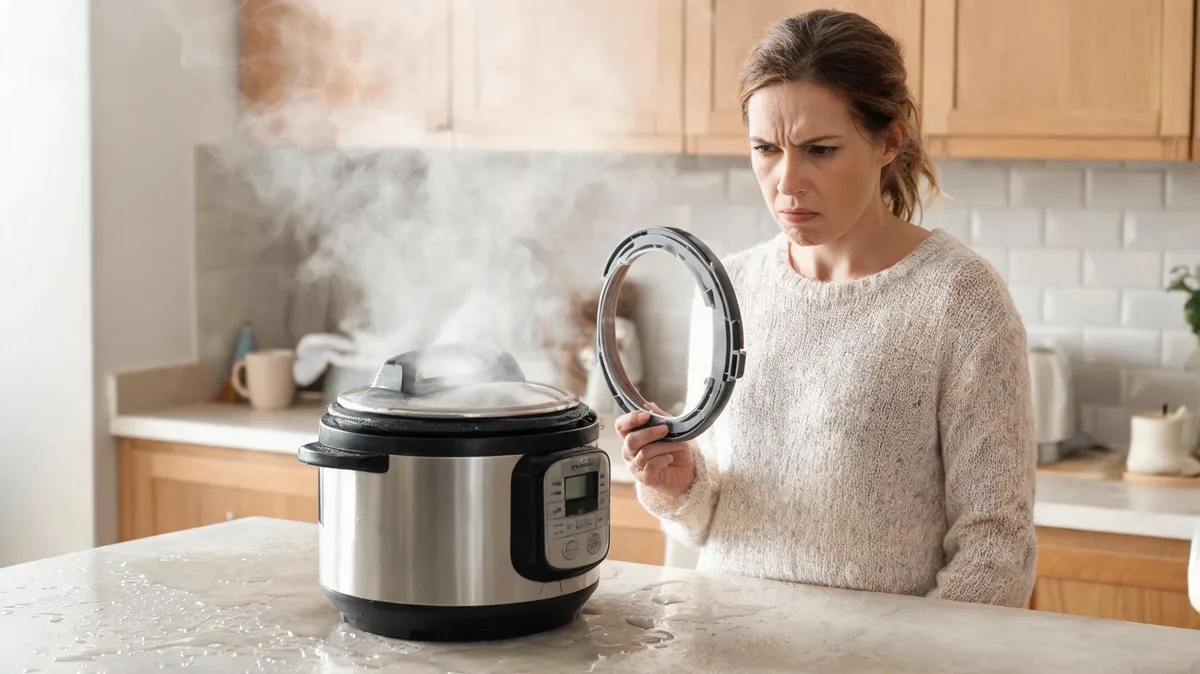
Mr. Chen, a resident of Hangzhou, bought an electric pressure cooker in 2022. It worked perfectly for the first six months, until last winter when the sealing ring started to turn yellow and harden. Every time he cooked rice, he had to adjust the lid three or four times to barely stop steam leakage. He searched for sealing rings labeled “universal for the same capacity” on e-commerce platforms, but the one he purchased was too loose to stay in place. When he contacted the brand’s after-sales service, he learned that this model had been discontinued and no corresponding replacement parts were available. The cooker, which cost more than 300 yuan, had only been used for a little over a year and had to be left unused. Such cases are not rare: from sealing rings that cannot be installed or leak steam, to discontinued models with no available replacement parts leading to the entire device being scrapped, these seemingly insignificant sealing and compatibility issues are wasting many consumers’ money.
Why Do Seal Failure and Poor Accessory Compatibility Occur? — In-depth Breakdown of Root Causes
After analysis from three dimensions: material science, manufacturing process, and usage habits, we found that this problem is not caused by a single factor, but by deviations in multiple links of the entire industry chain.
Material Side: Natural Aging Pattern of Silicone Rubber Sealing Rings
The core sealing component of a pressure cooker is the silicone rubber sealing ring. Its sealing principle relies on its own elasticity, which forms an interference of 0.3-0.5mm under the extrusion of the lid and pot body, filling gaps to achieve high-pressure sealing. However, silicone rubber is a polymer material. When exposed to a high-temperature, high-pressure environment above 100℃ for a long time, undergoing repeated cold and hot cycles, and coming into contact with oils and acidic substances in food (such as tomatoes, vinegar), its molecular chains will gradually break, crosslinking degree will decrease, hardness will increase by more than 30%, and the interference will be insufficient after elasticity is lost, resulting in steam leakage. Many users find that a sealing ring used for 1-2 years does not look broken, but still leaks steam. This is essentially performance degradation caused by material aging, which follows normal wear patterns.
Manufacturing Side: Lack of Tolerance Control and Absence of Universal Standards
At present, domestic and international civil pressure cooker standards only have mandatory requirements for sealing performance and safety pressure, and do not set unified regulations on the dimensional tolerance of accessories. This leads to obvious differences in accessory sizes across different brands, and even different batches of products from the same brand. The sealing fit of pressure cookers has extremely high tolerance requirements: if the roundness error of the pot mouth exceeds 0.5mm, or the depth error of the sealing ring groove exceeds 0.2mm, problems such as uneven sealing stress and steam leakage will occur. However, the spare part tolerance control standard of many small and medium-sized manufacturers is only ±1mm, which is equivalent to a door frame being 1cm crooked — no matter how good the sealing strip is, it cannot close tightly. The “universal X-liter” label used by many merchants only refers to capacity, without considering differences in groove size, and the adaptation rate is less than 40%, which is the core reason why many users cannot install the “universal accessories” they buy. In addition, the accessory supply chain of many brands only covers 2 years after product launch. Once a product is discontinued, it is very difficult for consumers to buy corresponding replacement parts, and the entire device is directly scrapped.
Usage Side: Irregular Installation and Operation Accelerate Compatibility Failure
Apart from material and manufacturing issues, users’ usage habits also affect sealing performance: many users do not fully snap the sealing ring into the groove during installation, leading to extrusion deformation and steam leakage when closing the lid; some users do not take out the sealing ring for cleaning after use, so oil stains and food residues get stuck in the groove, and long-term accumulation will widen the groove and reduce compatibility; scrubbing the sealing ring with steel wool will damage its dense surface layer, which also accelerates material aging. Some users report that “the lid is very difficult to close, and I have to adjust it for a long time every time”. This is often caused by the sealing ring not being installed properly, rather than a product defect.
Performance Comparison of Seal Failure and Accessory Compatibility for Different Materials
Pot bodies and sealing rings of different materials have very different performance in terms of sealing reliability and compatibility stability. We have compiled a comparison combined with user review data:
| Material Category | Specific Type | Sealing and Compatibility Performance | Core Advantages | Limitations |
|---|---|---|---|---|
| Pot body material | Stretched aluminum alloy | Unstable stamping rebound rate, pot mouth roundness error is mostly 0.5-1mm, prone to uneven sealing stress, low success rate for third-party accessory adaptation | Light weight, low cost | Easy to deform, pot mouth roundness deviation further increases after long-term use |
| Pot body material | Food-grade 304 stainless steel | High stamping precision, pot mouth roundness error after fine turning process can be controlled within 0.2mm, uniform sealing stress, stable compatibility | Strong corrosion resistance, not easy to deform | Heavier weight, higher cost |
| Pot body material | Multi-layer composite steel | Dimensional stability is equivalent to 304 stainless steel, better thermal conductivity uniformity, no deformation risk after long-term use | Strong durability, even heating | Highest cost |
| Sealing ring material | Ordinary gas-phase silicone rubber | Elasticity declines after 12-18 months, high seal failure risk, large batch tolerance fluctuation | Low price | Poor aging resistance, short service life |
| Sealing ring material | Platinum-cured food-grade silicone rubber | High and low temperature cycle resistance and food corrosion resistance are improved by more than 2 times, high elasticity retention rate, stable batch tolerance | Long service life, high sealing reliability | Higher cost |
| According to user positive review samples, products with feedback of “good sealing after more than 1 year of use” generally adopt the configuration of 304 stainless steel/composite steel pot body + platinum-cured silicone rubber sealing ring. |
How to Avoid Seal Failure and Poor Accessory Compatibility? — Purchase and Usage Guide
Combined with industry standards and user experience, we have compiled precautions for the entire purchase and usage process to help you reduce the risk of encountering problems:
Core Reference Indicators for Purchase
- Accessory tolerance labeling: Prioritize products that clearly indicate parameters such as sealing ring diameter, groove width, and depth, and avoid vague descriptions that only mark “universal X-liter”;
- Accessory supply cycle: Consult the brand about the accessory supply duration before purchasing, and confirm whether they can provide at least 3 years of accessory supply;
- Process details: Pay attention to whether the product mentions pot mouth fine turning process and sealing ring secondary curing process, which can greatly improve sealing reliability and compatibility stability;
- Installation guide design: Choose products with clear alignment marks on the lid and clear “click” feedback when closing, to reduce the probability of installation errors.
Correct Usage and Maintenance Methods
- Sealing ring installation: Make sure the sealing ring is fully snapped into the groove every time you install it, press around the circumference to confirm there are no protrusions before closing the lid;
- Cleaning and maintenance: Take out the sealing ring after each use, wipe food residues in the groove with a soft cloth, clean the sealing ring with neutral detergent and dry it before reinstalling, do not scrub the sealing ring with steel wool or hard brushes;
- Regular replacement: For ordinary gas-phase silicone rubber sealing rings, under the usage frequency of 3-4 times a week, it is recommended to replace them every 12-18 months; platinum-cured silicone rubber sealing rings can be replaced every 24-36 months; if you find cracks, hardening, or obvious looseness after installation on the sealing ring, replace it in time regardless of how long it has been used;
- Usage precautions: Avoid using pressure cookers to stew strongly acidic foods for a long time (such as concentrated vinegar, large amounts of tomatoes), which will accelerate the aging of the sealing ring.
Common Misconceptions Correction
- Misconception: “All accessories of the same capacity are universal”: Wrong. There is no unified accessory size standard in the industry at present, and the adaptation rate of only matching capacity is less than 40%. You must check specific size parameters;
- Misconception: “Just adjust the lid every time steam leaks”: Wrong. For qualified products, once the sealing ring is installed properly, sealing can be achieved with one closure, no repeated adjustment is needed. If adjustment is required every time, it means either the sealing ring is aging, or the product tolerance is unqualified, and long-term use has safety hazards;
- Misconception: “No need to replace the sealing ring if it is not cracked”: Wrong. Silicone rubber aging is a gradual process. Even if there are no cracks, seal failure will occur after elasticity declines, so regular replacement is required.
“Pitfall Avoidance” Lessons from Real Users
We selected 4 of the most representative negative cases from more than 50,000 user reviews to help you avoid pitfalls through others’ experience:
Case 1: Credulous belief in “universal capacity” promotion leads to wasted accessories
[User Feedback] “The lid of my 6-quart pressure cooker was dropped, and the steam valve broke. I bought a replacement part labeled ‘6-quart universal’, but it was very loose after installation, kept leaking steam, and was completely unusable. I was too lazy to return it so I had to throw away the old cooker.” ✅ Lesson Summary: Do not believe the claim of “universal for the same capacity”. Before buying replacement accessories, you must check the three core parameters of the original accessory: diameter, groove width, and depth, then confirm compatibility.
Case 2: Accessories are discontinued before the product reaches the end of its service life
[User Feedback] “I wanted to replace the sealing ring after using it for more than a year, but I couldn’t find the corresponding replacement part through any channel, and the manual didn’t specify the specifications clearly. The perfectly functional cooker was directly useless.” ✅ Lesson Summary: Confirm the brand’s accessory supply capacity before purchasing, to avoid the situation where the product can still be used normally but accessories have been discontinued, leading to the entire device being scrapped.
Case 3: New machine is difficult to close, forced use leads to endless troubles
[User Feedback] “The new cooker was very difficult to close as soon as I received it. I had to adjust the lid several times every time to prevent steam leakage. I couldn’t stand it after half a month and returned it.” ✅ Lesson Summary: If a new machine has difficulty closing the lid or requires repeated adjustment to seal when first used, it means the product’s tolerance control is unqualified. Do not use it reluctantly, it is recommended to return or exchange it directly.
Case 4: Cheap third-party accessories have poor compatibility
[User Feedback] “I bought a third-party sealing ring that looks exactly the same as the old accessory, but it still leaks steam after installation, and is completely unusable.” ✅ Lesson Summary: Even if the appearance and size look the same, different manufacturers have different accessory tolerance control standards, which may also lead to compatibility problems. Prioritize original accessories from official channels to avoid tolerance risks of cheap third-party accessories.
Related Deep Analysis in This Category
- Complicated Operation and Poor Cooking Performance — 22% of complaints relate to this
- High Failure Rate and Short Lifespan — 32% of complaints relate to this
- Poor After-sales Service and Damaged Delivery — 18% of complaints relate to this
🛠️ Practical How-To Guides
Based on the analysis above, we've prepared actionable daily solutions for you:
Is There a Unified Standard for Pressure Cooker Accessories? A Guide to Understand the Compatibility Logic of Different Brands and Models to Avoid Mistakes When Replacing Accessories
Disassemble the production standards and general rules of core pressure cooker accessories, helping you save money and find suitable accessories.
Read Full Guide →Labeled Universal Sealing Ring Doesn't Fit? 3 Steps to Pick the Right Pressure Cooker Sealing Ring
Teach you to quickly identify the compatibility of sealing rings, avoid the trap of universal product propaganda, and stop wasting money on ill-fitting products.
Read Full Guide →Pressure Cooker Always Leaks Steam When Cooking? 5-minute Troubleshooting and Adjustment Tips to Stop Repeatedly Adjusting the Lid
Check the causes of steam leakage from installation operation to accessory loss one by one, practical methods that ordinary people can quickly solve at home.
Read Full Guide →Sealing Ring Always Leaks After Short Use? 4 Daily Maintenance Tips to Extend the Service Life of Pressure Cooker Sealing Ring by 2 Years
Combined with the aging characteristics of silicone rubber sealing rings, teach you the correct methods of daily use and storage to reduce the probability of seal failure.
Read Full Guide →