Difficult Assembly in Sofa: What 101,716 Reviews Reveal
Assembly Difficulties: The “Hidden Killer” of the Sofa Industry
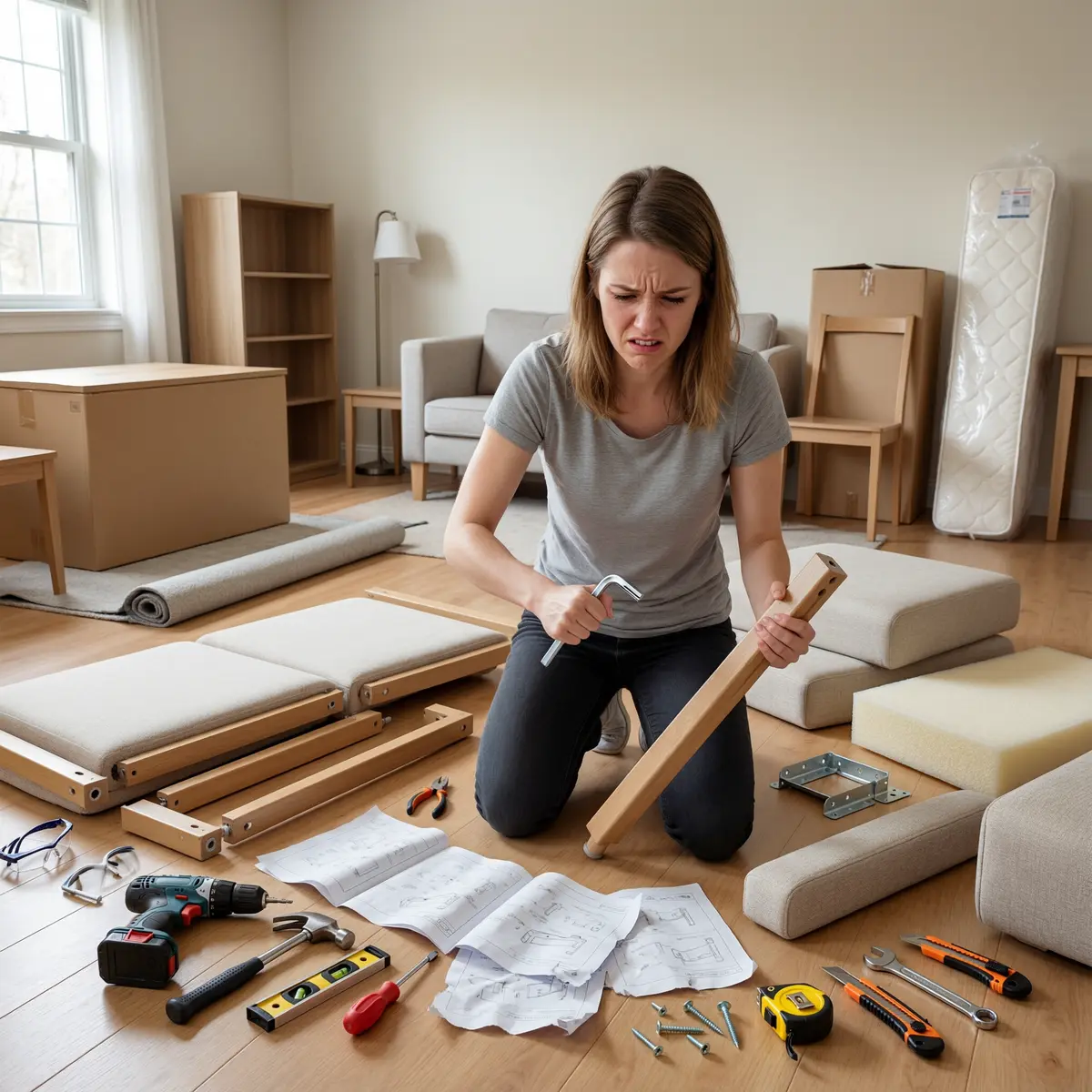
When buying a new sofa, consumers often look forward to comfort and aesthetics, but in reality, many encounter unexpected troubles during the assembly process. Based on our analysis of 101,716 genuine user reviews, we found that 15% of negative reviews are related to assembly difficulties. This issue not only affects the consumer’s usage experience but can also lead to a shortened product lifespan and reduced safety. Imagine eagerly purchasing what seems like the perfect sofa, only to find during assembly that the instructions are unclear, the components are of poor quality, and even additional tools are needed to complete the task. A few months later, the sofa starts to have various problems such as structural loosening and material damage, ultimately leading to the need for replacement or repair, which is undoubtedly a frustrating experience.
Why Are There Assembly Difficulties? — Deep Dive into the Root Causes
Material Science: Quality and Compatibility of Assembly Components
From a materials science perspective, the quality of assembly components directly affects the stability and durability of the entire sofa. Some low-quality sofas use cheap wood, plastic parts, or even cardboard as support structures, which perform poorly in terms of load-bearing and durability. For example, one user commented, “The frame of this sofa is made of 1x2 inch wooden strips nailed together, and it collapsed when my 3-year-old child sat on it.” In such cases, even simple assembly steps cannot ensure the quality of the finished product.
Craftsmanship: Clarity and Accuracy of Assembly Instructions
In addition to the issues with the materials themselves, the clarity and accuracy of the assembly instructions are also significant factors contributing to assembly difficulties. Some manufacturers provide manuals with blurry text, unclear diagrams, or missing steps, leaving consumers confused during the assembly process. For instance, “The diagrams in the manual are unclear, and many steps are not detailed. I spent several hours just to barely put it together.” Such feedback indicates that even if the material quality is satisfactory, if the instructions are not intuitive and easy to understand, it will significantly increase the difficulty of assembly.
User Habits: Consumers’ DIY Skills and Experience
Finally, the consumer’s own assembly skills and experience should not be overlooked. For those lacking DIY experience, even products with reasonable design and detailed instructions may seem complex and difficult to understand. Additionally, some sofas require specific tools for assembly, which are not always included with the product. Therefore, it is very important to understand whether you have the necessary skills and the types of tools required before making a purchase.
Comparison of “Assembly Difficulties” Across Different Materials
| Material | Advantages | Limitations | User Reviews |
|---|---|---|---|
| Metal Frame | Stable structure, strong load-bearing capacity | May be heavy, difficult to move | “Feels very sturdy, and I feel safe using it” |
| Solid Wood Frame | Natural and beautiful, highly durable | Higher cost, requires regular maintenance | “Although a bit more expensive, it’s worth the investment” |
| Composite Panels | Economical, lightweight and easy to move | Prone to moisture and deformation, short lifespan | “It was fine at first, but started having issues over time” |
How to Avoid Assembly Difficulties? — Purchasing and Usage Guide
- Key Indicators and Parameters: When choosing, focus on the frame material (metal or solid wood is recommended), connection methods (screws are better than nails), and whether there are detailed assembly instructions.
- Design Details Worth the Extra Cost: Look for products that offer pre-drilled holes, modular designs, or tool-free installation, which can significantly reduce assembly difficulty.
- Correct Usage Methods: Ensure you follow the instructions step by step and check that all parts are present before starting assembly; seek professional help if necessary.
- Common Misconceptions: Don’t assume that higher-priced sofas are easier to assemble. Sometimes, high-end products can be more difficult due to their complex design.
Lessons from Real Users to Avoid Pitfalls
-
Lesson 1:
- Review: “Bad news purchase This is a terrible product. First of all it only covers half of the sofa. The depth is too narrow. Floats around under the cushion.”
- Summary: Be sure to confirm the size information before purchasing to ensure that the selected style fully covers and fits your space needs.
-
Lesson 2:
- Review: “Still sags I was really excited about using these because my sofa is kind of old and sags after all these years. I’ve seen the commercial on TV where these stop the sagging once you put them under the cushion. I put them under The cushion sat down and didn’t feel any different. Save your money.”
- Summary: Be cautious with products that claim special functions; it’s best to check other buyers’ actual feedback before making a decision.
-
Lesson 3:
- Review: “Do not buy Edit. This couch sucks. The frame is made up of 1x2 pieces of wood that have been stapled together. How do I know this? My 3 year old broke it. He sat down and the whole thing collapsed under him. I pulled the underfabric back to see if I could fix a screw or whatnot…but what I sa”
- Summary: Choosing a sturdy and durable frame material is crucial, especially in households with children or pets, where safety performance is even more important.
Through the above analysis, we can see that although assembly difficulties are a common problem faced by consumers, by carefully selecting high-quality materials, paying attention to craftsmanship details, and improving personal skill levels, this issue can be effectively avoided. We hope the information provided in this article will help you make more informed choices when purchasing a sofa in the future.
Related Deep Analysis in This Category
- Assembly Difficulty, Missing Parts — 18% of complaints relate to this
- Durability Issues — 25% of complaints relate to this
- Function Failure, Mis-marketing — 12% of complaints relate to this
- Inaccurate Sizing — 20% of complaints relate to this
- Poor Comfort, Lack of Support — 28% of complaints relate to this
- Poor Quality Materials — 28% of complaints relate to this
- Poor Quality, Not Durable — 32% of complaints relate to this
- Uncomfortable Seating — 35% of complaints relate to this
- Wrong Size or Too Small — 35% of complaints relate to this