Non-Stick Coating Peeling in Air Fryer: What 97,574 Reviews Reveal
Non-Stick Coating Peeling: The “Hidden Killer” in the Air Fryer Industry
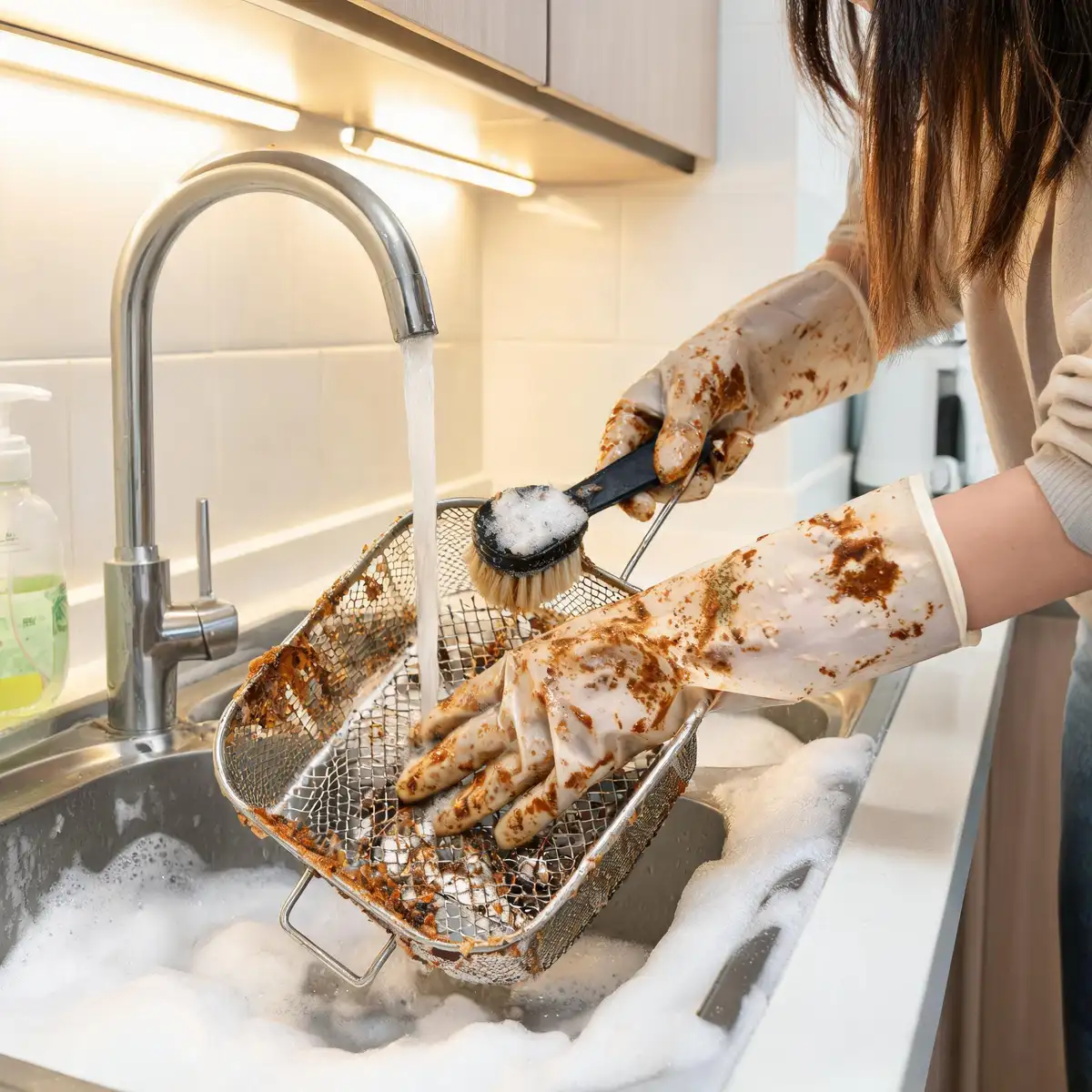
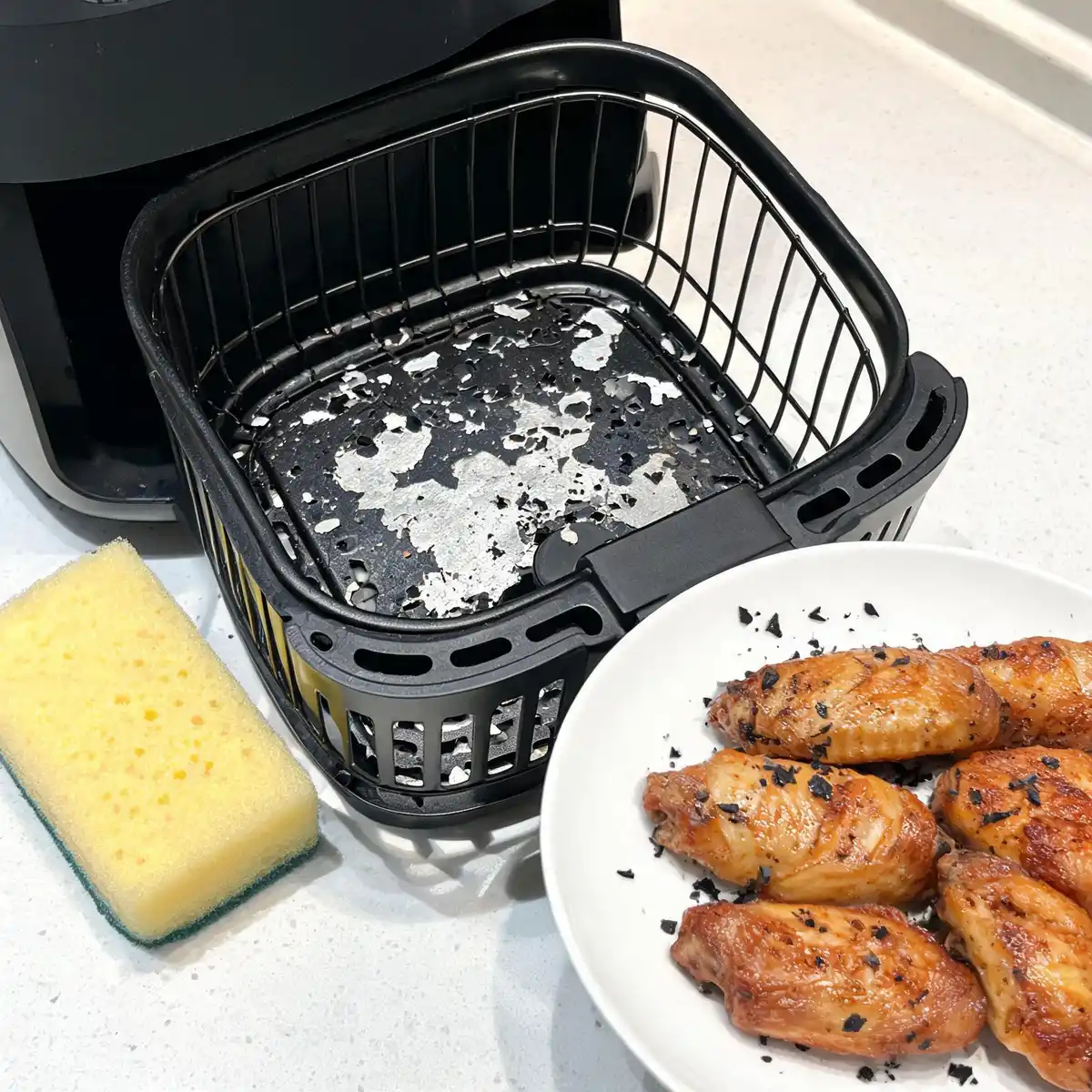
Many consumers purchase air fryers with the original intention of avoiding cooking fumes and the hassle of scrubbing cookware, but quite a few face a “reverse of expectations” after a few months of use: patchy peeling appears on the fryer basket after cooking, tiny black particles stick to the cleaning sponge, throwing the fryer away feels wasteful, while continuing to use it raises concerns about ingesting harmful substances. We analyzed 97,574 real user reviews covering 4,937 products, and found that 36% of negative reviews are related to easy peeling of non-stick coatings, which has become the most frequently complained pain point for the air fryer category. The experience of Ms. Lin, a white-collar worker living in a first-tier city, is very representative: she bought an air fryer last year, and had a great experience in the first two months, with roasted chicken wings and fries not sticking at all, and the basket only needing a quick rinse to clean. In the third month of use, she found that black residue would stick to the sponge every time she washed the basket, and upon close inspection, the non-stick coating on the bottom of the basket was lifting up piece by piece. “Now I’m on edge every time I use it, always worried the peeling coating will get mixed into the food. This perfectly good fryer has become something that’s a pity to throw away but a hassle to keep.”
Why Does Non-Stick Coating Peel Easily? An In-depth Breakdown of the Root Causes
Manufacturing Side: Substandard Spraying Process Leading to Inherent Poor Adhesion
Just like paint will peel quickly if applied directly to a wall without sanding and leveling pretreatment, the metal basket of an air fryer requires sandblasting and passivation pretreatment before non-stick coating is sprayed, to increase the roughness of the base so that the coating can “grip” the metal surface. Many small and medium-sized manufacturers skip the pretreatment process directly to cut costs, or spray the coating unevenly and cure it at an insufficient temperature, making the coating adhesion far below the qualified standard, and it will lift and peel after just a few uses. Some users reported that “the black non-stick coating peeled off after 8-10 uses”, and this kind of short-term peeling is basically an inherent defect caused by unqualified processes.
Raw Material Side: Coating Materials Fail to Meet Durability Requirements
Currently, compliant food-contact non-stick coatings need to meet multiple requirements including temperature resistance, wear resistance, and qualified migration indicators. Some manufacturers use low-grade or even recycled coating raw materials, only meeting the minimum safety threshold of “qualified migration” without taking durability into account at all: normal qualified Teflon coating can withstand long-term high temperatures of 260℃, while low-quality coatings will age and turn brittle after being baked a few times at 200℃, and will shed residue with slight friction.
User Side: Thermal Shock + Improper Cleaning Accelerate Wear
Many users wonder why the coating still peels even when they wash it with a soft sponge. In fact, apart from inherent quality issues, improper use can also greatly shorten the service life of the coating: if you immediately rinse the hot basket just used for 200℃ cooking under cold water, the thermal expansion coefficients of the metal base and the coating are very different, and the sudden temperature change will cause tiny cracks inside the coating, which will peel off in pieces over time. In addition, using abrasive cleaners such as scouring powder and baking soda will slowly wear the coating even with a soft sponge; scraping burnt bottom directly with hard brushes or steel wool, or poking the basket with metal tableware will directly damage the coating structure.
Industry Standard Loophole: Durability Indicators Are Non-Mandatory
At present, China’s mandatory standards for food-contact coatings mainly limit the migration of harmful substances, while indicators that directly determine the service life of the coating, such as “wear resistance cycles” and “thermal shock resistance times”, are all recommended standards with no mandatory requirements. This leads many manufacturers to only pursue “safety compliance” and refuse to increase costs to improve durability, further pushing up the complaint rate of coating peeling.
Comparison of “Non-Stick Coating Peeling” Performance of Different Materials
Polytetrafluoroethylene (PTFE, commonly known as Teflon) Coating
This is the most widely used air fryer coating material on the market currently. Qualified Teflon coating has excellent non-stick performance, with a wear-resistant service life of 2-3 years under normal use, making it a choice that balances user experience and durability. Its limitations are: it is very prone to peeling if the process and materials are unqualified; long-term dry heating or temperatures exceeding 260℃ will release volatile substances harmful to the human body. According to user feedback, Teflon coating products with qualified processes rarely have short-term peeling problems, and many users commented “very easy to clean, just rinse after use”.
Ceramic Coating
It is an inorganic non-stick coating, free of organic additives such as PFOA, and has higher temperature resistance (generally can withstand high temperatures above 300℃), with good safety if made of qualified raw materials. Its limitations are: non-stick performance decays rapidly with use, usually dropping significantly after 6-12 months of use; it is more brittle than Teflon, more prone to cracking and peeling under drops, impacts or thermal shock, and the peeling is mostly in flakes.
Uncoated Stainless Steel / Cast Iron Material
There is no coating at all, so there is no peeling problem, with the best durability, and can be used for many years under normal use. Its limitations are: it has no non-stick performance at all, food high in starch and protein is very easy to stick to the bottom when roasted, and it needs long-time soaking for cleaning, which is not friendly for users who want to avoid hassle. (For consumers’ concerns about “how long the coating generally lasts” and “whether there are uncoated products”, the above comparison gives clear answers: qualified Teflon coating can be used normally for 2-3 years, the non-stick performance of ceramic coating lasts for about 1 year, and uncoated stainless steel and cast iron products are also available for sale, you can choose according to your own needs)
How to Avoid Non-Stick Coating Peeling? Purchase and Use Guide
Key Purchase Considerations
If you pay attention to coating durability, you can check whether the product provides coating wear resistance test and thermal shock test reports. Generally speaking, coatings that can pass more than 5000 wear friction cycles without peeling and more than 100 thermal shock cycles without cracking have relatively more guaranteed durability. When purchasing, you can observe whether the coating of the basket is uniform, whether there are bulges, color differences, or missing spray at the corners, test whether the basket pulls and pushes smoothly, and whether there is jamming or shaking. Products with unsmooth pulling are very easy to bump the basket during use, leading to coating peeling. Products whose prices are far below the market average usually have reduced configuration in coating process and materials, with a relatively higher probability of peeling.
Daily Use and Maintenance Suggestions
- Do not dry heat the air fryer, try to control the use temperature within 200℃, and the single high-temperature use time should not exceed 1 hour to avoid excessive aging of the coating.
- Let the used basket cool down for at least 5-10 minutes before contacting cold water to avoid thermal shock.
- Use a soft sponge + ordinary dish soap for cleaning, do not use abrasive or corrosive cleaners such as steel wool, scouring powder, baking soda, citric acid, etc. If there is burnt bottom, soak it in warm water and dish soap for 10-15 minutes before wiping, do not scrape hard.
- Use silicone or wooden utensils when turning and taking food, do not poke the inner wall of the basket directly with metal clips or shovels.
Correction of Common Misconceptions
- Misconception 1: Eating a little bit of peeled coating will cause poisoning. Answer: Compliant food-contact grade coating has very stable chemical properties, a small amount of accidental ingestion will not be absorbed by the human body, and will be excreted with feces, so it will not cause poisoning. However, if large-area peeling occurs, it is recommended to replace the basket or the whole machine to avoid subsequent peeling coating mixing into food.
- Misconception 2: Washing with a soft sponge will not damage the coating. Answer: If the coating has cracked due to thermal shock, or if you use an abrasive cleaner, even a soft sponge will cause the coating to peel off.
- Misconception 3: Expensive products will definitely not have coating peeling. Answer: High price only represents high overall configuration, not necessarily excellent coating process, you still need to refer to test reports and actual process details.
“Pitfall Avoidance” Lessons from Real Users
- User Negative Review: “the basket isn’t nonstick and I have to scrub a lot after every use… and the black “nonstick” basket color is already coming off after about 8-10 uses” Lesson Summary: If a new fryer has obvious coating peeling after less than 10 uses, it is a process or material defect of the product itself. Do not make do with it, contact the merchant immediately to apply for return or exchange.
- User Negative Review: “The drawer doesn’t open I can’t use it because the drawer is stuck and has to be yanked on to get it open and I’m afraid over time, this will cause it to break! " Lesson Summary: For products where the basket pulls with jamming and requires hard yanking, each use will bump the edge of the basket, which is very easy to cause the coating to chip and crack. Be sure to test whether the pulling is smooth when purchasing, and choose carefully if you encounter a jammed model.
- User Negative Review: “Not nonstick… Cleaning this is a pain… the basket isn’t nonstick and I have to scrub a lot after every use” Lesson Summary: When food sticks to the bottom, do not rub hard directly to clean it. First soak it in warm water and dish soap for more than 10 minutes, wait for the food residue to soften before wiping gently. Otherwise, even a qualified coating will be worn and peeled off after long-term hard scrubbing.
Related Deep Analysis in This Category
- Difficult to Clean — 21% of complaints relate to this
- Poor Cooking Performance — 27% of complaints relate to this
- Short Lifespan & Easy Malfunction — 42% of complaints relate to this
- Structure & Design Defects — 19% of complaints relate to this
🛠️ Practical How-To Guides
Based on the analysis above, we've prepared actionable daily solutions for you:
How to Choose an Air Fryer with Durable Non-Stick Coating? 3 Key Parameters to Avoid Pitfalls
From coating material certification to spraying process identification, teach you to choose food-grade, high-adhesion durable air fryers
Read Full Guide →Is Peeling Air Fryer Coating Toxic? Can You Still Use It? The Complete Safety Guide
Popularize the health risks of different coating peeling conditions, and clearly tell you when to replace the air fryer and when it can be used temporarily
Read Full Guide →What's the Normal Lifespan of Air Fryer Non-Stick Coating? Is Peeling After 1 Year a Quality Problem?
Clarify the normal service life standard of air fryer coatings, and teach you to quickly distinguish between product quality problems and man-made damage
Read Full Guide →Why Is Your Air Fryer Coating Peeling? 5 Daily Use & Cleaning Tips to Extend Its Lifespan by 3 Years
From temperature control to cleaning tool and timing selection, teach you step by step to avoid coating wear and tear caused by improper operation
Read Full Guide →