Short Lifespan & Easy Malfunction in Air Fryer: What 97,574 Reviews Reveal
Short Service Life and Frequent Malfunctions: The “Invisible Killer” in the Air Fryer Industry
As a small kitchen appliance with a penetration rate exceeding 40%, the convenience of air fryers has been widely recognized by the market, but their persistently high failure rate is rarely mentioned. After compiling statistics on 97,574 real user reviews covering 4,937 products, we found that: 42% of negative reviews are directly related to short service life and frequent malfunctions, which is the most complained pain point for the air fryer category. Ms. Lin, a resident of Suzhou, purchased an air fryer during the 2023 Double 11 Shopping Festival. She only uses it 3-4 times a week to make common foods such as roasted sweet potatoes and chicken wings, and operates it strictly in accordance with the instruction manual. After less than 3 months of use, it suffered a heating failure: the machine was normally powered on and running, but the frozen fries placed inside were still cold after half an hour. When she contacted after-sales service, she found that the 90-day warranty period had just expired, and the repair would require paying parts and labor fees equivalent to 60% of the price of the whole machine. Ms. Lin had to throw the machine in the trash, meaning hundreds of yuan were spent for less than 10 uses. Such cases are not isolated. A large number of consumers have encountered problems such as “breaking down right after the warranty expires” and “jamming or smoking after a few uses”, which are both a waste of money and a safety hazard.
Why Are Air Fryers Prone to Short Service Life and Frequent Malfunctions? — In-depth Analysis of Root Causes
Air fryer failures are not caused by a single reason, but are the result of the combined effect of material selection, manufacturing process, and usage habits. We analyze them one by one from a professional perspective:
1. Insufficient specifications of core components, inherently “short-lived”
The core components of air fryers are heating elements and circulating fans: many low-end products use iron aluminized heating tubes instead of 304 stainless steel heating tubes to cut costs. The former is very prone to oxidation, deformation, or even fracture under a long-term working environment of 200°C, and its average service life is only 1/4 of the latter. Some products use ordinary unprotected shaded pole motors instead of high-temperature resistant motors. The insulation layer of the motor ages rapidly at high temperatures, and the fan will stop working after 3-6 months of use. This is also the core reason for the most frequently asked question by consumers: “Why does it suddenly stop heating after a few months of use?”
2. Imperfect circuit protection design, easy to fail in high-temperature environments
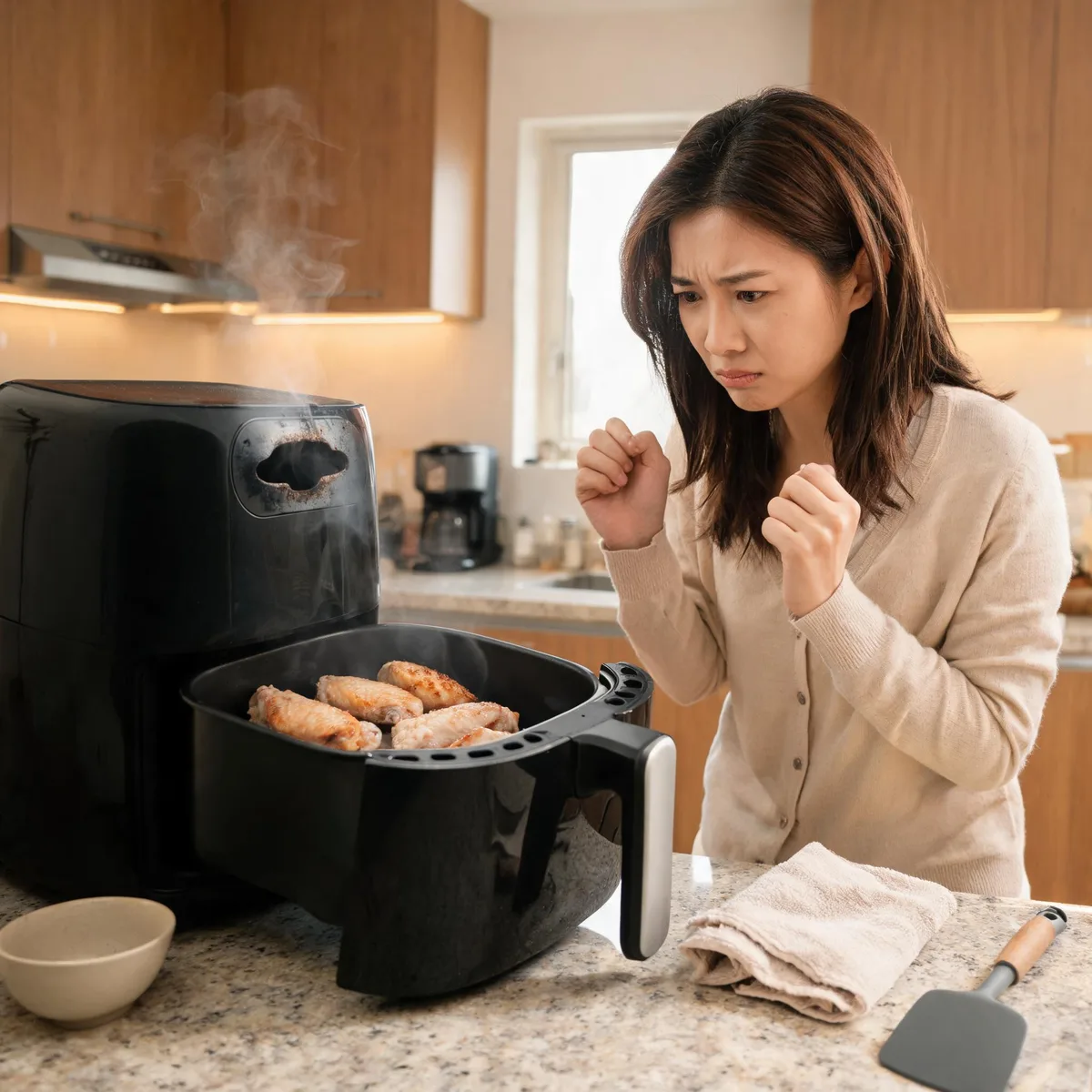
The internal temperature of an air fryer can reach over 200°C during operation. Qualified products must be equipped with three protections: overheat protection, overload protection, and automatic power-off when the lid is opened. However, many low-priced products directly omit these protection components, and will not automatically cut off power even when the temperature exceeds 250°C. In minor cases, the mainboard burns through and the machine is scrapped; in severe cases, internal oil stains or plastic structural parts ignite, leading to safety accidents such as smoking and fire, which is the main reason for the “sudden black smoke during use” reported by many users.
3. Low factory quality control sampling rate, faulty products flow into the market
At present, there is no mandatory full inspection requirement in the air fryer industry. The factory sampling rate of many small factories is less than 5%, and they only conduct simple tests such as “whether the light turns on when plugged in”, without reliability tests such as high-temperature cycle and opening/closing fatigue. As a result, a large number of defective products with problems such as excessive mold tolerance, loose wiring connections, and missing accessories flow into the market. For example, the problems reported by many users such as “the drawer has to be pulled hard to open” and “the basket has to be shaken for a long time to fit in” are caused by excessive mold tolerance and lack of factory inspection, and the buckle will break after a few uses.
4. High-temperature and high-humidity use environment accelerates component aging
Many consumers only clean the basket after using the air fryer, and do not wipe the oil stains on the heating tube and the inner wall of the liner. These oil stains are carbonized every time they are heated, and adhere to the surface of the heating tube, which not only affects thermal efficiency, but also continuously corrodes components. Some users use the appliance continuously for 2-3 hours, so internal components are in a high-load state for a long time, and the aging speed is more than 3 times faster than normal use.
5. Low industry entry threshold leads to bad money driving out good money
The technical threshold for air fryer assembly is extremely low. Small workshops can assemble one in more than ten minutes after purchasing all accessories, the cost can be reduced to tens of yuan, and the selling price is only 1/3 of that of qualified products. Many consumers buy such products at low prices, which in turn limits the sales of formal products made of high-quality materials and with strict quality control due to their high prices, forming a vicious industry cycle of bad money driving out good money, further reducing the average service life of the entire category.
Comparison of “Short Service Life and Frequent Malfunction” Performance of Different Materials
The material of the core components of an air fryer directly determines the failure rate and service life. We have sorted out the performance differences of different materials, and all data comes from real user feedback:
| Core Component Type | Material Classification | Average Service Life | Advantages | Limitations | Common Failure Symptoms |
|---|---|---|---|---|---|
| Heating element | Iron aluminized heating tube | 1-2 years | Low cost, fast initial temperature rise | Easy to oxidize and rust at high temperature, poor corrosion resistance | Uneven heating or sudden heating failure after 3-6 months of use |
| Heating element | 304 food-grade stainless steel heating tube | 5-8 years | High temperature resistance, oxidation resistance, corrosion resistance | High cost | Extremely low failure rate, stable performance for long-term use |
| Heating element | Quartz heating tube | 2-3 years | High thermal efficiency, medium cost | Fragile material, not resistant to impact | Easy to break after external force, resulting in heating failure |
| Liner coating | Ordinary non-stick coating without base | 0.5-1 year | Low cost, good initial non-stick effect | Easy to peel off at high temperature, poor wear resistance | Coating peeling after about 10 uses, accumulated oil is difficult to clean |
| Liner coating | Ceramic-based non-stick coating | 3-5 years | High temperature resistance, high hardness, not easy to peel off | High cost, non-stick effect is slightly inferior to ordinary Teflon | No obvious peeling after long-term use, easy to clean |
| Structural parts (drawer/buckle) | Ordinary PP plastic | 0.5-2 years | Low cost, light weight | Poor high temperature resistance, easy to deform | Stuck opening and closing, buckle fracture after 1-3 months of use |
| Structural parts (drawer/buckle) | High temperature resistant food-grade PP/PPS | 3-6 years | Resistant to high temperatures above 180°C, strong deformation resistance | High cost | Smooth opening and closing for long-term use, no stuck or deformation problems |
According to positive review data, the proportion of users reporting “no failure after more than 1 year of use” for products using 304 stainless steel heating tubes and high-temperature resistant structural parts is 4.7 times that of products made of ordinary materials, and most reviews mention “smooth operation and stable heating”.
How to Avoid Short Service Life and Frequent Malfunctions? — Purchase and Use Guide
Purchase Notes
Many consumers ask “How to judge the circuit safety of an air fryer?” There are 3 core points: First, check whether there is a national 3C compulsory certification mark, and directly exclude products without it. Second, check whether the product parameter page clearly marks the three protections of “overheat protection, overload protection, and automatic power-off when the lid is opened”. Third, check the materials of heating elements and structural parts, and give priority to products clearly marked with 304 stainless steel heating tubes and high-temperature resistant food-grade structural parts. In addition, you can shake the prototype before purchasing. If there is obvious abnormal noise inside, it means that the assembly process is poor and the failure rate is high. Processes worth paying extra for low failure rates include: integrally stretched liner (no splicing gaps, not easy to hide oil stains), metal reinforced buckles (service life is 3 times longer than pure plastic buckles), and detachable heating tube design (convenient for cleaning oil stains). Regarding the concern of “whether it is a quality problem if it breaks down just after the warranty expires”, we clearly state: If core failures such as no heating, no power, and motor burnout occur just after the warranty period under normal use without man-made damage, it is very likely that the product adopts a “planned obsolescence” strategy during design, and the service life of the core components is exactly stuck at the warranty threshold, which is an unreasonable quality problem. Consumers can complain to the local market supervision department or the 12315 platform to protect their rights.
Correct Use and Maintenance Methods
- Wait for the machine to cool for 10 minutes after each use. Not only should you clean the basket, but also use a soft cloth to wipe the oil stains on the heating tube and the inner wall of the liner to avoid carbonized oil stains corroding the components;
- Do not use continuously for more than 1 hour, and leave a 15-minute interval between two uses to cool down the components, so as to avoid accelerated aging caused by long-term high-load operation;
- Do not use steel wool or hard brushes to clean the liner, so as to avoid scratching the coating and leading to oil accumulation; do not leave acidic or corrosive food in the liner for a long time to avoid corroding structural parts.
Correction of Common Misconceptions
- Misconception 1: The higher the power, the better. The power should match the capacity. If a small capacity is matched with too high power, it will lead to uneven heating and accelerate component aging. Generally, 1L capacity corresponding to 100-120W power is a reasonable range;
- Misconception 2: Air fryers do not need maintenance. Oil stain cleaning is the core of extending the service life of high-temperature small appliances. The failure rate of products that have not been cleaned of oil stains for half a year is 6 times that of products that are cleaned on time;
- Misconception 3: It is normal to have a plastic smell during the first empty bake. If there is still an obvious pungent plastic smell after 10 minutes of the first empty bake, it means that the structural parts are made of non-high temperature resistant inferior plastic, which is not only easy to deform and malfunction, but also has health risks.
“Pit Avoidance” Lessons from Real Users
We selected the 4 most representative cases from tens of thousands of negative reviews to help you avoid pitfalls from other people’s experiences:
User Feedback 1: “Stopped working after 7days of use Made weird noises but was working well up to the 7th day of use. Worked that morning by dinner was no longer heating. It ran but food was still frozen.” Lesson Summary: You can use it frequently in the first 7 days after receiving the goods, do not be reluctant to use it. Most core failures will be exposed at an early stage, and finding problems within the 7-day no-reason return and exchange period can avoid losses.
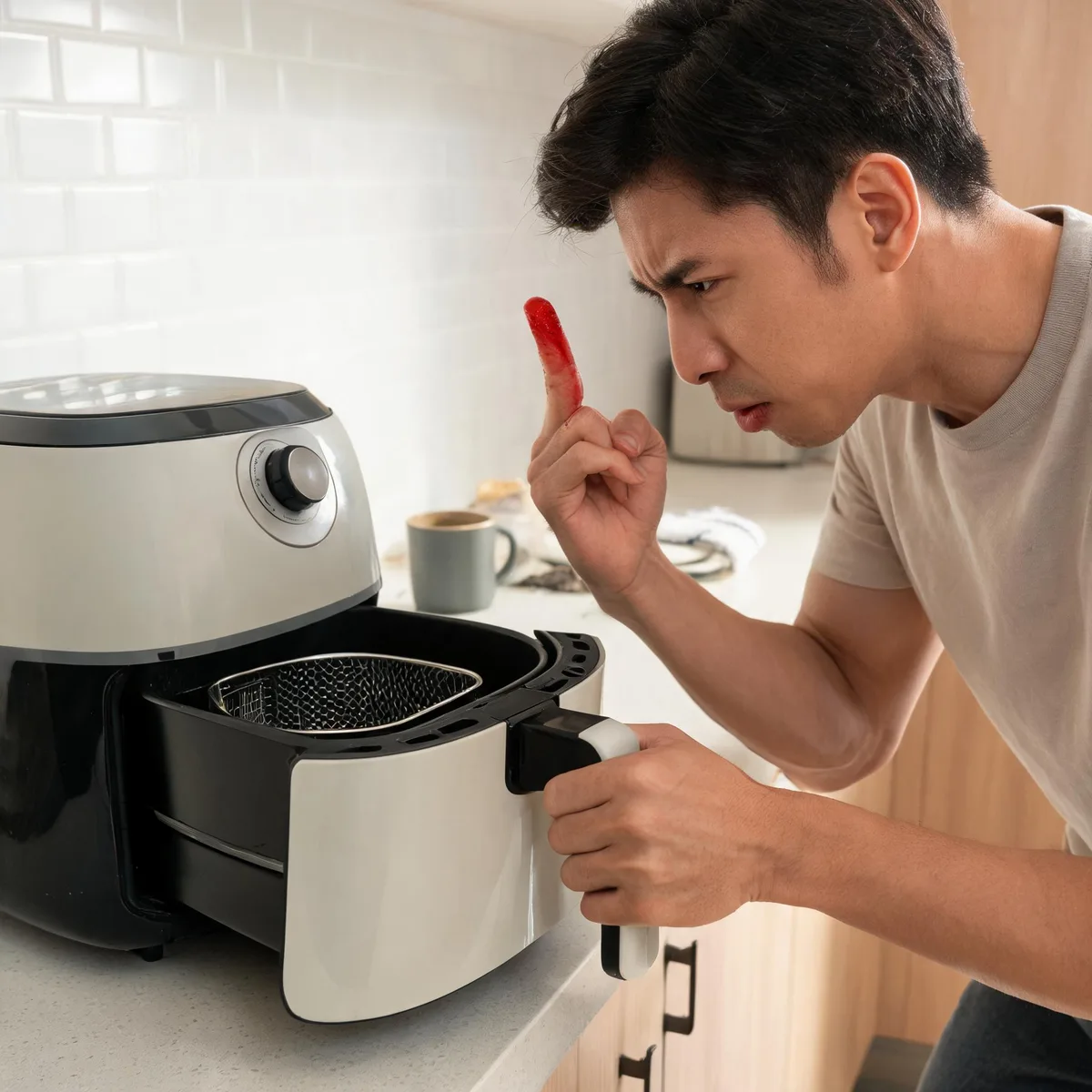
User Feedback 2: “The drawer doesn’t open I can’t use it because the drawer is stuck and has to be yanked on to get it open and I’m afraid over time, this will cause it to break! So I need to replace this appliance.” Lesson Summary: Check the smoothness of opening and closing of the drawer and basket when using it for the first time. Products that need to be pulled or shaken hard to close are unqualified in structural tolerance. Do not use them reluctantly, as the buckle will most likely break later.
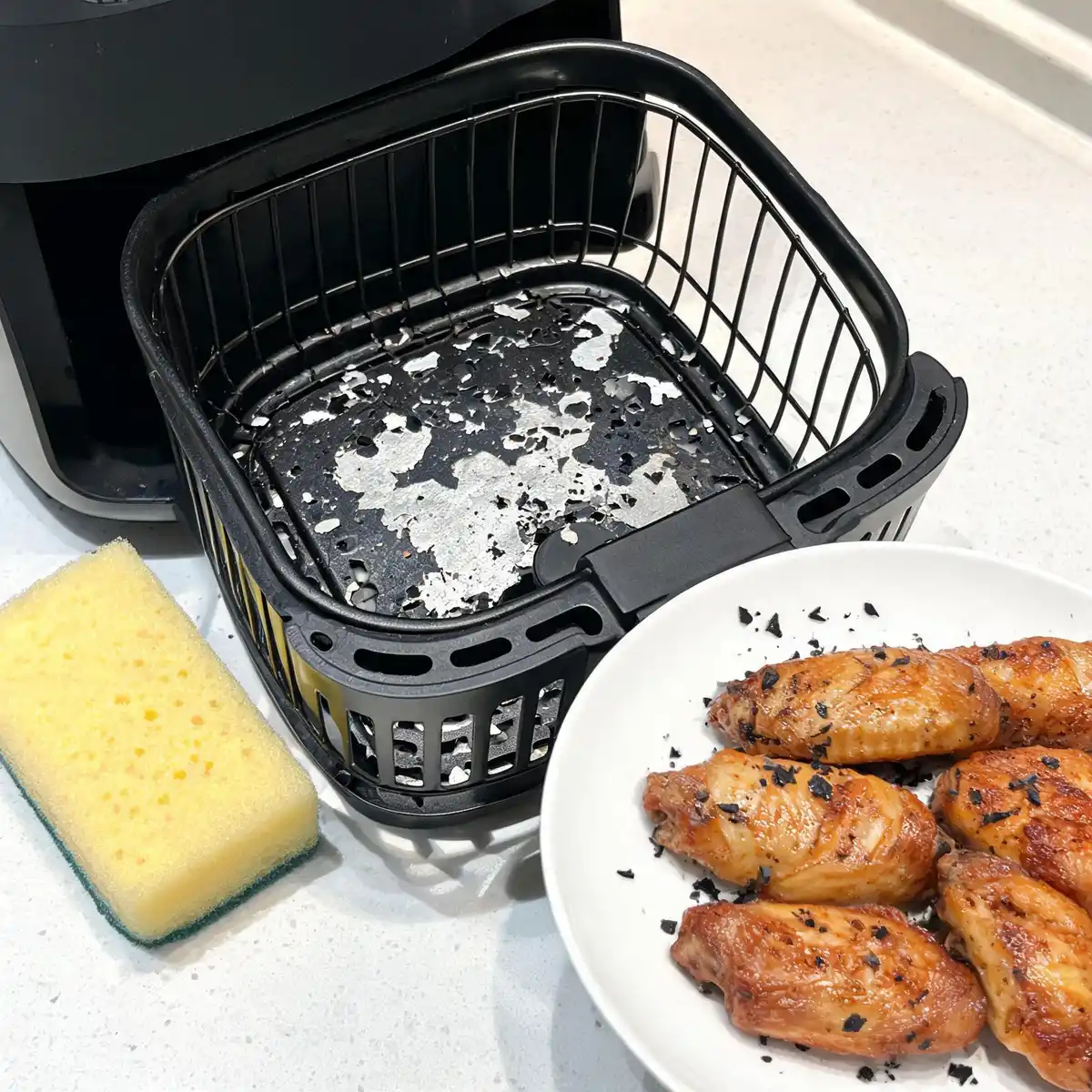
User Feedback 3: “the basket isn’t nonstick and I have to scrub a lot after every use… and the black “nonstick” basket color is already coming off after about 8-10 uses…” Lesson Summary: If the coating peels off within 10 times of normal use, it means the coating material is unqualified. Contact after-sales service to protect your rights in time. The peeled coating not only affects use, but also accelerates internal oil accumulation and aging, increasing the failure rate.
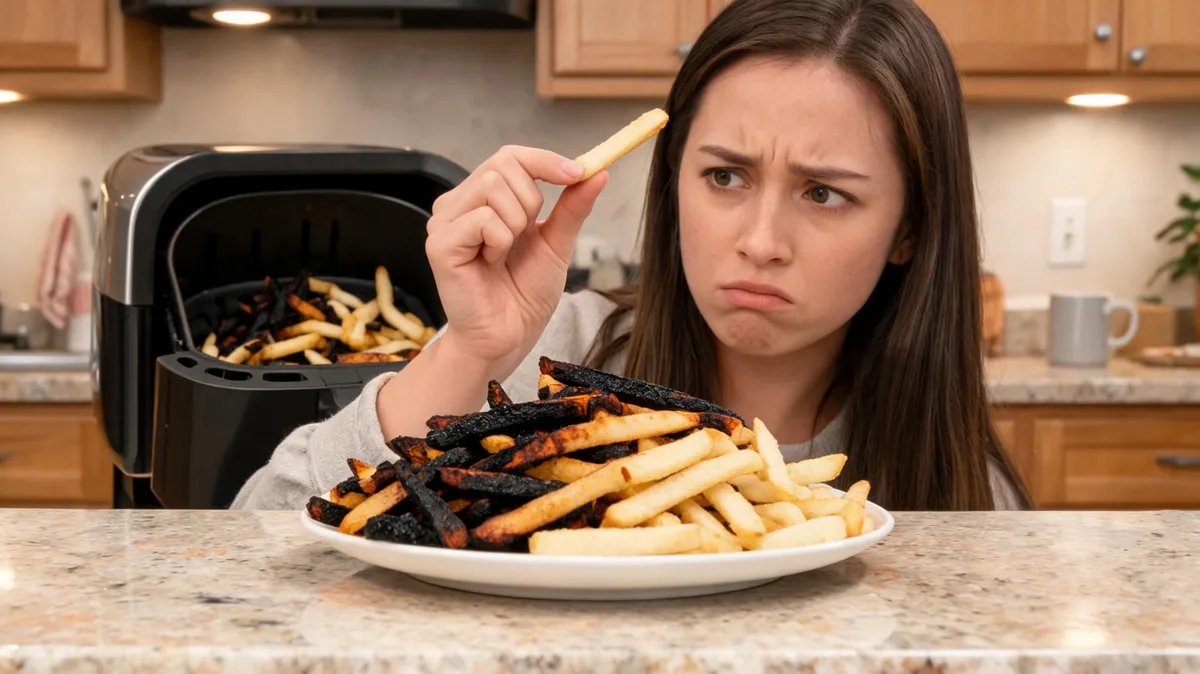
User Feedback 4: “It has been hard and cleaned numerous times still has a burning plastic smell. It does not cook the food all the thru! But it’s pretty good at burning it before it’s finished.” Lesson Summary: If there is still an obvious pungent plastic smell after 10 minutes of the first empty bake, it means that the shell or internal structural parts are made of non-high temperature resistant inferior plastic, which will not only accelerate the deformation and failure of parts, but also have health risks. It is recommended to stop using it.
Related Deep Analysis in This Category
- Difficult to Clean — 21% of complaints relate to this
- Non-Stick Coating Peeling — 36% of complaints relate to this
- Poor Cooking Performance — 27% of complaints relate to this
- Structure & Design Defects — 19% of complaints relate to this
🛠️ Practical How-To Guides
Based on the analysis above, we've prepared actionable daily solutions for you:
3 Simple Steps to Check Your Air Fryer's Circuit Safety at Home to Avoid Fire Risk
No professional tools required, ordinary people can master this circuit safety check method to eliminate hidden dangers of circuit aging caused by high temperature and high humidity
Read Full Guide →4 Buying Criteria to Avoid Low-quality Malfunction-prone Air Fryers
Teach you to choose air fryers with qualified quality control and low failure rate from the dimensions of core component materials, quality control certification, etc.
Read Full Guide →6 Daily Operation Tips to Extend Your Air Fryer's Lifespan by 5 Years
Aiming at the problem that core components are easy to age under high temperature, teach you to avoid machine-damaging behaviors in daily use to greatly reduce the failure probability
Read Full Guide →7 Early Failure Signs of Air Fryers: Catch Problems Before No Heating or Smoking Occurs
Sort out early warning signals of common faults, teach you to check hidden dangers in advance to avoid sudden faults and even fire risks
Read Full Guide →