Poor Quality & Easy to Damage in Bakeware: What 464,291 Reviews Reveal
Poor Quality and Fragility: The “Invisible Killer” in the Baking Utensils Industry
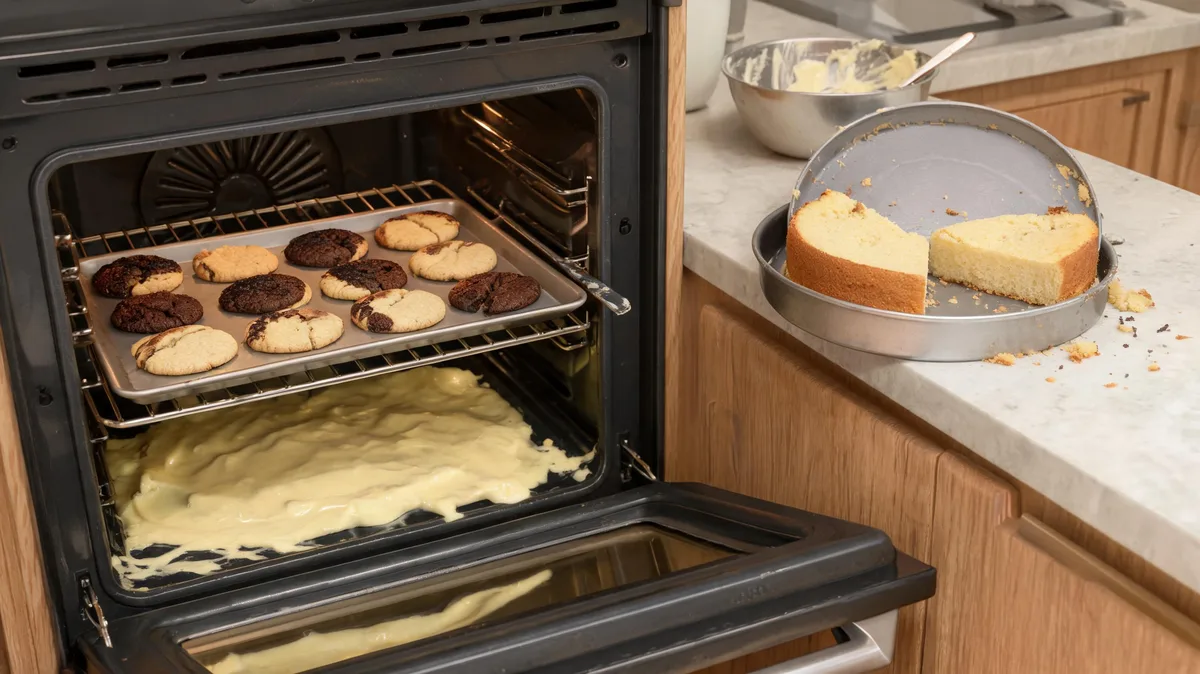
For many baking enthusiasts, the most frustrating moment is when they spend a whole afternoon preparing ingredients, only to have all efforts go to waste due to tool failure: a springform pan leaks batter all over the oven, rust from a cooling rack smudges freshly baked cookies, flaking non-stick coating mixes into the cake base. Our analysis based on 464,291 real user reviews covering 44,060 baking utensils shows that 42% of negative reviews are related to poor quality and easy damage, a proportion far higher than other issues such as food safety and inconsistent products, making it the most common pain point in current baking utensil consumption.
A typical user scenario: A novice baking enthusiast buys a “beginner set” including a baking tray, measuring cup and spatula for more than ten yuan for convenience. It works fine the first time, but when baking chiffon cake for the third time, the baking tray warps and deforms when heated, leaking half of the batter. After washing and placing it on the drain rack for a week, the cooling rack is already covered with a circle of red rust. When he contacts the seller for feedback, he is accused of “improper use and failure to dry properly”, so he can only accept the bad luck, throw it away and buy again, ending up spending more unnecessary money.
Why Are They of Poor Quality and Easy to Damage? —— In-depth Breakdown of Root Causes
Damage to baking utensils may seem like an accidental problem, but it is actually the result of a combination of multiple factors including materials, craftsmanship, quality control and information asymmetry. We break it down from three core dimensions:
Material Downgrade: “Jerry-building” Under Cost Compression
The current baking utensils track is facing fierce low-price competition. In order to minimize costs, many manufacturers directly downgrade raw materials: Baking trays that should use 0.5mm thick food-grade carbon steel are replaced with 0.2mm thin iron sheets, which deform as soon as they are heated in the oven; Spatulas that should use food-grade platinum silicone are replaced with recycled industrial silicone, which has a maximum temperature resistance of only 100°C and melts and leaches substances when put into the oven; Measuring cups that should use brand-new food-grade PP are replaced with recycled plastic with excessive impurities, which cracks and deforms when pouring hot water.
Some users reported that “the cookie press still leaches gray substances after being washed three times, ruining the entire batch of cookie raw materials”, which is a typical leaching problem of inferior materials. These leached impurities not only contaminate food, but may also pose food safety risks after long-term contact.
Lack of Craftsmanship and Quality Control: “Inherent Defects” From the Factory
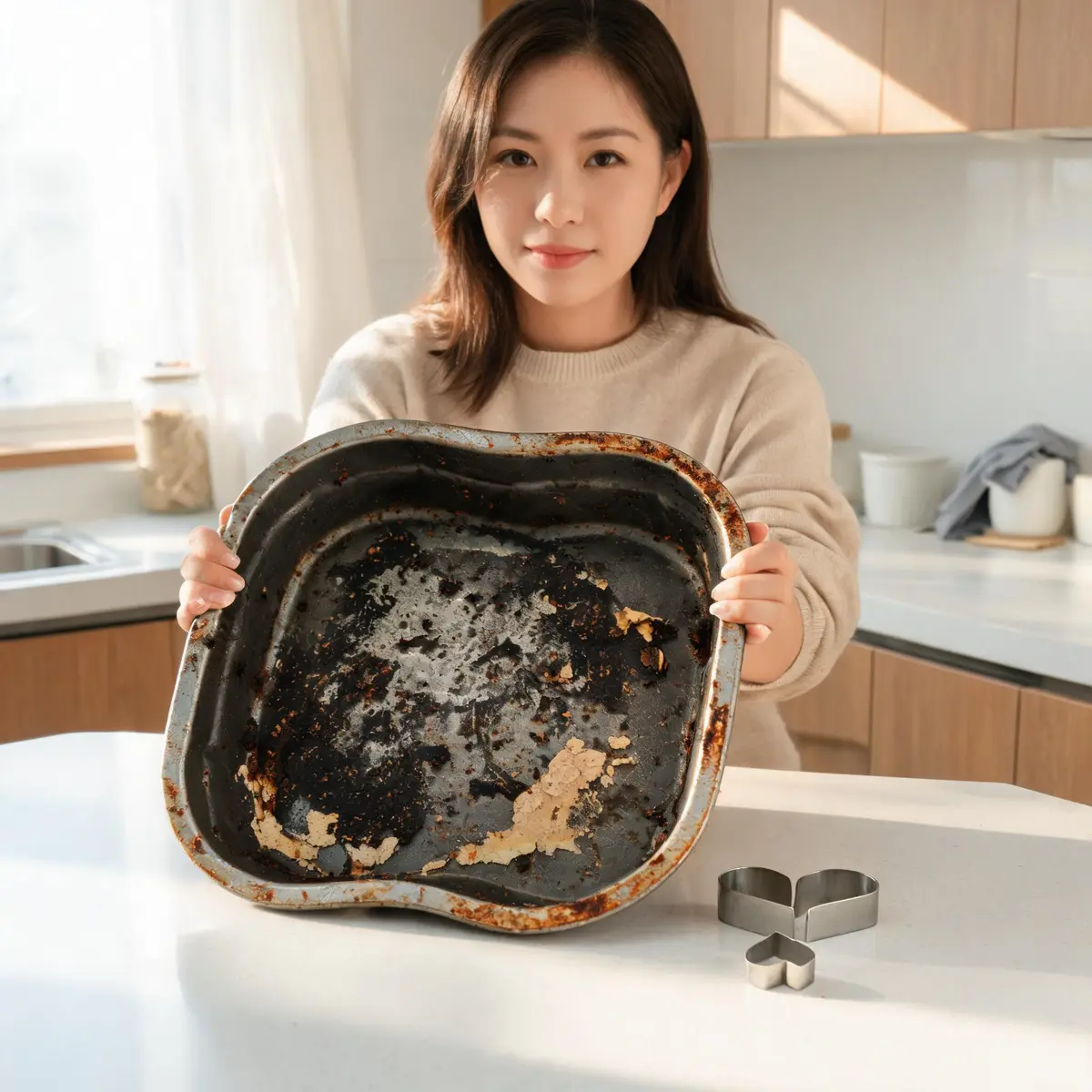
In addition to material downgrades, many manufacturers also cut necessary production processes and quality control links: The pre-treatment sandblasting process for non-stick coatings is omitted, resulting in insufficient coating adhesion that peels off after being wiped twice with a sponge; The crimping of metal molds is only pressed once, leaving tiny gaps where water seeps in after washing, leading to rust after several times of baking; The edge grinding process is completely omitted, making it easy to cut hands when taking and using.
More importantly, many small factories do not conduct any reliability testing before delivery: No 48-hour salt spray test to verify rust resistance, no more than 10 high-temperature cycle tests to verify deformation resistance, even appearance damage inspection is omitted. This is why users report situations such as “the baking tray was already broken on one side when I received it, completely unusable” and “the pie weights I received were all rusty, and I couldn’t even find the seller’s contact information”.
Insufficient Scenario Adaptation: “Man-made Damage” Caused by Information Asymmetry
A large part of damage also stems from merchants deliberately concealing the applicable scope of products: For example, ordinary plastic molds that can only withstand 100°C are marked as “baking molds”, users who don’t know put them directly into a 200°C oven and they melt; For example, if it is not marked “cannot be scrubbed with steel wool”, users scrape off the coating with steel wool and it is counted as man-made damage; For example, if it is not marked “cannot contact acidic ingredients for a long time”, users put lemon pound cake in a carbon steel mold and it gets rust spots the next day. This is the core reason why many users wonder “I obviously used it normally, why did it still break?”
Performance Comparison of “Poor Quality and Easy Damage” of Different Materials
For baking utensils of different materials, the damage characteristics of inferior products and the performance of qualified products are very different. We have compiled a comparison table of mainstream materials:
| Material Category | Typical Damage Performance of Inferior Products | Performance of Qualified Products (with User Positive Review Support) | Inherent Limitations |
|---|---|---|---|
| Carbon steel (baking trays, molds, cooling racks) | Wall thickness less than 0.3mm, easy to warp and deform during high-temperature baking; gaps in crimping, easy to accumulate water and rust after washing; poor coating adhesion, easy to fall off and leach substances | Wall thickness ≥0.4mm, no deformation when baked at 220°C; sealed crimping without gaps, no rust after 48-hour salt spray test; food-grade coating is scratch-resistant, does not fall off for more than 1 year under normal use User positive review support: “This baking tray is very good, what I received is completely consistent with the description, great texture, very high quality” |
Need to wipe off water stains in time, do not store acidic, high-salt ingredients for a long time |
| Silicone (spatulas, molds, baking mats) | Has pungent odor, melts and deforms when baked above 150°C; gray impurities leach out when rubbed, easy to break and shed crumbs when pulled hard | Clearly marked as food-grade, temperature resistance range covers -40°C ~ 230°C, no odor, good resilience, no leaching after repeated rubbing User positive review support: “It’s very easy to use for meal portioning, no problem for holding dips, olives, pickles, both size and material are very stable” |
Cannot be exposed to open flame, sharp objects can easily scratch the surface |
| Plastic (measuring cups, cutting molds, storage boxes) | Has pungent plastic smell, deforms and cracks when pouring hot water above 60°C; has burrs on edges that are easy to cut hands, breaks when dropped once | Clearly marked as food-grade PP/PC material, no deformation at temperature ≥100°C, edges are polished smooth, strong drop resistance User positive review support: “This set of cutting molds has a full range of shapes, the cutting edges are very sharp, and it is very efficient for making cookies” |
Cannot be placed in high-temperature environments such as ovens and air fryers, avoid cleaning with high-temperature mode of dishwasher |
How to Avoid Poor Quality and Easy Damage? —— Purchasing and Usage Guide
Based on material characteristics and user behavior data, we have compiled practical purchasing judgment standards and usage and maintenance methods to help you avoid the pitfalls of low-quality products:
Core Judgment Criteria When Purchasing
- Prioritize clear material labeling: All food-contact utensils must be clearly marked “food-contact grade”. For metal products, pay attention to the wall thickness parameter (carbon steel ≥0.4mm is qualified). Silicone products must be marked with a complete temperature resistance range. Plastic products must be marked with specific materials (PP/food-grade PC, etc.). Do not choose products without any clear material parameters.
- Pay attention to process details: Prioritize metal utensils marked with “sealed crimping” and “edge grinding and polishing”. Non-stick coatings must be clearly marked as food-grade non-stick coatings. Do not buy products that only advertise “non-stick” without any coating description.
- Avoid products significantly lower than the industry average price: The raw material cost of baking utensils is rigid. For example, the raw material cost of a standard-size carbon steel baking tray is more than 10 yuan. If the same size product is sold for only 9.9 yuan with free shipping, there must be material or process downgrades.
Correct Usage and Maintenance Methods
- Before using new utensils for the first time: For carbon steel products, you can do a seasoning treatment first: wash with warm water, wipe dry, brush a thin layer of oil, bake at 150°C for 10 minutes, then cool and wipe dry, which can greatly improve rust resistance and non-stick performance; For silicone and plastic products, wash with neutral detergent before first use. If unknown impurities are wiped off or there is a pungent odor, stop using immediately.
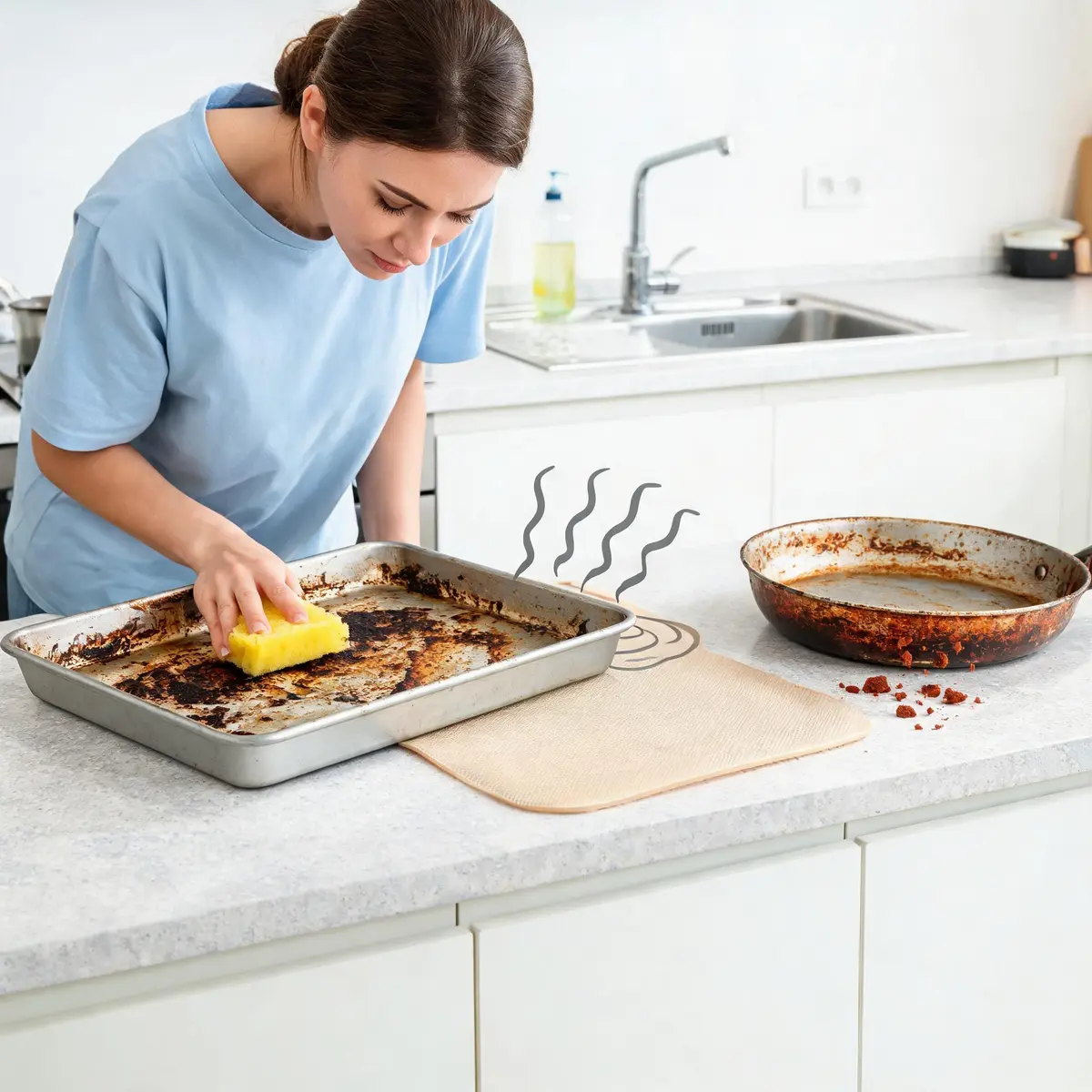
- Do not use steel wool or hard scouring pads to scratch the non-stick coating when cleaning, just wipe with a soft sponge cloth. All metal utensils should be wiped dry immediately after washing, do not soak in water for a long time, and do not store in humid places for a long time.
- Use strictly according to the marked applicable scenarios: Do not put non-metal utensils that are not clearly marked as oven-safe into high-temperature environments such as ovens and air fryers arbitrarily; All utensils should not be exposed to open flame, and should not hold acidic or high-salt ingredients for a long time.
Common Misconceptions Correction
- Misconception 1: “Stainless steel utensils will never rust”: Inferior stainless steel or 304 stainless steel will also rust when exposed to acid, alkali and salt ingredients for a long time, and also need to be wiped dry after use.
- Misconception 2: “Non-stick coatings can be scratched casually”: Even qualified food-grade non-stick coatings are afraid of scratches from sharp knives and hard cleaning tools. Avoid contact with metal shovels and steel wool when using.
- Misconception 3: “The cheaper the higher the cost performance”: The average service life of low-quality utensils is only 1/5 of that of qualified products. The cost of frequent replacement is actually higher than buying qualified products directly, and it will also bring additional losses from food waste.
“Pitfall Avoidance” Lessons From Real Users
We have selected the most representative user pitfall cases from hundreds of thousands of reviews, which you can refer to directly:
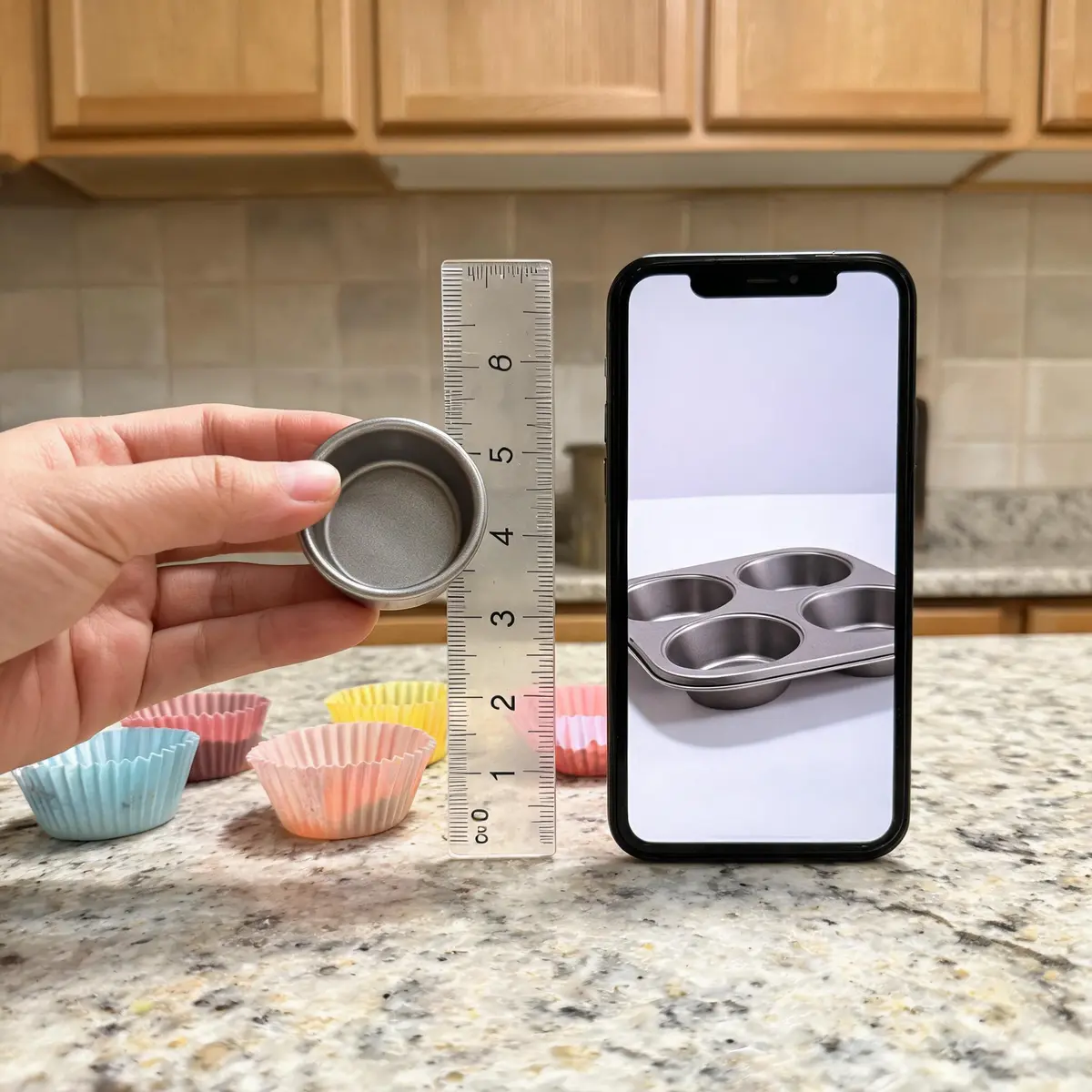
User Pitfall 1: “The springform pan I bought was marked as 5 inches, but I only received a 4.5-inch one, the size is very small, completely unusable, this is false advertising” ✅ Lesson Summary: When purchasing, don’t just look at the size publicity in the title, focus on the clear size marking on the parameter page. Check the core parameters as soon as you receive the goods, apply for return and exchange immediately if the product is not as described, don’t wait until you use it to find the problem.
User Pitfall 2: “The pie weights I received were all rusty, I couldn’t find the seller’s contact information, the phone number was empty, and I finally had to complain to the platform to get a new one” ✅ Lesson Summary: Before purchasing, you can first confirm whether the seller’s after-sales channels are smooth. Check the product surface for rust, damage, deformation and other problems as soon as you receive the goods. Don’t delay if there is a problem, go through the after-sales process immediately.
User Pitfall 3: “The cooling rack I bought did not match the promotional picture, the actual size is only 3/4 of the advertised size, it feels very poor quality, obviously shoddily made” ✅ Lesson Summary: When purchasing, don’t just look at the main picture promotion, read more moderate and negative reviews. If there are concentrated feedbacks of “product not as described”, “thin material”, “poor quality”, avoid such products directly.
User Pitfall 4: “I didn’t read the temperature resistance label, put the plastic mold in the 200°C oven, it melted and deformed directly, and also stained the inner wall of the oven, I spent a long time cleaning it up” ✅ Lesson Summary: Before using any baking utensils, first confirm the applicable scenarios and temperature range. Do not put non-metal utensils without clear temperature resistance labels into high-temperature environments such as ovens and air fryers arbitrarily to avoid unnecessary losses.
Related Deep Analysis in This Category
- False Advertising & Description Mismatch — 35% of complaints relate to this
- Hard to Clean & Material Safety Risks — 18% of complaints relate to this
- Poor Usability Performance — 28% of complaints relate to this
🛠️ Practical How-To Guides
Based on the analysis above, we've prepared actionable daily solutions for you:
Don't Just Buy for Looks! Choose These 3 Durable Materials to Say Goodbye to Rust and Peeling
A deep dive into the material dos and don'ts for metal, ceramic, and plastic tableware, teaching you to spot flimsy materials and choose truly durable options.
Read Full Guide →Tableware Cracking or Peeling After a Few Uses? Stop These 4 Fatal Daily Habits Now!
Uncover mistakes like extreme temperature changes and harsh cleaning that accelerate damage, plus a 1-minute home test to spot hidden cracks and defects early.
Read Full Guide →Tired of Broken Tableware Delivered? 3 Pro Tips for Checking Packaging and Inspecting Your Unboxing
From asking the right packaging questions before buying to the shake-and-listen unboxing trick, drastically reduce broken deliveries and keep sellers accountable.
Read Full Guide →How to Avoid Bakeware Coating Peeling, Deformation and Melting: 3 Rules Before Oven Use
Clarify the high temperature resistance limit and use taboos of different bakeware materials, completely solve the problems of coating peeling, deformation and melting during use.
Read Full Guide →How to Choose Durable Home Bakeware That Won't Rust or Peel
Start with material and craft details to avoid common pitfalls of low-cost inferior bakeware, and pick the right product that can be used for years.
Read Full Guide →How to Identify Inferior Bakeware Before First Use
Judge the quality of bakeware in 3 steps: touch the edge, check the coating and verify the label, to avoid using inferior products that are easy to break and may endanger health.
Read Full Guide →How to Prevent Bakeware From Rusting: 4 Daily Cleaning & Storage Tips
Aiming at rust caused by curled edge water accumulation and improper cleaning, teach you correct daily after-use care methods to greatly extend the service life of bakeware.
Read Full Guide →