Poor Usability Performance in Bakeware: What 464,291 Reviews Reveal
Substandard Use Performance: The “Hidden Killer” in the Bakeware Industry
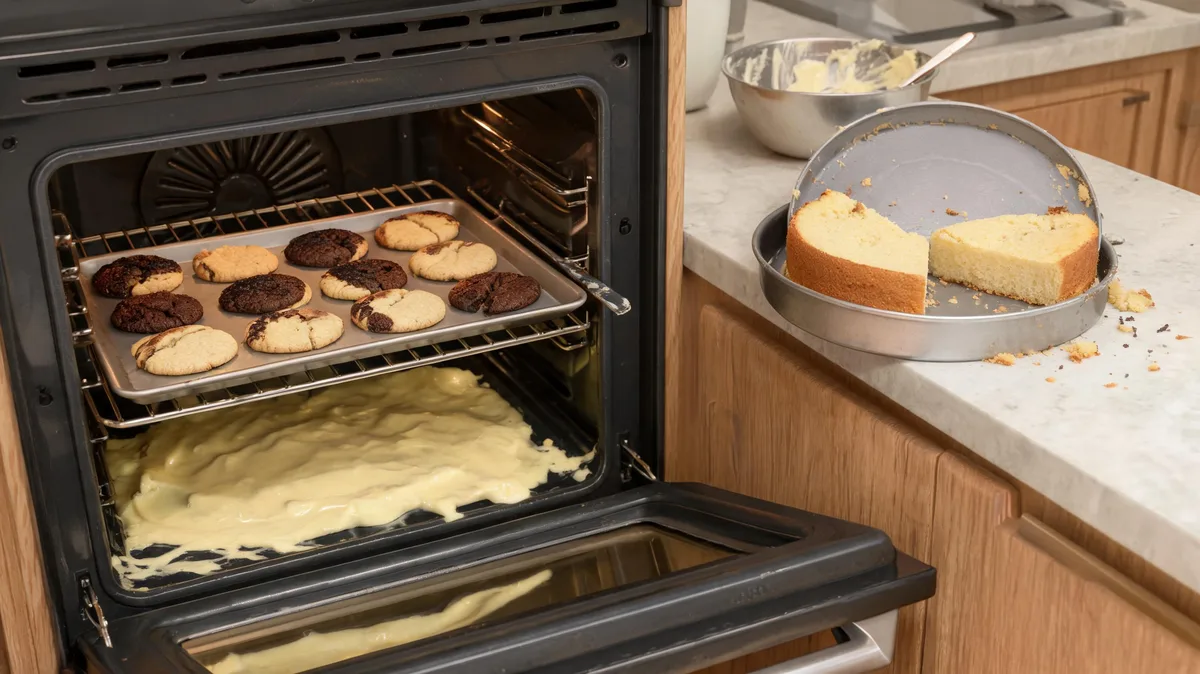
Many novice baking enthusiasts never suspect their tools are to blame for their first failed attempt — they either fault their insufficient whipping, or their oven’s inaccurate temperature, and rarely realize that the ingredients they spent hours preparing may have been doomed to fail from the moment they picked an unqualified bakeware product. After compiling 464,291 real user reviews covering 44,060 products, we found that 28% of negative reviews point to “substandard use performance”, a proportion far higher than other complaint types such as quality issues and logistics problems, making it the most easily overlooked hidden pitfall for ordinary consumers when purchasing. Ms. Lin, a resident of Guangzhou, bought a top-selling springform cake pan last year to make a birthday cake for her child. The first time she used it, the batter leaked, flowed onto the oven heating tube and emitted large amounts of white smoke. After she finally cleaned up the mess, the baked cake was so sticky it could not be pried out. She assumed it was her poor baking skills, and tried three times in a row without success. It was not until she communicated with other baking enthusiasts later that she learned the problem was the excessively large tolerance of the mold’s spring buckle and unqualified coating quality. The tens-of-yuan mold wasted hundreds of yuan worth of ingredients, and completely dampened her enthusiasm for baking. That mold is still gathering dust in the storage cabinet on her balcony now.
Why Does Use Performance Fail to Meet Standards? — In-depth Dissection of Root Causes
We dissected the issue from three dimensions: materials science, manufacturing process, and scenario adaptation, and found that the vast majority of performance problems are not caused by improper user operation, but by cost-cutting across the entire product chain from design to production:
Materials Science Level: Adulteration of Basic Materials Is the Core Incentive
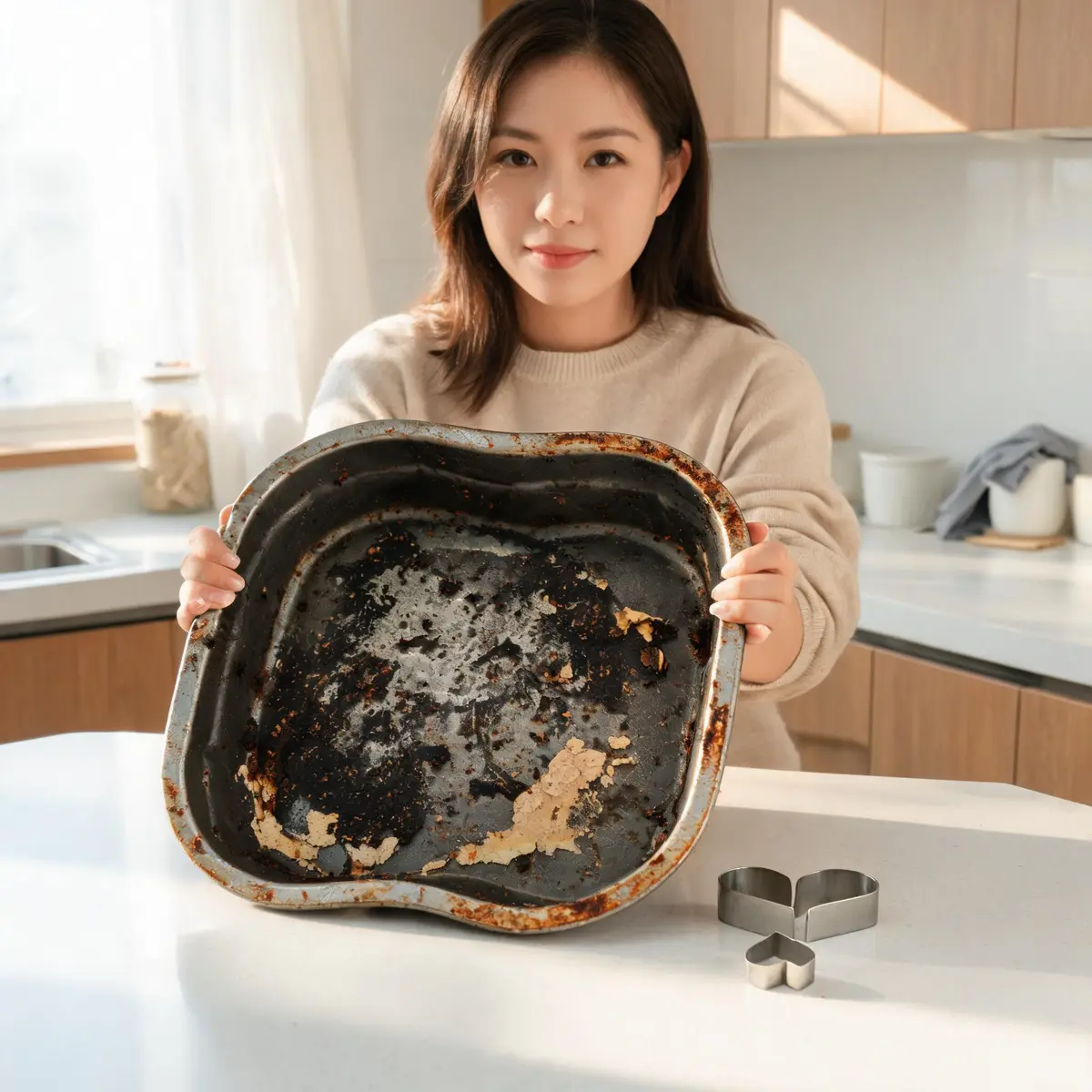
The core performance of bakeware is first determined by its basic material. For common carbon steel baking sheets, for example, qualified products generally have a steel plate thickness of 0.4mm or above, uniform alloy composition, and thermal conductivity fluctuation of no more than 5, so there will be no local overheating. Inferior products use recycled and remelted thin steel plates, which may only be 0.2mm thick, with high impurity content and poor thermal conductivity uniformity. It is like frying eggs with thin tinplate: one side is already burnt while the other side is not yet cooked, which is the core reason many people find their baked goods “burnt on one side and undercooked on the other”. For silicone molds, qualified food-grade fumed silicone has stable molecular chains, and can be used for a long time within the range of -40°C to 230°C without deformation. Inferior precipitated silicone only has an upper temperature resistance limit of 120°C, and will soften and collapse when placed in a 180°C oven, unable to support the weight of the batter at all, naturally leading to leakage problems. As for non-stick coatings, the adhesion of qualified three-layer composite non-stick coatings reaches Grade 1 of the national standard, and will not fall off under normal use. Inferior single-layer coatings only have adhesion below Grade 3, and will flake off after a few uses. These flakes mixed into food are the “gray impurities” mentioned in user reviews, and there may also be a risk of non-food-grade substance precipitation.
Manufacturing Process Level: Process Reduction Directly Leads to Functional Failure
Many performance problems are caused by cutting corners in the manufacturing process. For example, for the core sealing structure of springform cake pans, the spring buckle tolerance of qualified products is controlled within 0.1mm, and it is completely sealed after buckling, so it will not leak even when filled with water. The spring buckle tolerance of inferior products may exceed 1mm, and there are obvious gaps after buckling, so the batter will naturally leak everywhere. For cookie embossing molds, the pattern depth of qualified products is at least 0.3mm, so baked cookies have clear patterns. Inferior products only have an embossing depth of 0.1mm to save materials, and when cookies expand under heat during baking, the patterns are naturally stretched flat and disappear. As for anti-rust processes, many small metal bakeware pieces will rust quickly after getting wet if they have not undergone anti-rust treatments such as anodizing or nickel plating, making them completely unusable.
Scenario Adaptation Level: Lack of User Research Leads to Products Being Divorced from Actual Demand
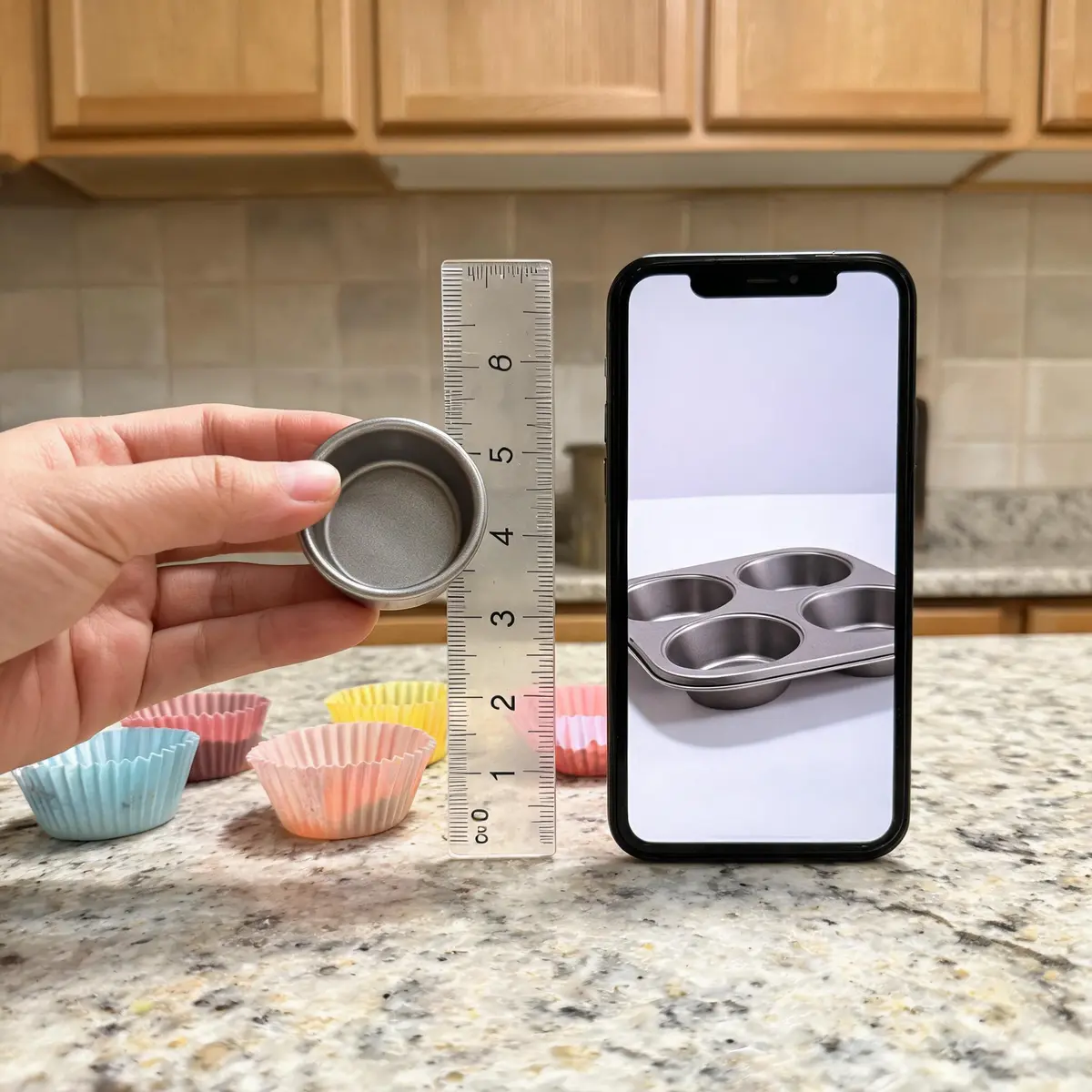
Many manufacturers do not research the baking needs of ordinary households at all when designing products, and only make low-end versions of commercial products to cut costs. For example, a cake mold advertised as 6 inches may actually only have an inner diameter of 5.5 inches, which cannot hold the amount of batter for a standard 6-inch cake recipe at all. Some cooling racks are a full size smaller than the inner cavity of conventional household ovens, so they can only hold half of the baked cookies at a time, making them extremely impractical.
Comparison of “Substandard Use Performance” Performance of Different Materials
The performance of bakeware made of different materials varies greatly, and the performance of qualified products and unqualified products is almost worlds apart. We have compiled a performance comparison of common materials:
| Material Type | Performance of Qualified Products | Common Problems of Unqualified Products | Applicable Scenarios |
|---|---|---|---|
| Carbon steel/aluminum alloy metal | Uniform thermal conductivity, high strength, strong deformation resistance, qualified non-stick coating for easy demolding, no rust for more than 3 years under normal use | Uneven thermal conductivity caused by too thin steel plate (burnt on one side, undercooked on the other), coating peeling and flaking, poor spring buckle sealing leading to leakage, easy to rust | High-frequency use utensils such as baking sheets, cake molds, cookie molds |
| Food-grade silicone | Wide temperature resistance range (above -40°C ~ 220°C), easy demolding, drop-resistant, no peculiar smell | Softens, deforms and leaks at high temperatures, has pungent odor, easy to be scratched | Scenarios requiring easy demolding such as ice trays, mousse molds, muffin cups |
| High borosilicate glass/ceramic | Stable chemical properties, no precipitation of harmful substances, high appearance value, easy to clean | Poor thermal shock resistance (easy to crack under sudden temperature changes), slow thermal conductivity leading to undercooking, heavy weight and fragile | Baking pans, pie pans, baking storage containers, etc. |
Qualified products, regardless of material, can meet corresponding use needs. For example, the comment “This baking sheet is fantastic, exactly as I ordered, very good quality” mentioned in user positive reviews is a typical performance of qualified metal utensils. Another positive review mentions “There are many pattern options, the cutting edges are very sharp, and the cookies made turn out very well”, which is the normal performance of embossing molds with qualified craftsmanship.
How to Avoid Substandard Use Performance? — Purchase and Use Guide
Key Judgment Indicators When Purchasing
- Core material parameters: For metal utensils, prioritize checking the steel plate thickness, which should be at least 0.4mm. It should have an obvious heavy feeling when held in the hand, not light and flimsy. Non-stick coatings should be clearly marked “for food contact” with clear coating composition instructions. For silicone utensils, check the marked temperature resistance range, which should at least cover the interval of -40°C to 220°C. Do not choose products without a marked temperature resistance range. Glass utensils should be clearly marked “high borosilicate heat-resistant glass”, with a temperature difference resistance of at least 120°C (that is, it will not crack when placed in 0°C water from a 120°C environment).
- Design detail inspection: For spring buckle molds, manually test the buckle: a piece of A4 paper should not be inserted into the gap after buckling. For embossing molds, feel the depth of the pattern: your nail should clearly feel the depression of the pattern (depth ≥ 0.3mm). For set products, confirm the size of each accessory. For example, the size of the cooling rack should match the inner cavity of your oven and the size of your baking sheet to avoid the situation that it cannot fit after purchase.
- Process details worth paying a premium for: If your budget allows, prioritize aluminum alloy utensils with anodizing treatment, which have more than 3 times higher rust resistance than ordinary galvanized products. Prioritize products with three-layer composite non-stick coatings, which have a service life more than 5 times longer than single-layer coating products. Prioritize integrally formed molds, which have better sealing performance than spliced and welded molds, are less prone to leakage, and are less likely to hide dirt.
Correct Use and Maintenance Methods
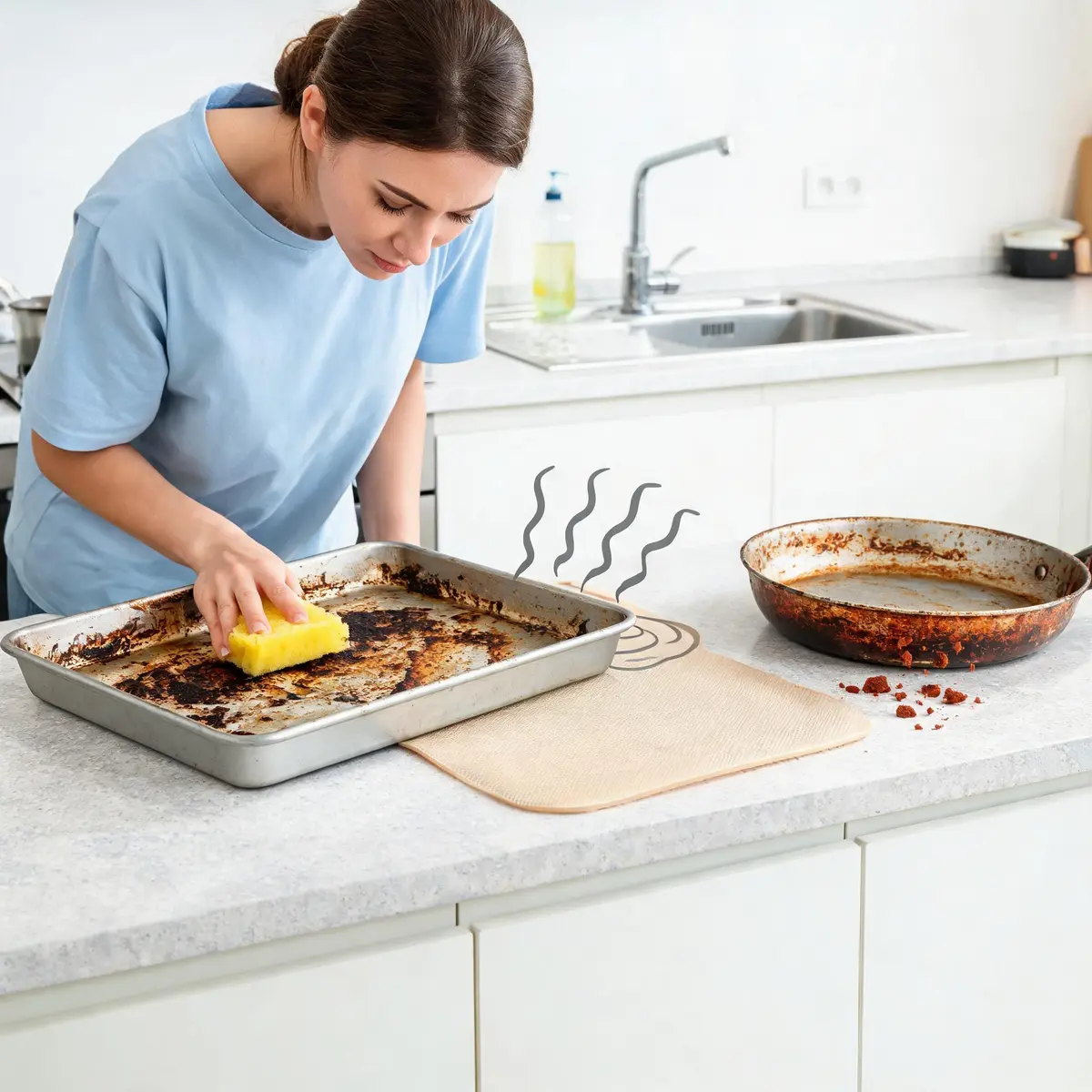
- Do not use sharp cleaning tools such as steel wool or wire brushes on non-stick coating utensils. Use a sponge or soft brush for cleaning to avoid scratching the coating. Do not use sharp knives or spatulas to cut food in the mold; it is best to demold the food before cutting.
- Silicone utensils should not be in direct contact with open flames or oven heating tubes to avoid deformation caused by excessive local temperature. Do not scratch the silicone surface with sharp objects to avoid damage.
- Do not subject glass/ceramic utensils to sudden temperature changes. Do not place a glass plate just taken out of the oven directly on the countertop; it is best to place it on a heat insulation pad, and do not pour cold water directly on it.
- All bakeware should be wiped dry of moisture before storage after use. Do not place them in a humid environment for a long time to avoid rusting of metal parts.
Common Misconception Correction
- Misconception 1: The cheaper the product, the higher the cost performance: Many molds sold for 9.9 yuan with free shipping use 0.2mm thin steel plates, which have uneven thermal conductivity and easy-to-peel coatings. They not only waste ingredients, but also may have food safety risks, so they actually have lower cost performance.
- Misconception 2: All silicone is high temperature resistant: Silicone products without a marked temperature resistance range mostly use inferior precipitated silicone, which will deform at 150°C and must not be used in the oven.
- Misconception 3: Bakeware can hold food for a long time: Acidic fruits, batter, etc. will corrode metal coatings and silicone surfaces. After making food, demold and clean it in time, and do not store it in the mold for a long time.
“Pitfall Avoidance” Lessons from Real Users
We selected several of the most representative user feedback from 460,000 reviews to help you avoid pitfalls in advance from others’ failures:
- User negative review: “Springform pan (NOT 5IN ONLY 4 1/2) BEWARE IT IS A 5 IN PAN IT IS A 4 1/2 INCH IT IS SO TINY ITS RIDICULOUS FALSE ADVERTISING!” Lesson summary: When purchasing molds, do not only look at the nominal size advertised by the merchant, confirm whether the marked size is “inner diameter size” or “total size with frame”. Many merchants will label the total size as the usable size, and the product you buy either cannot fit into the oven, or cannot hold the ingredients of the conventional formula, making it completely unusable.
- User negative review: “NO washed each pieace of the press with dish detergent, 3 times!! coockie dough was still coming out with gray stuff, totally ruined all of my cookie dough. RETURNED” Lesson summary: If a new mold still sheds gray/black debris after being washed more than 3 times with neutral detergent, it means that the coating adhesion is seriously substandard, which is a food safety hazard. Do not take chances and continue to use it, apply for return or exchange immediately.
- User negative review: “Very disappointed, the cooling rack doesn’t fit like it shows in the picture, covers 3/4 maybe. 1 cupcake pan for 12 only. Feels and looks very cheaply made.” Lesson summary: When purchasing baking sets, do not only look at the parameters of the main product, carefully check whether the size and capacity of each accessory meet your use needs. Many low-priced sets have accessories that are just makeweights, with mismatched sizes and too small capacity, which are completely unusable after purchase and a pure waste of money.
- User negative review: “rusty pie chain weights I don’t know if it is the manufacturer or the retailer, but I got a rusty set, tried to find the retailer (showed a different name when I looked for their website)–disconnected phone, had to file a complaint with the platform, which got a rapid response by phone and new product sh” Lesson summary: When buying small metal bakeware pieces, confirm that the product detail page has clear anti-rust treatment instructions. Check for rust, paint peeling and other problems as soon as you receive the goods. If you cannot contact the merchant, contact the shopping platform to intervene in rights protection in time to avoid losses.
Related Deep Analysis in This Category
- False Advertising & Description Mismatch — 35% of complaints relate to this
- Hard to Clean & Material Safety Risks — 18% of complaints relate to this
- Poor Quality & Easy to Damage — 42% of complaints relate to this
🛠️ Practical How-To Guides
Based on the analysis above, we've prepared actionable daily solutions for you:
Baking Batter Leaking Everywhere? 3 Tips to Choose & Use Molds Correctly to Avoid Messes
Aiming at the problems of poor sealing of spring buckles and deformation of inferior silicone at high temperature, teach you practical skills from purchase to use to eliminate batter leakage.
Read Full Guide →Sticky Demolding & Ruined Patterns? 4 Steps to Achieve Non-Stick Demolding with Complete Patterns
Aiming at the problems of sticky demolding and pattern disappearance caused by too shallow mold lines and unqualified non-stick coatings, teach you identification and preprocessing tips to get complete demolding easily.
Read Full Guide →Why Your Baked Goods Are Burnt On One Side And Raw On The Other? 3 Ways To Fix Uneven Baking
Aiming at the problems of local burning and undercooking caused by uneven heat conduction of thin steel plates and inferior metals, teach you practical methods of choosing the right molds and adjusting baking parameters.
Read Full Guide →