Wrong Size & Poor Fit in Bed Linens: What 195,723 Reviews Reveal
Mismatched Size and Poor Fit: The “Hidden Killer” in the Bedding Industry
Have you ever spent hours picking out bedding, only to find you can barely get it over your mattress no matter how hard you try, or it slips completely out of place after just a couple of nights of use? Many people blame themselves for “buying the wrong size”, but few know this is actually a widespread “hidden defect” in the industry. We analyzed 195,723 real user reviews covering 49,913 products, and found that 32% of negative reviews are related to “mismatched size and poor fit”. Its complaint rate is far higher than common issues like inferior material quality or strange odor, making it the well-deserved “hidden killer” of bedding consumption.
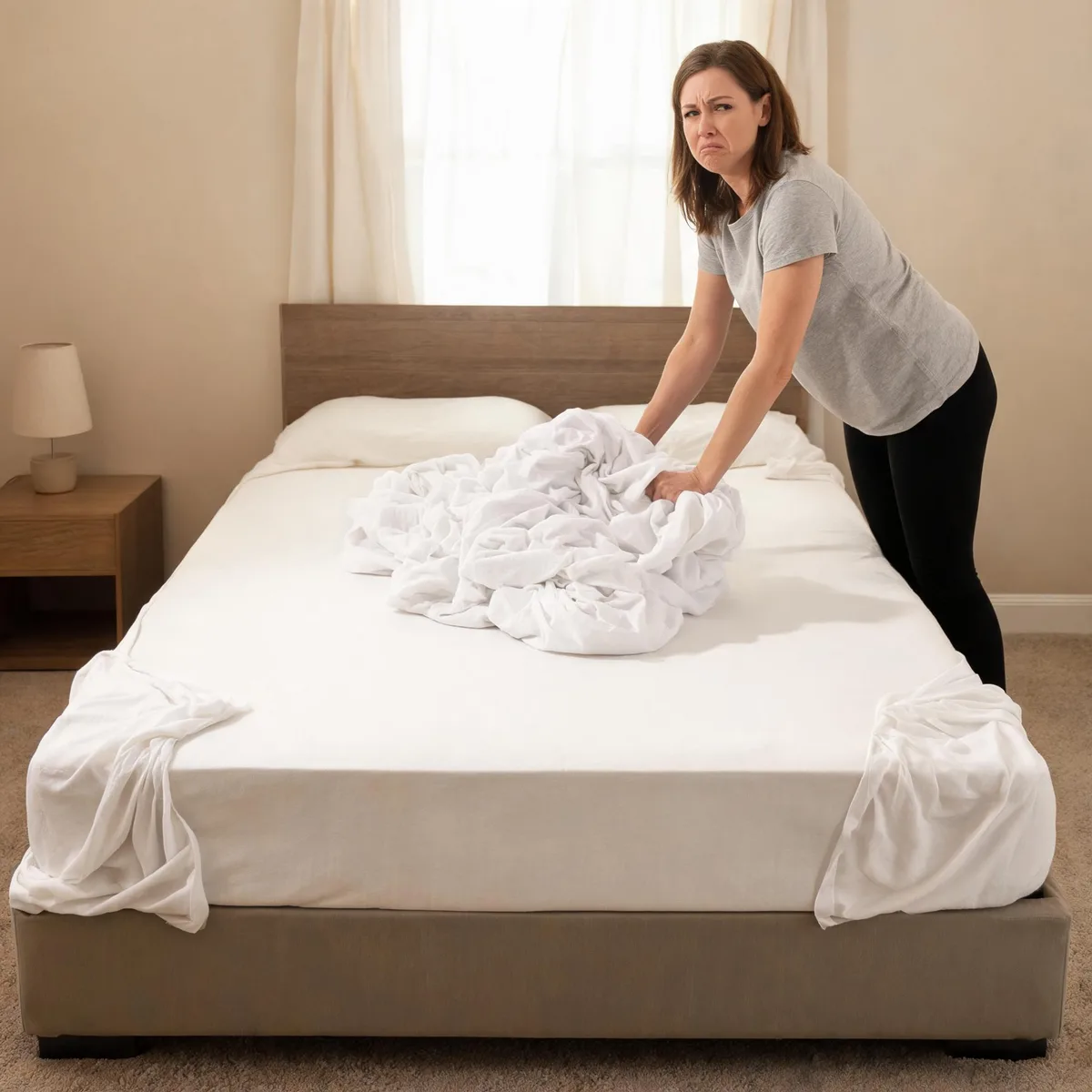
Ms. Chen, a resident of Hangzhou, replaced her old mattress with a standard Queen size innerspring mattress last month. She specifically ordered a fitted sheet marked “fits standard Queen size” on the product page. When she first unboxed it, the sheet fit snugly, and she thought she had chosen the right product. But after washing it once according to the instructions, the elastic bands at the four corners became completely loose. Every morning when she woke up, the fitted sheet had slipped to the middle of the mattress, and she could even feel the wrinkled fabric digging into her when she turned over at midnight. After struggling with it for half a month, she had to throw it away and repurchase. She always thought she was just unlucky to get a defective product, but had no idea this is a common pitfall caused by industry-wide problems.
Why Do Mismatched Sizes and Poor Fit Occur? An In-depth Breakdown of Root Causes
We analyzed this issue from three dimensions: material science, manufacturing process, and user usage habits, and found that the core of the problem is the combined result of missing industry standards and manufacturers’ cost control measures:
1. Inconsistent size standards across the supply chain
At present, specification names for domestic bedding (King/Queen/Cal King, etc.) are only for classification reference, with no mandatory unified size requirements. Different manufacturers may have size definitions for the same specification that deviate by 5-10cm, which is equivalent to shoes all marked as size 37 having an inner length difference of half a size across different brands. Buying solely based on specification names will inevitably lead to pitfalls. Some users reported that their standard Cal King mattress fits loosely and shifts when paired with a same-specification fitted sheet, which is caused by the manufacturer’s size definition deviating too much from the general mattress standard.
2. Inferior core accessories and fabric materials
The anti-slip core of a fitted sheet is the surrounding elastic band. Many manufacturers use low-elasticity recycled rubber to make elastic bands to cut costs. Its elasticity decay rate is 3-5 times that of brand-new natural rubber, and it will become loose and fail after 1-2 washes, which corresponds to the problem many users report of “elasticity became too loose after one wash following instructions”. In addition, if pure cotton fabric skips the pre-shrinking process, its washing shrinkage rate can reach 8%-10%, far higher than the national recommended standard of within 3%. It will directly shrink a full size after washing and become completely unusable.
3. Not adapted to current user usage habits
10 years ago, the height of mainstream mattresses was generally 15-20cm, but now more than 60% of users add a 2-5cm latex pad or memory foam thin pad on top of their mattress, bringing the total height to generally 22-28cm. However, many manufacturers still design the skirt height of fitted sheets at 18-20cm according to the 10-year-old standard. Even if you barely get it on, it will slip off with slight movement. Coupled with the lack of quality control processes in some manufacturers, the cutting process error can reach 2-3cm, further amplifying the fit problem.
Performance Comparison of “Mismatched Size and Poor Fit” for Different Materials
The physical properties of different fabrics vary greatly, and the corresponding size problem performances are also completely different. We have compiled a performance comparison of mainstream materials:
| Material Type | Common Size Issues | Dimensional Stability | Key Precautions |
|---|---|---|---|
| Pure Cotton | Products without pre-shrinking treatment shrink severely after washing, with a maximum shrinkage rate of 10% | Average (can reach Good level after pre-shrinking treatment) | Confirm whether pre-shrinking treatment is applied when purchasing, avoid high temperature during washing |
| Polyester fiber (microfiber) | Low gram-weight inferior products are easy to deform and loosen after use, and the matching elastic band is prone to slack | Excellent | Prioritize products with gram weight ≥ 100g/㎡, confirm the elastic band is configured for the full circumference |
| Regenerated cellulose fiber (Tencel/Lyocell) | Easy to deform and stretch if pulled hard or dried at high temperature after washing | Good | Lay flat to dry after washing, avoid high-temperature drying |
Qualified products can fully leverage the advantages of their materials. For example, some users reported that their padded Extra Deep Twin XL mattress fits very well with a compliant microfiber fitted sheet, and no shifting occurs after washing.
How to Avoid Mismatched Sizes and Poor Fit? Purchasing and Usage Guide
We have compiled actionable purchasing and usage rules targeting the 4 issues consumers care most about:
Core Purchasing Rules
- Do not only look at the specification name, be sure to check the actual size: The standard Queen mattress size is 152cm×203cm, and the King mattress is 193cm×203cm. When purchasing a fitted sheet, confirm that its length and width are 2-3cm larger than the mattress to reserve allowance; when purchasing a duvet cover, confirm that its size is 1-2cm larger than the duvet insert for easy fitting. Do not place an order relying solely on “Queen/King” labels.
- Focus on the skirt height parameter for fitted sheets: If you have added a thin pad to your mattress with a total height of H, choose a fitted sheet with a skirt height of H+5
8cm. For example, for a mattress with a total height of 25cm, choose a fitted sheet with a skirt height of 3033cm, which can stay stably fitted even if there is slight shrinkage after washing. - Pay attention to elastic band configuration: Prioritize fitted sheets with full-circumference elastic bands, do not choose styles with elastic bands only at the four corners. The width of the elastic band is preferably more than 1cm, as the wider the width, the slower the elasticity decay rate.
Usage and Maintenance Rules
- Wash pure cotton bedding with warm water below 30℃, avoid high-temperature hot water, and do not dry at high temperature for a long time, which can reduce more than 80% of abnormal shrinkage.
- Do not wring Tencel/Lyocell bedding hard after washing, just lay it flat to dry, avoid high-temperature drying with a dryer to prevent deformation and stretching.
- If the fitted sheet has slight slack, you can install fitted sheet fixing clips at the four corners, or manually sew a section of elastic band to solve the slipping problem.
Common Misconception Correction
- ❌ Misconception: It will fit as long as the specification name matches the mattress: The specification size deviation of different manufacturers can reach 10cm, so you must check the actual marked size.
- ❌ Misconception: The tighter the fitted sheet, the better: Reserve about 5cm of allowance for the skirt height. Too tight a fit will pull the elastic band for a long time, which will instead accelerate slack, and it will not fit after shrinkage.
- ❌ Misconception: All bedding has similar shrinkage rates: The shrinkage rate of non-pre-shrunk pure cotton can reach 10%, while the shrinkage rate of microfiber is less than 1%, a difference of up to 10 times.
“Pit Avoidance” Lessons from Real Users
We selected the most representative cases from real negative reviews to help you avoid pitfalls from other people’s bad experiences:
- User negative review: “Washed one time following instructions and already the elastic is too loose.” Lesson summary: If the bedding detail page does not clearly explain the material and process of the elastic band, it is very likely to use low-elasticity recycled rubber, which will become loose and fail after 1-2 washes. Prioritize checking the relevant description of the elastic band when purchasing.
- User negative review: “Too much shrinkage! The colors of this duvet are lovely and they are why I purchased it. However, after just one wash & drying (cold water/permanent press dryer setting) it shank so much I was dismayed. I know cotton shrinks somewhat but this amount was ridiculous – and the duvet looked ridiculous” Lesson summary: Be sure to confirm whether pre-shrinking treatment is applied when buying pure cotton bedding. The shrinkage rate of pure cotton products without pre-shrinking can reach up to 10%, which means a 1.8m duvet cover will shrink to 1.6m after washing, completely unusable.
- User negative review: “There thin, and fit my Cal King bed Sloppy. The stitching is poorly done. The sheets are not even cool for the summer when you first get in bed.” Lesson summary: Do not place an order solely based on specification names such as “Cal King/Queen”, be sure to check the actual length, width, and skirt height parameters marked on the product, and compare them with the actual size of your own mattress/duvet insert to avoid problems such as looseness or inability to fit.
Related Deep Analysis in This Category
- False Advertising & Product Mismatch — 21% of complaints relate to this
- Poor Durability & Easy Damage — 27% of complaints relate to this
- Poor Fabric Quality — 45% of complaints relate to this
🛠️ Practical How-To Guides
Based on the analysis above, we've prepared actionable daily solutions for you:
Can't Fit Your Fitted Sheet On? 3 Steps to Pick the Right Size for Deep Mattresses With Toppers
Teach you to avoid the pitfall of inconsistent size standards among manufacturers, choose the right bed linen size based on your actual mattress thickness and whether you use a topper, so you will never encounter the problem of standard-sized sheets not fitting.
Read Full Guide →Don't Throw Away Wrong-Sized Fitted Sheets! 2 DIY Modification Methods to Fit Small Sheets on Large Mattresses
For fitted sheets with wrong sizes, provide easy-to-learn DIY modification tutorials, so you can use them normally without returning, reducing unnecessary waste.
Read Full Guide →Fitted Sheet Slipping Off Every Night? 4 Zero-Cost Hacks to Keep It in Place Until Replacement
For the problem of fitted sheet slipping caused by elastic failure after washing and insufficient depth reservation, provide easy fixing methods that ordinary people can operate at home, no need to spend extra money to replace the fitted sheet.
Read Full Guide →Quilt Too Small to Cover Mattress Sides? 3 Ways to Spot False Size Labels and Pick the Right Quilt
Teach you to identify the false size label tricks of manufacturers, choose a quilt of suitable size according to your bed type and usage habits, and avoid wind leakage when turning over in winter.
Read Full Guide →