Coating Peeling in Cookware: What 534,374 Reviews Reveal
Coating Peeling: The “Hidden Killer” in the Cookware Industry
Have you ever had this experience: You carefully pick out a great-looking non-stick pan, it fries eggs without sticking and is super easy to clean for the first few months, making you feel like you’ve found the perfect cooking tool. But less than half a year later, fine scratches start to appear on the pan surface, small black coating pieces slowly lift up at the edges, and tiny coating crumbs are sometimes mixed into your cooked dishes. It feels wasteful to throw it away, but you feel uneasy keeping using it.
After analyzing 534,374 real user reviews covering 36,170 cookware products, we found that 32% of negative reviews are directly related to coating peeling, making it the most complained-about single pain point for the cookware category. Many consumers even give up the convenience of non-stick performance for fear of coating peeling, and go back to traditional iron pans and stainless steel pans. What most people do not know is that coating peeling is not unavoidable: the root cause of most problems is either choosing the wrong product, or using it incorrectly.
Why Does Coating Peel Off? An In-depth Breakdown of the Root Causes
From material science, manufacturing processes to usage habits, problems in any link can lead to premature coating peeling. We can compare the bonding between the coating and the pan base material to double-sided tape sticking to a wall: an uncleaned wall, poor quality tape, hard scraping by external force, or high temperature melting the adhesive layer will all cause the stuck item to fall off.
Material Level: Inherent Defects of Different Coatings
Currently, mainstream non-stick coatings are mainly divided into three categories, with completely different peeling mechanisms:
- Teflon (PTFE) Coating: This is the non-stick coating with the highest market share at present. It is an inert fluoropolymer with a relatively soft texture (Mohs hardness is only 2-3H), and its core weakness is the adhesion to the metal base material. Once the surface layer is scratched or the bonding layer is corroded, edge lifting and large-area peeling will occur.
- Ceramic Coating: It is a silicon-based inorganic coating with higher hardness (Mohs hardness up to 5-6H) and better scratch resistance, but it is relatively brittle. Its thermal expansion coefficient differs greatly from that of the metal base material, so fine cracks are prone to occur under thermal shock, followed by slow falling of fine ceramic slag, and large-area peeling is rare.
- Marble/Granite Coating: It is essentially PTFE coating added with hard particles such as mica and quartz to improve wear resistance, with a stone-like texture. Its peeling mechanism is similar to Teflon, but due to the hard filler, its wear rate is slower than ordinary Teflon, and large-area edge lifting rarely occurs.
Process Level: Inherent Defects of Unqualified Products
Many coating peeling problems are hidden dangers planted during production: if the base material surface is not cleaned by plasma polishing, the coating spray thickness is insufficient (qualified Teflon coating should be at least 25 microns thick, while many cheap pans only have about 10 microns), or the curing temperature does not meet the standard, the adhesion between the coating and the base material will be insufficient. Even if used strictly according to the instructions, peeling and sticking problems will occur quickly. For example, some user reviews mention “I followed the instructions completely, but eggs still stick badly”, which is most likely caused by insufficient coating adhesion due to unqualified processes.
Usage Level: 90% of Peeling is Caused by Bad Usage Habits
After counting all negative reviews about coating peeling, we found that more than 90% of the problems are related to four bad usage habits:
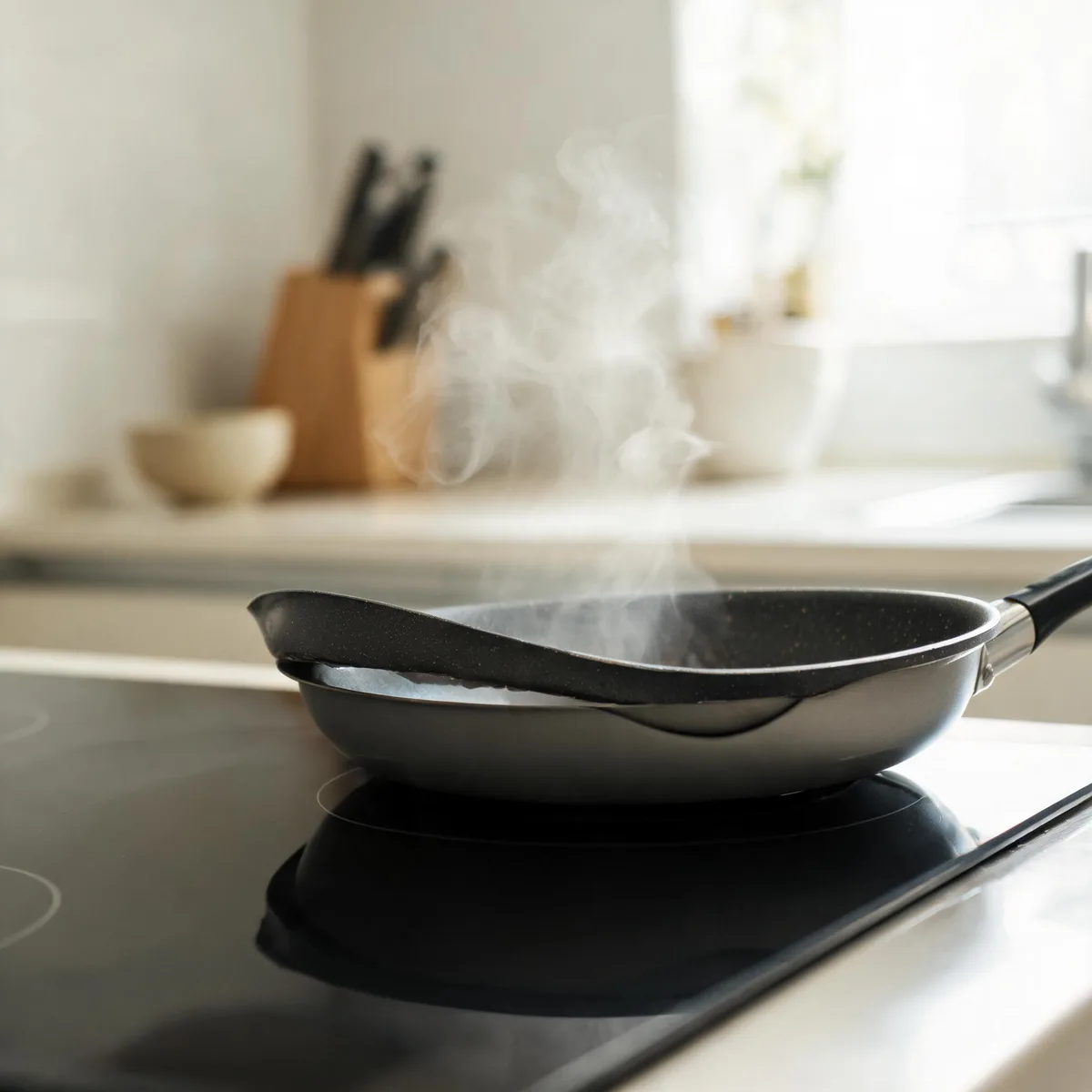
- Overheating: Teflon coating will start to decompose above 260°C. At the same time, the thermal expansion coefficient of the coating is different from that of the metal base material. Long-term empty heating and high-heat stir-frying will cause the coating to age quickly and lift at the edges, which is the core reason why many people experience coating peeling after half a year of use.
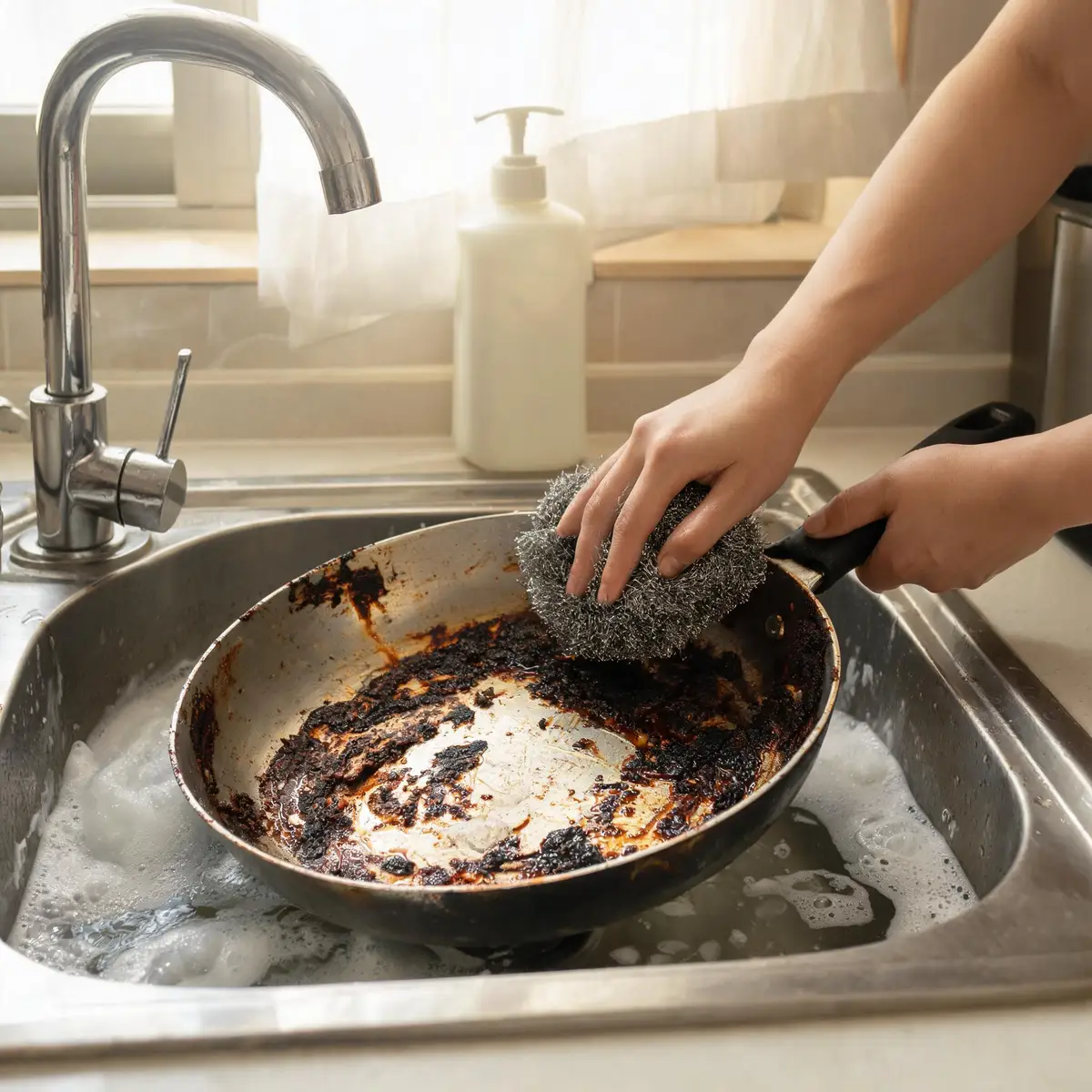
- Scratching with metal utensils: The hardness of metal spatulas and steel wool is much higher than that of Teflon coating. Each scratch leaves tiny marks, and after 3-6 months of accumulation, the coating will be worn through, exposing the underlying base material.
- Washing with strong alkaline dishwasher detergent: Ceramic coatings have poor alkali resistance. The strong alkaline detergent in dishwashers will corrode the bonding layer between the coating and the base material, gradually causing blistering and peeling. Even for coated pans marked “dishwasher safe”, long-term dishwasher use will greatly shorten their service life.
- Thermal shock: Rinsing a high-temperature pan that just finished cooking with cold water directly, or placing it directly on a cold countertop, will cause the coating and base material to shrink at different speeds, directly leading to coating cracking and chipping. Many user-reported problems of enamel Dutch ovens having chipped porcelain and small holes are caused by thermal shock.
Comparison of “Coating Peeling” Performance for Different Materials
We divided mainstream cookware into two categories according to whether they have a coating, and their peeling risk, advantages and disadvantages vary greatly:
| Material Type | Coating Peeling Performance | Advantages | Limitations | Normal Service Life |
|---|---|---|---|---|
| Teflon coated pan | Fine scratches appear first, followed by local edge lifting, and large-area peeling in severe cases | Best non-stick performance, light weight, low requirements for heat control | Scratch and high temperature sensitive, metal utensils not allowed | 1-2 years |
| Ceramic coated pan | Fine cracks appear first, followed by falling fine ceramic slag, large-area peeling is rare | High hardness, better scratch resistance than Teflon, good non-stick performance when new | Brittle texture, sensitive to thermal shock, non-stick performance declines quickly | 6-18 months |
| Marble coated pan | Textured part wears first, gradually exposes the underlying base material, large-area peeling is rare | Better wear resistance than ordinary Teflon, high appearance value | Essentially contains PTFE, high temperature sensitive, relatively high price | 1.5-3 years |
| Uncoated stainless steel/cast iron/carbon steel pan | No coating, no peeling problem | Extremely long service life, scratch and high temperature resistant, low long-term use cost | Requires seasoning and maintenance, high requirements for heat control, easy to stick for beginners | Over 10 years |
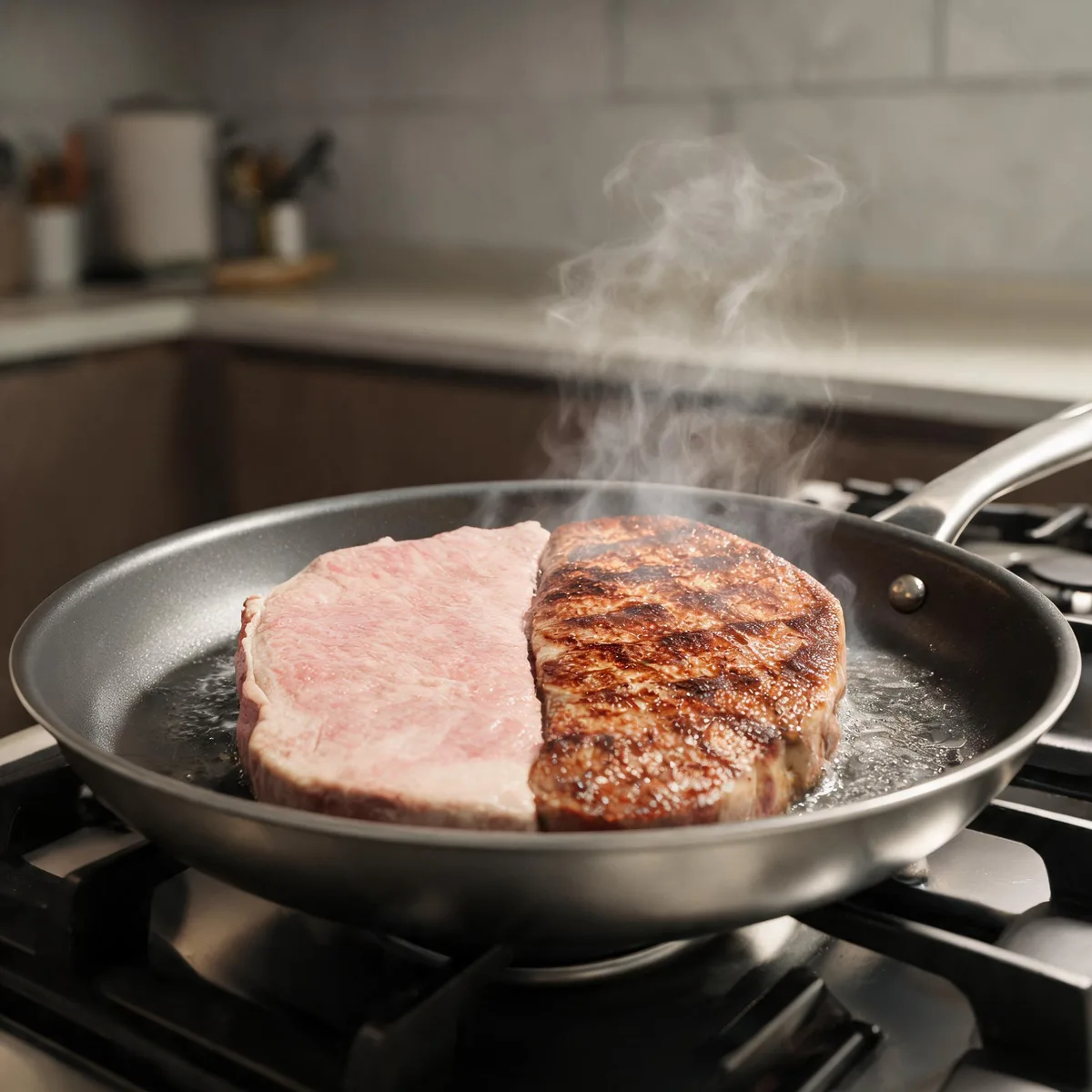
The non-stick effect of uncoated pans comes from the Leidenfrost effect: when the pan body is heated above 193°C, a layer of suspended water vapor film will form between the food and the pan surface, isolating direct contact. As long as the pan body is smooth enough and the heat is properly controlled, the non-stick performance can be completely comparable to that of coated pans. The user comments that “stainless steel pans are healthier than coated pans” and “well-maintained cast iron pans become more non-stick over time” are exactly because as long as a stable oil film is formed on uncoated pans, they can maintain non-stick effect for a long time with no peeling risk at all.
From the perspective of long-term use cost, the annual use cost of qualified coated pans ranges from 50 to 200 yuan, while the annual average cost of uncoated pans is less than 10 yuan, except that you need to spend a certain amount of learning cost to master the usage skills in the early stage.
How to Avoid Coating Peeling? Purchasing and Usage Guide
Check 3 Core Indicators When Purchasing to Judge Coating Quality
- Coating Thickness: Prioritize products marked with a coating thickness ≥25 microns. Too thin coatings are easy to be worn through and have a very short service life.
- Spraying Process: Prioritize products marked with “plasma base material pretreatment” and “multi-layer spraying”. The coating adhesion of these processes is more than 3 times that of single-layer spraying, so it is not easy to peel off.
- Base Material Thickness: Pans that feel evenly weighted and not flimsy have sufficient base material thickness, are not easy to deform at high temperatures, the coating bears force evenly, and is also less likely to peel off.
Correct Use and Maintenance to Extend Coating Life by More Than 2 Times
If you already bought a coated pan, as long as you follow the points below, you can greatly reduce the risk of peeling:
- Temperature control: Do not heat empty pans, use medium and low heat for cooking, do not wait for the oil to smoke before adding food (the smoke point of most edible oils is 200-250°C, which is already close to the decomposition temperature of Teflon).
- Utensil selection: Only use silicone spatulas and wooden spatulas, do not use metal spatulas or steel wool to scratch the pan surface.
- Cleaning method: Wait for the pan to cool completely before cleaning, try to wash by hand, wipe with a soft sponge, do not put it in the dishwasher, do not rinse with cold water immediately after cooking.
- Storage note: Do not store acidic foods (such as tomatoes, vinegar) in the pan for a long time to avoid corroding the coating bonding layer.
Common Misconception Correction
- There is no “coated pan that never peels”: As long as it is a product with a coating, no matter whether it is advertised as “physical non-stick” or “ceramic non-stick”, it will have normal wear and tear, only the length of service life differs.
- Do not continue to use the pan if the coating is peeled: Teflon coating itself is inert, a small amount of accidental ingestion will be excreted with feces. Although currently compliant coatings do not add PFOA, some still contain PFAS substances, and the risk of long-term intake of microplastic particles is still under study. The ceramic slag from peeled ceramic coating may scratch the digestive tract. Once large-area peeling occurs, it is recommended to replace the pan directly.
- Uncoated pans are not naturally sticky: As long as the seasoning is done properly and the heat is controlled well, the non-stick effect of uncoated pans is no worse than that of coated pans, and they can be used for more than ten years, with long-term use cost much lower than coated pans.
“Pit Avoidance” Lessons from Real Users
We selected 4 most representative user feedback from hundreds of thousands of reviews to help you avoid common pitfalls:
- User Feedback: “We followed the instructions completely, but the eggs still stick badly, it’s so disappointing” « Lesson Summary »: If you strictly follow the instructions for seasoning and use, and the new pan sticks badly as soon as you receive it, it is most likely that the coating spraying process is unqualified and the adhesion is insufficient, which is a product quality problem. It is recommended to return or exchange it directly, do not force use, as coating peeling will most likely occur faster later.
- User Feedback: “It looks very beautiful, but I have found several small holes in the enamel layer, and the porcelain around one of the holes is slowly peeling off” « Lesson Summary »: Enamel (ceramic coating) pans are most afraid of bumps and thermal shocks. Avoid dropping or bumping during use, do not place them directly on cold countertops or rinse with cold water immediately after heating. Once porcelain peeling occurs, do not continue to use it, the peeled porcelain slag may be ingested by mistake, and the exposed base material is also easy to rust.
- User Feedback: “The frying pan is completely deformed, the lid can’t fit at all, even if the pan isn’t deformed the lid doesn’t fit right” « Lesson Summary »: Base material deformation will directly lead to uneven force on the coating, causing cracking and peeling. Do not choose non-stick frying pans that feel flimsy when you hold them. Too thin base materials are easy to deform at high temperatures, greatly shortening the service life of the coating.
- User Feedback: “I bought an uncoated cast iron pan for better health, I thought it would become more non-stick if I maintained it well, but it still sticks after several uses” « Lesson Summary »: Uncoated pans have no coating peeling risk, but require correct seasoning and maintenance. Before first use, heat it up and apply oil to form an oil film, dry it after each use and apply a thin layer of oil. After 1-2 months of continuous use, a stable oil film will form, and the non-stick performance will get better and better. If beginners can’t control the heat well, it is recommended to master cooking skills first before choosing uncoated pans.
Related Deep Analysis in This Category
- Hard to Clean — 18% of complaints relate to this
- Uneven Heating — 21% of complaints relate to this
- Warping & Deformation — 27% of complaints relate to this
🛒 Recommended Solution

LEGEND COOKWARE 5-Ply Stainless Steel Cookware Set

6-Piece Cast Iron Cookware Set Ceramic Coated 6Qt Dutch Oven

LEGEND COOKWARE 5-Ply Stainless Steel 8-Inch Frying Pan
As an Amazon Associate, I earn from qualifying purchases.
🛠️ Practical How-To Guides
Based on the analysis above, we've prepared actionable daily solutions for you:
Avoid Peeling Coating Pans: Buying & Using Guide for 4 Types of Durable Nonstick Cookware
Compare the durability of different coating materials, explain the Leidenfrost effect physical non-stick skills for uncoated pans such as stainless steel, cast iron and carbon steel, help you choose peeling-free nonstick cookware.
Read Full Guide →Can You Use a Nonstick Pan With Peeling Coating? Are Ingested Chips Carcinogenic? Clear Up All Health Risks
Analyze the potential risks of PFAS/PFOA chemical disputes and microplastic intake, clarify the disposal standards for different peeling coatings to avoid health hazards.
Read Full Guide →Stop Washing Nonstick Pans in Dishwasher! 3-Step Correct Cleaning Method Prevents Coating Peeling Permanently
Explain how strong alkali cleaning in dishwashers and thermal shock damage the coating, teach you 3 quick and safe steps to clean non-stick pans without damaging the coating.
Read Full Guide →Why Your Nonstick Coating Peels in 6 Months? 5 Daily Habits Extend Its Lifespan by 3 Years
Disassemble the peeling mechanism of 3 common non-stick coatings including Teflon, ceramic and marble, teach you to avoid damaging habits such as overheating and metal spatula scratching to extend the service life of non-stick pans.
Read Full Guide →