Uneven Heating in Cookware: What 534,374 Reviews Reveal
Uneven Heating: The “Hidden Killer” in the Cookware Industry
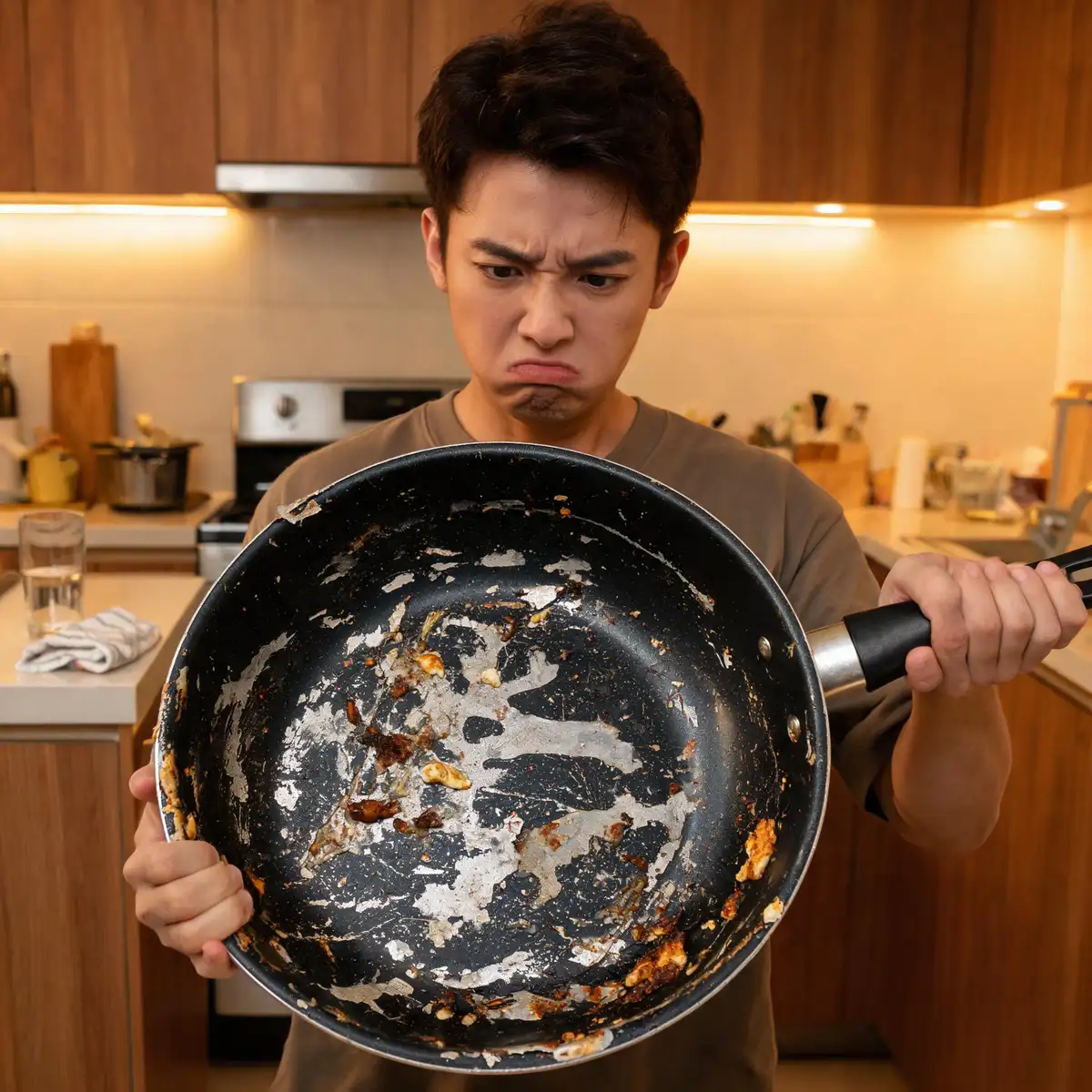
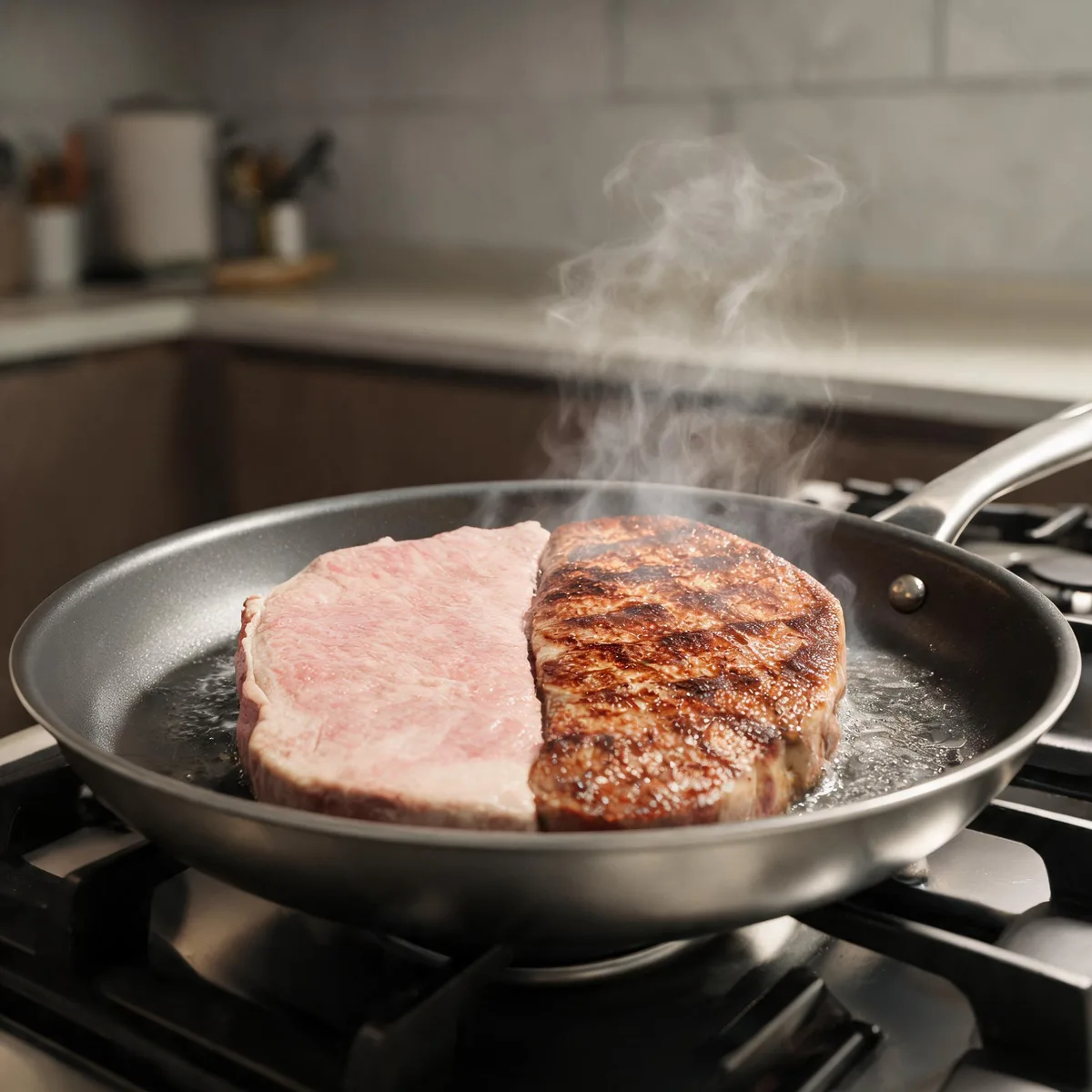
Have you ever had these experiences? A steak you carefully marinated for 2 hours gets burnt black spots within dozens of seconds after being put into the pan, but there are still ice chips inside when you cut it open; half of a fried egg sticks firmly to the pan bottom and can’t be scraped off, while the edge of the other half is already bitter; when you stew soup, one side is boiling and bubbling, while the other side is still lukewarm and unheated. Most people’s first reaction is that their cooking skills are poor, and few realize that the root of the problem may lie in the pan itself. After analyzing 534,374 real user reviews covering 36,170 cookware models, we found that 21% of negative reviews are directly related to uneven heating. This proportion far exceeds obvious problems such as food sticking, deformation, and coating peeling, making it a veritable “hidden killer”. One user’s experience is highly representative: He spent nearly 1,000 yuan on a stainless steel pan claimed to be “food-grade safe”. He was very satisfied with its solid texture when he first received it, but after 3 months of use, he found that no matter how he adjusted the heat, fried food was always burnt in the middle and undercooked at the edges. He tried 3 different pan seasoning methods and practiced frying eggs more than a dozen times following food bloggers, but still failed. Finally, he had to put the pan in the corner to collect dust, and it was not until he bought a new pan that he realized the previous problem was not caused by his poor cooking skills at all.
Why Does Uneven Heating Occur? — In-depth Breakdown of Root Causes
Uneven heating is never caused by a single factor. We can fully analyze it from three dimensions: material science, manufacturing process, and usage habits:
1. Underlying Differences in Material Science
Two core physical parameters determine the thermal conductivity performance of materials: First, the thermal conductivity coefficient, which measures how fast a material transfers heat, analogous to the diameter of a water pipe — the larger the diameter, the faster the water supply; second, the thermal diffusivity, which measures the uniformity of heat diffusion inside the material, analogous to whether the water flow can smoothly cover the entire pipe. These two parameters vary greatly among different metals, and the thermal conductivity ranking is: Copper > Aluminum > Cast Iron > Carbon Steel > Stainless Steel. The thermal conductivity coefficient of pure stainless steel is only 1/15 that of aluminum, which is equivalent to using a thin plastic pipe to deliver water. Not only does the water flow slowly, but it is also prone to local “blockage”, resulting in a huge temperature difference where one side is as hot as 200°C while the other side is less than 100°C.
2. Inherent Defects in Manufacturing Process
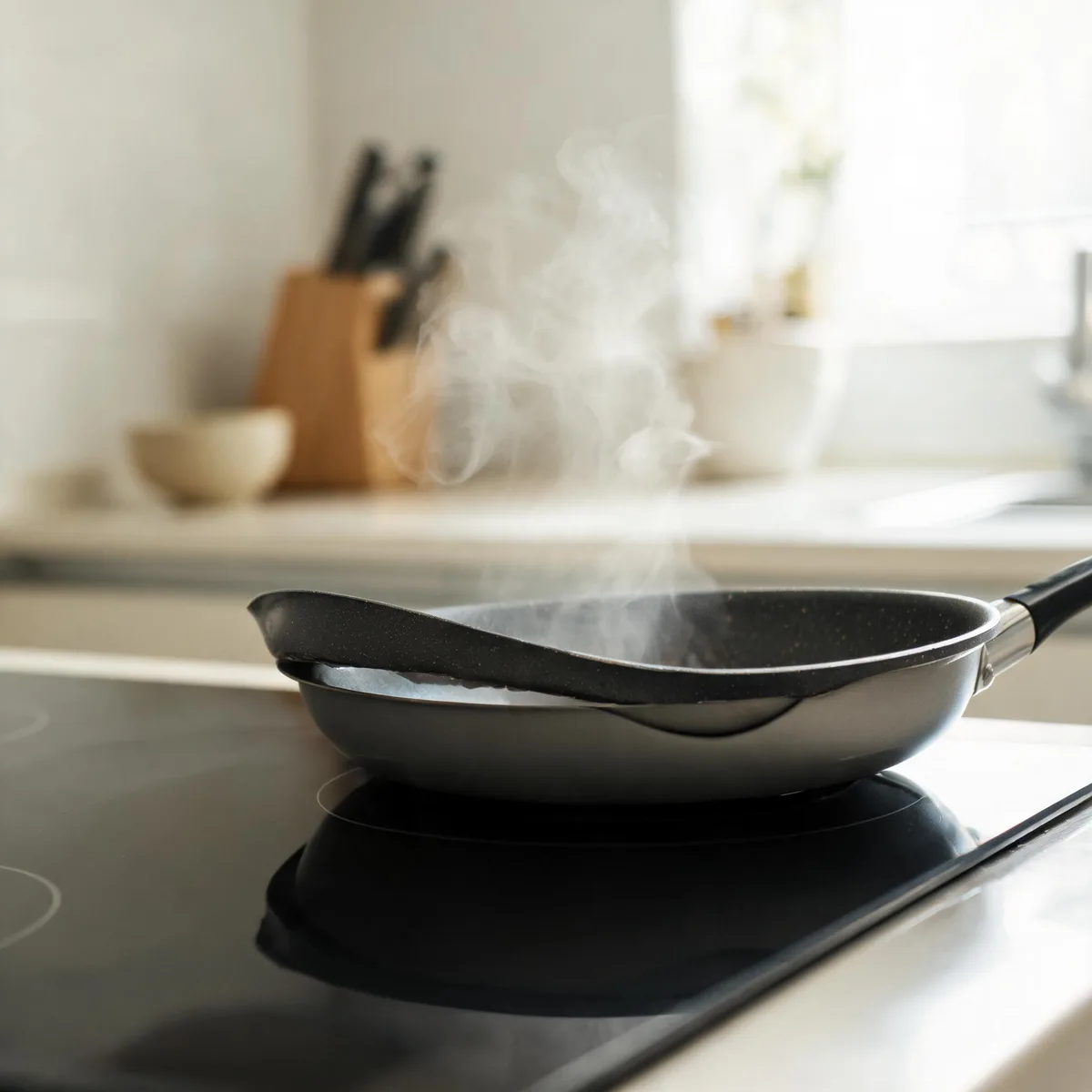
It is difficult for single-layer metal pans to achieve uniform heat conduction unless they are made of pure copper or aluminum plates with a thickness of more than 5mm: The common cheap single-layer stainless steel pans on the market often have a bottom thickness of less than 1mm. Heat can only be transferred upward from the small area in contact with the stove, so the center is already hot enough to smoke, while the edge may not have reached the required oil temperature. The multi-layer composite structure is equivalent to laying a “high-speed road network” for heat: The outer layer is made of magnetically conductive stainless steel to adapt to induction cookers, the middle is sandwiched with a thick layer of aluminum or pure copper as the heat conduction layer to quickly and evenly diffuse heat to the entire pan surface, and the inner layer uses food-grade stainless steel to contact food, which is both safe and ensures uniform heating. Some users reported that their 11-inch frying pan was severely deformed after only a few uses, and the lid could not be closed at all. The essence is that the material used in manufacturing is too thin and the process precision is insufficient. The degree of thermal expansion and cold contraction at different positions is inconsistent during heating, leading to pan body warping, and the contact area between the pan bottom and the heat source is further reduced, forming a vicious circle of “deformation → more uneven heating → easier deformation”.
3. Acquired Damage from Usage Habits
Many improper operations will aggravate the problem of uneven heating: For example, long-term use of maximum heat for fierce burning, local temperature exceeding the tolerance range of the material leading to deformation; immediately rinsing a pan that has just been heated to 200°C with cold water, the sharp change between hot and cold leading to pan body warping; long-term use on uneven stoves, only part of the pan bottom can contact the heat source, which naturally causes temperature differences.
Performance Comparison of “Uneven Heating” for Different Materials
The thermal conductivity characteristics of different materials vary greatly. There is no absolute good or bad, only whether it matches your usage habits:
| Material | Thermal Conductivity Rank | Heating Uniformity Performance | Core Advantages | Inherent Limitations |
|---|---|---|---|---|
| Pure copper | 1 | Excellent, heat diffuses quickly, overall temperature difference can be controlled within 5°C | Fast and uniform heat conduction, suitable for professional quick stir-frying and precise temperature control | High price, heavy weight, easy to oxidize, requires regular maintenance, copper has precipitation risk, cannot directly contact acidic food |
| Aluminum alloy | 2 | Excellent, heat diffuses evenly, overall temperature difference ≤10°C | Light weight, low price, fast heat conduction | Pure aluminum has precipitation risk when directly contacting food, must be coated with non-stick coating, safety decreases after coating is damaged |
| Cast iron | 3 | Large temperature difference before preheating, excellent uniformity after full preheating | Extremely strong heat storage capacity, stable temperature, suitable for frying steak and long-term braising and stewing | Heavy weight, long preheating time, very prone to local burning when not fully preheated, requires regular pan seasoning maintenance to prevent rust |
| Carbon steel | 4 | Average uniformity before preheating, good performance after full preheating | About 40% lighter than cast iron, faster heat conduction than cast iron, suitable for Chinese-style quick stir-frying | Easy to rust, high maintenance requirements |
| Pure stainless steel | 5 | Extremely poor, temperature difference between center and edge can exceed 50°C | Corrosion resistant, safe, no special maintenance required | Extremely slow and uneven heat conduction, very prone to local burning |
This is why high-quality stainless steel pans must adopt a multi-layer composite structure — it combines the safety and corrosion resistance of stainless steel with the excellent thermal conductivity of aluminum/copper, perfectly avoiding the inherent defects of pure stainless steel. The stainless steel pans mentioned in positive reviews as “balanced weight, stable heating, healthier than coated pans” basically adopt a composite structure of three or more layers.
How to Avoid Uneven Heating? — Purchase and Usage Guide
Core Judgment Criteria for Purchase
- Check the structure: Prioritize products marked “multi-layer composite” and “aluminum core/copper core heat conduction layer”. Pure stainless steel single-layer pans are not recommended as commonly used pans for frying and stir-frying.
- Check the thickness: The pan bottom thickness should be at least ≥3mm, and the pan wall thickness should be ≥2mm. The larger the thickness, the less likely it is to deform, and the more uniform the heat diffusion.
- Check the flatness: Place the pan on a flat glass table and rotate it gently. No warping or shaking indicates that the pan bottom is flat and contacts the heat source more fully.
- You can test the uniformity by yourself after receiving the goods:
- Water drop method: Heat the empty pan on medium-low heat for 3 minutes, drop 1 drop of clean water. If the water drop can roll across the entire pan surface without evaporating, the temperature is uniform; if the water drop in a certain area evaporates immediately, it indicates that this area is a hot spot with excessive temperature difference.
- Flour sprinkling method: Heat the empty pan on medium-low heat for 3 minutes, sprinkle a thin layer of flour evenly, and observe the discoloration speed of the flour. If all areas turn yellow at the same time, the uniformity is good; if local areas turn black first, the heating is uneven.
- Infrared temperature measurement method: After heating for 5 minutes, measure the temperature of the center, edge and four symmetrical points of the pan bottom with an infrared thermometer. A temperature difference ≤10°C is excellent, ≤20°C is qualified, and more than 20°C indicates poor uniformity.
Precautions for Daily Use
- Fully preheat: Especially for cast iron, carbon steel, and multi-layer composite pans, put ingredients in after the temperature of the entire pan body is uniform to avoid local burning.
- Avoid fierce burning on high heat: Medium and low heat is sufficient for most cooking scenarios. High heat not only wastes energy, but also easily leads to local overheating deformation and grease decomposition to produce harmful substances such as acrylamide.
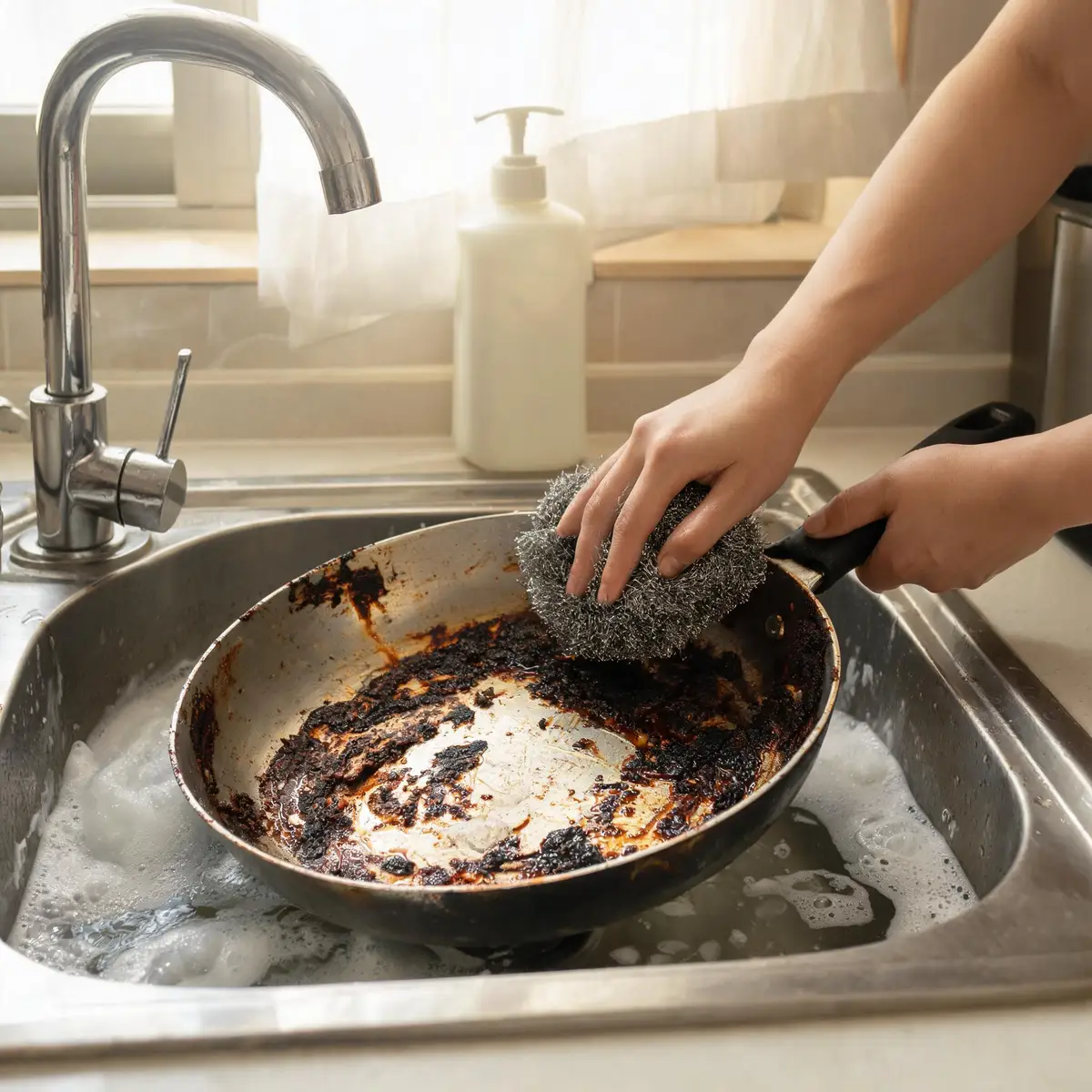
- Avoid sharp hot and cold changes: Do not rinse the high-temperature pan immediately after use with cold water. Wait for it to cool naturally to room temperature before cleaning to prevent pan body warping and deformation.
Correction of Common Misconceptions
- ❌ Misconception 1: Steak being burnt outside and raw inside is always a cooking skill problem? In fact, more than 80% of cases are caused by uneven heating of the pan. Excessive local temperature leads to the surface being burnt too quickly, and the heat has not been transferred to the inside of the meat.
- ❌ Misconception 2: Uneven heating of stainless steel pans means they are inferior products? If it is a single-layer pure stainless steel pan, uneven heating is the inherent characteristic of the material itself, which has nothing to do with quality; if a stainless steel pan marked as multi-layer composite still has severe uneven heating, it is an inferior product with unqualified craftsmanship.
- ❌ Misconception 3: The faster the heat conduction, the better the pan? Pans with fast heat conduction are suitable for stir-frying that requires rapid temperature rise, but they have higher requirements for heat control and are easy to burn food; pans with slow heat conduction have good heat storage and stable temperature, which are suitable for frying, braising and stewing, and are more friendly to novices. You should choose according to your own cooking habits, there is no absolute good or bad.
- ❌ Misconception 4: Multi-layer composite pans are an IQ tax? The cost of multi-layer composite pans is more than 30% higher than that of single-layer pans, but they can solve the uneven heating problem of pure stainless steel pans and have a longer service life. If you often use stainless steel pans for frying and stir-frying, the extra cost can be offset by reduced food waste and fewer use failures; if you only boil water and cook noodles occasionally, single-layer pans can also meet your needs.
“Pit Avoidance” Lessons from Real Users
We selected 4 most representative user pitfall experiences from tens of thousands of negative reviews to help you avoid common problems:
- User negative review: “The workmanship is good, but it is too small for frying eggs, and the egg broke directly when I moved it. It is suitable for making more stable food like roasted cheese. I finally gave it to my child as a prop for the toy kitchen.” ✅ Lesson summary: Do not buy frying pans with a diameter less than 20cm as commonly used frying utensils. Too small pans have limited heating range, and the temperature difference between the edge and the center is extremely large. Food that requires overall heating such as fried eggs and pancakes is very prone to being half-cooked and easily broken.
- User negative review: “We followed the instructions completely, but the eggs still stuck to the bottom of the pan completely. It’s so disappointing.” ✅ Lesson summary: If food still sticks frequently even after strictly following the standard operations of pan seasoning and preheating, do not blindly attribute it to your poor cooking skills. Prioritize checking the heating uniformity of the pan — too low local temperature will cause food protein to solidify and stick to the cool pan surface, which is one of the core causes of food sticking.
- User negative review: “The 11-inch frying pan is so disappointing. The lid can’t be closed at all, the pan is seriously deformed. It seems that even if the pan is not deformed, the lid is not suitable. The small size one I bought before works very well, I’m so disappointed this time.” ✅ Lesson summary: Large-size cookware has much higher requirements for material thickness and process precision than small-size cookware. When purchasing large-caliber frying pans and woks, be sure to confirm that the pan bottom thickness is ≥3mm, otherwise it is very prone to thermal deformation and uneven heating.
- User negative review: “I bought a cast iron pan for better health, which claimed to be pre-seasoned. There was indeed an oil layer when I received it, and it said that good maintenance will make it more and more non-stick. But it still sticks after I used it carefully.” ✅ Lesson summary: For materials with slow heat conduction such as cast iron and carbon steel, the preheating time should be 2-3 times longer than that of aluminum pans and composite stainless steel pans. Put ingredients in only after the temperature of the entire pan body is uniform, so as to avoid the problems of food sticking and local burning. Do not operate according to the preheating time of ordinary pans.
Related Deep Analysis in This Category
- Coating Peeling — 32% of complaints relate to this
- Hard to Clean — 18% of complaints relate to this
- Warping & Deformation — 27% of complaints relate to this
🛒 Recommended Solution

LEGEND COOKWARE 5-Ply Stainless Steel Cookware Set

LEGEND COOKWARE 5-Ply Stainless Steel 8-Inch Frying Pan
As an Amazon Associate, I earn from qualifying purchases.
🛠️ Practical How-To Guides
Based on the analysis above, we've prepared actionable daily solutions for you:
Only Look at Material When Choosing Cookware? Learn Pros and Cons of Fast and Slow Heat Conduction Pans to Cook Tastier Dishes
Compare the heat conduction performance differences of different cookware materials, and teach you to choose suitable cookware with uniform heating according to home cooking scenarios
Read Full Guide →Stainless Steel Pan Always Heats Unevenly? 4 Practical Tips Without Replacing the Pan
Analyze the heat conduction principle of multi-layer composite stainless steel pans, teach you to avoid low-quality stainless steel pans, and easily improve uneven heating in daily use
Read Full Guide →Steak Always Burnt Outside Raw Inside? 3 Steps to Tell If It's the Pan or Your Cooking Skill
Based on the principle of heating uniformity, teach you to quickly find out the reason for poorly cooked steak, with adjustment tips for different cookware
Read Full Guide →