Hard to Clean in Cookware: What 534,374 Reviews Reveal
Hard to Clean: The “Hidden Killer” in the Cookware Industry
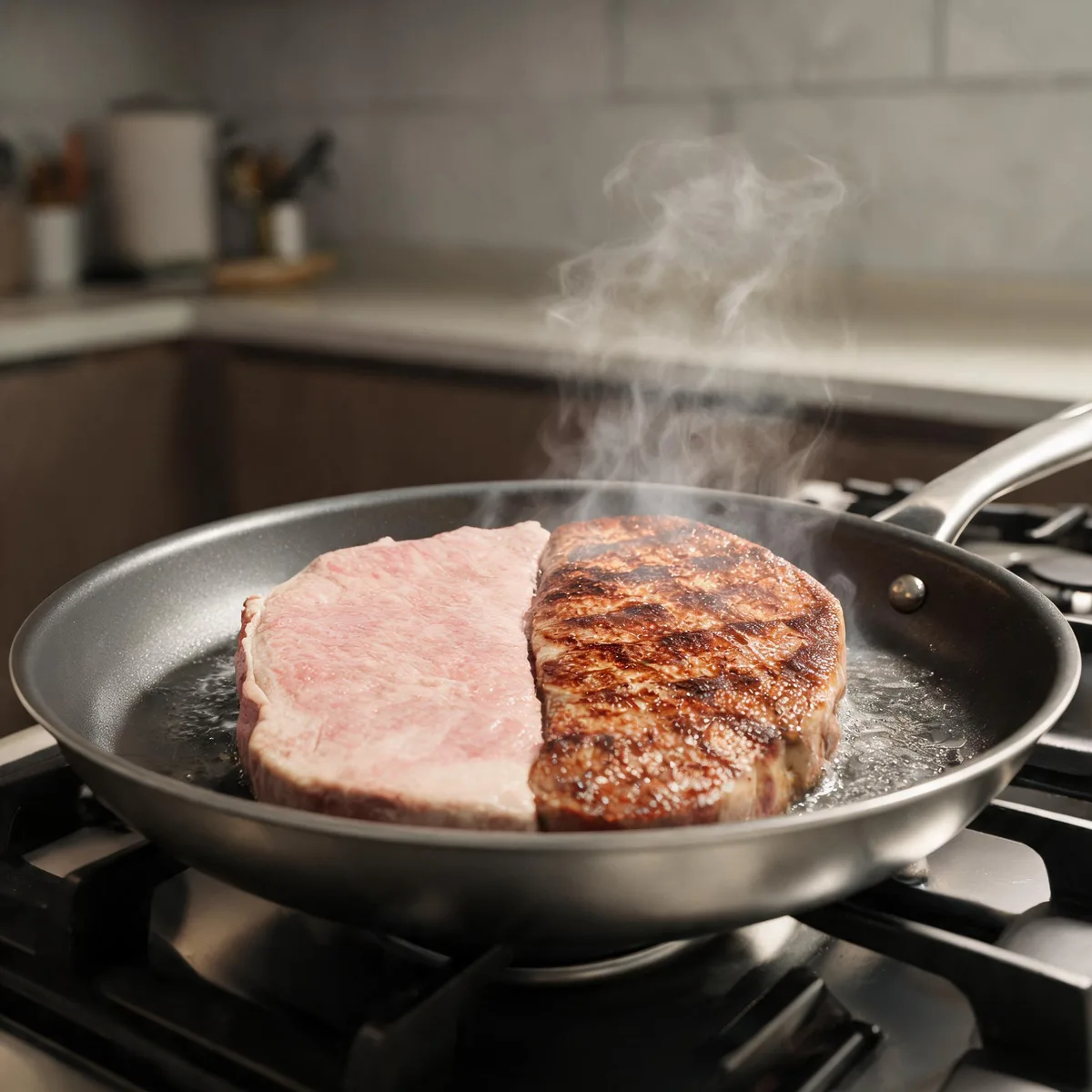
Many people prioritize appearance, non-stick performance, and heat conduction speed first when choosing cookware, but often overlook the core daily issue of “ease of cleaning” — until months of use pass, when they realize a pot that cannot be cleaned properly is the biggest burden in the kitchen. After analyzing 534,374 real user reviews covering 36,170 products, we found that 18% of negative cookware reviews are directly related to difficulty in cleaning, ranking second only to non-stick performance failure as the second biggest pain point for consumer complaints.
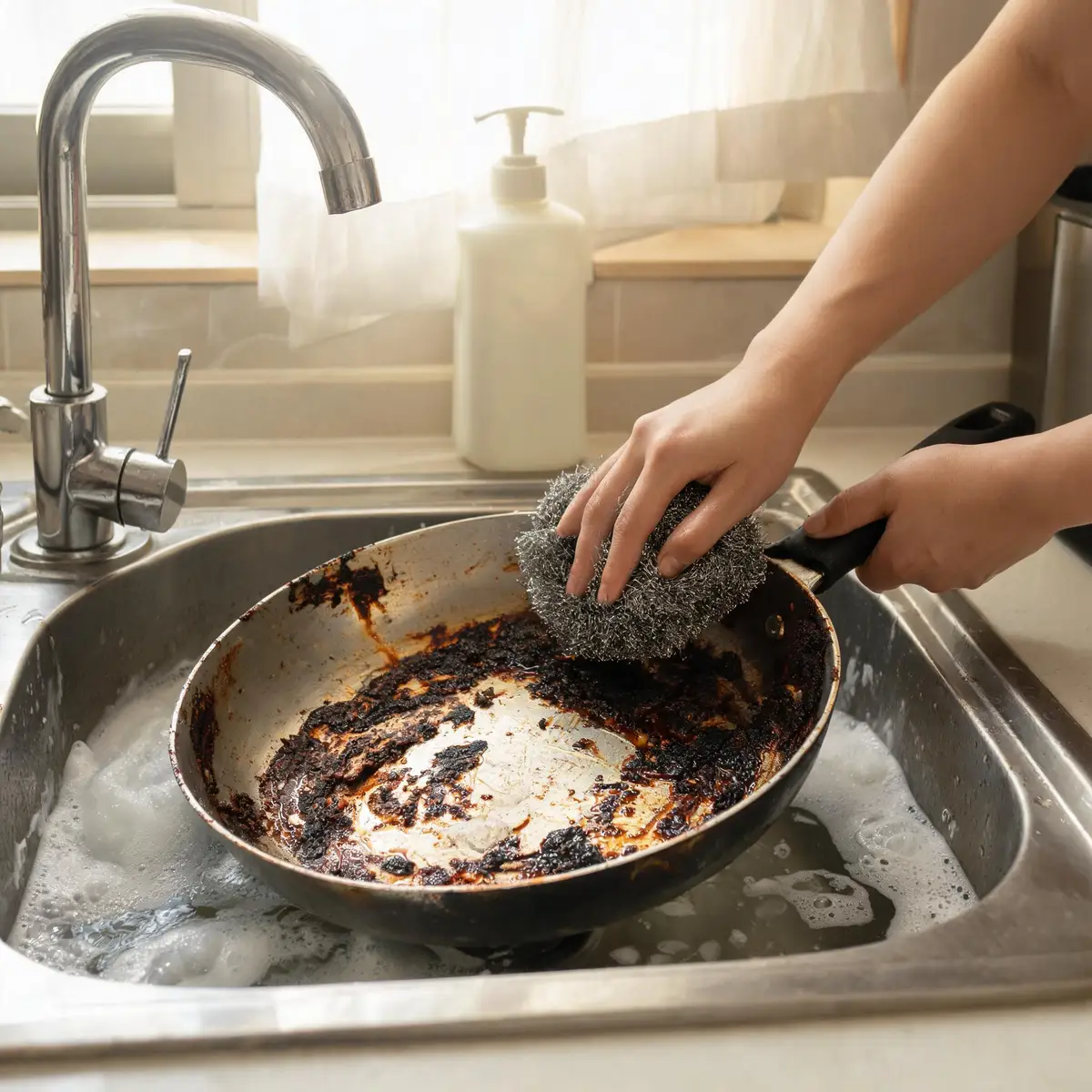
A typical user predicament is: You carefully pick a well-reviewed pot, the experience is perfect for the first few weeks, and it rinses clean right after cooking. But as use frequency increases, burnt stains on the pot bottom, grease on the rim, and black marks in gaps become harder and harder to clean. You fear scratching the pot with steel wool, but cannot scrub the stains off with a sponge. It feels wasteful to throw it away, but you have to spend over 10 minutes cleaning it every time before cooking, so you end up tucking it away in a cabinet corner to collect dust.
Why Is It Hard to Clean? — In-depth Breakdown of Root Causes
Difficulty in cleaning cookware is never a single problem of “you don’t know how to wash it”, but the result of the combined effect of material properties, manufacturing processes, and usage habits. We can understand this via an analogy to floor cleaning logic: Glossy tiles are easier to wipe than frosted floor tiles, cracked floors can never be fully swept clean, and even the most expensive floor will leave stains if you regularly spill grease on it and fail to wipe it up promptly.
Material Science Level
Differences in porosity, hardness, and chemical stability across materials directly determine cleaning difficulty: For example, the hardness of non-stick coatings is only 1/10 that of stainless steel. Even repeated friction from a silicone spatula will create micro-scratches, where grease and food residue get embedded and cannot be removed with a soft sponge. Ceramic/enamel materials have low porosity but high brittleness; minor bumps will create pores invisible to the naked eye, and pigments from dark food and grease will seep into the interior to leave permanent marks. The comments we see in negative reviews such as “it still sticks even when used per the instructions” and “the ceramic pot has unremovable yellow stains after a few uses” are essentially caused by limitations in material properties.
Manufacturing Process Level
The structural design and surface treatment of the pot body are the core triggers for dirt accumulation: Joints of rivet-fixed handles, gaps in welded pot rims, and textured surfaces with excessive unevenness will form cleaning dead corners. After grease repeatedly accumulates and carbonizes in these areas, it is almost impossible to clean completely. For example, the common user feedback that “the ring of black marks around the rivet cannot be wiped off” is caused by gaps left from the welding process.
Usage Habit Level
Incorrect usage will greatly amplify flaws in materials and processes: Rinsing a hot pot right after cooking with cold water will cause food residue to get embedded in the pot’s micro-pores due to thermal expansion and contraction. Scrubbing vigorously with steel wool regardless of material will damage coatings, ceramic glazes, and cast iron oil films, creating more gaps for dirt to hide. If you fail to clean promptly after cooking, the adhesion of carbonized grease will increase by more than 10 times. Long-term improperly cleaned cookware also carries clear health risks: Residual grease in gaps will oxidize and polymerize when repeatedly heated, producing carcinogens such as heterocyclic amines and polycyclic aromatic hydrocarbons. Mold grown from food residue (such as aflatoxin) and cross-contamination of different ingredients will cause hidden harm to health.
Comparison of “Hard to Clean” Performance Across Different Materials
We sorted out the cleaning characteristics of four mainstream cookware materials, all conclusions are derived from statistics of real user feedback:
| Material | Cleaning Friendliness (Full Score 10) | Core Advantage | Core Limitation | Real User Feedback Reference |
|---|---|---|---|---|
| Coated Pot | 8 points (new) / 3 points (used) | Excellent non-stick performance when brand new, light grease rinses off easily | Scratch-sensitive, cannot use steel wool or hard spatulas. Micro-pores form to trap dirt after coating wear, leading to a vicious cycle of “the more you wash, the dirtier and stickier it gets” | Negative review: “We followed the instructions completely, but eggs still stuck entirely, totally disappointed” |
| Stainless Steel | 7 points | Durable, withstands aggressive cleaning with steel wool and hard spatulas, no coating shedding risk | New pots stick easily, burnt stains have strong adhesion, easy to dull and leave water marks if cleaned improperly | Positive review: “Stainless steel pots are healthier than coated pots, balanced weight, very good quality” |
| Cast Iron | 8 points (well maintained) / 2 points (poorly maintained) | Stable physical non-stick performance after oil film forms, scratch-resistant and durable, even heat conduction | Requires regular seasoning, cannot store acidic food for long periods, rusts easily if not wiped dry after washing, extremely hard to clean after oil film is damaged | Negative review: “It was advertised as pre-seasoned, but it still sticks after maintenance per requirements, completely fails to meet the advertised non-stick effect” |
| Ceramic/Enamel | 6 points | Stable chemical properties, resistant to flavor transfer, high aesthetic value | High brittleness, easy to form pores after bumps, easily stained by dark food, scratches are irreparable | Negative review: “It looks very beautiful, but I found several small holes on the porcelain surface after a short time of use, they are tiny but impossible to clean” |
Among positive user reviews, products mentioned as “easy to clean” generally share two common features: first, high material density and smooth surface, second, no cleaning dead corners such as rivets or seams, with no absolute correlation to material type.
How to Avoid Cleaning Difficulty? — Purchase and Usage Guide
Core Purchase Judgment Dimensions
Prioritize three process details when purchasing, which can directly reduce 80% of your cleaning burden:
- Structural design: Prioritize seamless one-piece molded pot bodies, avoid styles with rivet-welded handles and obvious seams on the pot rim, to reduce cleaning dead corners at the source;
- Surface treatment: Prioritize mirror-polished inner surfaces, which are less likely to trap grease than brushed or deep-textured surfaces. If choosing a physical non-stick pot, select styles with dense texture and concave-convex depth less than 0.01mm, to avoid dirt hiding in overly deep textures;
- Thickness uniformity: Products with pot body thickness less than 2mm are prone to uneven heating and deformation, leading to local burnt bottom stains. You can touch the pot body and bottom to check for uniform thickness when purchasing.
Material-specific Cleaning and Maintenance Tips
We sorted out actionable cleaning methods targeting the characteristics of different materials, covering the high-frequency issues consumers care about most:
- Coated pots: Soak burnt stains in hot water + dish soap for 20 minutes then wipe with a sponge, never use steel wool or hard spatulas. If you notice obvious coating shedding or large-area blackening on the inner wall, it means a large amount of deteriorated grease has accumulated in the micro-pores, and you are advised to stop using the pot;
- Stainless steel pots: For bottom burnt stains, add white vinegar and baking soda at a 1:2 ratio, add water and boil for 5 minutes then let stand for half an hour, then clean with steel wool. Wipe dry with a dry cloth after daily washing to keep it shiny and avoid water marks. For stubborn dull marks, wipe with a neutral special stainless steel cleaner;
- Cast iron pots: Do not wash frequently with dish soap to avoid damaging the oil film. After each wash, place it on the fire to bake off moisture, then apply a thin layer of edible oil for maintenance. If slight rust appears, scrape off the rust with steel wool then re-season the pot to rebuild the oil film;
- Ceramic/enamel pots: Wipe staining marks with baking soda + lemon slices, do not scrape with steel wool, avoid sudden temperature changes that cause glaze cracking.
Correction of Common Cognitive Misconceptions
- “Steel wool will definitely scratch pots”: Only coatings, ceramics, and cast iron oil films will be damaged by steel wool, stainless steel pots can be safely cleaned with steel wool;
- “Non-stick pots can last a lifetime”: There is no permanently non-stick pot. The normal service life of compliant coated pots is 1-2 years, replace it when blackening or peeling occurs, there is no way to completely clean grease that has penetrated into coating gaps;
- “Ease of cleaning and non-stick performance cannot coexist”: As long as materials and processes meet standards, paired with correct usage habits, well-seasoned cast iron pots, high-quality physical non-stick stainless steel pots, and new compliant coated pots can all meet both non-stick and easy cleaning needs, there is no absolute “you can’t have your cake and eat it too”.
“Pit Avoidance” Lessons from Real Users
We selected 4 of the most representative user feedback from tens of thousands of negative reviews, to help you avoid pitfalls from other people’s bad experiences:
User Negative Review 1: “We followed the instructions completely, but eggs still stuck entirely, totally disappointed” Lesson Summary: Do not blindly trust merchant claims of “permanent non-stick” or “zero-maintenance non-stick”. All non-stick performance has preconditions, improper usage and maintenance will greatly shorten non-stick lifespan. Even the best coated pot will become sticky quickly if scratched with a hard spatula or dry burned.
User Negative Review 2: “The lid for the 11-inch frying pan doesn’t fit at all, the pot is badly deformed, and it looks like the lid wouldn’t fit even if the pot wasn’t deformed” Lesson Summary: Deformed pot bodies lead to uneven food heating, repeated local burning will greatly increase cleaning difficulty. Overly thin pots (thickness <2mm) are more prone to deformation under long-term high temperature and dry burning. Do not choose overly thin pots for the sake of light weight when purchasing.
User Negative Review 3: “The Dutch oven looks very beautiful, but I found several small holes on the porcelain surface after a short time of use, they are tiny but impossible to clean, and the porcelain surface is starting to crumble in some places” Lesson Summary: When the ceramic/enamel layer has pores or damage, grease and food residue will seep into the interior, which is not only hard to clean but also carries health risks. Check if the glaze is complete upon delivery, avoid bumps during use, and do not put a hot pot right after cooking into contact with cold water immediately.
User Negative Review 4: “The pot was extremely rough inside and out when I received it, like metal sandpaper. I didn’t dare put it on my glass cooktop for fear of scratching it, it even pricks my hand when I touch it” Lesson Summary: The higher the surface roughness of the pot body, the easier it is to trap food residue and grease, and cleaning difficulty increases exponentially. Be sure to touch the inner surface to check if it is smooth and dense when purchasing, do not choose deep-textured styles with overly strong concave-convex feeling.
Related Deep Analysis in This Category
- Coating Peeling — 32% of complaints relate to this
- Uneven Heating — 21% of complaints relate to this
- Warping & Deformation — 27% of complaints relate to this
🛒 Recommended Solution

LEGEND COOKWARE 5-Ply Stainless Steel Cookware Set

LEGEND COOKWARE 5-Ply Stainless Steel 8-Inch Frying Pan

6-Piece Cast Iron Cookware Set Ceramic Coated 6Qt Dutch Oven
As an Amazon Associate, I earn from qualifying purchases.
🛠️ Practical How-To Guides
Based on the analysis above, we've prepared actionable daily solutions for you:
Air Fryer Internal Dead Corner Oil Stain Cleaning: 3-Step No-Disassembly Method, Spotless in 5 Minutes
For air fryers with non-detachable bodies, teach you to clean old oil stains in hidden corners without disassembly, suitable for total beginners
Read Full Guide →Fix Air Fryer Oil Tray Overflow: 3 Modification & Cleaning Tricks, Barely Need Scrubbing After Use
Solve the oil overflow problem caused by missing oil tray or too shallow oil tray, teach you low-cost modification methods to greatly reduce subsequent cleaning burden
Read Full Guide →How to Clean Grease in Air Fryer Air Duct Gaps: 2 Low-Cost Tricks Without Damaging the Machine
Solve the problem that grease hidden in air duct gaps is hard to wipe, use common household materials to remove deep grease, avoid odor and reduce heating efficiency loss caused by long-term accumulation
Read Full Guide →Stop Air Fryer Basket Food Sticking & Coating Peeling: 4 Useful Tips to Avoid Scrubbing Pain
Explain the core reasons why food always sticks to the fryer basket, teach you practical methods to protect the coating and reduce sticking in daily use
Read Full Guide →Cookware Dead Corner Cleaning Guide: Choose Methods by Material to Remove Stains From Rivets, Seams & Rim Easily
Compare the cleaning differences of 4 common types of cookware: coated, stainless steel, cast iron, ceramic, and teach you to remove stains from hard-to-wash dead corners such as rivets, seams and pot rims
Read Full Guide →How to Clean Burnt Stainless Steel Cookware: 4 Steps to Restore Original Shine Without Abrasive Scrubbing
Break down practical tricks such as baking soda + vinegar burnt stain removal, hot water soaking, correct use of special cleaners, easily remove burnt stains and yellow gunk to keep the cookware shiny as new all year round
Read Full Guide →How to Clean Non-Stick Pans Without Scratching: 3 Tricks to Remove Hidden Black Gunk & Extend Coating Lifespan
Targeting the pain points of non-stick pans being prone to scratches and hidden dirt that gets worse with washing, teach you to remove stubborn black gunk without steel wool to avoid coating peeling and extend service life
Read Full Guide →