Misleading Capacity & Size Mismatch in Rice Cooker: What 31,105 Reviews Reveal
False Capacity Labeling and Size Inconsistency: The “Hidden Killer” of the Rice Cooker Industry
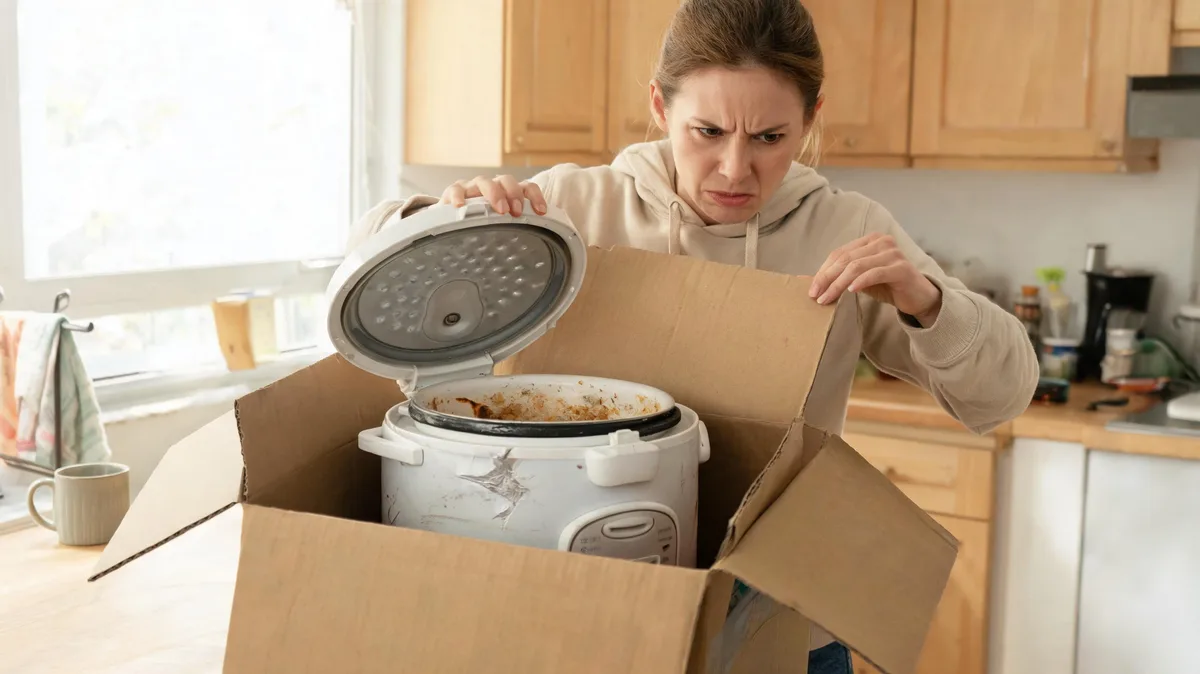
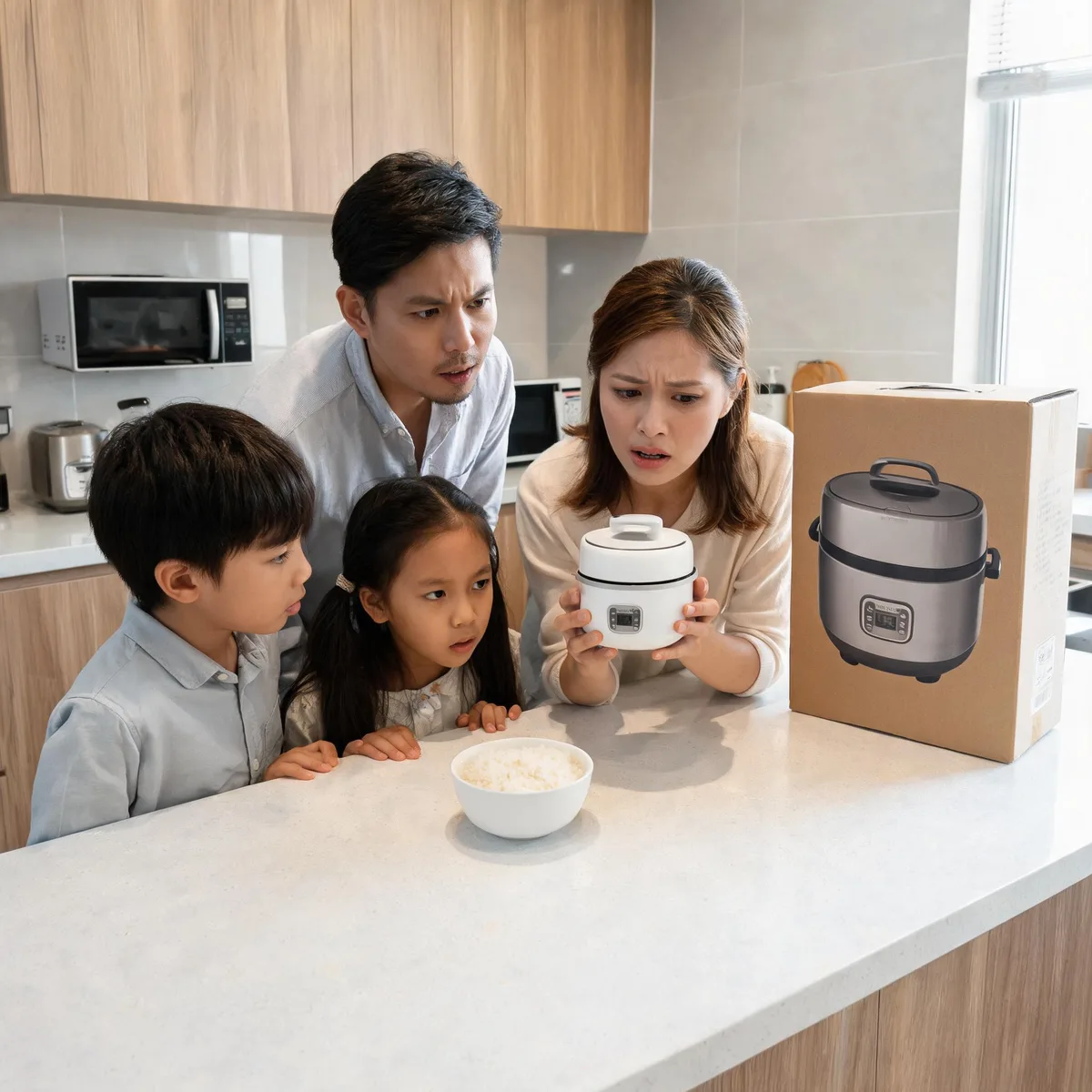
Have you ever had this experience? You scoured countless reviews and picked a rice cooker marked with “6-cup large capacity”. It works perfectly when you cook 2 to 3 cups of rice on regular days, but when you need to cook more for a family gathering, you find that just 4 cups of rice will cause overflow, failing to reach the marked capacity at all. The physical product is even a full size smaller than the image on the detail page, but the return and exchange window has long expired, leaving you to swallow the loss. After analyzing 31,105 real user reviews covering 1,599 products, we found that 18% of negative reviews are related to false capacity labeling and size inconsistency. This proportion even exceeds common problems such as functional failure and unresponsive buttons, making it the most easily overlooked hidden pit for ordinary consumers when purchasing.
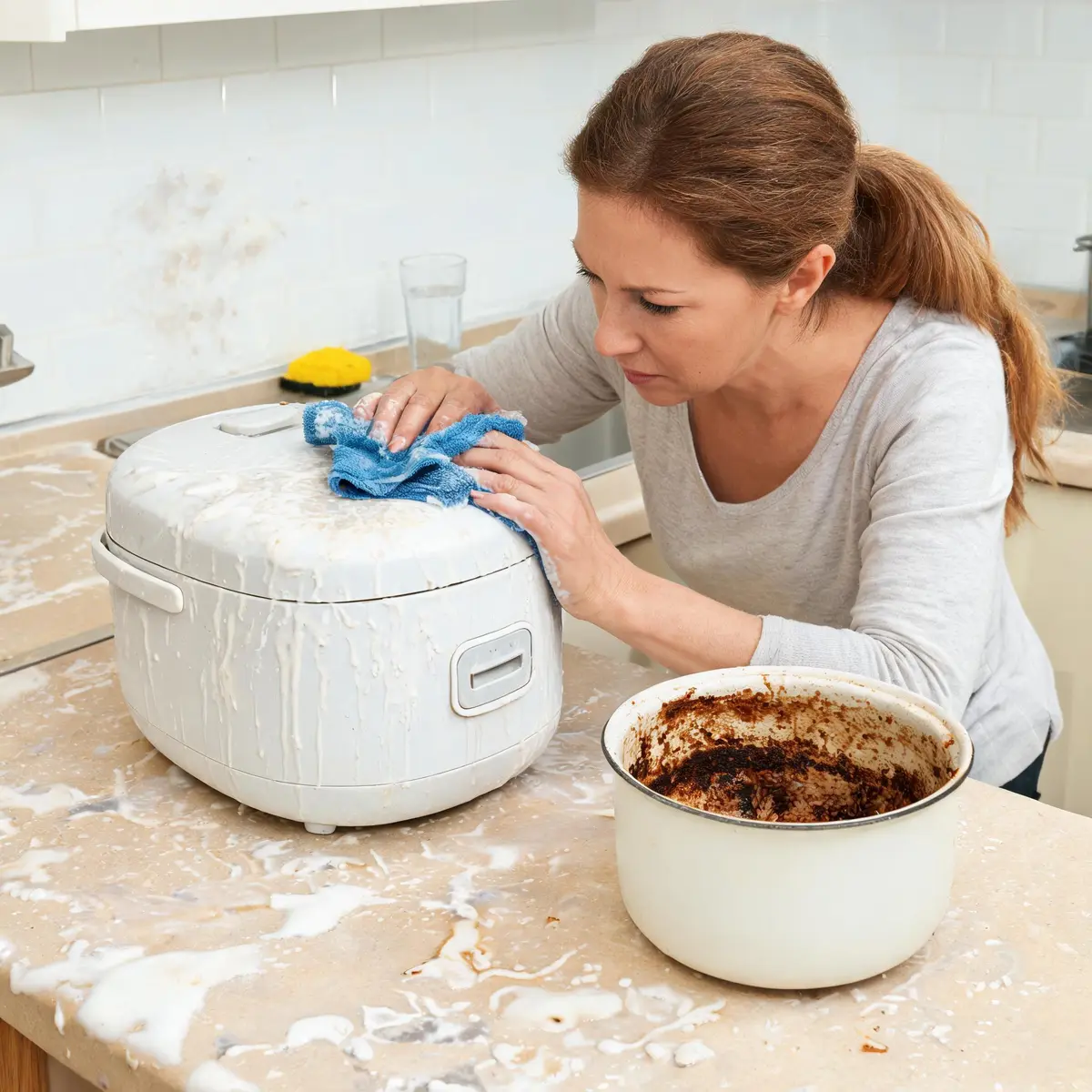
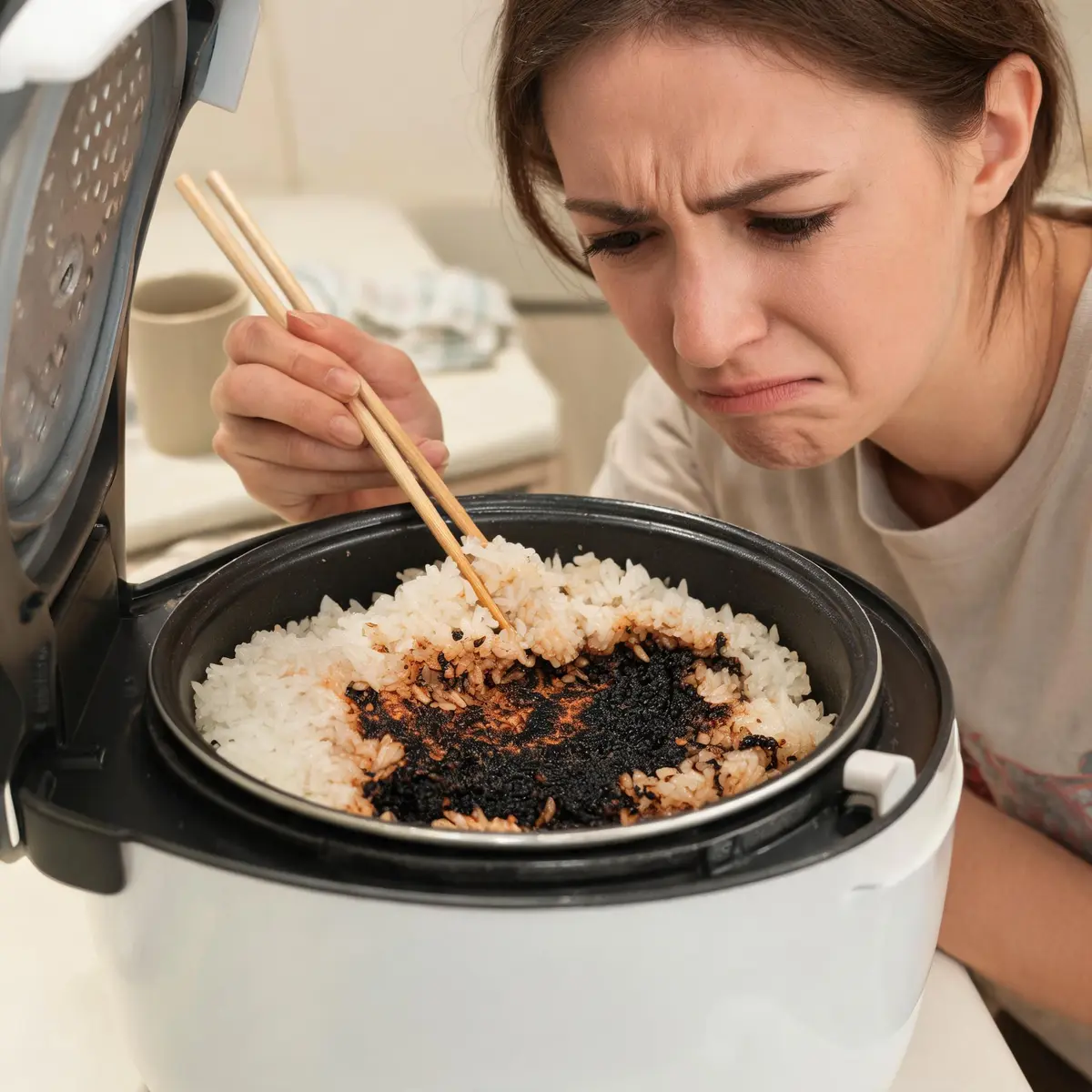
Ms. Lin (pseudonym), who lives in a new first-tier city, encountered a typical false capacity problem: She bought a rice cooker marked “6-cup large capacity” for her family of five. For the first 3 months, she only cooked less than 3 cups of raw rice each time, so she noticed no abnormality at all. It was not until the Dragon Boat Festival family dinner, when she planned to cook 6 cups of rice to entertain relatives, that rice soup started overflowing from the exhaust port just 10 minutes after heating, spilling all over the countertop and power sockets. The final cooked rice was half-cooked on the top and burnt on the bottom, and it was not even enough for 8 people, so she had to cook noodles temporarily as a backup.
Why Do False Capacity Labeling and Size Inconsistency Occur? — In-Depth Breakdown of Root Causes
This problem seems to be a case of manufacturers giving short weight on the surface, but it is essentially the result of misalignment between industry standards, marketing logic, and consumer awareness. We can break down the core reasons from three dimensions:
Material and Process Dimension: Gray Area of Measurement Standards
At present, there is no mandatory unified capacity labeling rule in the domestic rice cooker industry. Manufacturers can freely choose to label three types of capacity: total inner pot volume (maximum volume when filled with water), cooked rice volume, and cookable raw rice volume. The difference between the three can be as high as 2 to 3 times: 1 cup of 160ml raw rice will expand to 400-480ml when cooked into rice. For products marked with total volume, 20%-30% of overflow prevention reserved space also needs to be deducted, so the actual cookable raw rice amount is only about 1/3 of the marked value — this is equivalent to buying mineral water where the merchant labels the total capacity of the bottle instead of the net content of water. The number looks large, but the actual usable part is very small. Some manufacturers also make the inner pot very thin to control costs. The non-stick coating on the inner wall, heating guide grooves, and reinforcing ribs will take up an additional 10% of usable space, further reducing the actual capacity.
Marketing Promotion Dimension: Deliberately Amplified Visual Misleading
Many brands use close-up low-angle shots for the main image on the detail page, deliberately omit reference objects, and even use reduced-scale tableware and rice cups for comparison, making consumers mistakenly think the product is large in size. Some manufacturers also deliberately blur capacity units, only writing “6-cup large capacity” without specifying whether it refers to raw rice cups or cooked rice cups, nor whether it uses the industry standard 160ml measuring cup or the 250ml water cup commonly used in ordinary households, misleading consumers by taking advantage of information asymmetry. We have seen a large number of feedback like “Too small!! Way to small!! Way bigger in the picture!” in the reviews, all victims of this visual marketing misleading.
Consumer Awareness and Usage Scenario Dimension: Overlooked Adaptation Deviation
Many consumers have inherent deviations in their perception of rice cooker capacity: First, they do not know that the “cup” defaulted in the industry is a 160ml standard measuring cup, and are used to measuring rice with ordinary 200-250ml water cups at home, which naturally leads to the situation that “it can’t hold as much as expected”. Second, they ignore the difference in expansion rates of different foods. The maximum capacity marked by manufacturers is basically measured according to the expansion rate of cooking white rice. If used to cook whole grains, porridge, or sticky glutinous rice, the expansion rate will be more than 30% higher than that of white rice. Cooking according to the marked maximum amount will definitely cause overflow. As one user commented, “I have a large family, and was counting on it to cook a lot of rice. So far we have only cooked 4 cups and it boiled over twice. I don’t know what kind of mess it would be if we tried to cook 6 cups.”
Performance Comparison of “False Capacity Labeling and Size Inconsistency” for Different Inner Pot Materials
The material of the rice cooker inner pot directly determines the accuracy of capacity labeling and long-term capacity stability. We have sorted out the performance differences of three mainstream inner pot types:
| Inner Pot Material | Capacity Deviation Rate Range | Core Reason | Advantages | Limitations |
|---|---|---|---|---|
| Aluminum alloy inner pot | 15%-25% | The inner pot wall is relatively thin. Some manufacturers label total volume instead of usable volume to reduce costs. The coating and guide grooves account for about 10% of usable space. Long-term use of coating wear and inner pot deformation will further expand the deviation. | Fast heat conduction, light weight, low cost | Easy to deform under long-term high temperature, and capacity deviation will further increase after the coating falls off |
| 304 stainless steel inner pot | 5%-15% | Uniform wall thickness. Most regular manufacturers label usable volume. Only reinforcing ribs take up a small amount of space, and it is not easy to deform after long-term use. | Wear-resistant, corrosion-resistant, stable structure, not easy to deform | Uneven heat conduction requires more overflow prevention reserved space, so the actual usable volume is slightly lower than the marked value |
| Composite multi-layer inner pot | 3%-8% | High process precision. Most products have passed actual cooking tests before leaving the factory. The marked value is mostly the maximum capacity of cookable raw rice, with overflow prevention reserved space deducted in advance. The long-term deformation rate is extremely low. | Uniform heat conduction, stable structure, high accuracy of capacity labeling | Complex process, heavy weight, generally high cost |
| Judging from user positive feedback, inner pots with high labeling accuracy can basically achieve the effect of “no overflow even when cooking to the maximum marked amount, and even rice doneness”, without the problem of actual capacity being far lower than the marked value. |
How to Avoid False Capacity Labeling and Size Inconsistency? — Purchase and Usage Guide
Core Judgment Indicators When Purchasing
- Clarify the capacity labeling type first: Prioritize products that clearly mark “maximum cookable raw rice amount (L/cup)” on the detail page, avoid products that only mark “total volume” or “large capacity” without specific instructions. If the number of cups is marked, confirm whether it is the industry standard 160ml measuring cup.
- Check specific parameters instead of the main image: Ignore the visual effect of the main image, directly find the inner pot diameter and depth parameters marked on the detail page, and calculate the actual usable volume by yourself: Inner pot volume = π × (inner pot radius)² × inner pot depth, then subtract 20% of the overflow prevention reserved space to get the actual usable cooked rice volume, divide by 3 to get the corresponding maximum cookable raw rice amount.
- Look for real photos with reference objects: If the detail page only has separate product images, no comparison images with common items such as A4 paper and mineral water bottles, judge the size carefully to avoid receiving a physical product much smaller than expected.
Process Details Worth Paying a Premium For
- Inner pot wall thickness ≥ 2mm: The thicker the wall, the lower the deformation rate during long-term use, and the more stable the capacity;
- Inner pot scale marks both raw rice scale and water adding scale: It indicates that actual cooking calibration has been done before leaving the factory, and the capacity labeling accuracy is higher.
Correct Use and Maintenance Methods
- Measure rice with the standard measuring cup included with the product, do not use ordinary water cups at home as measuring tools;
- When cooking foods with high expansion rates such as whole grains, porridge, and glutinous rice, the maximum amount of rice added should not exceed 70% of the marked maximum raw rice amount to avoid overflow;
- Do not use sharp objects such as steel wool to scrub the inner pot, to avoid coating falling off and inner pot deformation leading to reduced actual capacity. If the inner pot is obviously deformed, replace it in time.
Correction of Common Cognitive Misconceptions
- ❌ Misconception: A rice cooker marked 6 cups can cook 6 cups of rice measured with your home cup: In fact, the marked cup is a 160ml standard measuring cup, and the capacity of ordinary household water cups is mostly more than 200ml. Measuring rice with ordinary cups will definitely lead to insufficient capacity;
- ❌ Misconception: The larger the capacity, the better: Generally, 1.5-2L (raw rice amount) is suitable for 1 person, 3-4L for 3-4 people, and 5L or more for more than 5 people. Too large capacity will lead to uneven heating when cooking a small amount of rice.
“Pit Avoidance” Lessons from Real Users
We selected 3 most representative user feedback from more than 30,000 reviews to help you avoid the pitfalls that previous users have stepped on:
User Feedback 1: “Too small!! Way to small!! Way bigger in the picture!”
Lesson Summary: Never judge the product size only by the visual effect of the main image. Be sure to check the product length, width, height and inner pot depth parameters marked on the detail page first. If possible, you can go to offline stores to check the physical size first, or find real photos with reference objects in user posted reviews for reference.
User Feedback 2: “I have a large family, and was counting on it to cook a lot of rice. So far we have only cooked 4 cups and it boiled over twice. I don’t know what kind of mess it would be if we tried to cook 6 cups.”
Lesson Summary: When purchasing, be sure to confirm whether the marked value is total volume or cookable raw rice amount. If it is marked as total volume, you need to convert the actual usable amount by yourself: Total volume × 0.7 (deduct overflow prevention space) ÷ 3 (raw rice expansion rate) = maximum cookable raw rice amount. Do not buy directly according to the marked value.
User Feedback 3: “I can’t understand the measuring cup and the scale of the inner pot, the experience is very bad”
Lesson Summary: After receiving the product, check the capacity of the included measuring cup as soon as possible, and confirm whether the inner pot scale corresponds to the raw rice amount or the water adding amount. Do not blindly add rice and water according to the habit of using other rice cookers before, to avoid the problem of insufficient capacity and overflow.
Related Deep Analysis in This Category
- Easy to Overflow & Hard to Clean — 30% of complaints relate to this
- Poor Cooking Performance & Bad Taste — 38% of complaints relate to this
- Poor Quality Control & Shipping Issues — 12% of complaints relate to this
- Short Lifespan & Frequent Malfunctions — 45% of complaints relate to this