Poor Cooking Performance & Bad Taste in Rice Cooker: What 31,105 Reviews Reveal
Poor Cooking Performance and Subpar Taste: The “Hidden Killer” in the Rice Cooker Industry
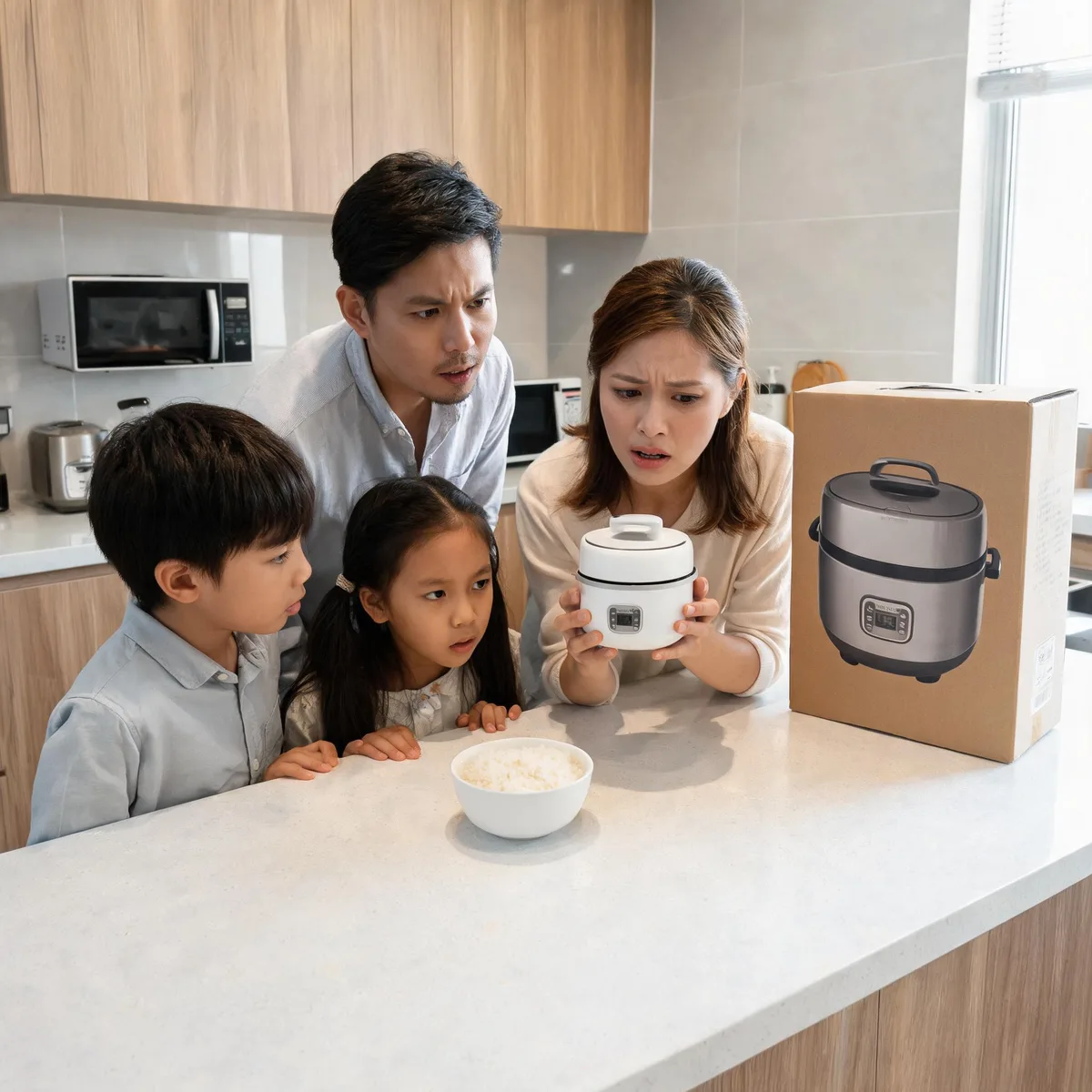
Many consumers’ lowest expectation for a rice cooker is simply “being able to cook rice through”, but even this most basic requirement is far from being universally met in the industry. After analyzing 31,105 real user reviews covering 1,599 products, we found that 38% of negative reviews point to poor cooking performance and subpar taste — which means 1 out of every 3 users who leave a negative review do so because their rice is not cooked properly.
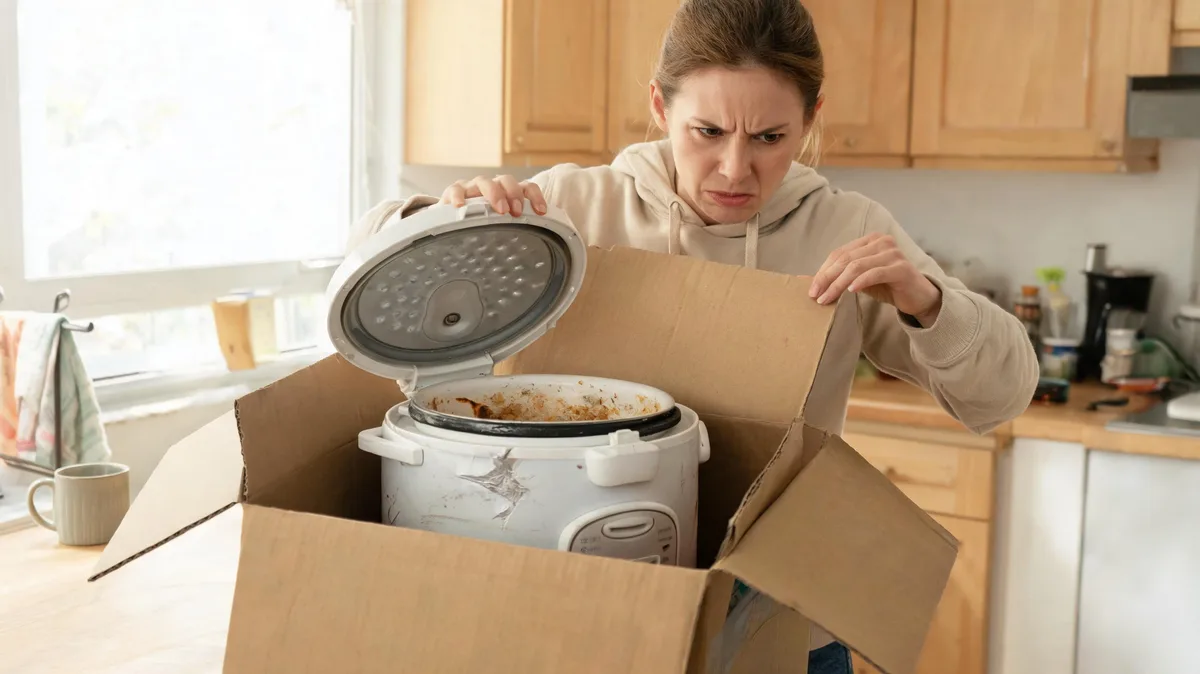
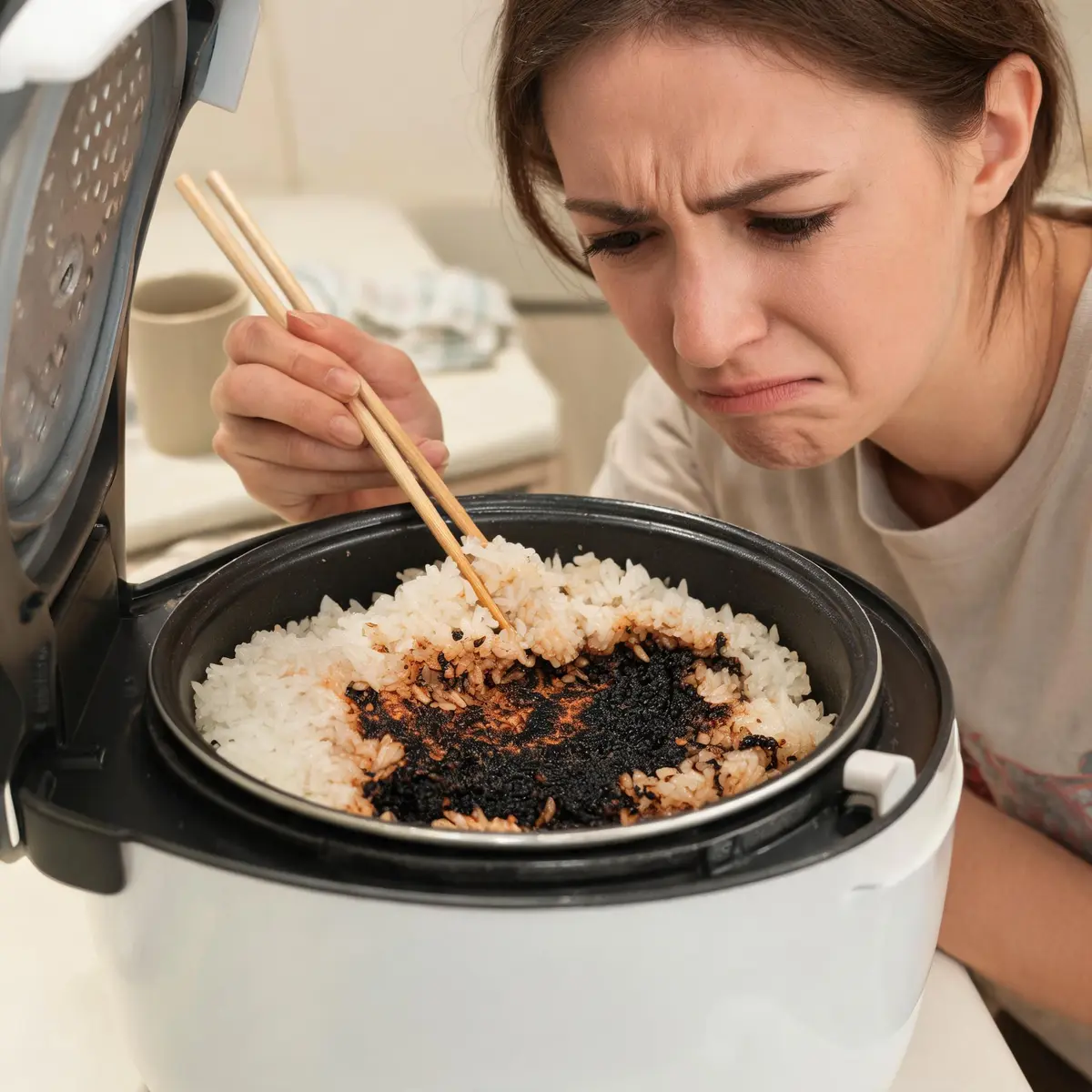
A typical user scenario goes like this: An ordinary office worker buys a sleek rice cooker advertised as “multi-functional and non-stick” for easy meal preparation. The first two times they cook regular polished rice, no issues occur. It is not until they cook multigrain rice on the weekend that they find the brown rice on the top layer is hard enough to hurt teeth, while the white rice at the bottom has a burnt layer, and leftover rice kept warm until evening is so dry it is hard to chew. When they contact customer service for feedback, they get replies like “you added the wrong amount of water” or “multigrain needs to be pre-soaked”. Only when they check reviews on the product page do they find that many users have had the same experience.
Why Does Poor Cooking Performance and Subpar Taste Happen? — In-depth Breakdown of Root Causes
We break down the core causes of this problem from three dimensions: material science, manufacturing process, and usage habits. All cases are from real user feedback.
Core Problems at the Material Science Level
First, the thermal conductivity of the inner pot material is insufficient: The inner pot is the core medium that transfers heat to rice grains. Low-end products often use thin recycled aluminum alloy as the inner pot base, which has uneven thermal conductivity. Areas with excessively high temperature are prone to bottom burning, while areas with insufficient temperature easily produce half-cooked rice, just like a thin aluminum pan always burns food more easily than a thick iron wok when stir-frying.
Second, food contact materials are unqualified: If the sealing rubber ring of the upper lid uses non-food-grade recycled silica gel, it will precipitate small molecular substances at high temperatures and produce a plastic smell; stainless steel inner pots without food-grade passivation treatment will precipitate metal ions when coming into contact with starch and weak acid environments, producing a metallic taste; after low-quality sprayed non-stick coating wears and peels off, it will not only worsen bottom burning, but also bring potential safety hazards.
Common Defects at the Manufacturing Process Level
First, the heating component has poor uniformity: The traditional design of a single bottom heating plate can only conduct heat from the bottom, equivalent to an earthen stove with fire only at the furnace bottom. Rice grains on the top layer and sides are difficult to be fully heated, which easily leads to the problem of “burnt bottom, raw top”. Some products advertised as “3D heating” actually only add a simple heating sheet on the upper lid, with no heating module on the side, so the uniformity improvement is very limited.
Second, the temperature control algorithm is not precise enough: The temperature control system is equivalent to the “brain” of a rice cooker. Most low-end products follow the logic of “cut off power and keep warm once heated to 100°C”, which is equivalent to turning off the fire as soon as water boils. Rice grains have not fully absorbed water and gelatinized, so they are naturally prone to being half-cooked. A high-precision temperature control system imitates the cooking curve of traditional firewood-cooked rice: soak at 30-40°C low temperature to let rice grains fully absorb water, boil at 95-100°C constant temperature to convert starch, and continuously control temperature in the final stewing stage to make gelatinization more sufficient, so the cooked rice is naturally soft, glutinous and even. The user feedback of “heating stops before rice is cooked through, and it won’t restart even after adding water” is a typical temperature control logic defect.
Third, the heat preservation temperature threshold is unreasonable: The optimal rice heat preservation range is 60-65°C, which can both inhibit bacterial reproduction and avoid too fast water evaporation. If the heat preservation temperature is set above 70°C, moisture in rice will be lost quickly, and rice will become dry and hard in less than 24 hours, which is the core reason many users report “rice kept warm gets dry easily”.
Fourth, there is a lack of adaptation parameters for different rice types: Polished rice, brown rice, multigrain and sushi rice have completely different gelatinization temperatures and water absorption durations. Low-end products usually only have 1-2 default cooking programs. Cooking brown rice with parameters for white rice will have insufficient temperature and duration to fully gelatinize the starch of multigrain, so it will naturally be undercooked and hard to chew.
Easily Overlooked Impact of Usage Habits
In addition to product issues, bad usage habits will also worsen poor cooking performance: For example, not adjusting water volume according to rice type before cooking, adding water based on experience will lead to either too mushy or too hard rice; not wiping off water stains and rice grains at the bottom of the inner pot before putting it in will lead to uneven local heating and bottom burning; scrubbing the inner pot with steel wool will damage the non-stick coating, greatly increasing the probability of bottom burning in subsequent use.
Comparison of “Poor Cooking Performance and Subpar Taste” Performance of Different Materials
We have compiled the performance of 4 mainstream inner pot materials on the current market, all feedback comes from real user reviews:
| Inner Pot Material Type | Cooking Performance | Core Advantages | Main Limitations | Typical User Feedback |
|---|---|---|---|---|
| Ordinary sprayed aluminum alloy inner pot | Fast heat conduction but average uniformity, prone to bottom burning and top layer half-cooked rice, bottom burning probability rises sharply after coating peeling | Low cost, good non-stick performance, light weight | Coating is easy to wear and peel off, low-quality coating easily precipitates peculiar smell at high temperature | Negative review: “The bottom burned after 3 uses, and a piece of coating fell off” |
| Food-grade stainless steel inner pot | Poor heat conduction uniformity, easy to burn bottom due to local overheating, no coating peeling problem | High durability, scratch and wear resistant | Heavy weight, easy to stick, prone to metallic taste without passivation treatment | Positive review: “It hasn’t broken after 3 years of use, but I have to soak it for a long time to clean it after each cooking” |
| Multi-layer composite inner pot | Uniform heat conduction, strong heat storage capacity, full gelatinization of rice grains, low probability of half-cooked rice and bottom burning | Even heating, high taste stability | High cost, heavy weight | Positive review: “No matter cooking white rice or multigrain, it is soft and glutinous, half-cooked rice rarely happens” |
| Ceramic inner pot | Good heat storage, no peculiar smell, gelatinized taste is relatively soft and glutinous | Safe without precipitation, acid and alkali resistant | Slow heat conduction, fragile, extended cooking time required for multigrain | Negative review: “It takes an hour and a half to cook brown rice, I can’t wait that long” |
How to Avoid Poor Cooking Performance and Subpar Taste? — Purchase and Usage Guide
Core Indicators to Focus on When Purchasing
- Temperature control accuracy: Pay attention to the temperature control accuracy mark on the parameter page. Accuracy of ±1℃ is far better than accuracy of ±5℃. At the same time, check if there is relevant description of segmented temperature control. Products with clear soaking, boiling and stewing stages have higher cooking stability.
- Heating method: Check if there are marks such as “3D heating” and “IH electromagnetic heating”. The uniformity of these heating methods is usually better than traditional bottom heating plates.
- Inner pot parameters: Pay attention to the thickness mark of the inner pot. Inner pots with thickness above 3mm have better heat storage capacity and more uniform heat conduction. At the same time, confirm that the food contact layer meets national food safety standards.
- Function adaptation: If you often eat brown rice and multigrain rice, confirm if there is a corresponding special cooking mode. The default white rice program cannot meet the gelatinization demand of multigrain.
- Heat preservation parameters: If you have long-term heat preservation needs, prioritize products marked with heat preservation temperature in the 60-65℃ range.
Process Details Worth Investing In
If you have high requirements for rice taste, you can focus on these processes: The non-stick layer of the inner pot adopts penetration process instead of simple spraying, which has longer service life; multi-point temperature sensors instead of single-point sensors, which have higher temperature control accuracy; IH electromagnetic heating module covers the side and bottom of the inner pot, which has better heating uniformity.
Correct Usage and Maintenance Methods
- Adjust water volume according to rice type before cooking: The water-rice ratio for ordinary polished rice is about 1.2:1, and the ratio for brown rice and multigrain is about 1.4:1. Try to add water according to the scale line of the inner pot, do not rely solely on experience.
- It is recommended to pre-soak brown rice and multigrain for 15-30 minutes before cooking, which can greatly reduce the probability of half-cooked rice.
- Before putting the inner pot in, be sure to wipe off water stains and rice grains at the bottom of the inner pot to avoid uneven local heating leading to bottom burning.
- Use soft sponge or rag to clean the inner pot, do not use steel wool or hard brushes to avoid damaging the non-stick coating.
- Try not to keep rice warm for more than 12 hours. Even for products with good heat preservation performance, long-term heat preservation will lead to water loss and worse taste.
Common Misconception Correction
- Misconception: The heavier the inner pot, the better. Some low-end products add cheap weight layers to the inner pot to increase weight, but the actual thermal conductivity is not improved. Do not judge the quality of the inner pot solely by weight.
- Misconception: Expensive rice cookers cook everything delicious. If there is no corresponding multigrain cooking mode, even high-end products will easily produce half-cooked brown rice when using the default white rice program.
- Misconception: Rice boiling over is caused by adding too much water. Most boiling over problems are caused by improper temperature control in the boiling stage, and failure to reduce power in time. Qualified products will not boil over even if water is added according to the standard amount.
“Pit Avoidance” Lessons from Real Users
The following are all from real user negative reviews. We have compiled the corresponding core lessons to help you avoid common pitfalls:
- User feedback: “Heating stopped before the rice was cooked through. I wanted to add some water and cook again, but none of the buttons worked, the whole meal was ruined” Lesson summary: The temperature control logic of the rice cooker needs to include a complete stewing stage, and will not directly lock the heating program before rice grains are fully gelatinized. Before purchasing, check if there are relevant feedback such as “power off in advance” and “half-cooked rice” in reviews.
- User feedback: “The old rice cooker I used for more than ten years had very good heat preservation effect. I have used this new model for less than half a year, and the rice becomes completely dry and hard after less than 24 hours of heat preservation. I contacted customer service and was told to press the extra extended heat preservation button” Lesson summary: Heat preservation temperature is the core parameter affecting the taste of leftover rice. 60-65℃ is the optimal range that balances freshness preservation and bacteriostasis. Heat preservation design above 70℃ will quickly evaporate rice moisture. When purchasing, prioritize products that disclose heat preservation parameters.
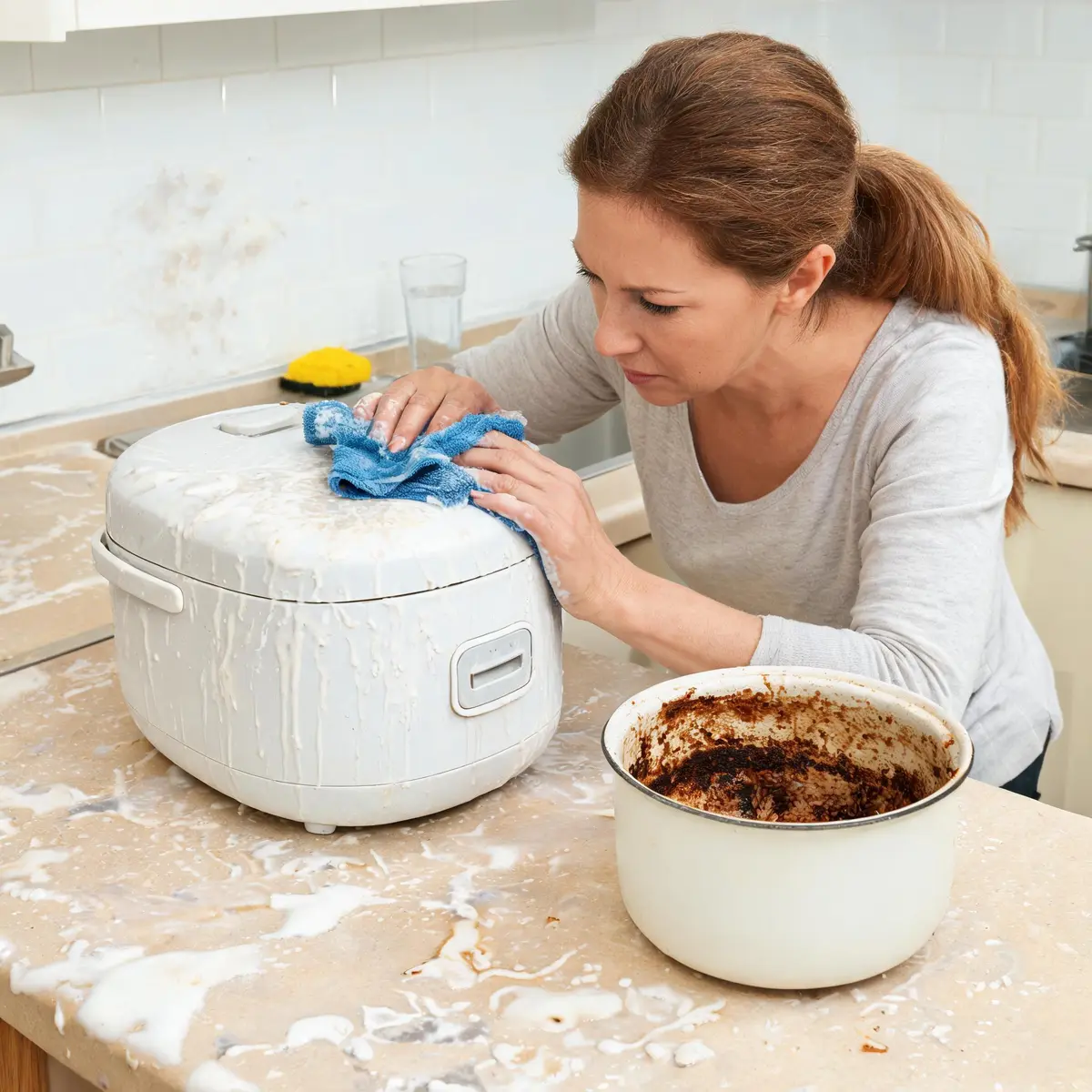
- User feedback: “I originally wanted to buy a large-capacity one for my big family, but it boils over when cooking 4 cups of rice, rice soup flows all over the countertop. I can’t imagine how messy it will be if I cook 6 cups” Lesson summary: The core cause of boiling over is the defective power adjustment design in the boiling stage. Products with only fixed power heating are very likely to have boiling over problems. Before purchasing, pay attention to “boiling over” related feedback in reviews.
- User feedback: “The price is very cheap, but the cooked rice always has a strange plastic smell. It still has the smell after three uses, so I didn’t dare to use it later” Lesson summary: After receiving a new rice cooker, you can first boil clear water with a small amount of white vinegar to remove smell. If there is still obvious peculiar smell after repeated use, it is very likely that the food contact material does not meet safety standards. It is recommended to return or exchange it in time, do not continue to use it.
- User feedback: “I usually like to eat multigrain rice, but the brown rice cooked by this cooker is so hard that it hurts my teeth. It can only be used when cooking white rice, which is too wasteful” Lesson summary: The gelatinization of multigrain and brown rice requires longer soaking time and higher heating temperature. If you often eat multigrain staple food, be sure to confirm that the product has a special multigrain/brown rice cooking mode. The default white rice program cannot meet the gelatinization demand of multigrain.
Related Deep Analysis in This Category
- Misleading Capacity & Size Mismatch — 18% of complaints relate to this
- Easy to Overflow & Hard to Clean — 30% of complaints relate to this
- Poor Quality Control & Shipping Issues — 12% of complaints relate to this
- Short Lifespan & Frequent Malfunctions — 45% of complaints relate to this