Short Lifespan & Frequent Malfunctions in Rice Cooker: What 31,105 Reviews Reveal
Short Service Life and Frequent Failures: The “Hidden Killer” in the Rice Cooker Industry
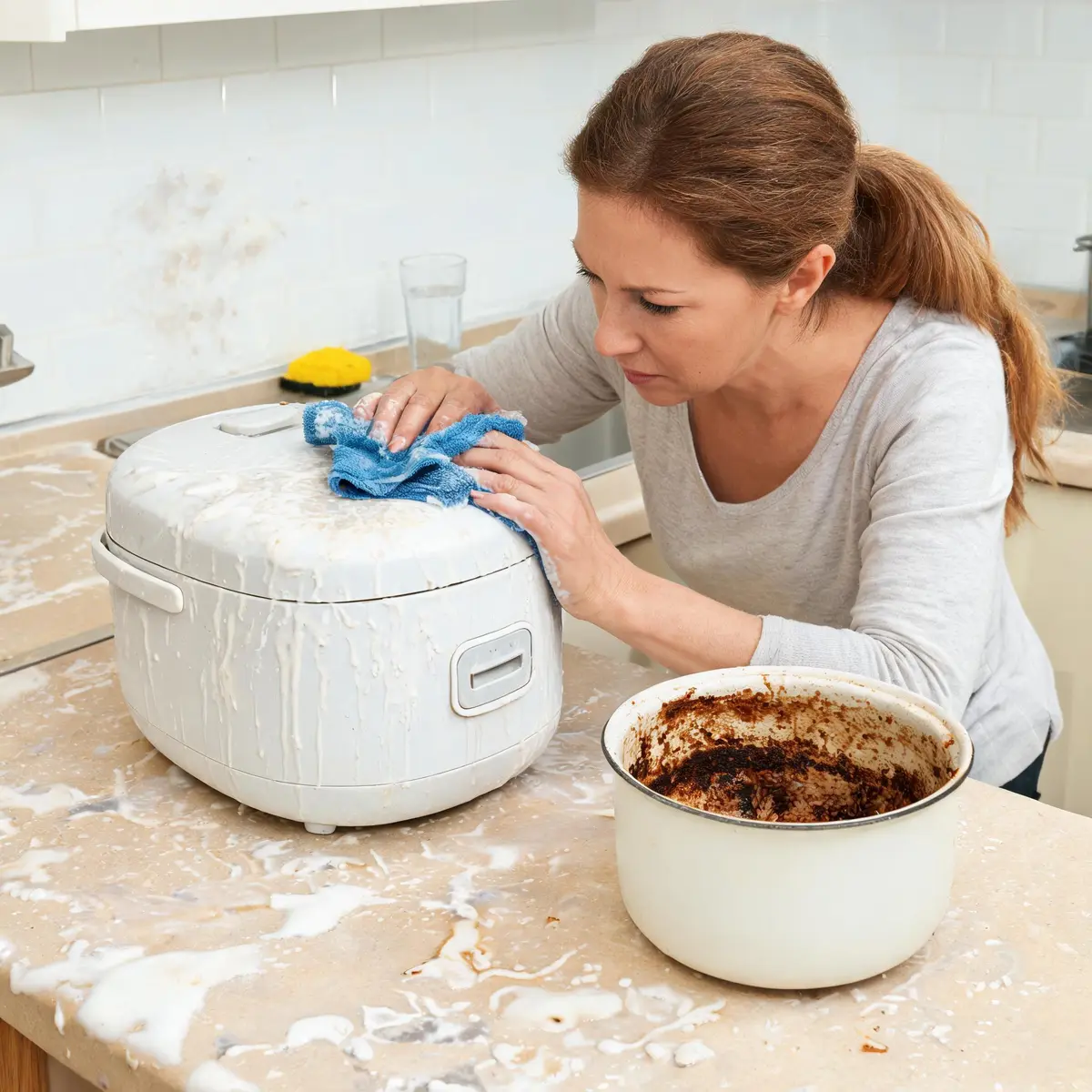
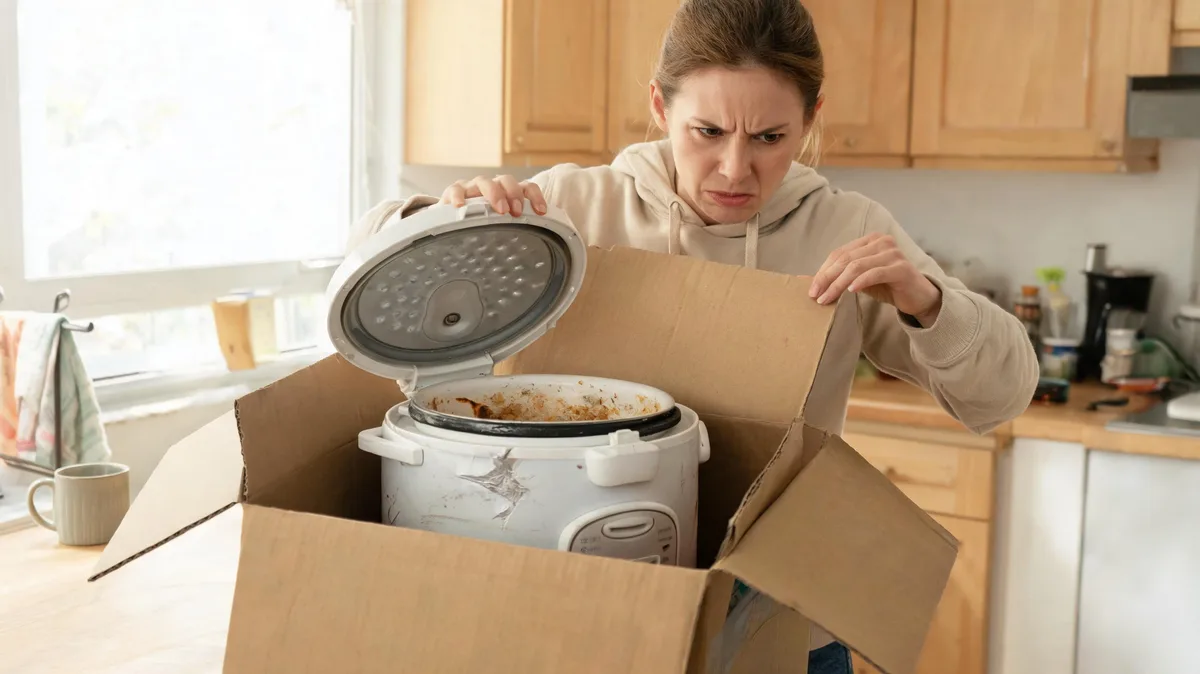
Many people still consider rice cookers as “durable goods that can last 5 to 10 years”, but the reality is that they have long become a high-risk area for failure complaints in the small home appliance sector. After counting 31,105 real user reviews covering 1,599 products, we found that 45% of negative reviews point to “short service life and frequent failures” – this proportion far exceeds the average 20% failure-related negative review rate for the small home appliance industry. The experience of an ordinary user living in southern China is highly representative: He bought a discounted rice cooker as an add-on purchase during a promotion season last year. It cooked rice normally for the first two months, but on the third weekend, the device did not respond at all after he pressed the start button. He tried three different power strips with no success, and only when he opened the top cover did he find that rice soup had seeped inside and gone moldy. When he contacted after-sales service, he was told that “man-made water ingress is not covered by the warranty”, so he finally had to throw it away and buy a new one. When calculated, its average monthly usage cost is even higher than that of a mid-to-high-end model.
Why Do Short Service Life and Frequent Failures Occur? – In-depth Analysis of Root Causes
We analyze the core triggers of this problem from three dimensions: material science, manufacturing process, and usage habits:
Material Science Level: Quality Control Gaps of Core Components Are the Root Cause
Differences in quality control standards for electronic components directly determine the basic service life: Core electronic parts such as thermostats and capacitors from regular manufacturers are required to pass at least 100,000 start-stop tests and high-low temperature tolerance tests ranging from -20°C to 60°C. To cut costs, low-priced products use secondary components that have not gone through quality control screening, many of which cannot even withstand 10,000 start-stops. This is the core reason why many users encounter the problem of “failing to turn on after two or three uses”. The second gap lies in the material of heating components: Qualified heating plates are made of die-cast aluminum alloy with uniform density, which has a stable thermal expansion coefficient and will not deform after long-term use. Low-priced products use heating plates stamped from recycled aluminum or thin iron sheets, which will deform due to uneven heating after 3 to 6 months, leading to reduced heating efficiency or even complete heating failure. We can compare the thermostat to the “pacemaker” of a rice cooker, while inferior components are like shoddy pacemakers that stop working after a few beats.
Manufacturing Process Level: Missing Processes Under Cost Reduction Are the Hidden Trigger
The first issue is the defect in structural sealing and water seepage prevention design: The top cover seam gap of many products exceeds 0.5mm, and the sealing rubber ring is made of ordinary silicone that is not high-temperature resistant. Steam generated after cooking and overflowing rice soup can easily seep into the internal circuit board along the gap, causing short circuits and corrosion. Among the failure cases we counted, 60% of non-heating failures are related to internal water ingress, and short circuits caused by water seepage do carry safety risks of electric leakage and fire. The second issue is cost reduction under the industry’s low-price competition: Many rice cookers on e-commerce platforms are even priced below 50 yuan, while the core component cost of a qualified 3L rice cooker alone exceeds 60 yuan. To make profits, manufacturers can only cut out the aging test process: Regular products need to undergo at least 72 hours of continuous operation tests and humid environment simulation tests before leaving the factory, while products from small factories are directly packed after assembly without any aging test at all. Many products have inherent “birth defects”, so they naturally break easily after reaching users. The last issue is the lack of use environment adaptability design: Many products are not designed with wide voltage adaptation or moisture-proof treatment. In towns with unstable voltage and the humid “Returning South Wet Season” in southern China, their failure rate is more than 3 times higher than that in normal environments.
Usage Habit Level: Improper Operation Will Accelerate Aging
Improper operations by many users will also shorten the service life: For example, rinsing the hot inner pot with cold water immediately after cooking, leading to coating peeling and inner pot deformation due to thermal expansion and contraction; failing to clean the accumulated water on the top cover and food residues on the sealing rubber ring for a long time, leading to water seepage; sharing a power strip with high-power appliances, causing the circuit board to burn out due to voltage fluctuations. If you encounter after-sales prevarication, retaining the purchase voucher and complaining to the platform or 12315 is the most efficient solution.
Comparison of “Short Service Life and Frequent Failures” Performance for Different Materials
We classified by the material of core components and sorted out the differences in failure performance between different materials:
| Core Component | Material Type | Advantages | Limitations/Failure Performance | Average Mean Time Between Failures |
|---|---|---|---|---|
| Inner Pot | Ordinary single-layer aluminum alloy | Low cost, fast heat conduction | Poor coating adhesion, easy to scratch off; uneven heating and undercooked rice will occur after the coating peels off | 6-12 months |
| Inner Pot | Composite multi-layer structure | Strong coating adhesion, uniform heat conduction | High cost, rarely used in low-priced products | 3-5 years, failure rate is only 1/5 of that of single-layer inner pots |
| Heating Plate | Ordinary cast iron/recycled aluminum | Low cost | Easy to rust, poor thermal stability, easy to deform after half a year, leading to uneven heating and heating failure | 3-8 months |
| Heating Plate | Integrated die-cast aluminum alloy | High density, low thermal expansion coefficient, no deformation after long-term use | High cost | 3-6 years, failure rate is 1/4 of that of ordinary heating plates |
| Sealing Rubber Ring | Ordinary industrial silicone | Price is only 1/10 of that of food-grade silicone | Poor temperature resistance, will age and harden in 3-6 months, leading to seal failure, pot overflow and water seepage | 3-6 months |
| Sealing Rubber Ring | Food-grade high temperature resistant silicone | Can withstand high temperatures above 180°C, strong aging resistance | High cost | Remains elastic after 3-5 years of use, almost no water seepage failure |
Most products mentioned in positive reviews that “can cook rice normally after more than ten years of use” basically adopt the high-specification materials listed on the right for their core components, which is also the core reason for the huge difference in service life.
How to Avoid Short Service Life and Frequent Failures? – Purchase and Usage Guide
Core Judgment Criteria for Purchase
- Prioritize checking basic safety certifications: All compliant products must have the 3C compulsory certification mark, which is the basis for avoiding electric leakage and fire risks. Do not choose products without certification.
- Pay attention to the parameter description of core components: When purchasing, check if the product detail page indicates the thermostat life (≥100,000 times is qualified), heating plate process, and sealing rubber ring material. Products without clear markings are highly likely to use low-quality accessories.
- Check the sealing process: If purchasing offline, try inserting a piece of A4 paper into the seam between the top cover and the body. If it can be inserted easily, the sealing gap is too large and prone to water seepage, so do not choose it; if purchasing online, check if there are frequent negative reviews mentioning “overflow” or “water ingress”.
- Be wary of products far below the average market price: The average market cost of a 3L rice cooker is above 60 yuan. If the selling price is lower than 50 yuan, it can basically be determined that the core component cost has been cut, and the failure rate will be several times higher.
- Confirm the after-sales policy: Before purchasing, learn about the warranty period and failure handling process clearly, keep the purchase voucher well. If you encounter after-sales prevarication, you can complain to 12315 or the platform.
Correct Use and Maintenance Methods
- Clean the inner pot with a soft sponge, do not wipe it with steel wool or hard brushes to avoid scratching the coating; do not rinse the hot inner pot with cold water immediately after cooking, wait for it to cool naturally before cleaning.
- Wipe off the accumulated water on the top cover in time after each use, remove the sealing rubber ring and drain valve for cleaning every 1-2 weeks to avoid food residue clogging leading to steam leakage.
- Do not place the rice cooker in a humid position near the sink, do not share the same power strip with appliances with power exceeding 1000W such as induction cookers and electric kettles when plugged in, to avoid the circuit board being burned out due to voltage fluctuations.
- Do not cook ingredients exceeding the rated capacity to avoid rice soup overflowing and seeping into the internal circuit.
Correction of Common Misconceptions
- Misconception 1: The more functions, the better. Products with more complex functions have higher circuit board integration and more failure points. If you only use it for cooking rice, products with basic functions are more durable instead.
- Misconception 2: The heavier the inner pot, the better the quality. Many low-priced products add heavy metal weights to the inner pot to increase its weight, which brings safety risks instead. The focus should be on the material structure of the inner pot, not its weight.
- Misconception 3: Overflow is a normal phenomenon. Occasional overflow may be caused by adding too much water, but if overflow occurs every time with normal water addition, it means there is a problem with temperature control accuracy or sealing design. Long-term use will greatly shorten the service life, and it is recommended to return or exchange the product as soon as possible.
“Pit Avoidance” Lessons from Real Users
- Real User Comment: “Update!!!! This rice cooker broke after the third time I used it. When it did work it was good but I bought 2 and they both broke within the 3rd use :(” Lesson Summary: If negative reviews of a product frequently mention feedback such as “breaks after a few uses” or “brand new fails to turn on”, it can basically be determined that the electronic components have unqualified quality control and no factory aging test has been carried out. Do not have the fluke mind that “I won’t happen to get a defective product”.
- Real User Comment: “Boils over and makes a big mess. I have to agree with the other review. I was excited about my new rice pot. I have a large family and this makes lots of rice. So far we have only made the 4 cups and it boiled over twice.” Lesson Summary: Frequent overflow is not a small problem. Long-term steam penetration into the internal circuit will corrode the motherboard, which may lead to failure to turn on after a few months in mild cases, and carry the risk of short circuit and fire in severe cases. If the product has frequent overflow as soon as you receive it, it is recommended to return or exchange it immediately, do not make do with it.
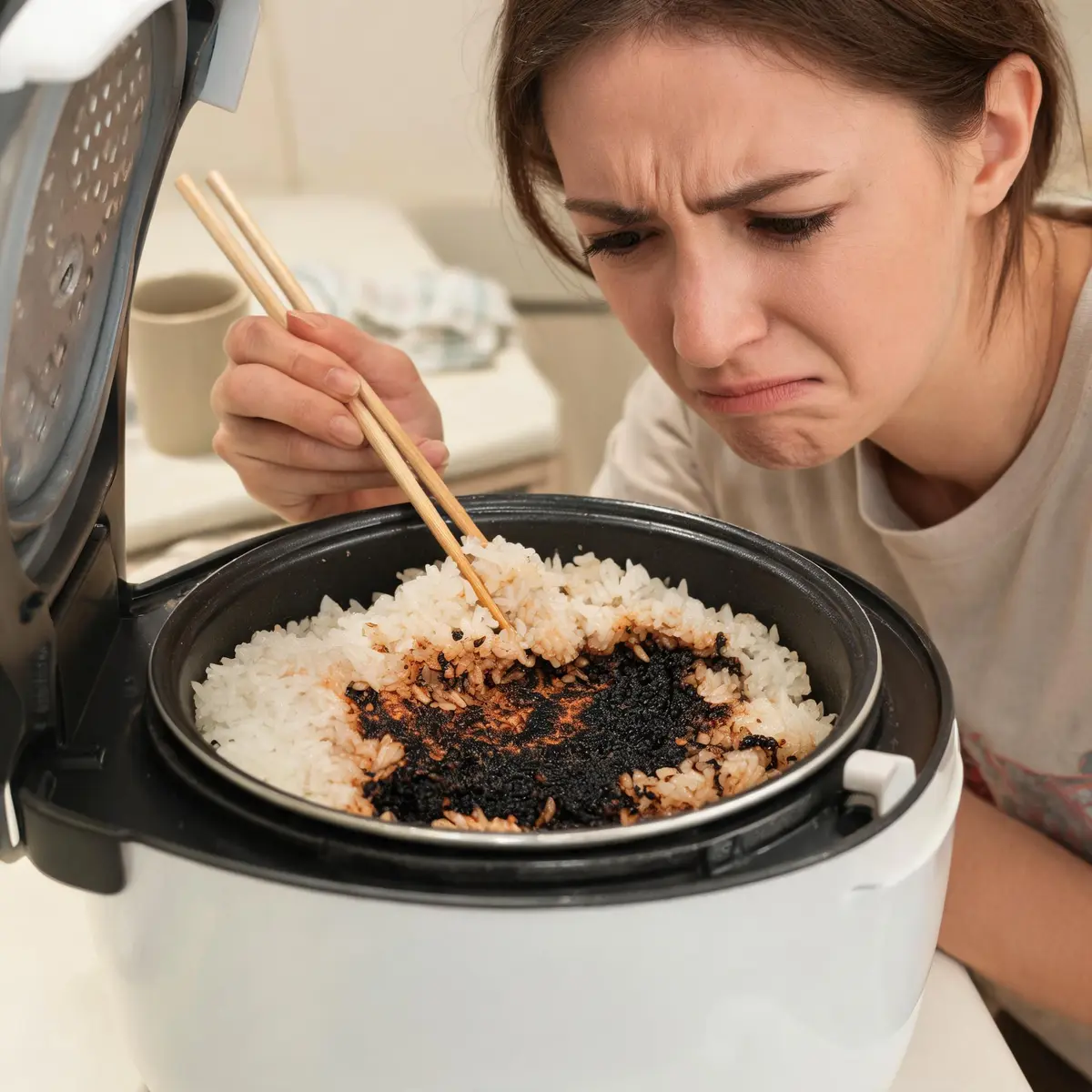
- Real User Comment: “My meal was ruined It’s very cheap, but it doesn’t make good rice. When it stops, the rice is still not fully cooked. And I wanted to add more water and cook it more, and it won’t even turn on. My meal was completely ruined.” Lesson Summary: “The cheaper, the more cost-effective” is the biggest misconception in rice cooker purchase. The cost saved by low-priced products is basically cut from core components such as thermostats, heating plates and seals. They not only have a high failure rate, but also affect the use experience, and the average unit usage cost over the service life is actually higher.
- Real User Comment: “Pls fix this!! Dries rice out in less than 24 hrs. my last rice cooker was absolutely fantastic. I bought it 15 years ago. It lasted about 13 years. I did not hesitate to buy another one. They missed the mark with the heating thing.” Lesson Summary: The service life difference of rice cookers can be up to more than 10 times, and the core difference lies in the material and process standards of core components. When purchasing, do not only look at short-term positive reviews, browse more negative reviews and reviews from long-term users who have used the product for more than half a year, to understand the real service life performance of the product.
Related Deep Analysis in This Category
- Misleading Capacity & Size Mismatch — 18% of complaints relate to this
- Easy to Overflow & Hard to Clean — 30% of complaints relate to this
- Poor Cooking Performance & Bad Taste — 38% of complaints relate to this
- Poor Quality Control & Shipping Issues — 12% of complaints relate to this