Inaccurate Size & Specification in Curtains: What 182,185 Reviews Reveal
Inconsistent Size Specifications: The “Hidden Killer” of the Curtain Industry
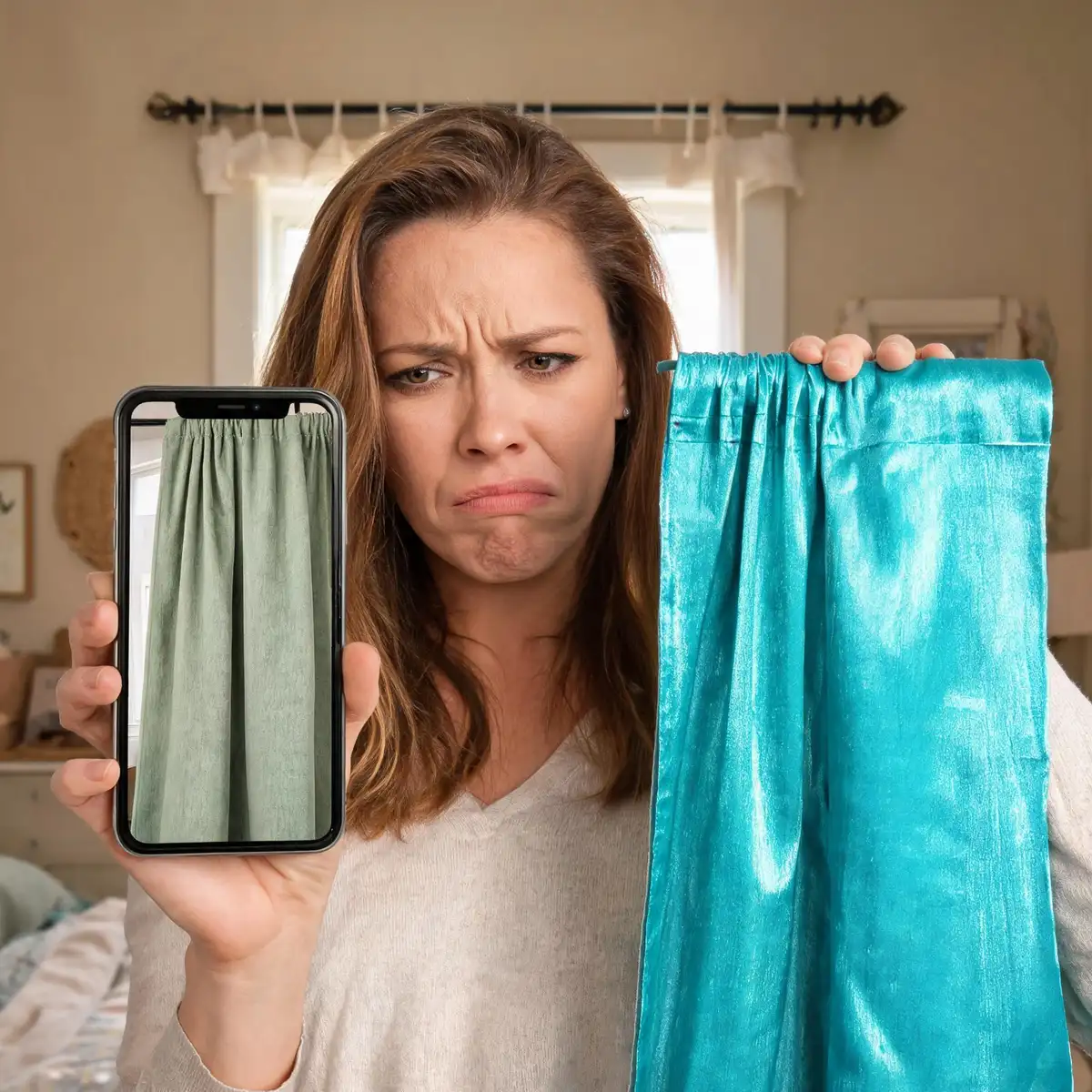
When choosing curtains at the final step of home renovation, many people have fallen into the trap of wrong sizes: after spending weeks picking styles and comparing prices, you only find issues after hanging the delivered products – 3cm too short leading to light leakage, insufficient width to cover the entire window, uneven lengths of multiple spliced panels. Returns and exchanges take half a month, so you can only make do with them if you fail to catch up with your moving or move-in schedule, directly discounting the originally planned home style. After analyzing 182,185 real user reviews covering 49,678 curtain products, we found that 35% of negative reviews are related to inconsistent size specifications, making it the most complained-about issue for the curtain category, with a far higher incidence than common pain points such as poor quality, color difference, and insufficient blackout performance.
Why Are Size Specifications Inconsistent? An In-depth Breakdown of Root Causes
The size deviation of curtains is never as simple as “accidentally made too short”, it is the combined effect of three dimensions: material properties, manufacturing processes, and merchant information asymmetry:
Material Science Dimension: The inherent shrinkage property of fabrics is deliberately concealed
From the perspective of material structure, molecules of natural fibers such as cotton and linen contain a large number of hydrophilic groups, which will expand and shrink when exposed to water. The shrinkage rate of cotton and linen fabrics without pre-shrinking treatment can reach 3%-8%, meaning an 84-inch curtain will shorten by 2.5-6.7cm after washing; while synthetic fibers such as polyester have fewer hydrophilic groups, with a conventional shrinkage rate of only 0.5%-1%, and higher dimensional stability. Many merchants will not actively inform consumers whether the fabric has undergone pre-shrinking treatment, and when consumers find size shrinkage after washing, it is often past the return and exchange period.
Manufacturing Process Dimension: Poor cutting accuracy and lack of quality control standards are the hardest hit areas
Batch cutting of curtains is similar to garment production: formal factories use positioning fixtures to fix the fabric, align the warp and weft threads before cutting, and the size tolerance of the same batch can be controlled within 1cm; while small workshops cut arbitrarily by directly stacking whole rolls of fabric to cut costs, without a unified alignment benchmark, the length difference of products in the same batch can be up to 5cm, which will be obviously uneven when multiple panels are hung. Many merchants also label “stretched flat width” as “finished hanging width”. After the curtains are pleated, the actual usable width is only half of the labeled value, just like the negative review mentioned by a user: “Says it is 42by 84. It was only 23.5 on the top with the pleats and 51 across the bottom”, which is essentially a misunderstanding caused by opaque process labeling.
Merchant Marketing Dimension: Deliberate false labeling and vague information induce orders
Many merchants use information asymmetry to mislead consumers: first, the main image shows the effect of two curtain panels, but the price is marked for a single panel, and the detail page does not clearly state the sales unit, so many users find that only one panel is delivered after receiving the goods; second, they falsely label the size, marking curtains with an actual length of 80 inches as 84 inches, attracting users with a lower unit size price to seem more cost-effective; third, they deliberately do not label the size tolerance range, and shirk responsibility on the grounds of “normal industry error” when users find deviations.
Comparison of “Inconsistent Size Specifications” Performance of Different Materials
The dimensional stability of different fabrics varies greatly. You can refer to the property comparison in the table below before purchasing:
| Curtain Material | Dimensional Stability | Conventional Shrinkage Range | Common Size Inconsistency Problems | Performance of High-Quality Products |
|---|---|---|---|---|
| Polyester/Silk Imitation | Excellent | ≤1% | Rare natural deformation, most cases are false size labeling by merchants | The fabric is heavy and drapes well, size deviation after washing is <0.5cm, which matches the description of “high gram weight, good texture” in user positive reviews |
| Cotton-linen Blended | Average | 3%-8% | Products without pre-shrinking treatment shorten by 2-5cm in length after washing | Pre-shrunk and shaped in advance, labeled post-wash shrinkage rate ≤1%, no obvious size change after multiple washes |
| Chenille | Medium | 2%-5% | Large length tolerance in the same batch caused by pulling during cutting, gradual elongation and deformation after hanging | High-temperature shaped before cutting, size tolerance of the same batch ≤1cm, no obvious elongation after hanging for more than 1 year |
| Sheer (Voile/Chiffon) | Good | ≤2% | False width labeling caused by stretching during cutting, large gap between stretched flat measurement and labeled value | Cut after shaping, clearly mark stretched flat width and finished hanging width, deviation ≤1cm |
How to Avoid Inconsistent Size Specifications? Purchase and Use Guide
Core Judgment Criteria When Purchasing
- Clarify labeling rules: Prioritize checking whether the detail page clearly states “sales unit is single panel/double panels”, “width is stretched flat expanded size/finished size with pleats”, “whether the length includes the height of grommets/hooks”. If there is no such label, be sure to confirm with customer service and save the chat history.
- Verify fabric process: Check whether “pre-shrinking treatment” and “high-temperature shaping” are labeled. Formal products will clearly label the post-wash shrinkage rate ≤1%. Cotton, linen and chenille products without such labels should be selected with caution.
- Confirm quality control standards: If multiple spliced panels are required, ask in advance about the size tolerance range of products in the same batch, and prioritize products with tolerance ≤1cm.
- Calculate reasonable size: If the labeled width is the stretched flat width, you need to buy 1.5-2 times the actual required hanging width. For example, if the window is 2 meters wide, you need to buy curtains with a total stretched flat width of 3-4 meters to achieve a natural pleat effect.
Usage and Maintenance Notes
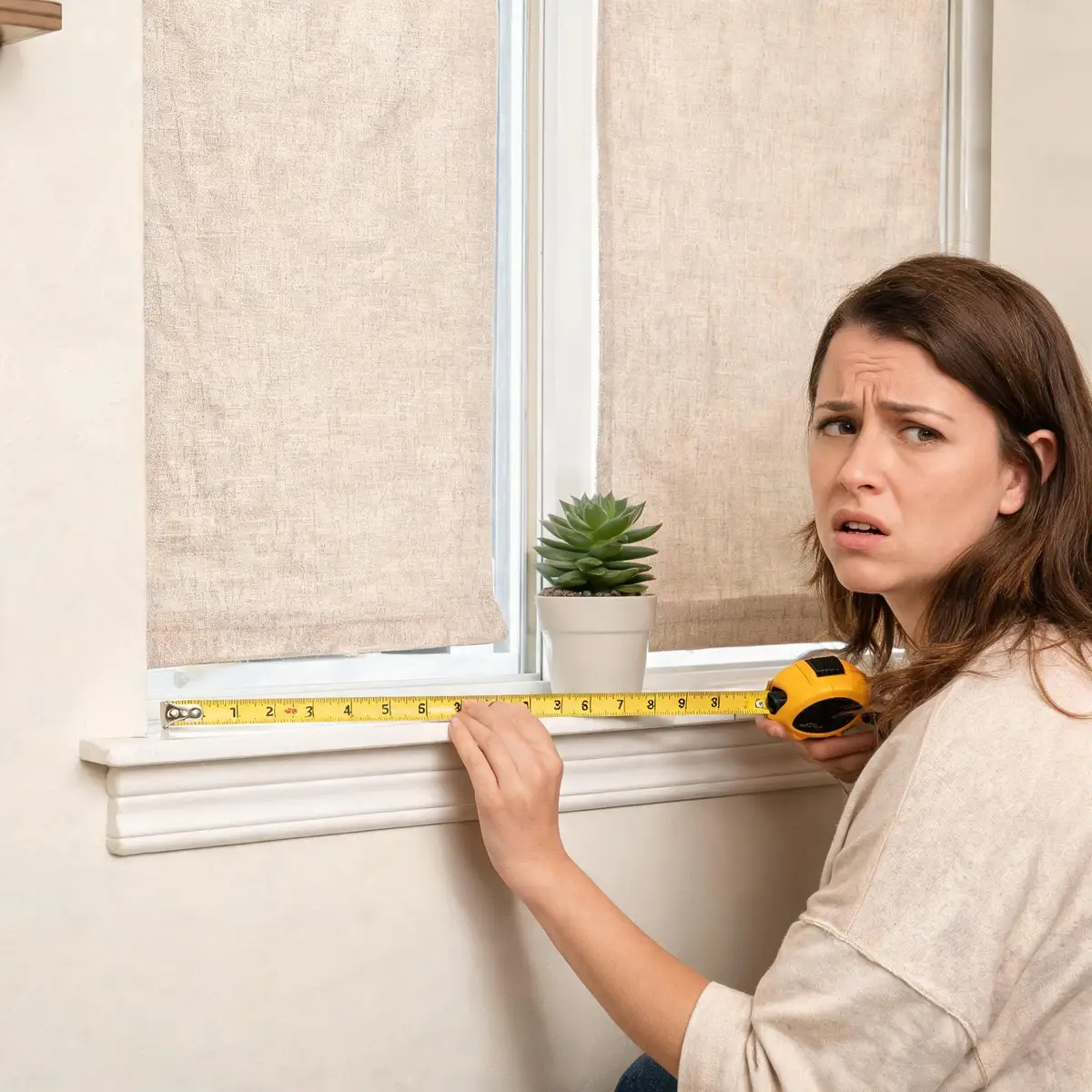
- Check first after unboxing: Do not hang the curtains immediately after receiving the goods. First lay them flat and measure the net size. If the deviation from the labeled value exceeds 2cm, apply for return and exchange directly, do not cut the hang tag or install accessories.
- Wash as required: Do not wash cotton and linen products with hot water above 60℃, do not dry at high temperature, try to hang to dry to reduce the risk of shrinkage.
- Choose the same batch for supplementary purchase: If you need to buy the same curtain later, be sure to inform customer service that you want the original batch of products to avoid size and color difference problems between different batches.
Common Misconception Correction
- Misconception 1: The labeled length is the height from the ground after hanging. In fact, for grommet style curtains, the grommet itself has a height of 3-4cm, and the hook of the hook style also has an adjustment range. You should take the height of these accessories into account before placing an order.
- Misconception 2: A size error of 2-3cm is normal. According to the formal standards of the home textile industry, the size tolerance of curtains should be within 1cm, and products with more than 2cm of deviation are unqualified.
- Misconception 3: The cheaper the curtains, the higher the cost performance. Many low-priced curtains reduce costs by falsely labeling sizes and using low-priced fabrics without pre-shrinking treatment. In fact, the price per unit effective size is higher, and it will also bring subsequent return and exchange troubles.
“Pit Avoidance” Lessons From Real Users
- User Negative Review: “Says it is 42by 84. It was only 23.5 on the top with the pleats and 51 across the bottom.” Lesson Summary: More than 90% of width disputes come from differences in understanding of “labeled width”. Most merchants label the width as the fully stretched flat size of the fabric. After being made into a finished product with pleats, the hanging width is only 50%-70% of the labeled value. Be sure to confirm clearly before placing an order, do not buy directly according to the window width.
- User Negative Review: “they measured shorter than the listing, in addition they arrived super wrinkled. Definitely returning.” Lesson Summary: Lay the curtains flat and measure the size as soon as you receive the goods. Do not wait until you hang them up, cut the hang tag or wash them to find the problem, at which time most merchants will refuse to return or exchange, and you can only bear the loss yourself.
- User Negative Review: “I ordered two different sizes of these curtains for different windows and they came with different tops for the curtain hangers… one has just a loop for a rod and one has the grommets.” Lesson Summary: Different sizes of the same product may correspond to different installation processes. If you want to choose the same curtain for multiple windows in your home, be sure to confirm the installation method corresponding to each size in advance to avoid the problem of inconsistent styles, such as some with grommets and some with rod pockets.
- User Negative Review: “Unfortunately, the material is just like cheesecloth. No way these can be used for curtains, unless you want to go to jail. All of your neighbors will learn all about your ‘business’.” Lesson Summary: Thin fabrics with a gram weight of less than 200g/㎡ not only have poor blackout performance, but also have extremely low dimensional stability, which is easy to be pulled and deformed and shrink after washing. Do not only look at the appearance when purchasing, prioritize hard parameters such as fabric gram weight and shaping process.
Related Deep Analysis in This Category
- Color & Appearance Mismatch with Listing — 22% of complaints relate to this
- Installation & Hardware Failure — 18% of complaints relate to this
- False Advertising of Functional Features — 40% of complaints relate to this
- Poor Material & Workmanship — 28% of complaints relate to this
🛠️ Practical How-To Guides
Based on the analysis above, we've prepared actionable daily solutions for you:
Confused by Single vs. Double Curtain Panels? Must-Read Guide to Avoid Ordering Mistakes
Decode the hidden rules of single and double curtain panels to avoid ordering mistakes and get exactly what you pay for.
Read Full Guide →Curtains Always Shrink? 3-Step Anti-Scam Measuring Guide to Avoid Fake Sizes
Uncover the truth behind fake curtain sizes and learn how to measure and communicate accurately for a perfect fit.
Read Full Guide →Uneven Curtain Hems? 3 Quick Inspection Tricks and DIY Fixes for Mismatched Lengths
Tackle batch tolerance and uneven hems with practical inspection tips and easy DIY fixes for mismatched curtains.
Read Full Guide →