False Advertising of Functional Features in Curtains: What 182,185 Reviews Reveal
False Function Publicity: The “Invisible Killer” in the Curtain Industry
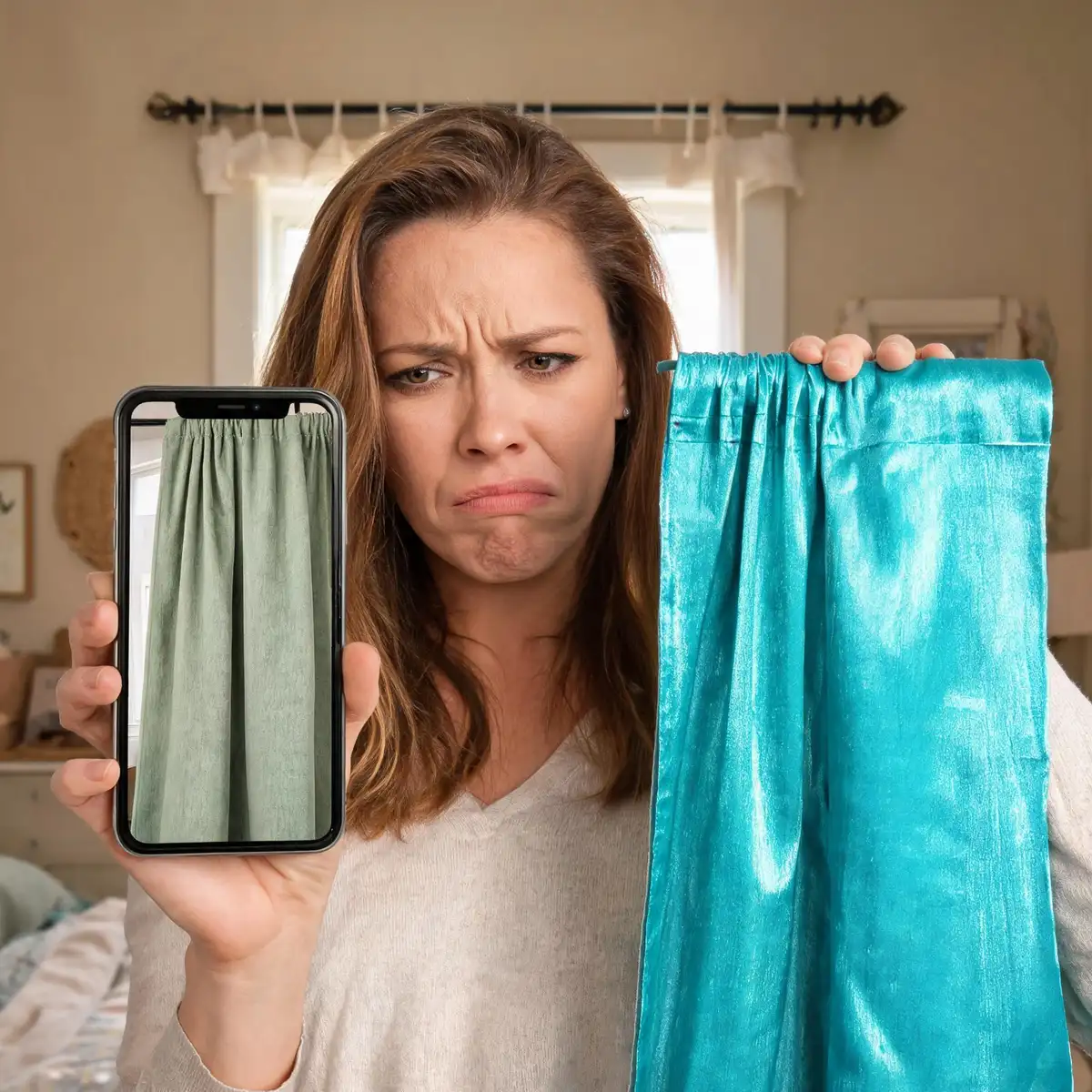
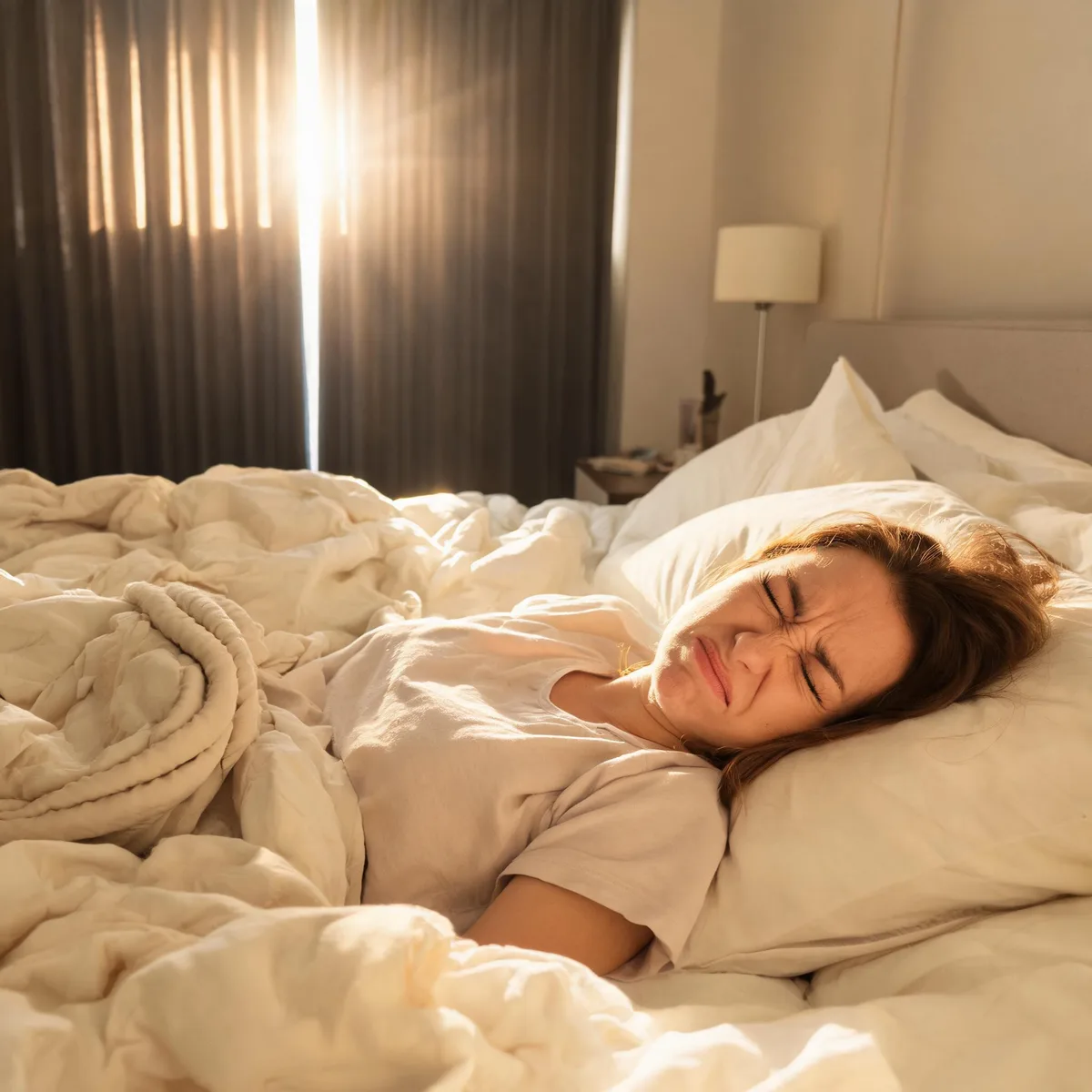
Have you ever had this experience: To block the early morning sun and sleep in, you specially chose a high-priced curtain marked with “99% full blackout, heat insulation and noise reduction”, but the day after you hang it, you are still woken up by the sunlight seeping through. The room with drawn curtains is bright enough to see your phone screen clearly, and the thickness of the curtain is even less than that of the ordinary sheer curtain you used before. When you argue with the merchant, they claim that “our full blackout refers to the 80% standard commonly used in the industry, which is marked in small print on the page”, and you have to pay dozens of yuan in overweight shipping fees if you want to return the product, so you can only swallow the loss in the end.
After analyzing 182,185 real user reviews covering 49,678 curtain products, we found that 40% of negative reviews are related to false function publicity. Falsely marked blackout rate, false claims of heat insulation performance, size shrinkage, and mismatch between goods and descriptions have become common problems in the curtain industry. Many consumers pay a high price but only get a nice-looking thin piece of cloth.
Why Does False Function Publicity Exist? — In-depth Analysis of Root Causes
Material Science Level: Jerry-building Directly Leads to Performance Failure
From the perspective of materials science, the blackout and heat insulation performance of curtains depends on two core indicators: First, the fiber packing density of the fabric itself. The higher the fiber gram weight per unit area, the smaller the gaps, the harder it is for light and heat to penetrate. Second, the process of the blackout coating. Qualified blackout coatings are generally composed of 2-3 layers of black glue and silver glue composite, which can reflect more than 90% of visible light and infrared radiation.
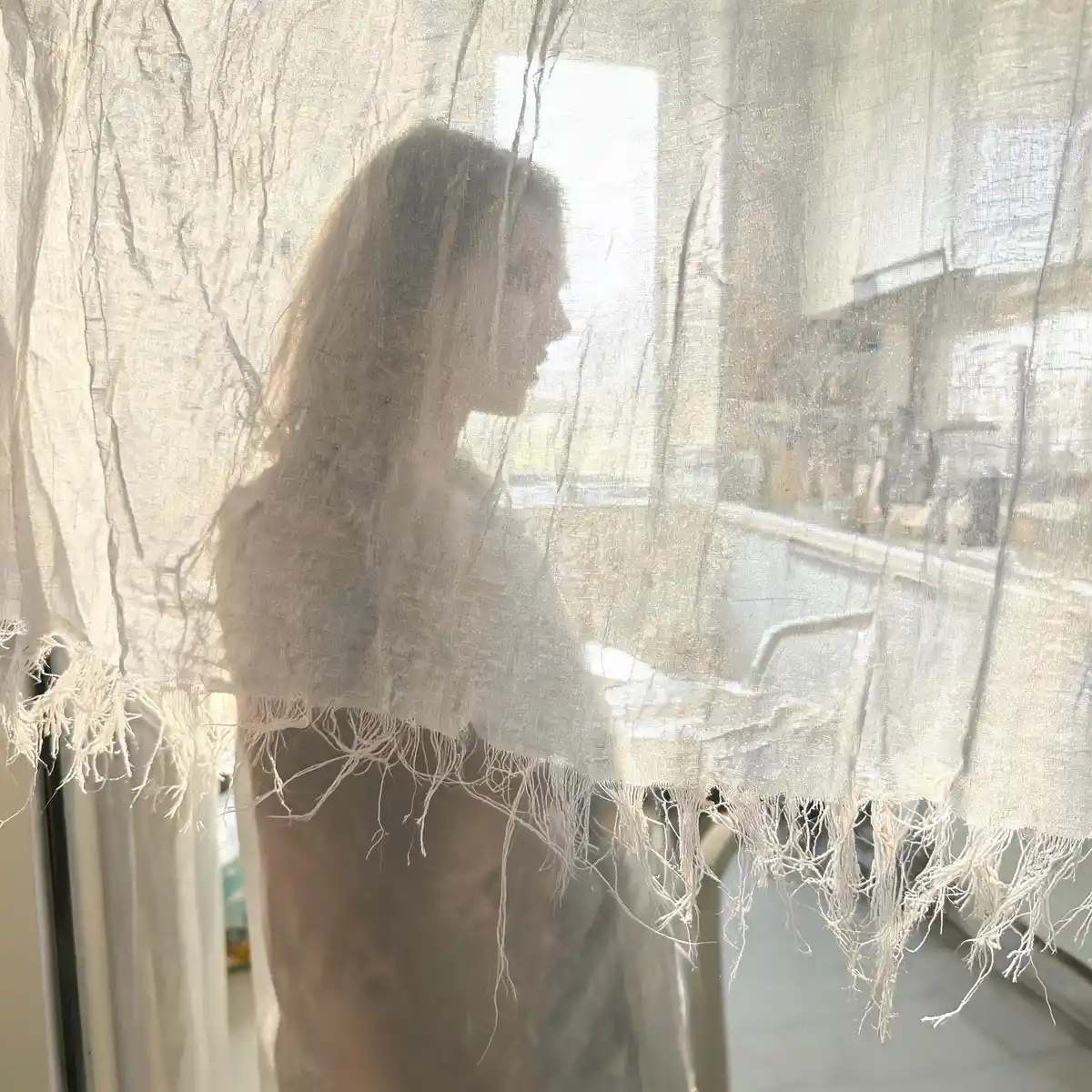
Many unscrupulous merchants cut costs by either using low-gram weight low-density fibers, or only applying 1 layer or even half a layer of coating, or even no coating at all, relying only on dark colors to pretend to be blackout cloth. The actual blackout rate may not even reach 50%, let alone heat insulation. One user complained in a negative review: “They are like coarse cotton cloth. The so-called ’light filtering curtain’ has a very beautiful pattern, but the material is the same as gauze, and neighbors can see everything happening in your home clearly”, which is a typical case of complete performance failure caused by insufficient fiber density.
Industry Rule Level: Lack of Unified Standards Leads to Zero Threshold for False Marking
At present, China has not issued mandatory grading standards for the blackout and heat insulation performance of curtains, nor does it require merchants to mark the blackout rate value tested by a third party. Terms such as “full blackout”, “semi-blackout”, “heat insulation” and “thermal” are just marketing terms customized by merchants, with no unified judgment threshold, and false marking costs almost nothing.
Our user survey shows that ordinary consumers generally expect “full blackout” to have a blackout rate of more than 90%, which can achieve a dim effect similar to night when drawn during the day. However, many merchants mark products with 60% or 70% blackout rate as full blackout, using information asymmetry to mislead consumers. One user said bluntly: “If the title didn’t say full blackout I would give a higher star rating. These curtains are not blackout models at all, and they are not even much thicker than ordinary sheer curtains”, which is a direct reflection of this cognitive gap.
Business Logic Level: Low Customer Acquisition Cost + High Rights Protection Cost Fuel the Trend of False Marking
Search data shows that the search volume of curtains marked “full blackout” and “heat insulation” is 3 times that of ordinary curtains, and the customer acquisition cost is 50% lower. Even if there are a small number of negative reviews, the overall income of merchants is much higher than that of products with real marked parameters. More importantly, curtains are large and heavy goods, and the return shipping fee is often dozens of yuan. If you want to provide evidence for rights protection, you have to pay for a professional institution to test the blackout rate yourself, which costs a lot of time and money. Most consumers can only choose to swallow the loss in the end, which further fuels the trend of false marking by merchants. One user commented angrily: “It’s completely false publicity. It’s not a heat insulation model, not a blackout model, just a thin piece of cloth. I had to throw it away in the end, it was a total waste of money”, which is a true portrayal of this dilemma.
Comparison of “False Function Publicity” Performance of Different Materials
| Material Category | Common Nominal Functions | Typical False Marking Performance | Actual Performance Upper Limit | Characteristics of Qualified Products |
|---|---|---|---|---|
| Coated blackout cloth | Full blackout (99%), heat insulation, noise reduction | Thin and uneven coating, blackout rate less than 60%, no heat insulation effect | Qualified products can reach a blackout rate of more than 95%, with excellent heat insulation effect | The back coating is smooth and uniform without exposure, no pungent odor, weight per unit area ≥ 1kg/㎡ |
| High-density physical blackout cloth | Full blackout, no odor, heat insulation | Insufficient fiber density, blackout rate less than 70% | Qualified products can reach a blackout rate of more than 90%, no coating odor, long service life | No obvious light transmission points when irradiated against strong light, thick hand feel with good drape, weight per unit area ≥ 0.8kg/㎡ |
| Decorative sheer curtain | Light transmitting but opaque, semi-blackout, UV protection | Sparse fabric, transmits both light and people, blackout rate less than 20% | The maximum blackout rate of qualified products can reach 40%, which can achieve opacity during the day | Dense hand feel without floating, no obvious fiber gaps visible when held against light |
| Natural fiber fabric (cotton, linen, real silk) | Semi-blackout, breathable, eco-friendly | Nominal full blackout, actual blackout rate less than 40% | Without lining, the maximum blackout rate is 50%, with good air permeability | Uniform fabric texture, high gram weight, good drape |
According to real positive review feedback, qualified curtains are generally mentioned by users as “thick enough” and “good fabric texture”. For example, one user commented: “The fabric is of very good quality, the weight and color are very good”. Weight and density are the most intuitive indicators for ordinary consumers to judge the performance of curtains.
How to Avoid False Function Publicity? — Purchase and Use Guide
Core Purchase Judgment Criteria
- Priority to check whether there is a blackout rate test report issued by a third-party institution. Do not only rely on marketing terms such as “full blackout” and “blackout” in the merchant’s title. If the merchant does not mark the specific blackout rate value, it is assumed that it cannot meet the general user expectation of 90% blackout rate.
- Calculate the weight per unit area: Divide the total weight marked on the product by the total area (width × height × quantity). For products with a weight per unit area lower than 0.7kg/㎡, it is basically impossible to achieve a blackout rate of more than 90%.
- Check the process detail description: For coated models, confirm the coating thickness and number of layers; for pleated models, confirm the effective coverage width after hanging in advance to avoid the problem of size shrinkage.
Common Misconception Correction
- Color depth is not equal to blackout rate: Low-density dark fabric has a much lower blackout rate than light gray high-density blackout cloth. Do not judge blackout performance only by color.
- Heat insulation performance is directly linked to blackout rate: For products with a blackout rate lower than 80%, the so-called “heat insulation” and “cooling” are marketing gimmicks, the actual cooling effect is less than 2℃, which is not significantly different from ordinary curtains.
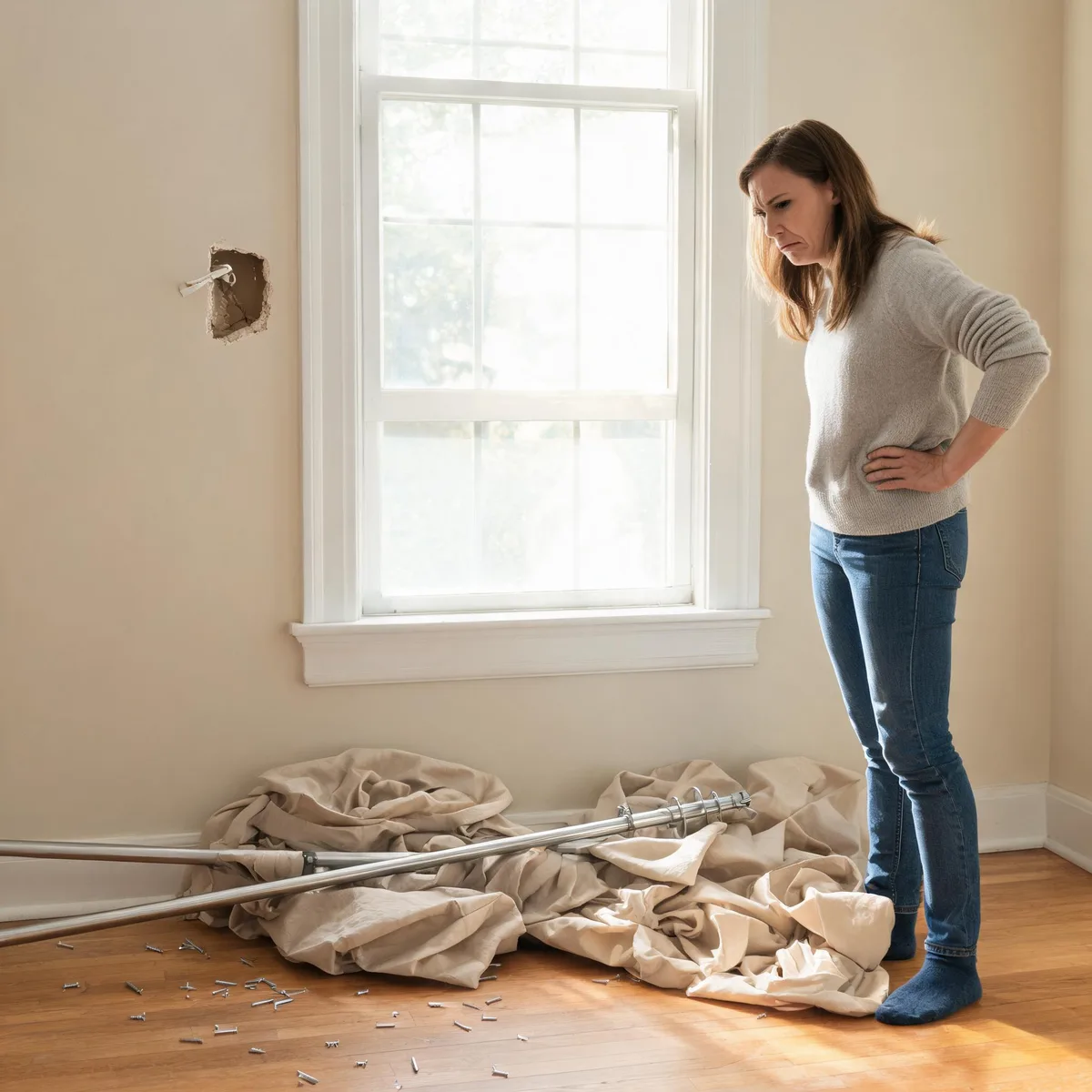
- For products marked “no installation required” and “easy installation”, confirm whether the accessories are complete. Many products do not come with installation tools nor installation instructions, which need to be prepared by yourself.
Usage and Maintenance Notes
- Air the new curtain in a ventilated place for 2-3 days after receiving it. If there is still a pungent odor after one week, it is likely that inferior coating or glue is used, and it is recommended to apply for return or exchange.
- Do not machine wash coated curtains, try to wipe with a dry cloth or clean with a vacuum cleaner. Machine washing will destroy the coating structure, leading to rapid decline of blackout performance.
- Do not use strong alkaline detergents when cleaning physical blackout models and natural fiber models, to avoid damaging the fiber structure and affecting the density and blackout effect.
“Pit Avoidance” Lessons from Real Users
Lesson 1: Different sizes under the same link may have process differences
User’s original comment: “I bought two curtains of different sizes for different windows, but the hanging rod accessories are completely different, one is a rod pocket and the other is a grommet, and they are not blackout models at all!” Lesson summary: Do not assume that products of different sizes and styles under the same product link have exactly the same performance and accessories. Confirm the specific parameters of each SKU with the merchant before placing an order, and do not judge the quality of all specifications based on the main image publicity.
Lesson 2: If the performance does not match, protect your rights immediately, do not swallow the loss
User’s original comment: “It’s completely false publicity. It’s not a heat insulation model, not a blackout model, just a thin piece of cloth. I had to throw it away in the end, it was a total waste of money!” Lesson summary: Test the light transmittance against strong light immediately after receiving the product. If it obviously does not match the advertised blackout and heat insulation performance, keep screenshots of the publicity page and actual test evidence of the product, apply for return or exchange immediately. Do not give up rights protection because you find it troublesome, which will only fuel the merchant’s false marking trend.
Lesson 3: The nominal width of pleated curtains is the unfolded width, not the hanging width
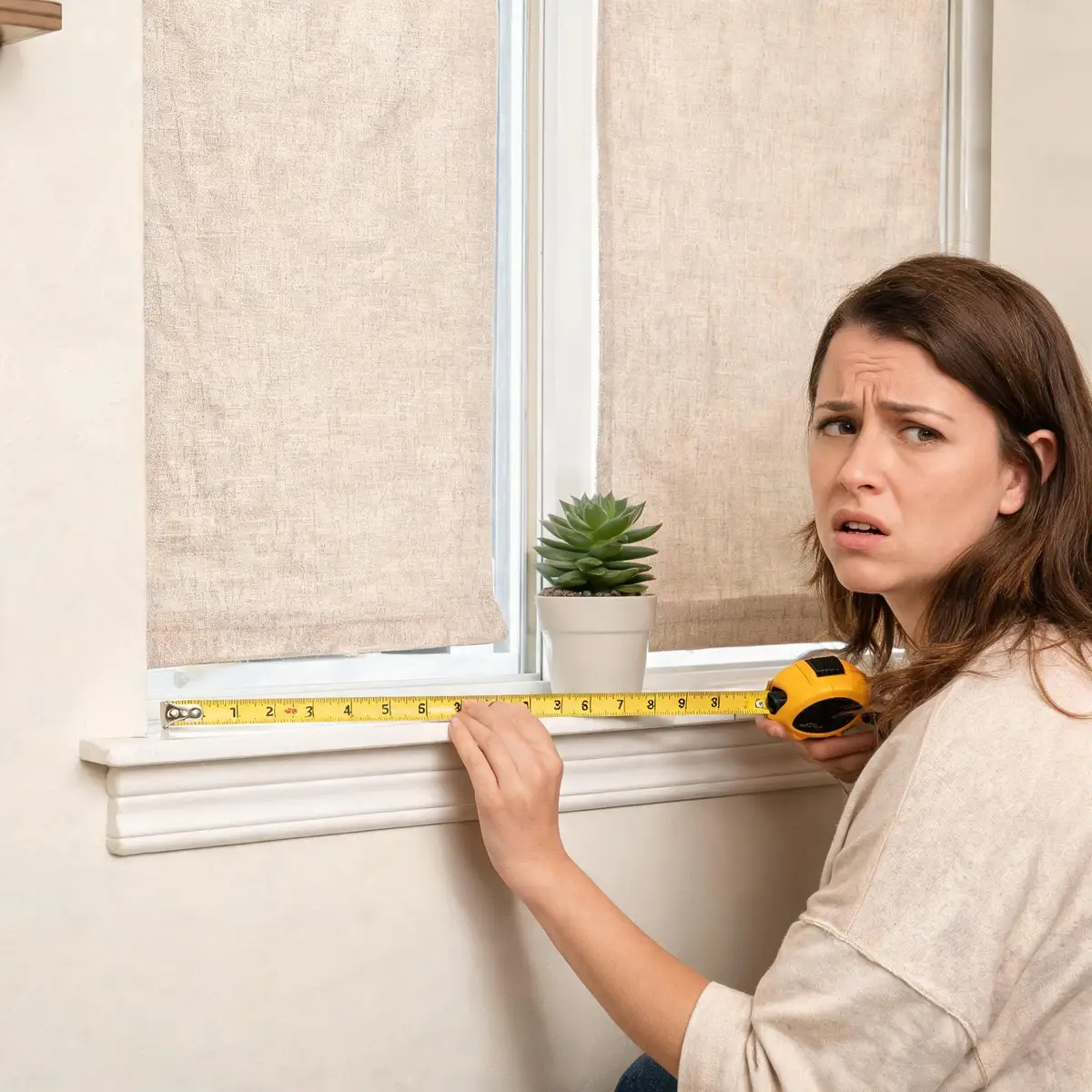
User’s original comment: “The marked size is 42×84, but the pleated top width is only 23.5, and the bottom is only 51, which can’t cover the window at all.” Lesson summary: For curtains with pleated process, the nominal width is the size of the fully unfolded fabric. To ensure the pleating effect after hanging, the effective coverage width is only 50%-60% of the unfolded width. Before purchasing, confirm in advance whether the merchant marks the unfolded width or the effective hanging width, to avoid buying too narrow and causing light leakage.
Lesson 4: Do not ignore fabric density for the sake of appearance
User’s original comment: “The so-called ’light filtering curtain’ has a very beautiful pattern, but the material is the same as gauze, and neighbors can see everything happening in your home clearly.” Lesson summary: For consumers who have requirements for privacy and blackout, do not only look at patterns and appearance. Fabric density is the core indicator. Products that feel like thin gauze, no matter whether they are marked as “light transmitting but opaque” or “light blackout”, cannot meet the basic privacy protection needs.
Related Deep Analysis in This Category
- Color & Appearance Mismatch with Listing — 22% of complaints relate to this
- Inaccurate Size & Specification — 35% of complaints relate to this
- Installation & Hardware Failure — 18% of complaints relate to this
- Poor Material & Workmanship — 28% of complaints relate to this
🛠️ Practical How-To Guides
Based on the analysis above, we've prepared actionable daily solutions for you:
Are Thermal Curtains a Scam? How to Spot Fake Heat-Insulation Coatings by Touching, Shining, and Rubbing
Uncovering the truth about cheap coatings, this guide uses a three-step method of touching, shining, and rubbing to quickly identify the quality of thermal curtain coatings.
Read Full Guide →Bought "Blackout" Curtains but Light Leaks? 4 Low-Cost Hacks to Turn Your Bedroom into a Darkroom
Addressing light leaks from the top and sides, this guide offers practical remedies like magnetic strips and crossover tracks to achieve true blackout on a budget.
Read Full Guide →Merchants Claim 100% Blackout? How to Test Your Curtains' True Light-Blocking in 3 Seconds with a Flashlight
Say goodbye to false advertising; use a smartphone flashlight and simple observation to easily verify the true blackout rate and fabric density at home.
Read Full Guide →