Hard to Clean & Easy to Hide Dirt in Kitchen Utensils: What 333,789 Reviews Reveal
Hard to Clean and Prone to Dirt Traps: The “Hidden Killer” in the Kitchenware Industry
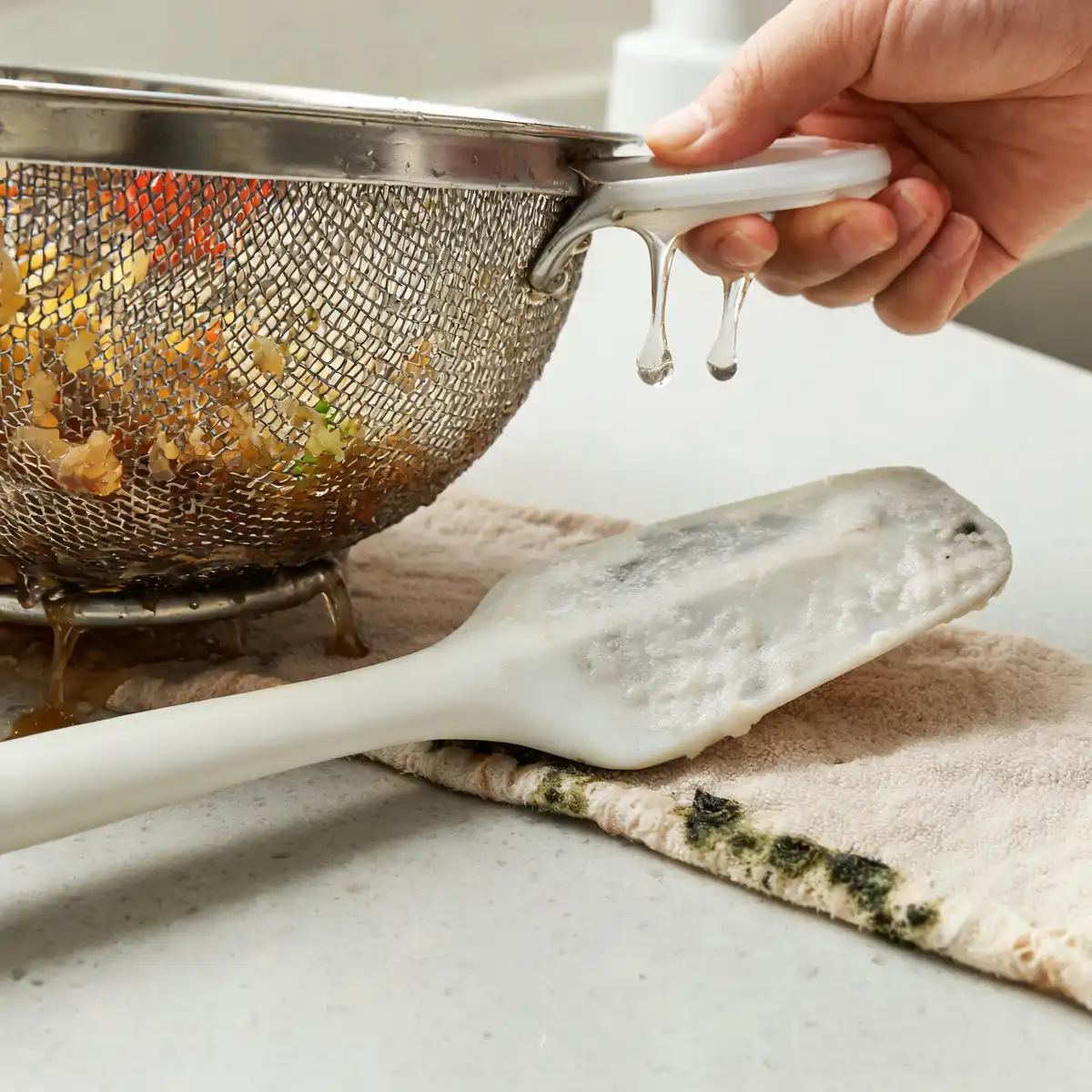
Have you ever had this experience: you splurge on a good-looking kitchenware item, it looks perfect when you first use it, but after a few months you notice something wrong – murky water occasionally leaks out of the handle gap, moldy food residue can be scraped out of the pot rim seam, the surface still feels greasy no matter how many times you wipe it, and it even absorbs food stains that can never be washed off. These invisible dirt traps are quietly threatening your food safety.
Our analysis based on 333,789 real user reviews covering 30,170 kitchenware products shows that 22% of negative reviews are related to difficulty in cleaning and easy dirt trapping, a proportion far higher than traditional complaint points such as quality failure and functional mismatch. Ms. Chen, a resident of Shanghai, is a typical victim: she bought a popular spliced handle fry pan last year, and after three months of use, dark yellow dirty water would drip from the handle every time the pan was heated. When she pried open the seam, she found the interior was full of moldy food residue and accumulated water. It was a pity to throw it away, but unpleasant to keep, so she could only leave it unused and gathering dust. Such problems usually do not appear immediately after receiving the product, and by the time you discover them, the return and exchange period has already expired, becoming a “hidden headache” for many consumers.
Why Are Kitchenware Hard to Clean and Prone to Dirt Traps? – In-depth Breakdown of Root Causes
We can fully analyze the underlying logic of such problems from three dimensions: material science, manufacturing process, and usage habits:
Material Level: Surface Porosity Is the Core Influencing Factor
Qualified food contact materials should have a dense, non-porous surface, just like glazed tiles, which can be wiped clean immediately after being splashed with oil. However, if the material itself is of poor quality and the surface treatment process is not up to standard, it will be like cement ground without waterproof treatment, with extremely high porosity. Oil, pigments, and detergents will directly penetrate into the interior of the material, forming stubborn stains that cannot be wiped off. For example, inferior plastic and silicone products are incompletely vulcanized, with many pores on the surface, which not only easily absorb odors and retain oil, but may also precipitate harmful substances at high temperatures; inferior non-stick coatings have insufficient density, and will be stained by food after a few uses, leaving indelible yellow marks and white films.
Process Level: Unreasonable Designs Naturally Have Cleaning Dead Corners
Many brands deliberately add unnecessary structural designs to reduce costs or pursue appearance, essentially transferring costs to consumers:
- Excessive structural gaps: For example, handles fixed with buckles or rivets instead of seamless welding, splicing seams between the pot body and the rim, and kitchenware accessories composed of multiple parts. These gaps are usually only 0.1-0.5 mm wide, which cannot be reached by water flow or brushes. Food residue and water stains accumulated inside will quickly become moldy. The “Handle Holds Water” problem mentioned in real negative reviews is a typical result of insufficient sealing design.
- Porous/multi-grain design: To promote concepts such as anti-slip and water drainage, many products have dense concave-convex patterns and porous designs on the contact surface. The grooves of these patterns are natural dirt traps, which will be filled with food residue after a few uses and are very difficult to clean.
- Dishwasher scenario not considered: Many products have not passed dishwasher tolerance tests. The high temperature above 70℃ and strong alkaline detergent in the dishwasher will quickly corrode inferior coatings, plastics and sealants, making the surface pores larger, cracked, or even discolored and peeling off. The comment “Hand Wash Only Very pricey for a hand wash only pot” in real negative reviews is a typical design deficiency.
Usage Habit Level: Wrong Operations Will Amplify the Problem
Many users ignore the instruction manual of kitchenware. Rinsing a hot pan with cold water immediately after cooking will cause the coating to crack and the seams to widen due to thermal expansion and contraction; forcing products marked as hand-wash only into the dishwasher will accelerate material aging; putting them directly into the cabinet without drying after washing will make the residue in the gaps mold quickly in a humid environment.
Comparison of “Difficulty in Cleaning and Dirt Trapping” Performance of Different Materials
We have sorted out the cleaning performance of common kitchenware materials on the market to objectively present their advantages and disadvantages:
| Material Type | Easy-to-clean Performance (full score 10) | Advantages | Limitations |
|---|---|---|---|
| Food-grade stainless steel | 8 points | High-quality 304/316 stainless steel has a dense surface after passivation and polishing, is not easy to retain oil, and supports dishwasher cleaning | Inferior 201 stainless steel is prone to rust, the surface texture of brushed treatment is easy to trap residue, and it is easy to leave water stains and white films |
| Cast iron | 7 points | A dense oil film forms on the surface after proper seasoning, which is non-stick, not easy to stain, and has no chemical coating | Unseasoned cast iron has many pores on the surface, is easy to rust, cannot be cleaned with detergent, and cannot be put into the dishwasher |
| Compliant non-stick coating | 9 points | Qualified Teflon/ceramic coating has an extremely smooth surface, retains little oil, and can be cleaned with a rinse of clear water | Inferior coatings have poor density, are easily scratched by hard objects, are prone to dirt trapping after being scratched, and are not resistant to high-temperature dishwasher washing |
| High-temperature ceramic | 7 points | The glaze fired at above 1200℃ is dense, high-temperature resistant, not easy to stain, and has a high appearance value | Low-temperature fired glaze has many pores, is easy to leave white films, and cracks formed after bumps are natural dirt traps |
| Food-grade silicone | 6 points | Soft and does not scratch pots, qualified products have high temperature resistance ≥220℃, and are not easy to stick to oil | Inferior silicone is incompletely vulcanized, has many pores and is easy to absorb odors, and insufficient temperature resistance makes it easy to melt at high temperatures, corresponding to the negative review of “melted after 2 weeks of use” |
| Wood/Bamboo | 4 points | Warm to the touch, does not scratch pot coatings | Natural porous structure is easy to absorb water and mold, cannot be put into the dishwasher, and requires regular disinfection and drying |
Judging from real user positive reviews, products made of high-quality stainless steel and compliant non-stick coatings have the best easy-to-clean performance. For example, a user commented on a stainless steel grater that “it has been used for half a year, and it is clean after a rinse, with no residue at all”; some users also explicitly mentioned that the good-looking kitchenware they bought “is only suitable for decoration, not for daily use”. Such products usually have unqualified materials and processes, can only meet the needs of scene display, and are not suitable for high-frequency use.
How to Avoid Difficulty in Cleaning and Dirt Trapping? – Purchase and Use Guide
Core Judgment Criteria When Purchasing
- Prioritize simple structure integrated design: Give priority to products with integrally die-cast pot bodies and seamless welded handles, avoid styles with buckle splicing, multi-part riveting, dense concave-convex patterns, and porous designs. The simpler the structure, the fewer cleaning dead corners.
- Confirm the material surface treatment process: For stainless steel, choose products marked with “food-grade passivation/mirror polishing”; for coatings, choose products clearly marked with “density meets food contact standards”; for silicone and plastic products, confirm that the temperature resistance range is ≥220℃; for ceramic products, choose products marked with “high-temperature glaze (fired at ≥1200℃)”.
- Confirm cleaning scenario adaptability: If you are a user who relies heavily on dishwashers, do not just look at the “easy to clean” description on the promotional page, look for styles clearly marked “dishwasher safe” on the product detail page; do not buy products clearly marked “hand wash only” and try to put them in the dishwasher.
- Avoid products with too strong decorative attributes: Many kitchenware focusing on appearance are positioned as scene decorations, and have not been tested for durability and ease of cleaning for daily use. Clarify your usage needs before buying, and do not buy decorative models as daily use models.
Correct Use and Maintenance Methods
- Use strictly in accordance with the requirements of the instruction manual: Wash by hand if it is marked as not dishwasher safe, do not contact heat sources exceeding the marked upper temperature limit, wait for the pot to cool down slightly after cooking before washing with warm water, to avoid damage to the coating and seams caused by thermal expansion and contraction.
- Use the right cleaning tools: Do not use steel wool, emery sponges to wipe coating, silicone, and wood products, to avoid scratching the surface and creating pores, try to use sponges and soft cloths for cleaning.
- Dry thoroughly before storage after washing: After each wash, disassemble removable parts to dry, wipe dry parts that are easy to accumulate water such as handles, sealing rings, and the edge of pot lids before putting them into the cabinet, to avoid mold growth in humid environments.
Frequently Asked Questions
- What to do if the water hidden in the handle flows out every time I cook? It means the seal of the handle has failed. You can disassemble the handle to clean the accumulated water and mold spots inside, and re-seal the seam with food-grade sealant. If it cannot be disassembled, it is recommended to replace it directly to avoid dirty water dripping into the food.
- Are indelible stained marks toxic? If it is a qualified food contact material, staining is just pigment penetrating into the surface pores, and it is not toxic if there is no migration of harmful substances. However, if it is an inferior material, harmful substances such as plasticizers and heavy metals may precipitate with food, and replacement is recommended.
- What to do if moldy food residue in the gaps affects health? Mold spores will disperse with the air, and long-term exposure may cause respiratory allergies, intestinal discomfort and other problems. If the mold spots in the gaps cannot be completely cleaned, it is recommended to replace the product directly and stop using it.
- Why is the product marked dishwasher safe but scratched after one wash? There are two possibilities: First, the product falsely claims dishwasher compatibility, and it is not resistant to high temperature and strong alkaline washing. Second, you used the highest temperature drying mode of the dishwasher, which exceeded the tolerance temperature of the product. When purchasing, pay attention to whether it is marked “support high-temperature dishwasher washing”.
“Pit Avoidance” Lessons from Real Users
We selected the most representative user pitfall cases from hundreds of thousands of negative reviews to help you avoid common traps:
- User Negative Review: Handle Holds Water This is an awesome idea except the handle holds water. Lesson Summary: When purchasing kitchenware, prioritize handles that are integrally formed/seamlessly welded, avoid handles with splicing or buckle connections. If you have to choose a spliced model, confirm that the seam has a complete food-grade sealing design.
- User Negative Review: Hand Wash Only Very pricey for a hand wash only pot. Why would you create a pot that can’t go in the dishwasher? Lesson Summary: Be sure to check the cleaning requirements of the product before placing an order. If you are a user who relies heavily on dishwashers, do not just look at the “easy to clean” description on the promotional page, look for products clearly marked “dishwasher safe” to avoid spending a lot of money on a product that requires hand washing.
- User Negative Review: Already melted after only 2 weeks I’ve had these for about 2 weeks and are already ruined. Just used it to take out a hot cookie sheet and it melted. Lesson Summary: High temperature resistance is the core parameter of silicone and plastic kitchenware. When purchasing, you must confirm that the temperature resistance range covers your usage scenarios (ovens are usually above 200℃, and the bottom of a stir-fry pan can reach 280℃). Do not buy cheap silicone/plastic kitchenware without marked temperature resistance values.
- User Negative Review: Decent quality except the sides just don’t suction to the sides of the sink The size and quality are decent but it is really annoying how the thick plastic does not lay flat against the sides of the sink and the suction cups are too small and weak to make it stick. A real flaw Lesson Summary: For kitchenware with multi-part designs such as splicing, buckles, and suction cups, the seams and component connections are natural dirt traps. Unless necessary, do not choose products with complex structures and too many removable parts, and prioritize integrated designs with simple structures.
- User Negative Review: Stinky product. Plastic smells terrible. Center piece does not grip sink, slides off. Lesson Summary: If newly bought plastic/silicone kitchenware has a pungent odor, it means the material is incompletely vulcanized/polymerized, and the surface porosity is high. It is not only easy to absorb odors and trap dirt, but may also have harmful substance migration. It is recommended to return or exchange it directly and do not use it.
Related Deep Analysis in This Category
- False Advertising & Mismatch with Description — 18% of complaints relate to this
- Low Cost Performance & Overpriced — 12% of complaints relate to this
- Poor Quality & Low Durability — 40% of complaints relate to this
- Unreasonable Design & Poor Functionality — 35% of complaints relate to this
🛠️ Practical How-To Guides
Based on the analysis above, we've prepared actionable daily solutions for you:
Can't Remove Stubborn Stains, Oil and White Film on Kitchen Utensils? 4 Household Materials Can Fix It, Non-toxic and Harmless
Aiming at the problems of oil hanging, dyeing and stubborn white film caused by poor material technology of kitchen utensils, teach you low-cost cleaning methods without professional cleaners, and answer the question whether dyeing is toxic
Read Full Guide →Kitchen Utensil Handle Leaks When Cooking? 3 Steps to Clear Standing Water and Prevent Mold
Aiming at the problem of handle water ingress and water leakage during cooking caused by poor sealing of kitchen utensils, teach you to quickly clean up existing standing water and avoid pitfalls in daily use to eliminate hidden dangers of internal mold
Read Full Guide →Kitchen Utensils Discolor and Leave Marks in the Dishwasher? 2 Preprocessing Tips + Adaptation Label Interpretation
Aiming at the problem of discoloration and marks caused by high temperature detergent when kitchen utensils are not designed for dishwasher scenarios, teach you the correct operation of putting existing kitchen utensils into the dishwasher, as well as the judgment criteria for purchasing dishwasher-friendly kitchen utensils
Read Full Guide →Worried About Health Risks From Mold in Kitchen Utensil Gaps? 2 Cleaning Tips + 3 Selection Tips to Solve It From the Root
Aiming at the problem of mold caused by food residues in many structural gaps of kitchen utensils, teach you the method of cleaning gap dirt without dismantling parts, and teach you to avoid designs that are easy to hide dirt when purchasing
Read Full Guide →