Poor Quality & Low Durability in Kitchen Utensils: What 333,789 Reviews Reveal
Poor Quality and Low Durability: The “Hidden Killer” in the Kitchenware Industry
Many consumers have had similar experiences: spending hours comparing parameters and reading reviews to buy a kitchenware item that looks attractive and full-featured, only to find it rusts, deforms or has parts fall off after just a few uses. After-sales claims often end up nowhere as the return and exchange period has already expired. Based on analysis of 333,789 real user reviews covering 30,170 products, we found that 40% of negative kitchenware reviews are directly related to “poor quality and low durability”, which has become the top pitfall for ordinary consumers when purchasing kitchenware.
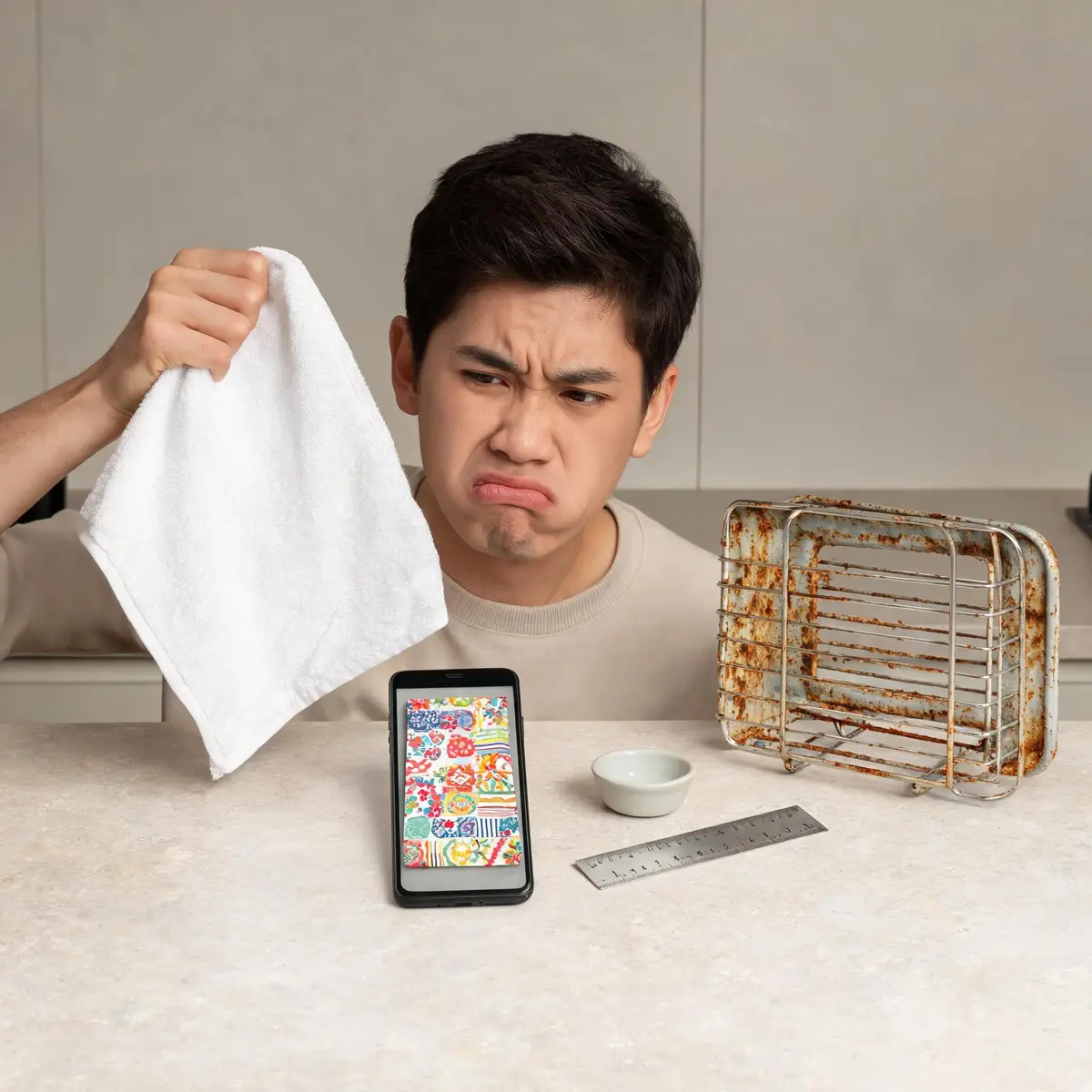
An office worker in a first-tier city once shared his bad purchase experience: he was recommended a “food-grade stainless steel non-stick wok” on social platforms, spent nearly 200 yuan on it, and the usage experience was acceptable for the first half month. Three months later, the coating on the wok edge peeled off, and water seeped through the handle seam. After a simple wipe with a steel wool pad, a large area of rust appeared on the wok bottom. By that time, the 7-day no-reason return period for e-commerce purchases had long passed, and he received no effective feedback when contacting the merchant for claims. He finally had to throw the wok into the trash, losing hundreds of yuan for no reason and ruining his mood for cooking.
Why Are Kitchenware Products Poor in Quality and Durability? — In-depth Disassembly of Root Causes
The durability of kitchenware is the combined result of raw materials, craftsmanship, design and usage scenarios. A large number of low-durability products on the market are essentially caused by manufacturers cutting corners in all links and ignoring the real usage needs of users.
Raw Material End: Cost Trap of Passing Off Shoddy Products As Good Ones
To cut costs, many small manufacturers use inferior raw materials to replace the advertised food-grade raw materials, which is difficult for ordinary consumers to distinguish from the appearance. For example, products advertised as 304 food-grade stainless steel actually use 201 stainless steel, which costs only half of 304 stainless steel, has higher manganese content, and is very easy to rust when exposed to acid and alkali substances such as soy sauce, vinegar and salt used in cooking; products advertised as food-grade silicone actually use industrial-grade recycled silicone, which has a heat resistance limit of only around 100°C, will melt when exposed to just-cooked hot oil or oven baking trays above 200°C, and may even precipitate harmful substances.
Just like the user comment mentioned: 「Already melted after only 2 weeks I’ve had these for about 2 weeks and they are already ruined. Just used it to take out a hot cookie sheet and it melted.」, this is essentially caused by the substandard temperature resistance of inferior silicone raw materials. Another user mentioned: 「Stinky product. Plastic smells terrible. Center piece does not grip sink, slides off.」, which is also a typical manifestation of excessive volatile substances and insufficient structural strength of inferior plastic raw materials.
Manufacturing End: Missing Craftsmanship and Testing Links
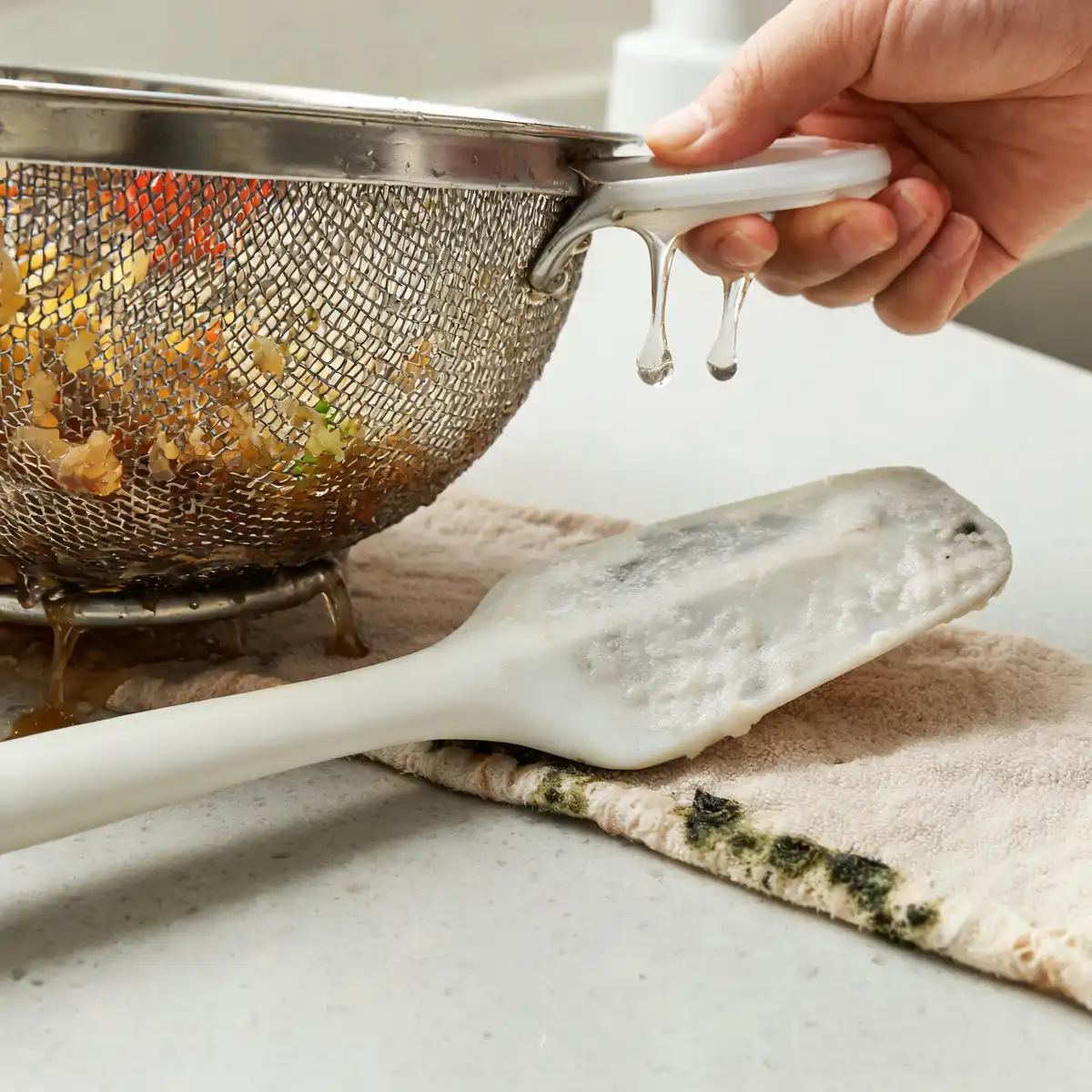
In addition to raw material problems, substandard assembly processes and missing weather resistance testing are also core reasons for low kitchenware durability. Cutting corners in the assembly link is very common: for example, the connection between the handle and the pot body is not fixed with high-strength rivets, but only bonded with cheap glue, or the riveting pressure is insufficient, so it will loosen and fall off after several cycles of thermal expansion and cold contraction; the handle seam is not properly sealed, so water will seep into the handle and remain there when washing the pot, leading to mold and odor over time, just as the user comment mentioned: 「Handle Holds Water This is an awesome idea except the handle holds water.」.
Formal kitchenware manufacturers will conduct complete weather resistance tests before products are launched, such as 1000 dishwasher cycle tests, 300 thermal shock tests (taking out from a 200°C oven and rinsing directly with cold water), 72-hour acid and alkali immersion tests, etc., to ensure that products will not have problems in various usage scenarios. However, many small manufacturers skip these tests directly to save costs, resulting in products that simply cannot withstand the complex environment of daily use. For example, the user complained: 「Hand Wash Only Very pricey for a hand wash only pot. Why would you create a pot that can’t go in the dishwasher?」, which is a typical product that has not undergone weather resistance testing for dishwasher environments, whose coating and hardware simply cannot withstand the alkaline detergent and high-temperature washing of the dishwasher.
Market End: Low Threshold and Adaptation Mismatch
The entry threshold for the kitchenware industry is extremely low: a small workshop can be opened with only tens of thousands of yuan to produce kitchenware, so cutting corners is very common. More importantly, many small manufacturers design their products with reference to Western low-temperature cooking standards, which are completely unsuitable for the high-frequency, high-load usage habits of Chinese cooking: Chinese high-heat stir-frying will instantly raise the temperature of the pot body to above 200°C, and hard spatulas and steel wool pads are often used. The pots produced by these small manufacturers have thin bodies and soft coatings, which simply cannot withstand such usage intensity, so it is very normal for them to break after a few uses, just as the user complained: 「Opposite of helpful. If your goal is to smoosh your herbs around on the cutting board this is your tool.」, which is essentially caused by insufficient tool strength design that cannot meet the demand for processing hard ingredients in Chinese kitchens.
Comparison of “Poor Quality and Low Durability” Performance of Different Materials
The advantages and disadvantages of kitchenware made of different materials are obviously different. Understanding the durability performance and limitations of different materials can help you avoid most pitfalls:
Stainless Steel Category
- Poor quality performance: Prone to rust, slag falling off cutting edges, possible heavy metal precipitation after long-term contact with acid and alkali food
- Qualified performance: Resistant to acid and alkali, scratch-resistant and durable, suitable for high-frequency use, just as mentioned in the user’s positive review: 「Sturdy Zester Never thought I needed a zested until I needed one! We’ve used this thing for cooking, baking, and fancy cocktails. It’s easy to use and is sharp (be careful!).」, a qualified stainless steel grater can maintain stable performance after long-term high-frequency use
- Limitations: It may still rust if soaked in high-salt, high-acid liquid for a long time, so it needs to be wiped dry in time after use
Silicone Category
- Poor quality performance: Melts when heated, has pungent odor, breaks easily when pulled
- Qualified performance: Temperature resistance range covers -40°C to 230°C, no odor, quickly rebounds and does not deform after being pulled, can safely contact high-temperature food
- Limitations: Cannot be exposed to open flame, cannot be used in environments exceeding the marked upper temperature limit
Non-stick Coating Category
- Poor quality performance: Coating peels off after a few uses, not scratch-resistant, can only be washed by hand
- Qualified performance: Coating does not peel off for 3-5 years under normal use, can be used with soft spatulas, products that meet standards can be put into the dishwasher, just as mentioned in the user’s positive review: 「excellent product everything seems to be working great」, a qualified non-stick pan can maintain stable non-stick performance for a long time
- Limitations: Cannot be scrubbed hard with steel wool pads, cannot be scraped with hard metal spatulas
Plastic Category
- Poor quality performance: Deforms when heated, has pungent odor, insufficient structural strength and easy to break
- Qualified performance: Marked as food-grade PP material, resistant to 100°C high temperature, no odor, reasonable structural design, products with suction cups have sufficient adsorption force
- Limitations: Cannot be exposed to high temperatures above 200°C, cannot be used in ovens or air fryers
How to Avoid Poor Quality and Low Durability? — Purchase and Use Guide
Core Purchase Judgment Indicators
When purchasing, you can focus on the following clear marks and details. Products without clear markings have high quality risks:
- Material mark: Stainless steel should be clearly marked as 304/316 food grade, silicone should be clearly marked as food grade and have a temperature resistance range (at least 180°C or above for daily use), plastic should be clearly marked as PP food grade
- Craft details: For the connection between the handle and the main body, prioritize products with rivet connection, which has higher strength than glued connection; check whether the joints are completely sealed without obvious gaps; for products with suction cups, the diameter of the suction cup should be at least 2cm to ensure sufficient adsorption force
- Test mark: If there are test results marked such as dishwasher safe, oven safe, scratch resistance times, etc., it means that the manufacturer has carried out corresponding weather resistance tests, and the durability is more guaranteed
Correct Use and Maintenance Methods
Even qualified kitchenware will have its service life greatly shortened if used incorrectly:
- Wipe stainless steel kitchenware dry in time after use, do not leave accumulated water or leftover food in the pot for a long time to avoid rust
- Do not expose silicone kitchenware to open flame, do not leave it in a high-temperature wok that has just been turned off for a long time, do not use it in an environment exceeding the marked upper temperature limit
- Use non-stick coated kitchenware with silicone/wooden spatulas, do not scrub hard with steel wool pads, and do not put products not marked as machine washable into the dishwasher
- Do not put just-boiled hot oil in plastic kitchenware, do not use it in high-temperature environments such as ovens and air fryers
Common Cognitive Misconceptions
- Misconception: All stainless steel will not rust. The fact is that 201 stainless steel is very easy to rust when exposed to acid and alkali substances such as salt and vinegar, and only qualified 304/316 stainless steel has good rust resistance
- Misconception: All silicone is high temperature resistant. The fact is that the upper temperature limit of industrial grade silicone is only around 100°C, and only qualified food grade silicone can withstand high temperatures above 200°C
- Misconception: The more expensive the kitchenware, the more durable it is. The fact is that some high-end decorative kitchenware, or kitchenware designed with reference to Western cooking, is not suitable for the high-frequency and high-load use of Chinese kitchens, just as the user mentioned in the positive review: 「Very cute for decor! I love these! They are the exact color I was hoping for and are super cute. I bought these for decor only. I don’t think these are well suited for daily, functional use.」, this type of decorative kitchenware is not designed for daily use at all, and it is not durable no matter how expensive it is.
“Pit Avoidance” Lessons from Real Users
The following are selected bad purchase cases from real reviews, you can directly refer to the corresponding lesson summaries:
Case 1: 「Already melted after only 2 weeks I’ve had these for about 2 weeks and they are already ruined. Just used it to take out a hot cookie sheet and it melted.」
Lesson Summary: When buying silicone kitchenware, be sure to check the marked upper temperature limit. The temperature resistance of silicone tools for ovens and baking should be at least 220°C. Do not buy products without clear temperature resistance marks.
Case 2: 「Handle Holds Water This is an awesome idea except the handle holds water.」
Lesson Summary: When buying kitchenware with a handle, check whether the joint between the handle and the main body is completely sealed. Products with large splicing gaps are easy to store water, breed mold, and have a shorter service life.
Case 3: 「Hand Wash Only Very pricey for a hand wash only pot. Why would you create a pot that can’t go in the dishwasher?」
Lesson Summary: If you need to use a dishwasher, be sure to confirm whether the product is marked “dishwasher safe” before purchasing. Products without this mark have probably not undergone weather resistance testing for dishwasher environments, and problems such as coating peeling and hardware rust are prone to occur after machine washing.
Case 4: 「Decent quality except the sides just don’t suction to the sides of the sink The size and quality are decent but it is really annoying how the thick plastic does not lay flat against the sides of the sink and the suction cups are too small and weak to make it stick. A real flaw」
Lesson Summary: When buying kitchenware fixed with suction cups (such as drain baskets, storage racks), prioritize products with suction cup diameters greater than 2cm and soft rubber sealing design on the edges. Small suction cups generally have insufficient adsorption force and are difficult to fix on smooth surfaces.
Case 5: 「Very cute for decor! I love these! I don’t think these are well suited for daily, functional use.」
Lesson Summary: Clarify your usage needs first before buying kitchenware. If it is for daily high-frequency use, do not buy products clearly marked for decorative use only. The strength and weather resistance of such products cannot meet the daily use standards.
Related Deep Analysis in This Category
- False Advertising & Mismatch with Description — 18% of complaints relate to this
- Hard to Clean & Easy to Hide Dirt — 22% of complaints relate to this
- Low Cost Performance & Overpriced — 12% of complaints relate to this
- Unreasonable Design & Poor Functionality — 35% of complaints relate to this
🛠️ Practical How-To Guides
Based on the analysis above, we've prepared actionable daily solutions for you:
Cushion Gets Shabbier With Use? 4 Daily Maintenance Tips to Double Its Service Life
Share precautions for daily use of cushions, reduce unnecessary wear and dirt, reduce washing frequency, and greatly extend the service life of cushions.
Read Full Guide →Cushion Pilling Or Fraying After One Wash? 4 Steps to Pick Durable High-Quality Cushions
Teach you to quickly identify low-quality cushions from three dimensions: fabric material, filling type and sewing technology, and avoid consumption traps such as chemical fiber pretending to be pure cotton and jerry-built workmanship.
Read Full Guide →Cushion Turns Shabby After 2 Washes? 3 Home Cleaning Tips to Keep It In Good Condition
Provide scientific washing, drying and ironing methods for cushions of different materials to solve common damage problems such as fraying, pilling, shedding and color fading after washing.
Read Full Guide →New Cushion Frayed After A Few Uses? 3 Steps to Check Defects Upon Receipt And Return Unqualified Products
Teach you to quickly check unqualified products from the dimensions of overlock accuracy, sewing technology and color fastness test after receiving the cushion, so as to avoid wasting money on defective products.
Read Full Guide →Kitchen Utensils Not Durable? 4 Daily Use & Maintenance Tips to Resist High Temperature, Acid & Alkali and Dishwasher Environment
For high-temperature cooking, acid and alkali food contact, dishwasher cleaning and other scenarios, teach you to use and maintain utensils correctly, greatly extend the service life
Read Full Guide →Stainless Steel Utensils Rust in 2 Months? 3 Steps to Pick Genuine Food Grade Pieces That Last 5+ Years
Teach you to quickly identify stainless steel utensils made of fake inferior materials, avoid cut corners of small manufacturers, and choose durable, rust-resistant reliable products
Read Full Guide →Utensil Handles Fall Off After A Few Uses? 3 Inspection Tips to Filter Out Poor Craftsmanship Products Right After Unboxing
Teach you to judge the assembly quality of utensils from the dimensions of bonding and splicing strength, and filter out products with substandard craftsmanship in advance
Read Full Guide →Worried About Toxic Melting Silicone Spatulas? 4 Selection Tips for No Leaching Even Under High Heat Stir-fry
Disassemble the cut corners routine of inferior silicone utensils, teach you to choose temperature-standard silicone utensils that are safe for dishwashers
Read Full Guide →