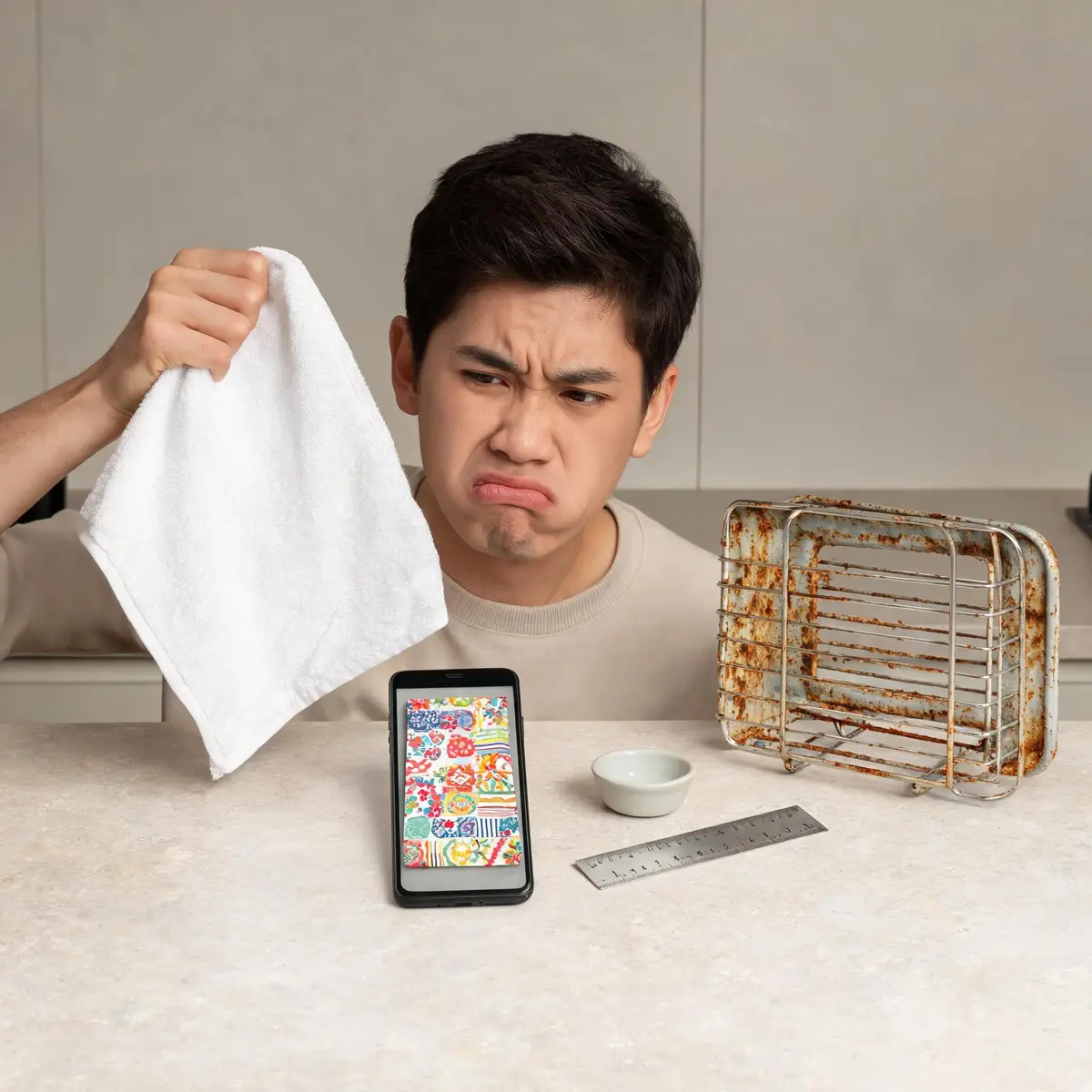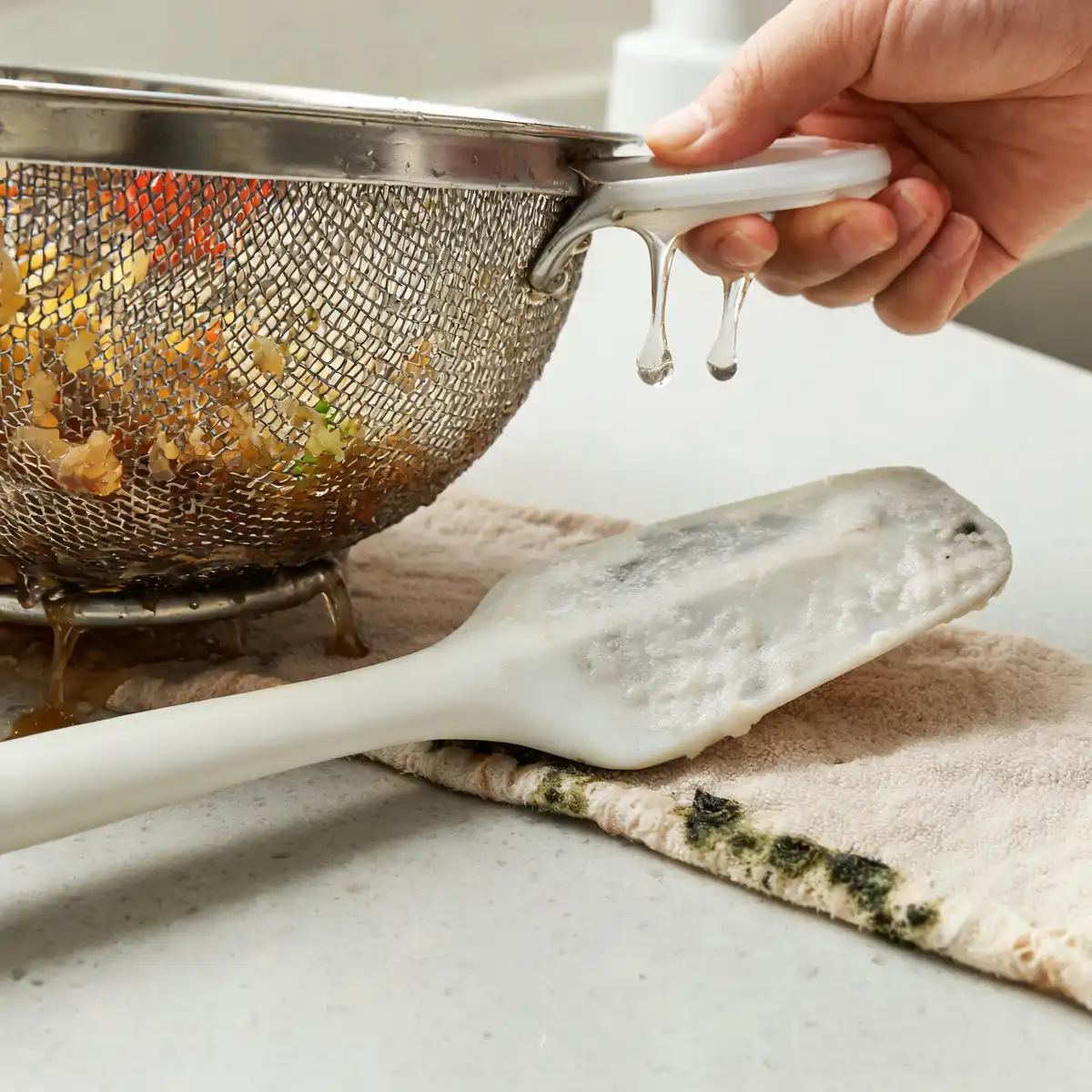
Unreasonable Design & Poor Functionality in Kitchen Utensils: What 333,789 Reviews Reveal
Poor Design and Subpar Functionality: The “Hidden Killer” in the Kitchenware Industry
Many consumers have had similar experiences: they impulsively order stunningly attractive kitchenware they stumble upon online, are delighted with it when it arrives, only to find it full of flaws after a few uses – it either does not fit their pots, fails to stick to the sink, or retains water and grows mold after one wash. Not only is the money wasted, but it also adds unnecessary household troubles. After analyzing 333,789 real user reviews covering 30,170 products, we found that 35% of negative kitchenware reviews are directly related to unreasonable design and subpar functionality, a proportion far higher than traditional causes of negative reviews such as quality issues and logistics problems. Ms. Lin, who lives in the Yangtze River Delta, is a typical victim. After decorating her new home, she specially picked a trending enamel pot priced at nearly 1,000 yuan. It looked exactly the same as the one shown by the influencer, but problems emerged less than half a month after use: water seeps into the handle joint every time after washing, and even after air-drying for two days, moldy, smelly stagnant water can be poured out of it. She wanted to put it in the dishwasher for cleaning, but was deterred by the “hand wash only” note in the instruction manual. In the end, she had to put the almost brand-new pot into the storage room, and only remembered she had spent over 1,000 yuan on it when she moved house.
Why Do Unreasonable Design and Subpar Functionality Occur? – In-depth Breakdown of Root Causes
What seem to be simple design flaws are essentially the collective absence of three links: material selection, production logic, and user research. We break them down one by one from three dimensions:
Materials Science Dimension: Cost Reduction as Priority, Lack of Scenario Adaptation
Many manufacturers deliberately lower material grades to control costs, only meeting the minimum requirement of “complying with basic national standards”, completely ignoring extreme conditions in actual usage scenarios. For example, for high temperature-resistant silicone tongs, ordinary industrial silicone only costs 1/3 of food-grade platinum silicone, with a maximum temperature resistance of only 100℃. It will melt directly when coming into contact with a 180℃ baking tray just out of the oven, which is the “melted after two weeks of use” mentioned in user negative reviews. There are also sink racks made of cheap plastic that have not undergone small molecule precipitation control, giving off a pungent odor right after unboxing, and posing health risks when in long-term contact with food.
Manufacturing Process Dimension: Focus on Marketing Highlights, Neglect Basic Testing
The vast majority of design flaws stem from insufficient testing at the production end:
- Lack of ergonomic testing: Many handles and gripping tools are only designed according to the hand size of Europeans and Americans. Asian women with small hands cannot grip them firmly or exert force, leading to the problem mentioned by users that “you can only crush herbs when wiping them”, the core reason being that the arc design does not conform to the force exertion habits of Chinese users;
- Insufficient versatility testing: Many manufacturers advertise “fits all pots/sinks”, but in reality only test products of the same specification from their own brand, and do not cover the mainstream sink sizes and pot calibers in the domestic market, eventually leading to the problem of “advertised to fit all pots, but none of mine work”;
- Inverted core function priority: A large number of trending kitchenware spend 90% of the cost on appearance color matching and shape design, leaving only 10% of the cost for function realization, resulting in many products with “full marks for appearance, zero marks for function”. Some users even explicitly mentioned in positive reviews that “I bought it only as decoration, it is not suitable for daily use”, which essentially means the product’s positioning has changed from a practical tool to a soft furnishing ornament.
Usage Habit Dimension: No Local Scenario Adaptation
Many manufacturers directly copy overseas product designs, completely ignoring the usage habits of Chinese families: Overseas families rarely use dishwashers, so many pots are not designed to be dishwasher compatible, which becomes the user complaint of “an expensive pot that still has to be washed by hand” when sold in the domestic market. The cabinet depth of overseas kitchens is generally 5-10cm deeper than that of domestic Chinese kitchens, so pots with copied designs have overly long handles that cannot fit in ordinary domestic cabinets when the door is closed.
Comparison of “Unreasonable Design and Subpar Functionality” Performance for Different Materials
The manifestations of design defects for kitchenware of different materials have obvious differences. We have sorted out the advantages, disadvantages and qualification standards of common materials:
| Material Type | Core Advantages | Common Subpar Design Performance | Qualified Product Standard |
|---|---|---|---|
| Food contact grade plastic | Light weight, low cost, wide color selection | Strong odor, easy deformation due to insufficient temperature resistance, weak suction cup force, false size labeling | No pungent odor, clearly marked temperature resistance ≥120℃, suction cup diameter ≥4cm, both inner diameter and outer diameter marked |
| Stainless steel | Wear resistant, easy to clean | Water retention in handle gaps, loose buckles that fall off easily, unpolished sharp edges that scratch hands | Integrated molding or sealed waterproof treatment for welds, moderate buckle damping, rounded edge polishing |
| Ceramic/Enamel | High aesthetic value, good non-stick performance | Too heavy to lift, low temperature difference resistance leading to easy chipping, not dishwasher safe | Empty pot weight ≤1.5kg, clearly marked temperature difference resistance ≥150℃, supports dishwasher cleaning |
| Silicone | Non-slip, does not scratch pot coatings | Easy to melt due to insufficient temperature resistance, easily stained with oil and hard to clean | Clearly marked temperature resistance range -40℃~230℃, no odor, oil stains can be removed by rinsing with clean water |
| Good material design puts core functions first. For example, the durable grater mentioned in user positive reviews, “still sharp after long use, suitable for both cooking and cocktail making”, essentially means both its material and structural design are centered on meeting usage needs, with no compromise on basic experience for cost. |
How to Avoid Unreasonable Design and Subpar Functionality? – Purchase and Use Guide
Core Judgment Criteria for Purchase
- Check parameters first, then look at promotions: Do not believe vague promotional claims such as “universal fit” and “suitable for all scenarios”. Be sure to look for clearly marked parameters: such as temperature resistance range, compatible pot/sink size range, whether it is suitable for dishwasher/oven/microwave, only consider purchasing if they match your actual home situation;
- Check structural details: For products with handles, prioritize integrated molding designs with no obvious gaps; For suction cup products, choose thick-walled suction cups with a diameter ≥4cm for more stable suction; For products with buckles, test the buckle 3 times on site, it is qualified only if it does not come loose easily;
- Function takes precedence over appearance: Clarify your purchase purpose: If you buy it for daily use, first confirm whether the core function can meet your needs, then consider whether the appearance is good; If you buy it as decoration, do not have overly high expectations for practical performance.
Process Details Worth Paying Extra For
If you have sufficient budget, these details can significantly improve your experience: Integrated seamless welding process (no water retention and mold growth), food-grade platinum silicone (high temperature resistance, no odor), ergonomic handle with non-slip texture (fits different hand types), and universal design with clearly marked compatible size range.
Correct Use and Maintenance Methods
- Before installing suction cup products, wipe off water stains and oil stains on the wall/sink surface, completely squeeze out the air in the suction cup before pressing to fix, do not hang items exceeding the nominal load-bearing capacity;
- Do not force products clearly marked as hand wash only into the dishwasher, as high-temperature high-pressure water flow may damage the coating and let water flow into the joints;
- Plastic and silicone products should not come into direct contact with open flames, nor be placed near heat sources exceeding their upper temperature resistance limit.
Correction of Common Misconceptions
- Do not assume “expensive products must be problem-free”: Many high-end kitchenware are designed for professional kitchen scenarios, ordinary household users may encounter problems such as “not dishwasher safe” and “too heavy” when using them. Products that suit your usage habits are good products;
- Do not believe “the more functions the better”: Many small gadgets are advertised to have more than a dozen functions, but their core functions are poorly done. For example, a grater cannot grate carrots, a garlic masher cannot mash garlic. No matter how many functions a product has, it is useless if its core function does not meet standards;
- Do not assume “products that everyone buys must be easy to use”: The sales volume of many trending products is piled up by marketing promotion, and the actual use experience is very poor. Before placing an order, read more follow-up reviews and negative reviews, focus on whether there is common feedback on design defects.
“Pitfall Avoidance” Lessons from Real Users
We selected the most representative user feedback from tens of thousands of negative reviews to help you summarize experience from others’ pitfall experiences:
User feedback: “It melted after two weeks of use, it broke just after I picked up a cookie tray that had just been baked” Lesson summary: When purchasing kitchenware that comes into contact with high temperatures (clamping tools, heat insulation pads, etc.), be sure to confirm that the upper temperature resistance limit is ≥200℃. The temperature of items taken out of ovens and baking trays is usually above 180℃. Products with insufficient temperature resistance will melt directly, and may also cause scalding risks.
User feedback: “The design idea is very good, but the handle retains water, I have to pour it for a long time every time after washing” Lesson summary: When purchasing pots and tableware with handles, prioritize products with integrated handles or products clearly marked with waterproof sealing treatment. Water retained in gaps not only easily breeds bacteria, but also corrodes the internal structure over time, shortening the service life.
User feedback: “The quality is okay, but the suction cup can’t stick to the sink. The suction cup is too small and the suction is too weak, it can’t be fixed at all” Lesson summary: When purchasing suction cup storage racks and filter baskets, prioritize products with a suction cup diameter ≥4cm. At the same time, confirm the type of your installation surface. Quartz stone and antique bricks with overly deep texture are not suitable for suction cup installation. Confirm the compatible range with the merchant before placing an order.
User feedback: “Such an expensive pot can only be washed by hand. Why design a pot that can’t go into the dishwasher?” Lesson summary: If you are used to cleaning kitchenware with a dishwasher daily, be sure to confirm whether the product supports machine washing before purchasing. Do not compromise for appearance or so-called “high-end materials”. No matter how expensive a product that does not meet your usage habits is, it will end up idle.
User feedback: “It’s completely useless. Cutting herbs will only crush the herbs on the cutting board, it can’t cut them at all” Lesson summary: When purchasing functional small tools (graters, herb knives, garlic mashers, etc.), do not only look at the advertised “convenient” and “multi-purpose” claims. Prioritize core function feedback in user reviews. Products that cannot even meet the most basic usage needs are not worth buying no matter how many gimmicks they have.
Related Deep Analysis in This Category
- False Advertising & Mismatch with Description — 18% of complaints relate to this
- Hard to Clean & Easy to Hide Dirt — 22% of complaints relate to this
- Low Cost Performance & Overpriced — 12% of complaints relate to this
- Poor Quality & Low Durability — 40% of complaints relate to this
🛠️ Practical How-To Guides
Based on the analysis above, we've prepared actionable daily solutions for you:
All-pot Compatible Is A Hoax? 3 Steps to Pick a Colander That Perfectly Fits Your Pots
Teach you to avoid false compatibility marketing traps, and accurately pick non-slip draining tools according to the specifications of your own pots
Read Full Guide →Bought Kitchen Utensils That Can't Fit Your Cabinets? 2 Steps to Measure Size Correctly to Avoid Wasting Money
Teach you to accurately measure the available size of sinks and cabinets before buying kitchen utensils, and avoid products with unreasonable design and poor compatibility
Read Full Guide →Prettier Kitchen Towels Are Less Absorbent? 3 Selection Criteria to Avoid Bad Buys
Help you avoid merchants' routine of valuing appearance over practicality, and pick good dish towels that leave no water marks and do not harden after long-term use
Read Full Guide →Sink Rack Always Falling Off? 4 Zero-cost Tips to Make Suction Cups Stick Firmly for 10 Years
No need to throw away useless suction kitchen racks, you can solve the problems of insufficient suction and frequent falling with bare-handed operation
Read Full Guide →