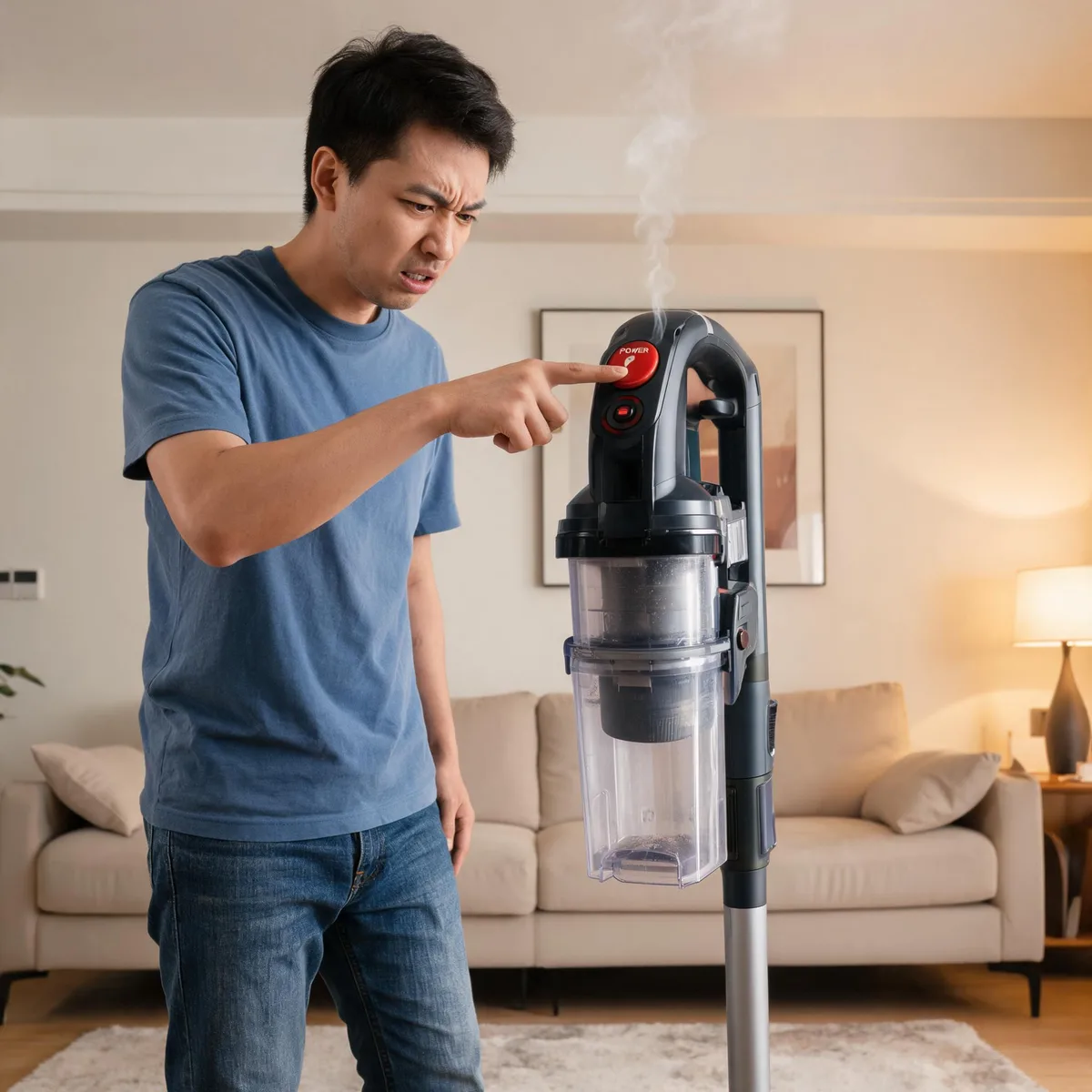
High Failure Rate & Short Lifespan in Vacuum Cleaner: What 806,246 Reviews Reveal
High Failure Rate and Short Service Life: The “Hidden Killer” in the Vacuum Cleaner Industry
Many consumers prioritize visible parameters such as suction power, battery life, and weight first when purchasing a vacuum cleaner, but rarely consider the issue of “how long it will last” in advance, only realizing the problem after running into pitfalls. After analyzing 806,246 real user reviews covering 27,766 products, we found that 32% of negative reviews point to “high failure rate and short service life”, which is the most frequently reported problem, even outranking widely concerned issues like “insufficient suction” and “short battery life”.
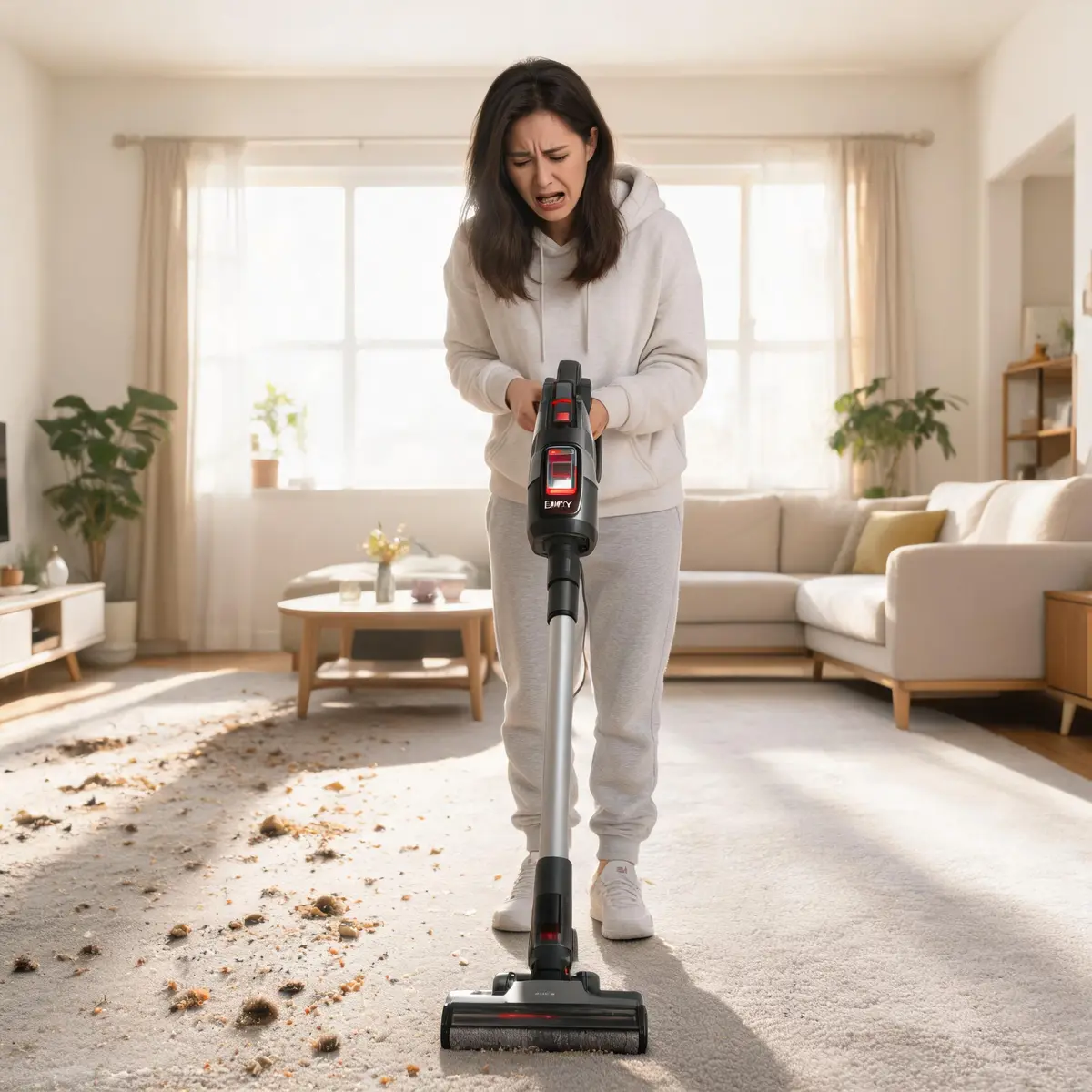
Many consumers have had similar frustrating experiences: They come across recommendation content showing a vacuum with strong suction and a lightweight, portable design, specifically add it to their cart or wishlist, and receive it as a gift from family members. Since they have no time to use it, they leave it unopened for a month before unpacking. On the first use, it suddenly shuts down before they finish vacuuming half a flight of stairs, and will not turn on again. The 7-day no-reason return period has already expired, and the repair quote is even close to the price of a new unit. They end up having to throw it away as garbage, wasting money for no reason and causing unnecessary hassle.
Why Is the Failure Rate High and Service Life Short? In-depth Breakdown of Root Causes
After analysis from three dimensions: material science, manufacturing process, and usage habits, we found that the short lifespan of most vacuum cleaners is essentially caused by a combination of “material defects under cost cutting, design defects, and improper use”:
Material Science Dimension: Jerry-building of Core Components Is the Worst Hit Area
First is the material selection for motors and circuit boards. As the heart of a vacuum cleaner, a qualified household vacuum cleaner motor should use pure copper windings, which feature high conductivity, high temperature resistance, and are not easy to blow even under long-term high-load operation. However, many low-priced products use “copper-clad aluminum” or even pure aluminum windings instead, which cost only 1/3 of pure copper, but have a melting point more than 200℃ lower than pure copper. In case of filter clogging and increased load, they may overheat and blow in just over ten minutes, which corresponds to feedback from many users of “burned out after 1 use” and “shut down halfway after 5 uses and won’t turn on again”.
Second is the material selection for plastic structural parts. Qualified products should use brand-new ABS/PC alloy materials, which have high fatigue strength, and will not be damaged after thousands of buckle openings/closures or minor drops. However, many low-priced products use repeatedly recycled mixed plastic, which contains a large amount of impurities, and has a fatigue strength only 1/10 of that of new materials. It will crack when dropped in low-temperature winter environments, and the buckle will break after a dozen openings and closures, resulting in failed dust cup sealing and complete loss of suction.
Manufacturing Process Dimension: Lack of Quality Control + Design Defects Amplify Failure Risk
To cut costs, many low-priced products have a factory sampling inspection rate of only 10% or even lower, and do not carry out full power-on tests and load tests. Many problems such as cold solder joints and loose parts are not screened out, so it is very common for consumers to receive a product that breaks after one or two uses.
In addition, the rationality of cooling design directly determines the service life of the motor. Many products cut out necessary cooling fins and dual air duct design to achieve lightweight, so the motor temperature will exceed 120℃ after 10 minutes of continuous operation, triggering overheat protection or even direct burnout, which is the core reason for many users’ feedback of “suddenly shut down halfway through use, can only turn on again after cooling down”.
Poor accessibility of after-sales maintenance further amplifies the perception of short service life: The offline maintenance outlet coverage of many small and medium-sized brands is less than 20%, and core components are not sold separately. The quote for replacing a motor can reach 70% of the price of the whole unit, so consumers often have to throw the product away directly when it breaks, further reducing the actual service life.
Usage Habit Dimension: Improper Operation Can Shorten Service Life by 80%
Even qualified products will have their service life greatly shortened if used incorrectly: The most common issue is not cleaning the filter after use. After the filter is clogged, the motor load will increase by more than 3 times, and long-term operation will accelerate motor aging. Second, using an ordinary dry vacuum cleaner to absorb water, uncooled soot, or sharp hard objects will scratch the dust cup seal at best, and cause water ingress to burn the circuit board at worst. Many users also use the product continuously for longer than the rated battery life for a long time, keeping the motor in a high-temperature state, which will burn out in a few months.
We can use a simple analogy to understand: A poor-quality vacuum cleaner is like a low-quality power strip made of copper-clad aluminum wire. It works fine when plugged with a low-power mobile phone charger, but once connected to a high-power electric heater, it will quickly overheat and burn out. Wrong usage habits are equivalent to keeping the power strip fully plugged with high-power appliances for a long time, so a product that could have lasted 1 year may break in 1 month.
Performance Comparison of “High Failure Rate and Short Service Life” for Different Materials
We have compiled the impact of different materials of vacuum cleaner core components on service life in the table below for intuitive comparison:
| Component Type | Material Category | Mean Time Between Failures | Advantages | Limitations |
|---|---|---|---|---|
| Motor winding | Pure copper | 2500-3000 hours | High conductivity, high temperature resistance, strong load impact resistance | High cost, the whole unit price will be 15%-20% higher |
| Motor winding | Copper-clad aluminum | 300-500 hours | Low cost, can reduce the whole unit price | Low melting point, easy to blow under high load, service life is only 1/5 of pure copper |
| Structural parts (shell/buckle) | Brand new ABS/PC alloy | No damage after ≥500 opening/closing/drop tests | High fatigue strength, not easy to crack at low temperature | Cost is 3 times that of recycled plastic |
| Structural parts (shell/buckle) | Mixed recycled plastic | Damaged after ≤20 opening/closing/drop tests | Very low cost, can reduce the whole unit cost | Poor toughness, easy to crack, buckle failure easily leads to reduced sealing and loss of suction |
| Circuit board substrate | Brand new glass fiber copper clad laminate | Solder joint life ≥10 years | Good insulation, moisture resistance, solder joints are not prone to cold soldering | Cost is 3 times that of paper substrate |
| Circuit board substrate | Recycled paper-based copper clad laminate | Solder joint life ≤1 year | Very low cost | Prone to damp and electric leakage, solder joints fall off easily, slight vibration may lead to shutdown |
According to real user feedback, products made of high-quality materials can be used stably for a long time. One user commented that their old vacuum cleaner “has been used for more than ten years, works for housekeeping and post-renovation cleaning, and has no problem as long as the filter is cleaned regularly and accessories are replaced”, which is a typical example of core components meeting material standards and reasonable design.
How to Avoid High Failure Rate and Short Service Life? Purchase and Usage Guide
Core Judgment Criteria When Purchasing
- Check core component labels: Prioritize products that clearly mark “pure copper motor” and “brand new glass fiber circuit board”, do not choose products that only mark “high power” and “strong suction” without mentioning core component materials;
- Check structural process details: Shake the body when you get the prototype. If there is obvious abnormal noise from loose internal parts, or the buckle feels obviously brittle when pressed, it means the structural assembly accuracy and material are very poor, and the failure rate will be very high;
- Check cooling design marks: Prioritize products marked with “dual air duct cooling” and “motor overheat protection”, do not choose fully closed products without obvious cooling air inlets;
- Check warranty terms: Prioritize products that clearly mark “whole unit warranty for more than 1 year, core component warranty for more than 3 years”, do not choose products with only 3 months warranty and vague warranty terms.
Details Worth Investing In
If the budget allows, spend about 20% more to choose products with full factory inspection, structural parts made of new alloy, and national joint warranty service. Their average service life will be 3-5 times that of low-priced products, and the long-term use cost is actually lower.
Correct Usage and Maintenance Methods
- Clean the dust cup immediately after each use, clean the filter every 1-2 weeks, and install it back only after it is completely dry after washing, to avoid filter clogging increasing motor load;
- Ordinary dry vacuum cleaners should not absorb water, uncooled soot, or large sharp hard objects, to avoid jamming the motor or damaging the seal;
- Do not use continuously for longer than the rated duration. For example, for a product marked with 15 minutes of continuous use, do not use it for more than 10 minutes at a time, to avoid motor overheating;
- When not in use for a long time, charge it to 50% power and store it in a dry and ventilated place, to avoid battery power loss or damp circuit board.
Correction of Common Misconceptions
- Misconception 1: The higher the suction, the better. Many small factories deliberately adjust the motor power to exceed the design upper limit to stack suction parameters, and the motor will burn out after a few uses. A normal household vacuum cleaner with an air wattage of 120W or above is fully sufficient for household use;
- Misconception 2: The lighter the better. Many ultra-light products achieve light weight by cutting out the cooling structure and reducing the thickness of structural parts, so the failure rate will be much higher for long-term use;
- Misconception 3: Low-priced products are okay for casual use. Products with prices far below the industry cost line will inevitably cut corners on core components, their failure rate is 3-5 times that of qualified products, and the average use cost is actually higher.
“Pitfall Avoidance” Lessons from Real Users
We selected 4 most representative feedback from real negative reviews for your reference to avoid pitfalls:
差评原文:Hunk of Junk!!!! Beware! Beware!!!! This hunk of crap lasted one vacuum. One. After one crappy vacuum, emptied, plugged in - multiple outlets- the piece of junk is dead. Please don’t waste your time. VACU-DEAD! Waste of time - money. Lesson Summary: Do not buy ultra-low-priced products without clear warranty terms and no core component material labels. Many such products have not undergone full power-on testing before leaving the factory, and are very likely to fail on the first use. The rights protection cost is extremely high after the no-reason return period expires.
差评原文:Stopped working about fifth use Was working great, I love it. But the middle of using it the last time it turned off and wouldn’t turn back on. Going to buy a different brand now, guess this is what I get for buying the cheap one. It never cleaned super deeply or fast, had to make multiple pass over Lesson Summary: If the body gets hot frequently and suction drops during use, stop the machine immediately to clean the filter, do not force continuous use. Low-priced products generally have defects in cooling design, do not use continuously for more than 10 minutes, otherwise it is easy to burn out the motor.
差评原文:Doesn’t work- stopped working after 2 small vacuums Waste of money. 2 vacuums (small) cleaned out all areas of the vacuum. Replaced filter. No suction what do ever. Poorly made- moves around dirt. I’ve learned my lesson. You get what you pay for. It’s at the curb. Lasted 2x. Lesson Summary: Shake the body first when purchasing. If there is obvious abnormal noise from loose internal parts, it means the structural assembly accuracy is poor, and there is a high probability that sealing failure and suction drop will occur after a few uses.
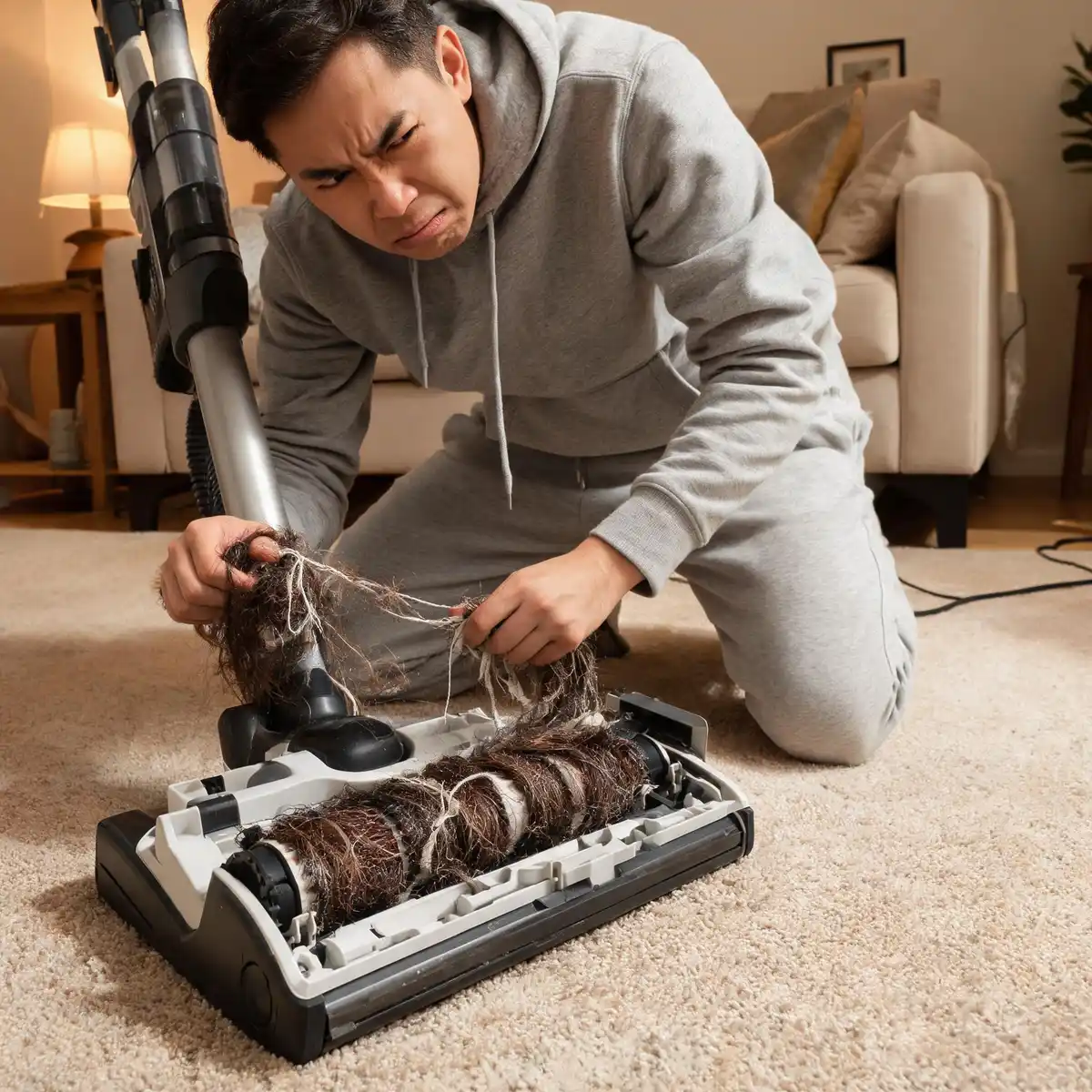
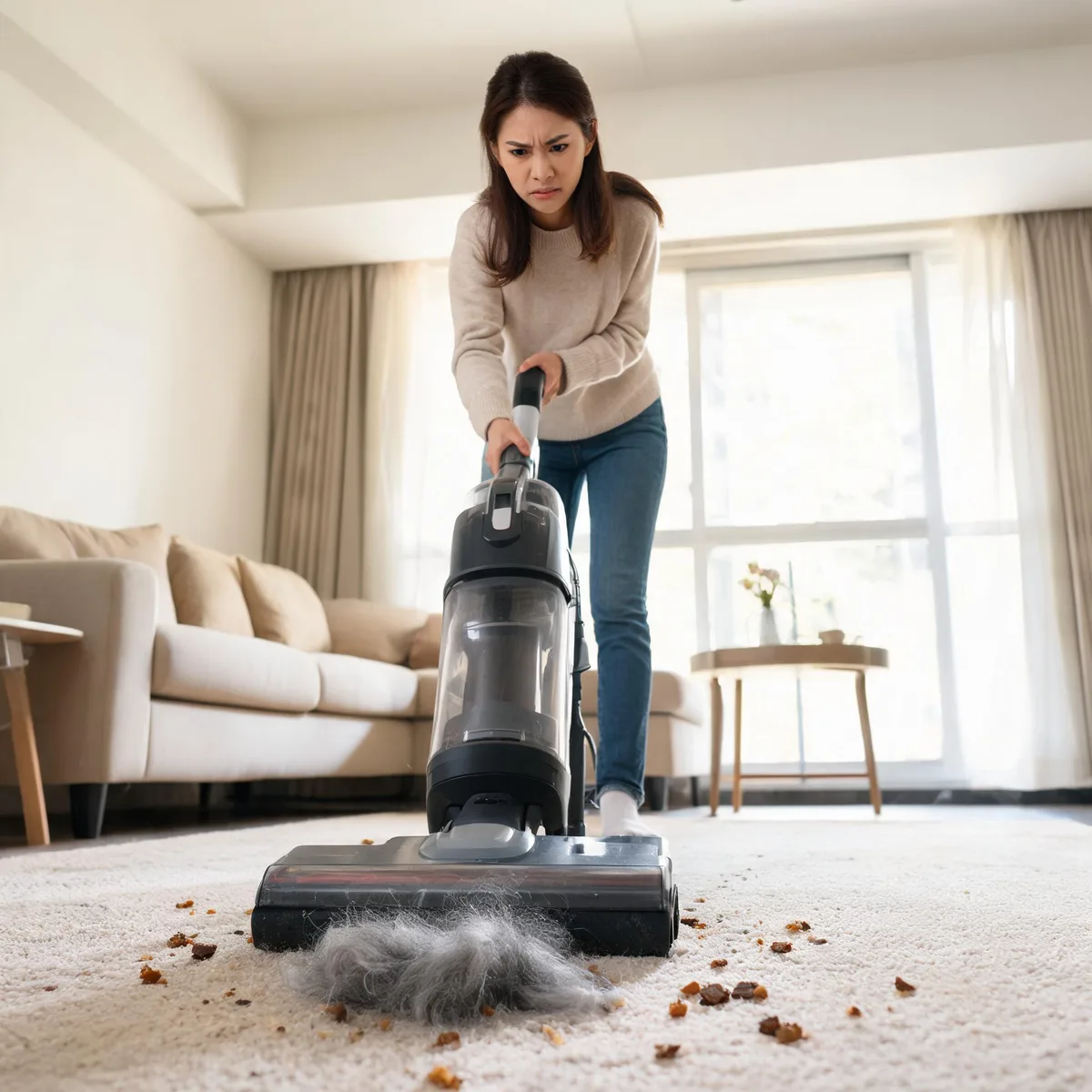
差评原文:Better products elsewhere -no good if you have pets Picks up bits and peices - no animal hair and is cumbersome. Wanted to like but sits in the barn now. completely useless even with the attachments Lesson Summary: If you have a high frequency of pet hair cleaning needs, do not choose entry-level models with a rated air wattage lower than 120W. Such products have insufficient motor load margin, and long-term suction of tangled hair can easily jam the motor, greatly shortening the service life.
Related Deep Analysis in This Category
- Poor Battery Performance — 22% of complaints relate to this
- Poor Design & Bad User Experience — 18% of complaints relate to this
- Poor Suction Performance — 45% of complaints relate to this
- Smart Robot Vacuum Malfunction — 10% of complaints relate to this
🛠️ Practical How-To Guides
Based on the analysis above, we've prepared actionable daily solutions for you:
Pressure Cooker Breaks Right After Warranty? 3 Steps to Troubleshoot Common Minor Faults for Free
Teach ordinary users step by step to troubleshoot common non-core faults such as startup failure and frequent error reports, solve simple problems by yourself without maintenance cost or throwing away the cooker directly.
Read Full Guide →Why Does Your Pressure Cooker Break in 6 Months? 3 Core Indicators to Pick a Durable One That Lasts Over 5 Years
From 3 professional dimensions of electronic component temperature resistance standard, core structural part design and production quality control system, teach ordinary consumers to choose reliable pressure cookers with low failure rate and avoid inferior products that break right after warranty.
Read Full Guide →Your Pressure Cooker Has a Short Lifespan? 2 10-Minute Monthly Maintenance Tricks Add 3 More Years of Use
Aiming at the fatigue loss of core structural parts, teach users 2 simple and easy monthly maintenance methods to delay component aging and greatly extend the service life of the product.
Read Full Guide →Your Pressure Cooker Keeps Showing Error Codes? 4 Daily Use Habits Cut Failure Rate by 80%
Aiming at the component loss caused by high temperature and high humidity working environment, provide practical use specifications for ordinary people to reduce abnormal situations such as error reporting and startup failure.
Read Full Guide →Are Cheap Vacuums All Short-lived? 4 Shopping Tips to Pick a Cost-effective Durable Vacuum That Lasts Over 3 Years
Teach you to avoid short-lived models from the dimensions of core component labels, quality control certifications, heat dissipation design, etc., you can buy a durable vacuum without spending a lot of money
Read Full Guide →Does Your Vacuum Always Fail? 3 5-minute Weekly Maintenance Tips Reduce 80% of Common Failures
Daily cleaning and maintenance methods for easily worn parts such as filters, roller brushes, and body interfaces, improve the fatigue resistance of plastic structural parts and reduce loss
Read Full Guide →Vacuum Breaks After Less Than 3 Uses? Avoid These 5 Wrong Usage Habits to Double Its Lifespan
Explain load limits, heat dissipation precautions, improper operation taboos in daily use to reduce the failure probability of motors and circuit boards
Read Full Guide →Vacuum Won't Turn On After 6 Months? Step-by-Step Guide to Make Warranty Claims to Save Hundreds of Repair Costs
Sort out warranty judgment rules for different fault conditions, teach you to keep purchase and use certificates, and successfully apply for free after-sales service
Read Full Guide →