Poor Suction Performance in Vacuum Cleaner: What 806,246 Reviews Reveal
Poor Suction Performance: The “Hidden Killer” in the Vacuum Cleaner Industry
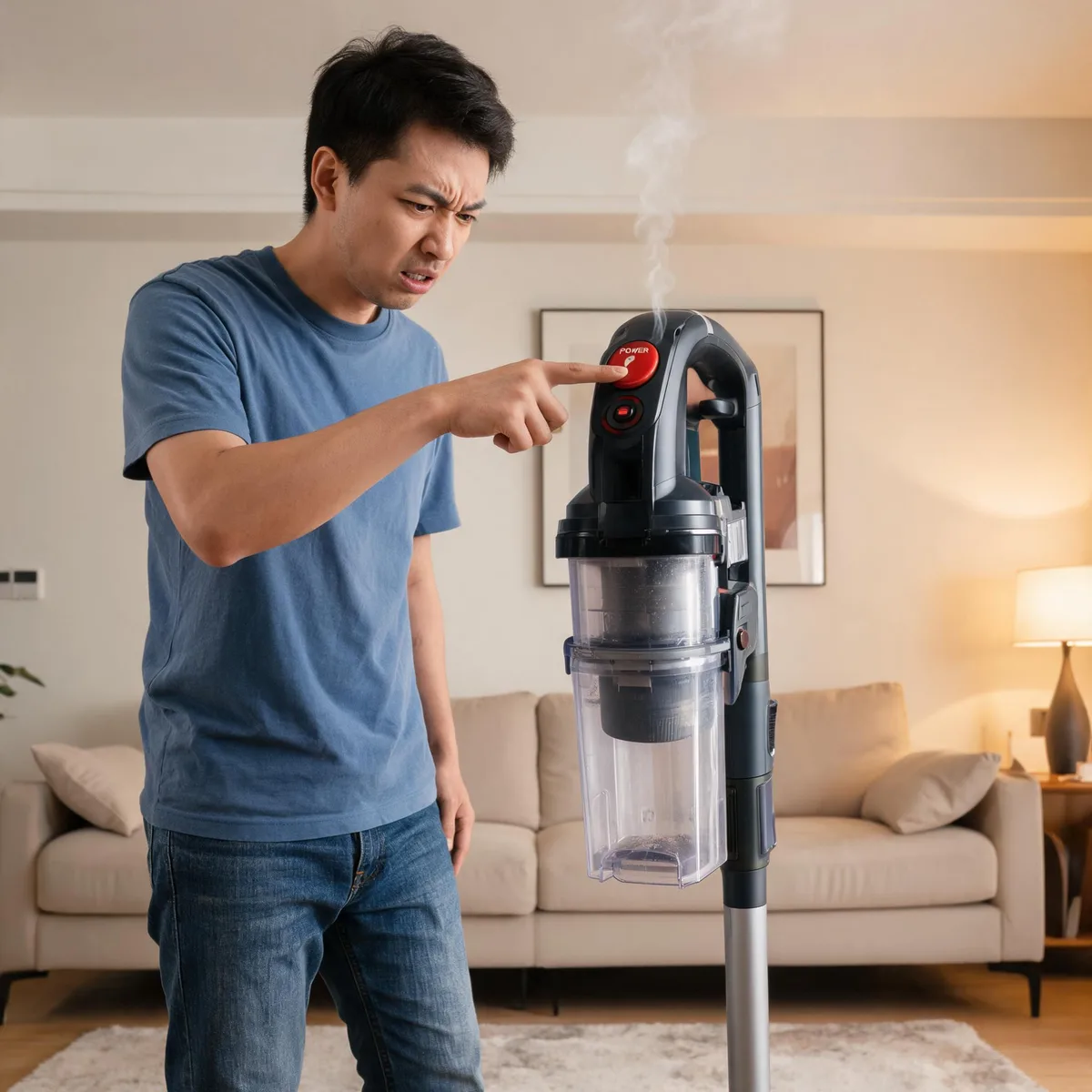
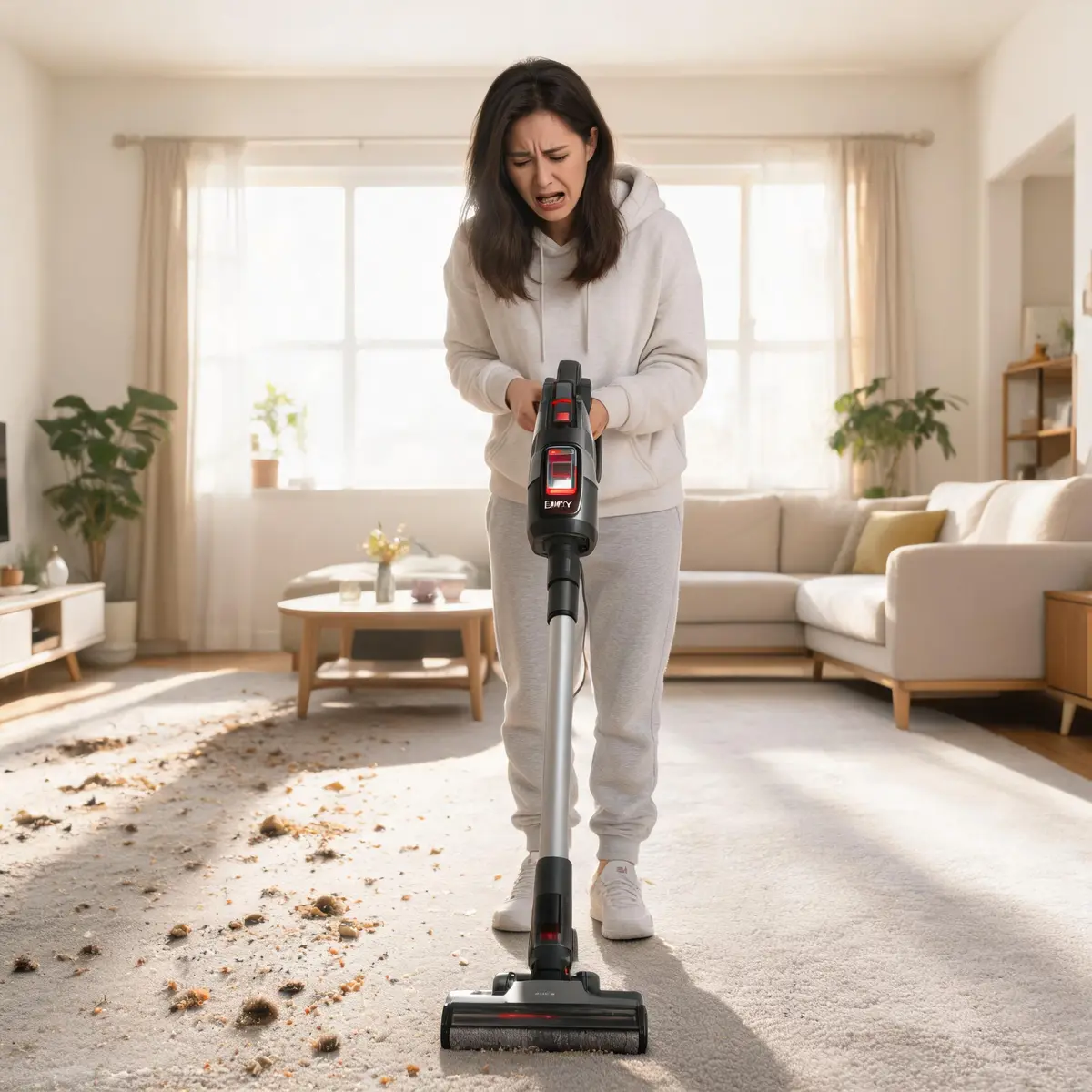
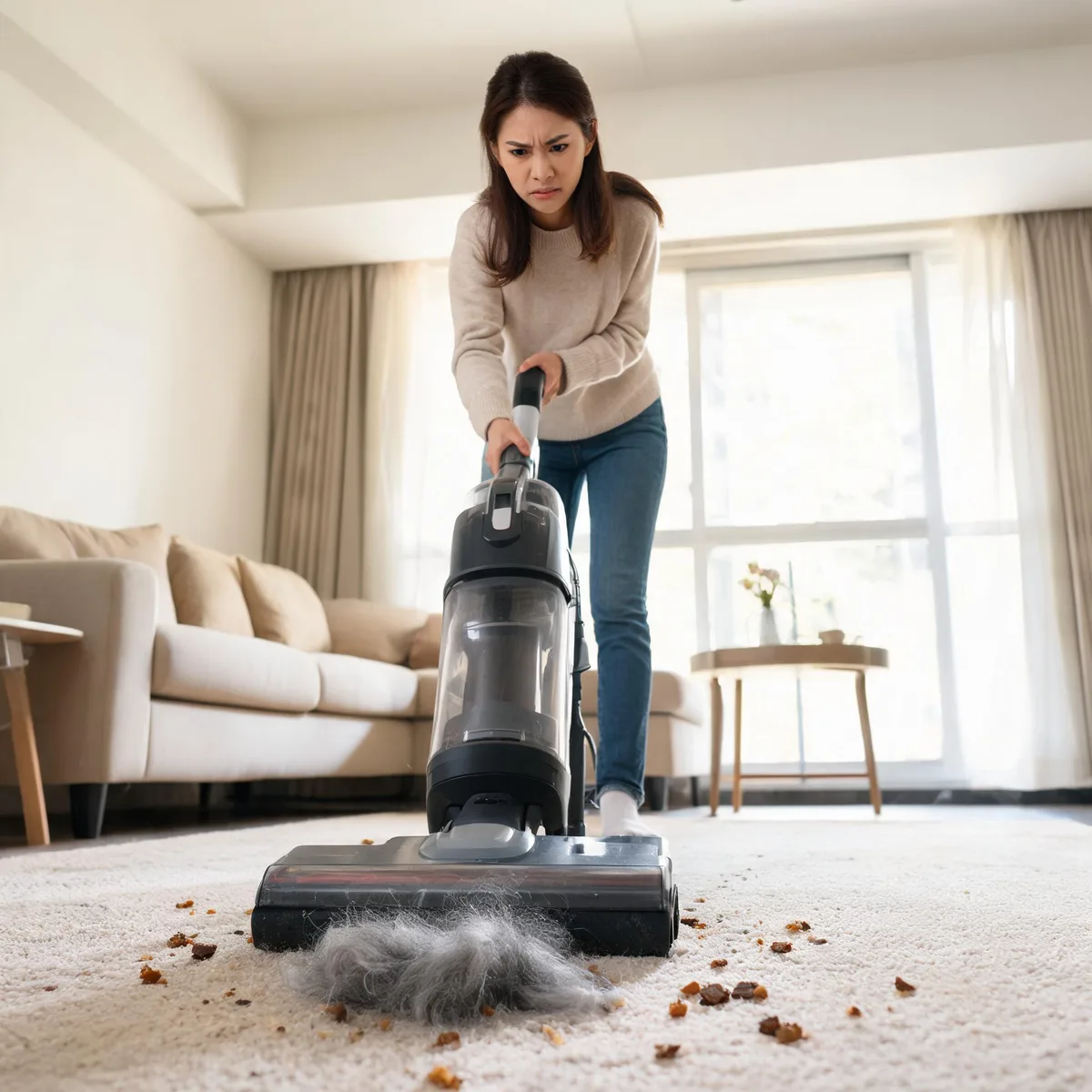
Have you ever had this experience: You pick a vacuum cleaner after scrolling through hundreds of positive reviews. It feels light and looks great when you receive it, and you are full of expectations when unboxing it that it will solve your cleaning troubles. But when you actually use it, you find that cat hair stuck to the sofa can’t be picked up even after 3 passes, cookie crumbs on the carpet are blown all over the place, and even inhaled dust drifts out from the air outlet. When you want to return it, the 7-day no-reason return period has long passed. It is a pity to throw it away but useless to keep it, so it ends up piling up in the storage room collecting dust.
After analyzing 806,246 real user reviews covering 27,766 products, we found that: 45% of negative vacuum cleaner reviews are directly related to poor suction performance, which is the most complained-about problem in this category, even surpassing pain points that users generally care about such as battery life, noise, and weight. This problem is extremely hidden: more than 80% of suction problems do not appear on first use, and most gradually emerge after 3 to 10 uses. By this time, the return and exchange window has usually passed, and users can only bear the loss themselves.
As one user mentioned in her review: She added the vacuum cleaner she had her eye on to her wishlist, and her sister bought it for her as a birthday gift. Since they had a housekeeper at home at the time, it was left unopened for more than a month. When she used it for the first time, she found that the suction was completely below expectations, and she had to accept the bad luck in the end.
Why Is Suction Performance Poor? — In-Depth Breakdown of Root Causes
Suction problems are never as simple as “insufficient power”. We break it down from three dimensions: materials science, manufacturing process, and usage habits, to find the root of all problems:
Material Level: Cutting Corners on Core Component Materials Is the Original Sin
First is the motor material: many low-priced products use copper-clad aluminum or even pure aluminum wire motors instead of pure copper wire motors. The conductivity of aluminum is only 60% that of copper, which makes it easy to heat up and lose speed under load. After 3 months of use, the motor output power can decay by more than 30%, directly leading to reduced suction. Second is the filter material: the dust holding capacity of ordinary non-woven filters is only 1/5 that of HEPA filters. After about 5 uses, the pores will be completely blocked by dust, wind resistance increases significantly, and suction is naturally cut in half. Finally, the seal material: sealing rings made of recycled soft rubber will deform and leak air after 3 to 5 uses, which is equivalent to a hole in a straw—no matter how hard you suck, you can’t get the drink up.
Process Level: Design Defects and Inadequate Processes Are the Core Inducements
- Motor Power Matching and Air Duct Sealing Process Defects: Many manufacturers advertise 1000W, 1500W as input power (power consumption), but the actual suction power (unit: AW) that determines suction may be less than 20W. This is just like a car: no matter how much horsepower the engine has, if the transmission system has serious leakage loss, the wheel power will be greatly reduced. Many products also have assembled air ducts, where the sealant at the joints is applied unevenly, or there is even no sealing design at all. Air pressure leaks through the gaps, and the suction that actually reaches the suction port is less than half of the designed value. This is the core reason why some users report “it can’t pick up fluff even after sucking for 3 minutes”.
- No Suction Redundancy Designed for Suction Attenuation After Filter Clogging: Qualified products will reserve at least 30% suction redundancy. Even if the filter is 20% clogged, the actual output suction can still meet cleaning needs. However, many low-priced products do not have reserved redundancy: the suction of a new machine is just enough for daily use, and once the filter is slightly clogged, the suction will directly drop below the qualified line.
- Unqualified Dust Box Sealing Design: If the connection between the dust box and the main unit only has a single-layer seal, or even no one-way check valve, when the machine is tilted or stopped, the inhaled garbage will flow back, and even drift out from the air outlet, which exactly corresponds to the problem of “inhaled garbage falling out” reported by many users.
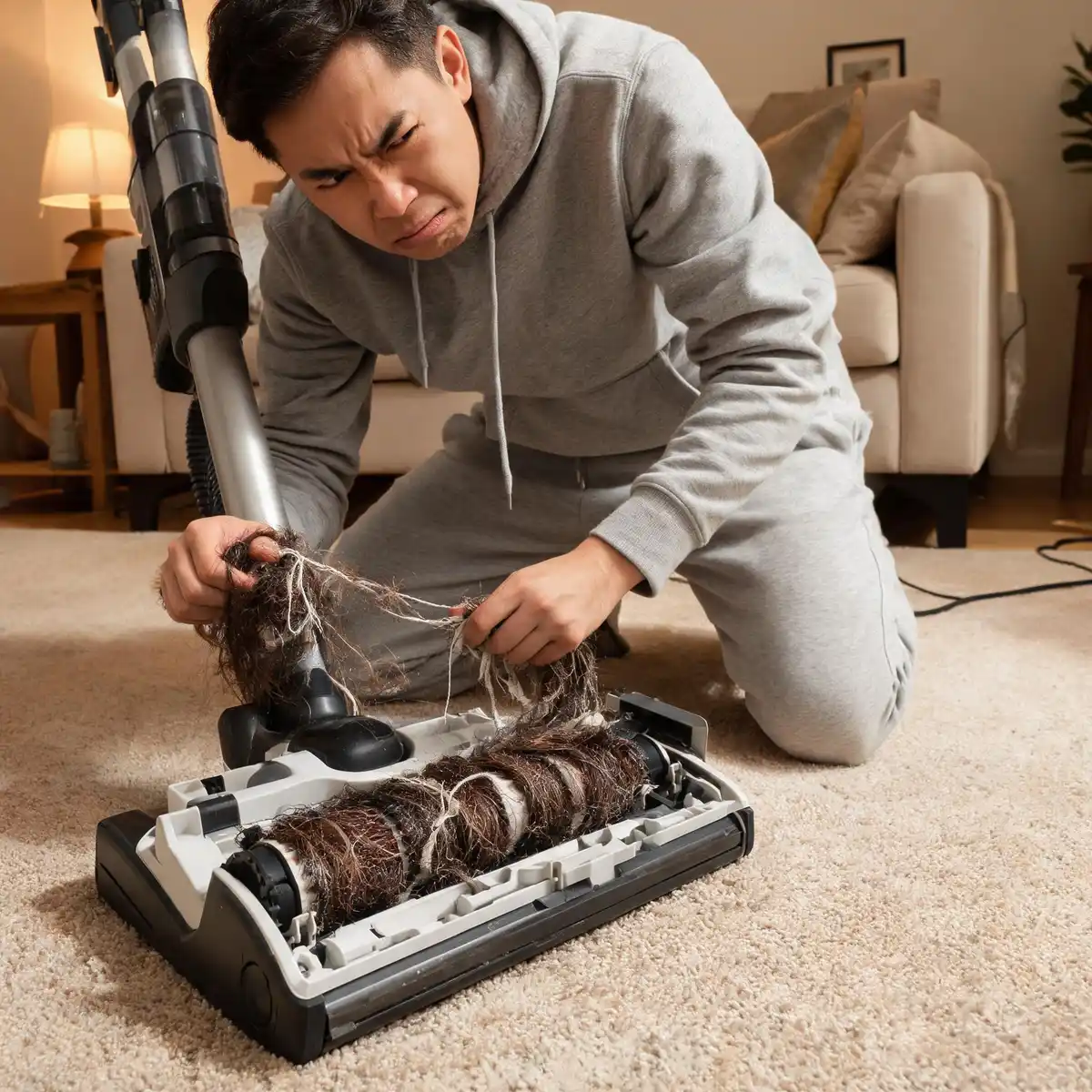
- Lack of Scene Adaptation Tuning: The suction and air pressure required for different scenarios are completely different: hard floors only need 15AW of suction power to be cleaned, while carpets need at least 30AW of suction power + roller brush beating to suck out deep dust because the pile surface will leak air. Pet hair is flocculent and easy to wrap around the roller brush or block the filter inlet. If there is no special anti-wrap design and large dust holding capacity filter, the suction will drop significantly after 2 to 3 uses. The feedback from pet owners that “it can only suck up small crumbs, not pet hair” is essentially because the product has not been tuned for the corresponding scenario.
Usage Level: Wrong Usage Habits Will Accelerate Suction Attenuation
Many users never have the habit of cleaning the filter and roller brush, do not empty the dust box when it is full, and even use vacuum cleaners to suck wet garbage and sharp construction waste. These behaviors will cause filter clogging, scratched air ducts and air leakage, and corroded seals, accelerating suction attenuation. Some users mentioned that “there was no suction after 2 uses, and it was useless even after cleaning all parts and replacing the filter”, which is most likely caused by sucking wet garbage leading to mold and blockage inside the air duct, which is difficult to clean.
Suction Performance Differences of Different Materials for Core Components
We have sorted out the performance of different materials of core components that affect suction as follows, to help you intuitively judge the long-term suction stability of the product:
| Core Component | Material Type | Suction Performance Characteristics | Advantages | Limitations | Corresponding Real User Feedback |
|---|---|---|---|---|---|
| Motor | Pure copper wire motor | Power attenuation after long-term use ≤10%, stable suction | Durable, stable speed under load, can undertake heavy-duty cleaning tasks | High cost | Products mentioned in positive reviews such as “the old model has been used for more than ten years, which can be used for daily housekeeping and cleaning construction waste after new decoration, and it works well as long as the filter is cleaned regularly” generally use this type of motor |
| Copper-clad aluminum/pure aluminum wire motor | Power attenuation ≥30% after 3 months of use, suction drops significantly | Low cost | Easy to heat, short service life, fast suction attenuation after long-term use | Products mentioned in negative reviews such as “it broke suddenly after 5 uses, and the suction was getting worse before that” mostly use this type of motor | |
| Filter | PTFE coated HEPA | Suction attenuation ≤20% after 6-12 months of use, washable and reusable | Large dust holding capacity, non-stick hair, low maintenance cost | High cost | Products mentioned in positive reviews such as “it turns on regularly every day, sucks cat and dog hair very clean, and only needs to wash the filter once every few months” basically use this type of filter |
| Ordinary HEPA (H12 and above) | Suction attenuation ≤20% after 1-3 months of use | High filtration efficiency, slow suction attenuation | Requires regular replacement | Most qualified mid-range products use this type of filter, and the suction is stable enough under normal maintenance | |
| Ordinary non-woven fabric | Suction attenuation ≥50% after 5-10 uses | Extremely low cost | Small dust holding capacity, easy to block, low filtration efficiency, easy to leak dust | Products mentioned in negative reviews such as “there was no suction after 2 uses, and it got better after replacing the filter” are mostly equipped with this type of filter | |
| Seal | Food-grade silicone | Service life 3-5 years, sealing efficiency remains ≥95% | Aging resistance, good elasticity, no air leakage | High cost | Products that have no dust leakage and stable suction after long-term use basically use silicone seals |
| Ordinary PVC | Sealing efficiency drops by more than 20% after 6-12 months of use | Moderate cost | Easy to age and deform | Products that have reduced suction and slight dust leakage after about half a year of use mostly use this type of seal | |
| Recycled soft rubber | Deforms and leaks air after 3-5 uses, sealing efficiency drops by ≥40% | Extremely low cost | Extremely easy to age, serious air leakage | Products mentioned in negative reviews such as “the inhaled dust blows out from the air outlet” basically use this type of seal |
How to Avoid Poor Suction Performance? — Purchase and Usage Guide
Focus on These Parameters and Processes When Purchasing
- Don’t look at input power, look at suction power (AW): Suction power is the parameter that truly represents suction. For daily home use, it should be at least ≥15AW, ≥30AW for carpet needs, and ≥25AW for pet owners.
- Pay attention to the suction retention parameter: If the product detail page marks parameters such as “suction retention rate ≥80% after 100 hours of filter use” and “whole machine sealing efficiency ≥90%”, it means that the product has sufficient suction redundancy design, and the suction is more stable for long-term use.
- Prefer products with integrated air ducts and double-sealed dust boxes: The air leakage rate of integrated air ducts is much lower than that of assembled air ducts, and dust boxes with double silicone sealing rings and one-way check valves will not have the problem of dust leakage and garbage backflow.
- Choose the corresponding design according to your core scenarios: For carpet needs, prioritize products with electric roller brush beating design; for pet owners, prioritize products with anti-wrap roller brushes and large dust holding capacity filters (≥0.5L).
Actionable Suggestions for Correct Use and Maintenance
- Empty the dust box in time after each use to avoid increased wind resistance caused by a full dust box.
- Pat the filter to remove dust every 1-2 weeks. Washable filters should be washed every 1-3 months, and reinstalled only after completely drying to avoid mold and blockage of the air duct.
- Clean the hair wrapped around the roller brush every 2 weeks to avoid reduced cleaning ability caused by decreased roller brush speed.
- Do not use the vacuum cleaner to suck wet garbage, sharp construction waste, or large particle viscous garbage, to avoid scratching the air duct, corroding the seals, and blocking the filter.
Common Misconceptions Correction
- Misconception 1: The higher the power, the better the suction. Wrong. Input power only represents power consumption. Many products with 1500W input power have a suction power of less than 20AW, which is far inferior to products with 500W input and 40AW suction power.
- Misconception 2: The higher the suction, the better. Wrong. Good products have multi-level tuning, using different suction for different scenarios: low gear for curtains and sofas will not suck up the fabric, high gear for carpets is sufficient for cleaning. Excessive suction throughout the whole process will instead increase unnecessary power consumption and noise.
- Misconception 3: Products that never need filter replacement are better. Wrong. Any filter will be blocked by dust. Products that claim to never need filter replacement either have large filter pores that are easy to leak dust, or have extremely high suction redundancy but very high power consumption, neither of which is suitable for ordinary household use.
“Pit Avoidance” Lessons from Real Users
We selected 4 most representative user feedbacks from hundreds of thousands of reviews to help you avoid the pitfalls others have stepped on:
- User feedback: “I bought it after reading all the positive reviews, thinking it wouldn’t be that bad. As a result, the suction is really bad, it can’t pick up a piece of fluff even after sucking for 2-3 minutes.” Lesson summary: Don’t just look at the overall positive review rate, focus on suction-related feedback in “follow-up reviews after more than 1 month of use”. The initial suction of new machines is generally not too bad, and the suction attenuation after long-term use is the core.
- User feedback: “There was no suction after two uses, it was useless even after cleaning all parts and replacing the filter, and I finally threw it away by the roadside.” Lesson summary: If you use it frequently (more than 3 times a week), don’t choose products that are too low-priced. Most of these products have no suction redundancy design, and will completely lose suction once the filter is slightly clogged, resulting in higher long-term use cost instead.
- User feedback: “I have pets at home, it can only suck up small crumbs, not pet hair, now it’s thrown in the warehouse and completely useless.” Lesson summary: Be sure to clarify your core usage scenarios before purchasing. If you have special needs such as pets and carpets, prioritize the special tuning design for corresponding scenarios, don’t make do with general-purpose products, which will most likely fail to meet expectations.
- User feedback: “I waited too long and missed the return period, I didn’t want to waste money so I use it occasionally, but it’s actually not as good as wiping with a rag.” Lesson summary: Be sure to test the newly bought vacuum cleaner 2-3 times in your most commonly used scenarios (such as sucking carpets, sucking cat hair) within the 7-day no-reason return period. Don’t wait until after the after-sales period to unbox and use it, you can only accept bad luck if something goes wrong.
Related Deep Analysis in This Category
- High Failure Rate & Short Lifespan — 32% of complaints relate to this
- Poor Battery Performance — 22% of complaints relate to this
- Poor Design & Bad User Experience — 18% of complaints relate to this
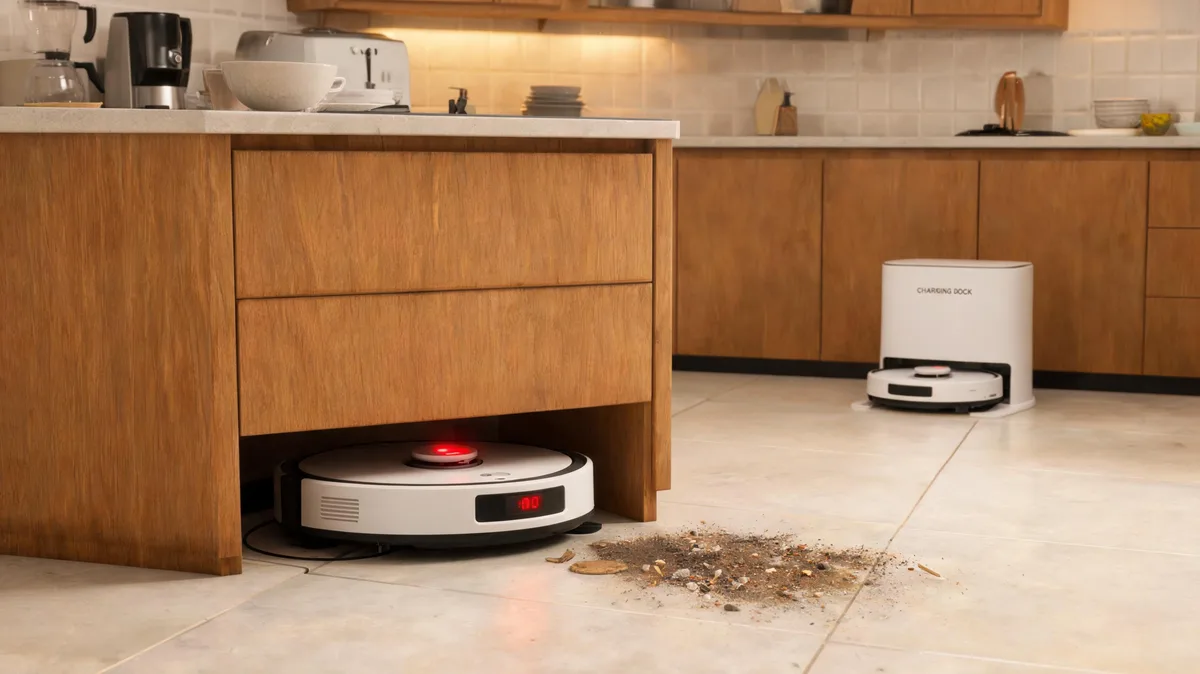
- Smart Robot Vacuum Malfunction — 10% of complaints relate to this
🛠️ Practical How-To Guides
Based on the analysis above, we've prepared actionable daily solutions for you:
Afraid of Buying a Vacuum With Poor Native Suction? Check 2 Core Processes When Purchasing to Avoid Pitfalls
Teach ordinary people to choose a vacuum cleaner with stable suction from the two core dimensions of motor power matching and air duct sealing technology, and you can choose correctly without understanding parameters
Read Full Guide →Can't Pick Up Cat Hair/Paper Scraps? 4 Scene Adjustment Tips for Ordinary Vacuum Cleaners to Adapt to All Scenarios
Adjust the vacuum settings for different cleaning scenarios such as carpets, pet hair, and debris, which can greatly improve the cleaning effect without changing the machine
Read Full Guide →Garbage Leaks From Vacuum Outlet? 2 Steps to Check Dust Box & Sealing Problems to Solve Backflow Risks
Teach you to quickly locate the garbage backflow problem caused by poor dust box sealing, which is easy to operate and can be solved without contacting after-sales service
Read Full Guide →Vacuum Suction Drops After A Few Uses? 3 Steps to Check Filters & Maintain Full Suction
Teach you to quickly troubleshoot suction attenuation caused by filter clogging, and do daily maintenance at home to extend the service life of the vacuum cleaner
Read Full Guide →