Poor Sharpness and Edge Retention in Knife Tools: What 188,337 Reviews Reveal
Insufficient Sharpness and Poor Edge Retention: The “Silent Killer” of the Knife Industry
In the kitchen, a sharp and durable knife is key to successful cooking. However, many consumers find that their newly purchased knives not only fail to cut through ingredients easily but also become dull quickly. According to our analysis of 188,337 genuine user reviews, 42% of negative reviews are related to issues of insufficient sharpness and poor edge retention. Imagine buying a new set of knives with high expectations, only to find after a few months that they can no longer handle everyday cutting tasks. This is undoubtedly a frustrating experience.
Why Insufficient Sharpness and Poor Edge Retention? — A Deep Dive into the Root Causes
From a Materials Science Perspective
The grade of steel used in the blade directly affects its hardness and wear resistance. If the steel is not hard enough, the blade will wear down and roll over during use. For example, some low-cost knives may use low-alloy steel, which is inexpensive but has lower hardness and cannot maintain sharpness for long. This is like a car with poor-quality tires, which will show severe wear after a period of driving.
Case Analysis:
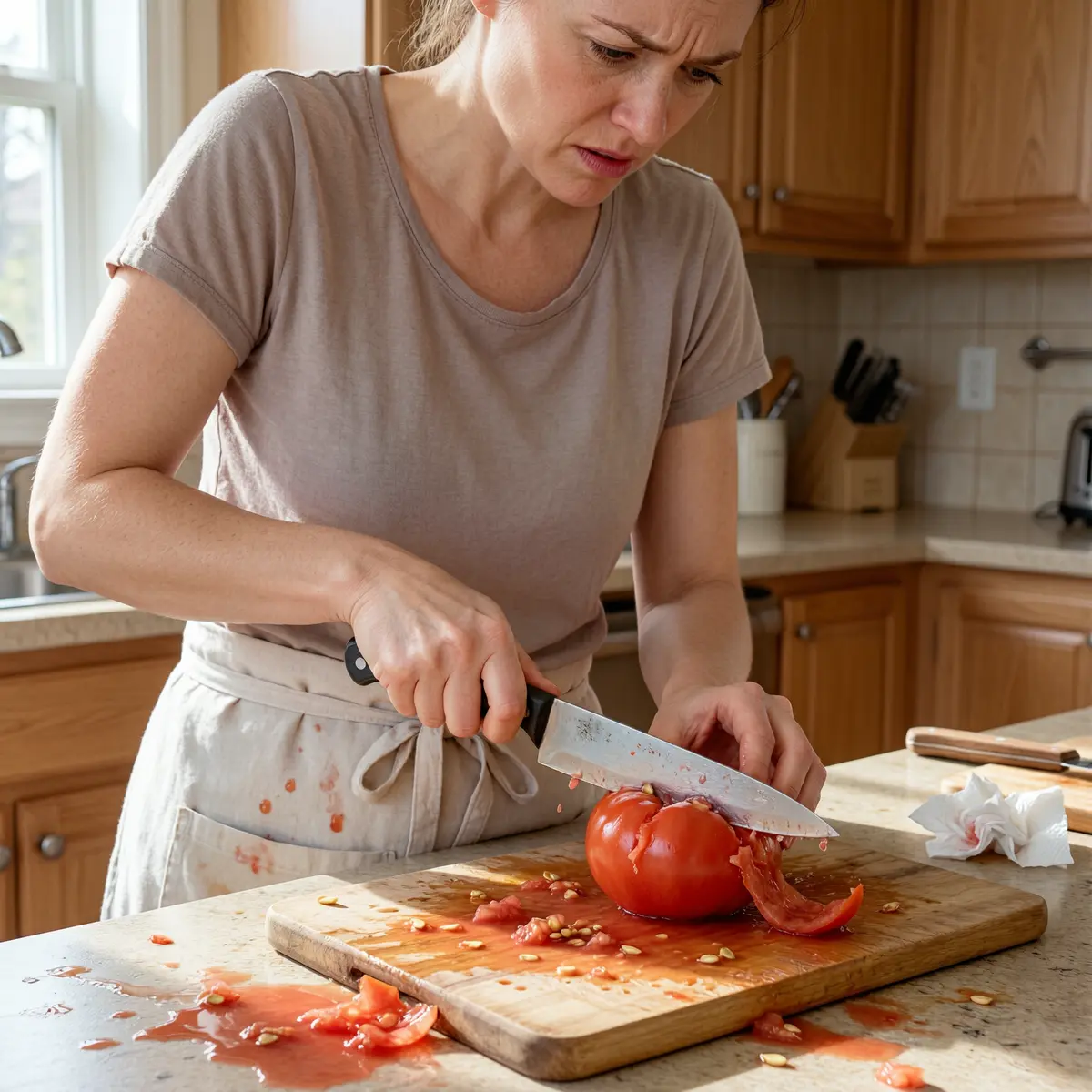
- “Tears food Not happy with these at all. Everything I try to cut… Whether it’s bread or meat, the food is ripped apart not cut.”
- This review reflects the poor cutting performance due to insufficient hardness of the knife material, resulting in tearing rather than clean cuts.
From a Manufacturing Process Perspective
The precision of the sharpening process is also crucial. If the edge angle is uneven, the blade cannot form an effective cutting surface, affecting the cutting performance. Additionally, some low-cost knife manufacturers may skip post-processing steps such as edge honing to control costs, leading to defects in the blade right out of the factory.
Case Analysis:
- “Its ok The colors are nice but the color is coming off already and only had for about two months and they are already dull”
- This review reveals manufacturing defects, with the knives becoming very dull in a short period.
From a Usage Habit Perspective
Frequent cutting of hard ingredients in everyday household use can also accelerate blade wear. For example, frequently cutting frozen foods, bones, or hard-shelled ingredients can cause the blade to wear faster. Proper usage and regular maintenance can significantly extend the life of the knife.
Case Analysis:
- “Looks good, does not last long. My grandson just bought these..
They do look good, but do not stay sharp for long if you use basically the same knife for everyday.
These are light weight, plastic Handles.”- This review indicates that frequent use of the same knife can lead to it becoming dull quickly.
Comparison of “Insufficient Sharpness and Poor Edge Retention” in Different Materials
| Material | Advantages | Limitations |
|---|---|---|
| High Carbon Steel | High hardness, excellent sharpness | Prone to rust, requires frequent maintenance |
| Stainless Steel | Corrosion-resistant, easy to maintain | Lower hardness, difficult to maintain sharpness |
| Alloy Steel | Good overall performance | Higher cost, more expensive |
Positive Review Example:
- “Great knife for the money! This is a really nice knife. Quality made, for the money you can’t go wrong. Cuts through vegetables easily and flawlessly.”
- This review demonstrates the excellent performance of a high-quality knife when cutting vegetables, highlighting the importance of good materials and craftsmanship.
How to Avoid Insufficient Sharpness and Poor Edge Retention? — A Guide to Selection and Use
Key Indicators and Parameters to Look for When Purchasing
- Steel Grade: Choose high-hardness, high-wear-resistance steels such as high carbon steel or alloy steel.
- Edge Angle: Ensure the edge angle is uniform; this can be preliminarily judged by checking if the blade is straight.
- Weight and Balance: The knife should have a good weight distribution and balance, making it easy to hold and use.
Design and Craftsmanship Details Worth Spending More On
- Full Tang Design: The blade extends to the handle, providing better stability and durability.
- Edge Honing: A honed edge is smoother, reducing cutting resistance.
- Handle Material: Choose slip-resistant, durable handle materials such as wood or composite materials.
Correct Usage and Maintenance Methods
- Avoid Cutting Hard Objects: Try not to use the knife to cut frozen foods, bones, or hard-shelled ingredients.
- Regular Sharpening: Use a whetstone or electric sharpener to regularly sharpen the knife, maintaining a sharp edge.
- Cleaning and Drying: Clean and thoroughly dry the knife after use to prevent rust.
Common Misconceptions to Correct
- Focus on Appearance Only: A pretty appearance does not necessarily mean a high-quality knife; focus more on the material and craftsmanship.
- One Knife for All Tasks: Use different types of knives for different cutting tasks to avoid overusing a single knife.
Lessons from Real Users to Avoid Pitfalls
-
Lesson One:“paring 2 piece knife set I was busy shopping on the last prime day, at the last few minutes and this set came up. I didn’t read through past the ‘German high carbon’ part. They are very light - WAY too light. The tangs are not complete, meaning the tips are glued into a crappy handle.”
- Summary of Lesson: Do not rush to buy because of a promotion; carefully check the product details, especially the material and craftsmanship.
-
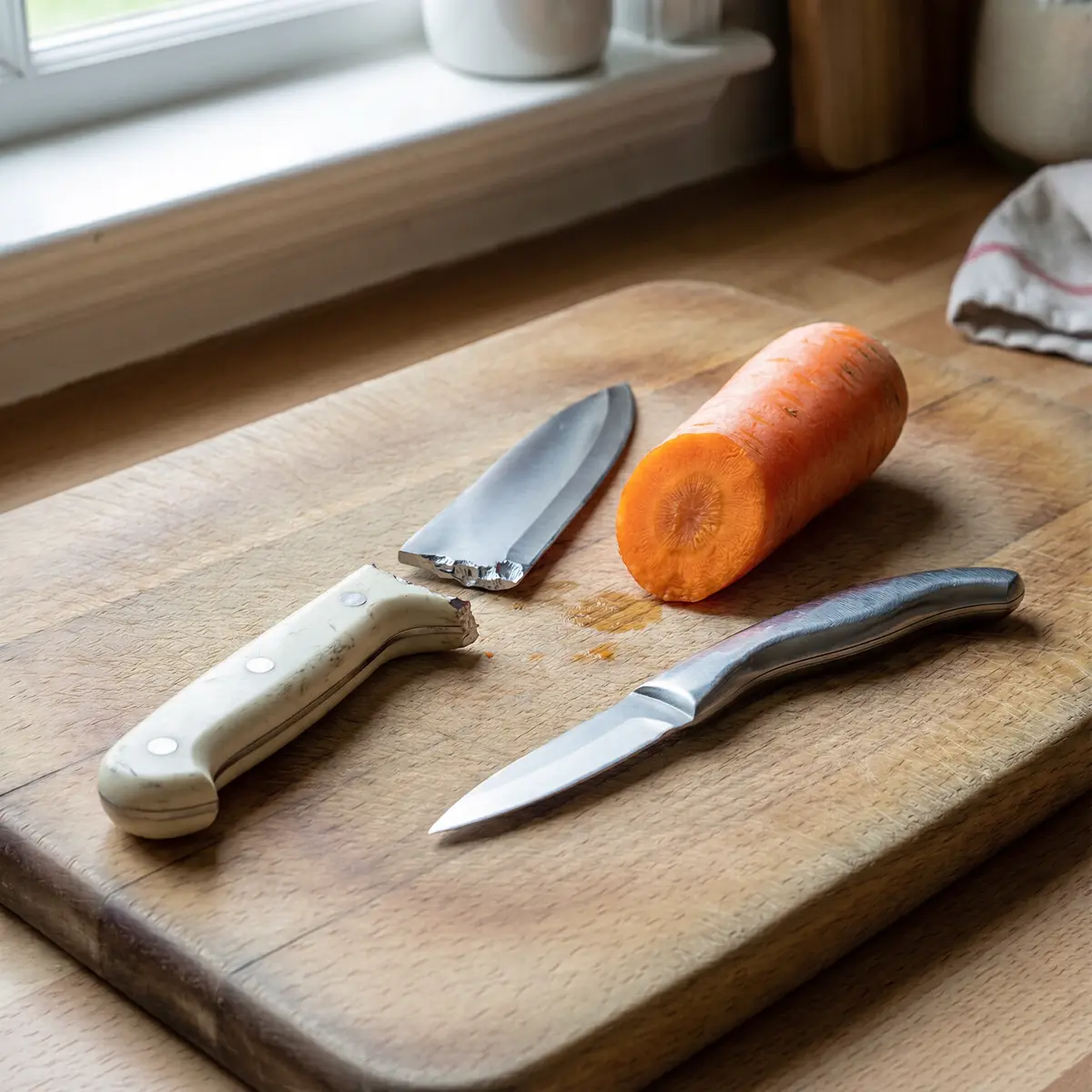
Lesson Two:“Arrived broken This item arrived broken. The handle was broken off and in many pieces.”
- Summary of Lesson: Choose reputable sellers and check the packaging and shipping conditions to avoid receiving damaged products.
-
Lesson Three:“Slices garlic thin if I’m slicing only a couple of cloves otherwise the blade clogs; also requires lots of pressure to slice I purchased this at a Pampered Chef party because I wanted to replace a sliding garlic slicer and this one appeared to work wonderfully at the party. However, after using this”
- Summary of Lesson: Pay attention to the actual usage scenarios when trying a product; some products may perform well under specific conditions but may not meet expectations in everyday use.
Through the above analysis and recommendations, we hope consumers can better understand the issues of insufficient sharpness and poor edge retention and make informed choices in the selection and use of knives.
Related Deep Analysis in This Category
- Blade Rusting — 45% of complaints relate to this
- Cheap Materials — 35% of complaints relate to this
- Dull Blades — 40% of complaints relate to this
- Easy to Rust and Stain — 28% of complaints relate to this
- Poor Grip and Ergonomics — 13% of complaints relate to this
- Poor Material and Workmanship, Easy to Break — 22% of complaints relate to this
- Poor Quality Handle — 38% of complaints relate to this
- Uncomfortable Grip — 30% of complaints relate to this